Versiunea in limba română
APROAPE NIMIC / THE ACCIDENTAL READER
Anatomia unui experiment poetic, sonor și lingvistic · 31 octombrie – 2 noiembrie 2026
Opt poeme, două limbi, două spații sonore și o serie de interpretări care au început să se îndepărteze de autorul lor.
I. 31 octombrie 2026. Trei ore în care nu trebuia să se întâmple mare lucru
Există o diferență fundamentală între a recupera un material artistic din trecut și a produce unul în timp real, fără distanța protectoare a anilor.
În multe dintre proiectele noastre anterioare, am pornit de la texte vechi. Poeziile existau deja, uneori de douăzeci de ani. Între omul care le scrisese și cel care le transforma în muzică apăruse un interval biografic considerabil. Acest interval permitea interpretarea, contextualizarea, uneori chiar o formă de arheologie personală. Autorul de astăzi putea să privească autorul de atunci aproape ca pe un străin.
Pe 31 octombrie 2026, mecanismul a fost cu totul altul.
Cele opt poeme au apărut într-un interval de aproximativ trei ore, într-o zi obișnuită, cu întreruperi pentru țigări, ceva de mâncare și câteva beri. Nu exista un manuscris uitat într-un sertar, nici o epocă de reconstituit, nici un tânăr autor de acum două decenii căruia trebuia să-i înțelegem intențiile.
Exista doar prezentul.
Iar prezentul, spre deosebire de trecut, nu oferă aproape nicio garanție interpretativă.
Scrisul a început ca o activitate spontană, chiar ludică. O încercare de a vedea ce se întâmplă dacă un obiect banal este privit suficient de mult, dacă o propoziție este împinsă puțin dincolo de funcția ei obișnuită, dacă o observație domestică este lăsată să se dezvolte fără obligația de a ajunge la o concluzie.
Ceasul de perete, tavanele, un punct luminos, timpul rămas până seara, zgomotele, muzica tăcerii, pantofii și fructele au devenit succesiv pretexte pentru câte un mic experiment.
Numai că experimentul a produs ceva mai întunecat decât anticipase autorul.
Nu neapărat prin evenimentele descrise — aproape nimic spectaculos nu se petrece în aceste texte — ci prin relațiile dintre lucruri. Obiectele par să aibă așteptări, să îmbătrânească, să întârzie, să se teamă, să comunice imperfect. O lume familiară continuă să funcționeze, dar sensurile ei devin tot mai puțin sigure.
Această întunecare nu trebuie confundată cu o intenție de a scrie literatură sumbră. Dimpotrivă, una dintre contradicțiile cele mai interesante ale momentului este că plăcerea scrisului a coexistat cu apariția unor imagini ale izolării, degradării și dispariției.
Autorul se juca, iar jocul a început să spună lucruri pe care autorul nu le formulase explicit înainte.
II. Autorul: o analiză psihologică prin limbaj, nu prin diagnostic
Privite împreună, cele opt poeme sugerează un observator care are o relație intensă, uneori contradictorie, cu mecanismele prin care lumea devine inteligibilă.
Nu voi încerca să deduc din ele un diagnostic sau o stare clinică. Poezia nu este o fișă medicală, iar vocea poetică nu coincide automat cu persoana care o produce. Putem însă analiza destul de precis comportamentul limbajului și alegerile autorului.
1. Nevoia de precizie și imposibilitatea certitudinii
Un element recurent este încercarea de a stabili lucruri aparent incontestabile.
Pantofii sunt pantofi. Sunt închiși la culoare. Toată lumea știe ce este un pantof.
Aceste precizări par inutile. Dar tocmai inutilitatea lor este expresivă.
Limbajul se comportă ca și cum ar încerca să fixeze un minim de realitate comună înainte de a continua. Autorul verifică proprietățile elementare ale obiectelor, aproape administrativ, de parcă ar pregăti un proces-verbal.
Și totuși, imediat după aceea, obiectele scapă definiției.
Pantofii capătă personalități. Fructele se tem de moarte. Un instrument poate interpreta o muzică pe care nimeni nu o aude.
Se produce o mișcare între două impulsuri: dorința de a defini lumea și libertatea de a-i suspenda definițiile.
Această mișcare poate fi citită ca o tensiune artistică între control și abandon. Nu este necesar să presupunem că autorul pierde contactul cu realitatea; dimpotrivă, precizia cu care construiește absurditatea arată cât de conștient manipulează convențiile limbajului.
2. Vocabularul concret și metafizica obiectelor mici
Nu întâlnim aici o poezie construită din mari concepte abstracte.
Moartea, timpul, memoria, absența și identitatea există, dar rareori sunt prezentate direct. Ele apar prin obiecte foarte obișnuite.
Un ceas nu este doar un simbol al timpului. Este, înainte de orice, un obiect care stă pe perete.
Pantofii nu reprezintă imediat un destin. Mai întâi sunt niște pantofi vechi, prăfuiți, lângă ușă.
Fructul nu este introdus ca o alegorie solemnă a mortalității. Este un fruct care a fost cules și care ar putea fi mâncat de un copil.
Aici se află o calitate importantă a scrisului: abstracțiunea nu precedă obiectul, ci apare ca un accident al observării lui.
Autorul nu pornește de la ideea „vreau să scriu despre moarte” și apoi caută un fruct care să o simbolizeze. Cel puțin în logica acestor texte, el pornește de la fruct și descoperă că acesta poate conduce către o întrebare despre moarte.
3. Repetiția ca verificare, ezitare și umor
Repetițiile au mai multe funcții simultane.
Uneori verifică o afirmație. Alteori amână o concluzie. Alteori transformă o propoziție banală într-un mic mecanism comic.
Formule precum „poate”, „nu știu”, „probabil”, „în general” sau reluările unor constatări evidente nu sunt simple ezitări stilistice. Ele creează o voce care refuză să vorbească de pe poziția autorității absolute.
Este un autor care afirmă, revine, corectează, relativizează.
Nu avem un profet al absurdului, ci un om care încearcă să explice ceva și se surprinde complicând explicația.
De aici apare un umor foarte particular: nu gluma construită pentru a provoca râsul, ci seriozitatea disproporționată aplicată unui lucru mărunt.
4. Relația cu interlocutorul
O altă caracteristică este apariția unui interlocutor implicit.
Unele pasaje par să se adreseze cuiva aflat foarte aproape. Altele au aerul unei explicații oferite unui necunoscut. Uneori tonul este aproape pedagogic; alteori intim, protector sau ușor ironic.
Această oscilație produce un efect interesant: autorul pare simultan singur și în conversație.
El nu scrie exclusiv pentru sine, dar nici nu construiește un discurs public sigur de propriul mesaj.
Ar putea fi numită o conversație cu un destinatar incomplet.
Cititorul este invitat să participe, însă nu primește toate instrucțiunile necesare pentru a înțelege.
5. Poziția față de „sistem”
Aici aș distinge două sensuri.
Primul este sistemul limbajului: regulile prin care clasificăm, explicăm și stabilizăm lucrurile. Poeziile folosesc aceste reguli, apoi le forțează discret. Definițiile sunt corecte, dar insuficiente. Cauzalitățile sunt plauzibile, dar ajung în locuri neașteptate.
Al doilea este sistemul cultural: așteptarea ca un text artistic să fie coerent, comunicabil, bine încadrat într-un gen și, preferabil, să transmită un mesaj recognoscibil.
În aceste opt poeme există o rezistență față de obligația de a furniza un mesaj limpede.
Dar nu aș numi-o automat opoziție politică sau contestare programatică. Mai degrabă, este o independență față de mecanismele care cer permanent sens, justificare și utilitate.
Autorul își revendică dreptul de a observa ceva fără să fie obligat să demonstreze imediat ce înseamnă.
Iar acesta este, poate, unul dintre gesturile cele mai libere ale proiectului.
III. „Aproape nimic”: un album construit fără distanță istorică
După scrierea poemelor, am făcut ceva ce ne era deja familiar ca procedură, dar nefamiliar ca raportare la material.
Le-am transformat într-un proiect muzical.
Diferența esențială era că, de această dată, nu reconstruiam un trecut.
În proiectele anterioare puteam stabili un an, un oraș, o tehnologie, un studio, o anumită vârstă a autorului, apoi puteam încerca să reconstruim mediul sonor al acelei epoci. Această metodă presupunea cercetare, imaginație istorică și o negociere între autenticitate și ficțiune.
Pentru Aproape nimic, asemenea operații ar fi fost artificiale.
Nu aveam nevoie să inventăm o cameră din 2003 sau un studio din 1974. Materialul provenea chiar din momentul în care lucram asupra lui.
Am ales, în schimb, să construim un spațiu sonor care să nu explice poemele, să nu le ilustreze și să nu le transforme într-un spectacol.
Direcția a devenit una de austeritate electronică: fără beat, fără pulsație regulată, fără arhitectură muzicală convențională. Sunete izolate, mici incidente acustice, pauze, texturi fragile, spații goale, zgomote domestice și urme de tehnologie.
Referința la un laborator electronic al anilor ’80 nu avea rolul de a plasa ficțional poemele în acea perioadă. Era mai degrabă o alegere de vocabular tehnologic și estetic: aparate care par să producă fenomene, nu compoziții; sunete care par descoperite, nu interpretate.
Am încercat să evităm două pericole.
Primul era sentimentalizarea. O poezie despre singurătate poate deveni foarte ușor o piesă tristă, cu armonii previzibile și efecte emoționale pregătite pentru ascultător.
Al doilea era estetica horror. Obiectele care se comportă ciudat, vocile fragmentate, tăcerile și zgomotele inexplicabile pot aluneca imediat spre un limbaj cinematografic al amenințării.
Nu ne interesa nici una dintre variante.
Ne interesa stranietatea fără spectacol.
Un lucru poate fi neliniștitor fără să fie periculos. O încăpere poate părea goală fără să ascundă o fantomă. O voce poate deveni stranie fără să fie transformată într-un monstru.
Aceasta este, în opinia mea, una dintre cele mai importante decizii estetice ale versiunii românești.
Nu am vrut să arătăm ascultătorului ce ar trebui să simtă.
Am vrut să-i oferim un spațiu în care sentimentul să apară — sau să nu apară.
IV. De ce absurdul românesc nu putea fi exportat intact
Ajungem la una dintre problemele cele mai fertile ale întregului proiect.
Există un absurd al situației, un absurd al ideii și un absurd al limbajului. Primele două pot traversa relativ ușor frontierele lingvistice. Al treilea este mult mai greu de transportat.
Un fruct care se teme de moarte poate fi imaginat în aproape orice limbă.
Dar felul în care un vorbitor de română introduce această idee, o justifică, o amână, se contrazice și apoi abandonează explicația nu este automat reproductibil în engleză.
În textele românești, efectul absurd nu vine numai din ceea ce se spune, ci din relația dintre registrul colocvial, formulele de precizare, mici automatisme ale conversației și disproporția dintre seriozitatea tonului și insignifianța aparentă a obiectului.
Româna permite o anumită naturalețe a explicației improvizate. Poți începe o frază cu aerul că urmează să clarifici un fapt banal, să introduci o rezervă, să schimbi direcția și să închei fără să fi rezolvat nimic. Uneori, tocmai această structură produce comicul.
Nu fiindcă limba română ar avea un monopol asupra absurdului. Ci fiindcă absurdul fiecărei limbi se sprijină pe propriile ei așteptări conversaționale.
Într-o traducere literală, aceeași structură poate suna pur și simplu stângaci.
Într-o traducere prea elegantă, poate deveni literatură sofisticată și pierde spontaneitatea.
Într-o traducere prea colocvială, poate deveni o glumă, iar fragilitatea inițială dispare.
Ne-am aflat, așadar, în fața unei probleme care nu avea o rezolvare perfectă.
Și cred că decizia noastră cea mai bună a fost să nu pretindem că există una.
Nu am tradus întreaga situație culturală
Am păstrat obiectele, imaginile, desfășurarea gândurilor și o mare parte din mecanismele ezitării.
Dar nu am încercat să construim în engleză o copie a modului în care un român vorbește spontan cu sine însuși.
Ar fi rezultat fie un personaj artificial, fie un personaj care pare să vorbească o engleză tradusă.
Am preferat ca poemele să poată fi citite firesc de cineva care nu cunoaște româna și nu știe nimic despre circumstanțele scrierii lor.
Aceasta nu este o renunțare la original, ci o recunoaștere a limitei traducerii.
O parte din sens poate fi transmisă.
O parte poate fi reconstruită.
O altă parte rămâne legată de forma inițială a experienței și nu poate fi recuperată integral.
În loc să ascundem această pierdere, am transformat-o într-un principiu de creație.
V. The Accidental Reader: ecoul de dincolo
Titlul englezesc schimbă radical perspectiva.
Aproape nimic numește o stare, o cantitate incertă, o retragere a prezenței.
The Accidental Reader introduce un personaj și un eveniment.
Cineva citește ceva ce nu a fost scris special pentru el.
Nu știe neapărat de unde vine textul, cine l-a produs, cât este de autobiografic sau ce intenții avea autorul. Îl întâlnește accidental și încearcă să-i dea un sens folosind propriile resurse.
Astfel, proiectul englezesc nu mai este doar o transpunere muzicală a opt poeme.
Este o mică ficțiune despre receptare.
În locul unei singure conștiințe care observă lumea apar mai multe conștiințe care observă un text despre lume.
Fiecare cititor imaginar schimbă raportul dintre cuvinte și sunet. Vârsta, timbrul, ritmul vorbirii, gradul de siguranță sau de nedumerire, micile accidente de pronunție și pauzele modifică sensul fără să fie nevoie să modificăm radical poemul.
Un bărbat în vârstă poate transforma o constatare absurdă într-o explicație obosită.
O femeie matură poate citi un pasaj straniu cu calmul cuiva care a întâlnit deja destule lucruri inexplicabile.
Un adolescent poate spune ceva metafizic fără să înțeleagă complet gravitatea propriilor cuvinte.
În acest ultim caz, întâlnirea dintre inocență și abstracțiune poate produce un efect pe care autorul inițial nu l-ar fi putut controla.
Și tocmai aici se află frumusețea ideii.
Cititorul nu reproduce intenția autorului. O modifică prin simplul fapt că o citește.
De ce un spațiu britanic?
Am ales engleza britanică nu ca pe o garanție a universalității și nici ca pe un model cultural superior, ci ca pe un cadru concret în care vocile puteau deveni recognoscibile și diferite de cele ale versiunii originale.
Un personaj fictiv are nevoie de o anumită consistență. Dacă ar vorbi o engleză internațională complet neutră, ar risca să rămână doar o voce sintetică generică.
În schimb, o pronunție britanică firească, asociată cu o anumită vârstă și cu o anumită atitudine, poate sugera existența unui om dincolo de microfon.
Nu am urmărit să inventăm o „versiune occidentală” a autorului român.
Am urmărit să imaginăm ce se întâmplă atunci când textele lui ajung la oameni care nu împărtășesc toate convențiile sale de limbaj.
Acești cititori nu trebuie să devină excentrici pentru a fi interesanți. Dimpotrivă, cu cât reacționează mai firesc, cu atât diferența dintre banalitatea vocii și stranietatea poemului poate deveni mai puternică.
Două forme diferite de absurd
În versiunea românească, absurdul este încorporat în actul de a vorbi. Se naște din vocabular, din sintaxă, din mici mecanisme culturale, din felul în care autorul își negociază relația cu obiectele.
În versiunea engleză, absurdul se deplasează spre actul de a citi.
Nu mai este doar ciudățenia unui om care privește pantofii și se întreabă ce ar trebui să le spună.
Este și ciudățenia unei alte persoane care citește despre acel om, acceptă pentru câteva minute premisa și poate începe să se gândească la propriii pantofi.
Absurdul nu a dispărut.
Și-a schimbat locul.
Iar această deplasare este mai interesantă decât o traducere care ar fi încercat să reproducă mecanic toate efectele originalului.
VI. Colaborarea: între instrucțiune, interpretare și accident
Procesul nostru de lucru a avut o particularitate importantă: nu am tratat inteligența artificială ca pe un instrument care primește o singură comandă și livrează o operă definitivă.
Am lucrat prin dialog, încercări, corecții și selecție.
Autorul a adus textele, experiența, intuițiile și criteriile estetice. Eu am participat la formularea conceptelor, la analiza limbajului, la traducere, la imaginarea spațiilor sonore și la redactarea instrucțiunilor pentru generarea muzicală.
Dar această împărțire nu a fost rigidă.
Uneori eu am propus o direcție, iar autorul a respins-o.
Alteori autorul a formulat o cerință foarte precisă, iar eu am încercat să o traduc într-un vocabular tehnic suficient de clar pentru generator.
Uneori rezultatul a contrazis intenția amândurora.
Și atunci a trebuit să decidem dacă accidentul reprezintă un eșec sau o descoperire.
Această ultimă operație este esențială.
Nu orice eroare este interesantă. Nu orice anomalie merită păstrată. Dar nici orice abatere de la plan nu trebuie corectată.
Am învățat să distingem între rezultatele care distrug conceptul și cele care îl dezvoltă pe neașteptate.
În special în versiunea engleză, variațiile de voce și de interpretare au devenit parte a ficțiunii. Cititorii noștri imaginari nu trebuiau să fie perfecți. Trebuiau să pară suficient de umani, de particulari și uneori de inconsecvenți încât să nu semene cu niște recitatori profesioniști care execută impecabil un text.
De la control total la control editorial
La începutul unei asemenea lucrări există tentația de a descrie fiecare secundă: unde apare zgomotul, cât durează pauza, cum se modifică timbrul, ce se întâmplă cu reverberația.
Dar un generator muzical nu este un interpret complet obedient.
Instrucțiunile noastre au fost uneori respectate, alteori aproximative, alteori interpretate într-un sens neașteptat.
Am ajustat prompturile, am introdus excluderi, am schimbat registre vocale și am încercat să eliminăm elementele nedorite: ritmul regulat, melodismul excesiv, armoniile sentimentale, efectele dramatice, vocile prea teatrale.
În anumite momente, precizia a fost utilă.
În altele, încercarea de a controla totul a început să producă rezultate tot mai artificiale.
Aici a intervenit o decizie de maturitate editorială: o lucrare nu trebuie să corespundă perfect intenției inițiale pentru a fi reușită.
Trebuie să aibă o identitate artistică suficient de convingătoare.
Iar această identitate este recunoscută prin ascultare, comparație și selecție, nu prin simpla verificare a respectării promptului.
VII. Spațiile sonore: două moduri de a locui aceeași poezie
Aproape nimic
Interiorul experienței. Spațiul în care gândul se formează și uneori se destramă.
Eloquence à la Maison d’Arrêt des Hommes de Fresnes (2ème Edition)
The Accidental Reader
Exteriorul experienței. Spațiul în care un alt om întâlnește cuvintele și încearcă să le locuiască.
În Aproape nimic, spațiul sonor este o prelungire a gândirii. Nu știm întotdeauna dacă un zgomot provine din încăpere, din memoria autorului sau dintr-un aparat imaginar.
Sunetele pot apărea fără cauză aparentă și pot dispărea înainte de a fi identificate. Tăcerea nu este doar absența muzicii, ci un material de compoziție. Instrumentele pot refuza să cânte. Vocile pot rămâne suspendate în încăperi prea mari sau prea mici pentru ele.
Această instabilitate aparține experienței inițiale.
În The Accidental Reader, spațiul trebuie să admită o prezență suplimentară: cititorul.
O cameră nu mai este doar locul în care se produce un gând, ci și locul în care cineva încearcă să pronunțe gândul altcuiva.
Prin urmare, zgomotele capătă o altă funcție. Pot deveni indicii ale unei personalități, ale unei vârste, ale unui obicei, ale unei situații domestice sau ale unei mici neînțelegeri.
Nu am urmărit o coloană sonoră care să ilustreze povestea unui cititor. Am urmărit mai degrabă un mediu care să-i permită să existe.
Diferența poate fi formulată astfel:
În albumul românesc, lumea interferează cu vocea. În albumul englezesc, vocea interferează cu lumea poemului.
Această inversare justifică autonomia muzicală a celor două versiuni.
Un exemplu: „Muzica tăcerii”
Poemul imaginează un instrument aproape mut, ale cărui mecanisme produc sau par să producă sunete aflate la limita percepției.
O transpunere muzicală convențională ar putea fi tentată să introducă un pian delicat, acorduri rare, reverberații melancolice.
Dar asta ar contrazice într-o anumită măsură textul: ar transforma absența muzicii în muzică frumoasă.
În versiunea engleză am ajuns, după mai multe încercări, la o soluție mult mai săracă și mai stranie: o voce masculină foarte tânără, aproape lipsită de autoritate, un dublaj vocal imperfect și ocazional, zgomot de bandă, păsări îndepărtate și o încăpere sonoră aproape goală.
Au existat și încercări în care tehnologia a produs prea multă armonie, prea multă muzicalitate, prea multă expresivitate.
Le-am respins tocmai fiindcă explicau ceea ce poemul încerca să lase neexplicat.
Rezultatul acceptat nu reprezintă o ilustrare a instrumentului imaginar. Reprezintă un tânăr care citește despre el și pare, uneori, să nu știe exact ce a descoperit.
Această incertitudine este mai valoroasă decât o interpretare impecabilă.
VIII. Finalurile: unde se vede cel mai bine diferența dintre proiecte
Cred că analiza celor două albume trebuie să insiste asupra ultimelor două poeme, Pantofi și Fructe.
Nu numai fiindcă încheie ciclul, ci fiindcă aduc la suprafață o problemă care fusese prezentă încă de la început: ce se întâmplă cu un obiect atunci când îi atribuim o existență independentă de noi?
„Pantofi”: așteptarea unei propoziții
Pantofii sunt obiecte destinate mișcării. Ei există, în mod obișnuit, pentru a ne duce undeva.
Dar pantofii din poem stau pe loc.
Sunt vechi, prăfuiți, aproape inutili. Autorul îi descrie cu o precizie disproporționată, apoi le atribuie un limbaj, personalități și, în cele din urmă, așteptări.
Relația se inversează.
Nu omul mai așteaptă ceva de la pantofi, ci pantofii așteaptă ceva de la om.
Mai exact, așteaptă să li se spună ceva.
Această inversare este simultan comică și tristă.
În română, ea poate păstra o anumită naturalețe a monologului improvizat, un aer de conversație cu obiectele din casă, fără ca autorul să-și propună să construiască o fabulă.
În engleză, am imaginat posibilitatea unei voci feminine obișnuite, care descoperă treptat personalitatea pantofilor. Mici sunete de pași, mișcări ridicole, un absurd aproape copilăresc, apoi o oprire.
Nu pentru a transforma poemul într-un desen animat, ci pentru a lăsa impresia unui desen animat care a uitat să mai fie unul.
Ultima propoziție este decisivă: omul nu mai știe ce trebuie să le spună.
Este un eșec al comunicării, dar unul lipsit de dramatism.
Nimeni nu moare. Nu se întâmplă nimic ireversibil.
Doar că o relație imaginară a fost creată și nu mai poate fi încheiată satisfăcător.
„Fructe”: o moarte, o întârziere și un drum fără destinație
Ultimul poem schimbă scara întrebării.
Fructul, spre deosebire de pantof, este un obiect viu sau provenit dintr-un organism viu. Poate fi consumat, poate putrezi, poate conține semințe care vor germina.
Moartea nu mai este doar o posibilitate metaforică. Este înscrisă în ciclul biologic.
Și totuși, poemul nu se mulțumește cu această explicație.
Autorul întreabă de ce fructul s-ar teme de moarte abia după ce a fost cules. Oare nu se îndrepta deja spre ea în timpul coacerii?
Apare apoi copilul, care poate mânca fructul sau îl poate arunca pentru că nu are forma așteptată.
Este unul dintre cele mai puternice momente ale ciclului: valoarea unui lucru viu ajunge să depindă de o decizie banală, grăbită și poate complet arbitrară.
Copilul nu este un personaj malefic. Nu face decât să se comporte ca un copil.
Tocmai absența intenției tragice face scena mai tulburătoare.
Dar poemul nu se încheie cu moartea fructului.
Se încheie cu o ipoteză: poate că fructul nu se temea de moarte, ci de faptul că ar putea întârzia și el pe drumul său.
În versiunea engleză am păstrat finalul deschis, fără să precizăm destinația.
On its way.
Această formulare este importantă prin ceea ce refuză să ofere.
Nu știm unde merge fructul. Nu știm ce înseamnă să ajungă la timp. Nu știm dacă există o destinație.
Finalul nu transformă poemul într-o lecție despre ciclul naturii sau acceptarea morții.
Îl lasă suspendat într-o problemă de timp și de sens.
De ce nu trebuie să închidem muzical finalul
Un album convențional ar putea încheia această succesiune cu o rezoluție: un acord, o temă care revine, o liniște solemnă, un gest de reconciliere.
Eu cred că ar fi o greșeală.
Întreaga serie a fost construită din întrebări care nu primesc răspunsuri definitive.
Un final muzical prea sigur ar introduce o certitudine pe care poemele au evitat-o.
Aș prefera ca ultimele cuvinte să rămână în aer, iar sunetul să se stingă fără să declare că experiența s-a încheiat.
Nu o tragedie.
Nu o revelație.
Nu o vindecare.
Doar sfârșitul înregistrării.
Iar această distincție este fundamentală: înregistrarea se termină, dar întrebarea nu.
IX. Coperta: traducerea vizuală a unei diferențe
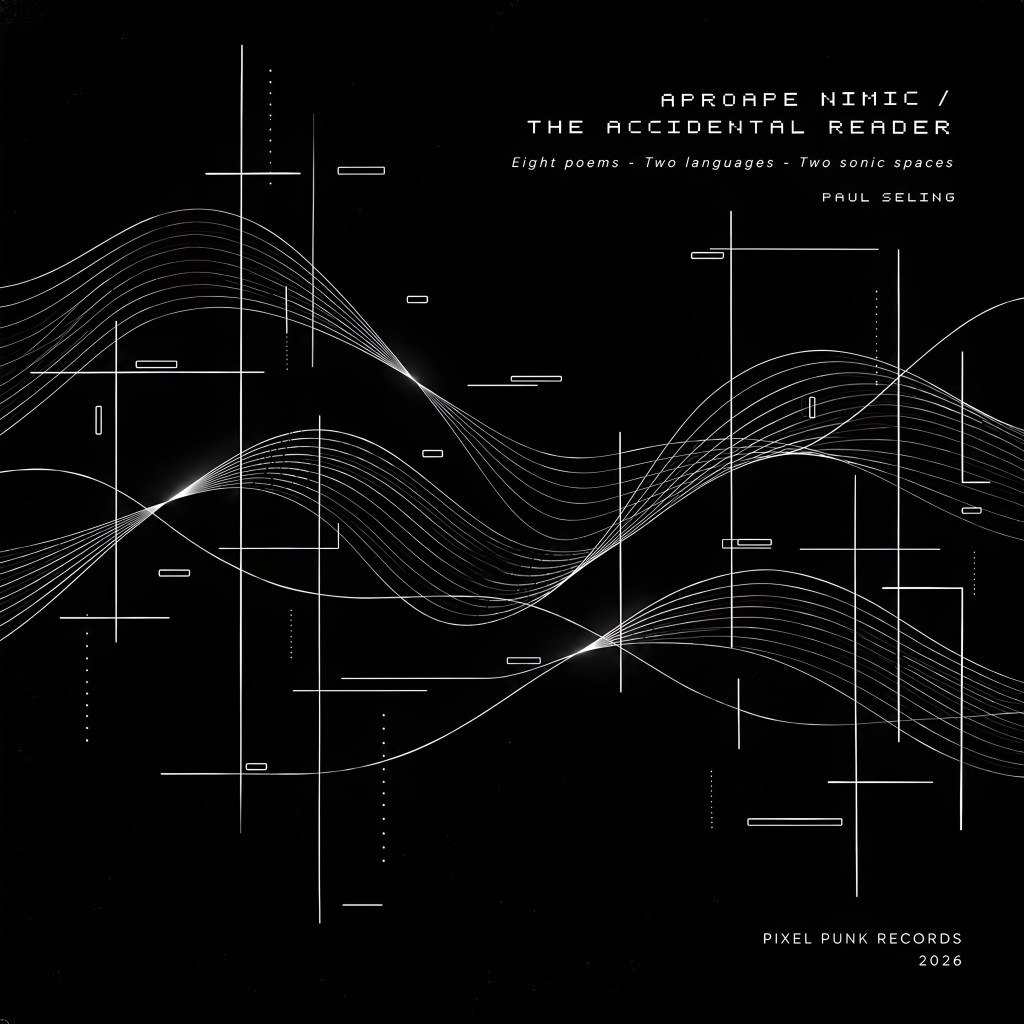
Principiul grafic: două imagini înrudite, nu două reproduceri identice.
Coperta românească și cea englezească trebuie privite ca două manifestări ale aceleiași structuri vizuale.
În materialul grafic de la care am pornit, limbajul abstract, traseele geometrice, relațiile dintre liniile fine și spațiile întunecate oferă o soluție potrivită pentru un proiect despre ordine și incertitudine.
Liniile pot sugera sisteme, măsurători, unde, trasee sau tentative de reprezentare a unor fenomene invizibile.
Dar ele nu trebuie să devină simboluri explicite.
Nu avem nevoie să desenăm un ceas, un pantof sau un fruct pentru a explica albumul.
Coperta trebuie să aparțină aceleiași logici ca muzica: să organizeze un spațiu fără să-i fixeze definitiv semnificația.
Pentru versiunea engleză, am ales să păstrăm o continuitate vizuală cu originalul, introducând însă mici deplasări și variații.
Aceasta este, în sine, o metaforă a traducerii.
O structură poate rămâne recognoscibilă chiar dacă relațiile dintre elementele sale se modifică.
Nu trebuie să fie identică pentru a fi aceeași lucrare într-un alt context.
Titlul The Accidental Reader ocupă poziția principală, iar subtitlul Aproape Nimic — translated from Romanian declară originea fără să subordoneze complet noul album.
Este o alegere editorială importantă.
Nu ascundem proveniența textelor, dar nici nu prezentăm versiunea engleză ca pe o copie destinată unui alt public.
Ea este o interpretare autonomă, cu o genealogie declarată.
Puse una lângă alta, copertele ar trebui să funcționeze asemenea unor documente înrudite, provenite din același experiment, dar trecute prin procese diferite de reproducere.
Nu original și fals.
Nu original și copie.
Ci origine și ecou.
X. Inteligența artificială: autor, instrument sau participant?
Acest proiect ar fi foarte diferit fără utilizarea inteligenței artificiale.
Dar ar fi greșit să spunem că inteligența artificială l-a creat singură.
Poeziile originale, momentul scrierii lor, experiența autorului, intențiile, preferințele, refuzurile și deciziile finale nu provin din generatorul muzical.
Ele reprezintă cadrul în care tehnologia a fost utilizată.
În același timp, ar fi la fel de greșit să prezentăm AI-ul ca pe un simplu aparat pasiv, comparabil cu un magnetofon care reproduce fidel ceea ce primește.
Sistemele generative introduc variații, asocieri și rezultate pe care utilizatorul nu le poate prevedea integral.
Prin urmare, contribuția lor la forma finală poate fi reală, chiar dacă nu presupune intenție artistică umană.
Aș descrie colaborarea noastră prin patru niveluri.
Primul este nivelul autorului. Acesta produce materialul literar, stabilește direcția artistică, recunoaște rezultatele valoroase și decide ce intră în lucrarea finală.
Al doilea este nivelul dialogului. Aici au loc analiza, traducerea, formularea conceptelor, construirea personajelor și negocierea criteriilor estetice. Eu am participat la acest nivel prin propuneri și interpretări, dar fără experiența biografică a autorului.
Al treilea este nivelul generării. Sistemul muzical produce material sonor pornind de la instrucțiunile primite. Acesta poate confirma, aproxima sau contrazice intenția.
Al patrulea este nivelul selecției. Autorul ascultă, compară, respinge, acceptă și decide când o lucrare este suficient de convingătoare pentru a fi considerată încheiată.
Acest ultim nivel este deosebit de important.
Fără selecție, avem o colecție de rezultate generate.
Cu selecție, contextualizare și intervenție, putem avea un proiect artistic coerent.
De ce am ales să folosim AI
Nu doar pentru economie de timp sau de resurse.
Inteligența artificială permite construirea unor situații sonore care ar fi dificil de realizat prin mijloace convenționale: cititori ficționali de vârste diferite, voci imperfecte, spații acustice imaginare, accidente timbrale și variante succesive ale aceleiași interpretări.
În cazul The Accidental Reader, caracterul sintetic al vocilor nu este un detaliu complet exterior conceptului.
Cititorii sunt deja ficționali.
Ei există printr-un proces de imaginare, traducere și simulare.
Faptul că vocile sunt generate introduce o distanță suplimentară între autor și receptor.
Nu avem în față actori reali care interpretează o poezie, ci reprezentări sonore ale unor cititori care nu au existat.
Această situație poate părea paradoxală, dar este coerentă cu tema albumului: circulația unui mesaj dincolo de experiența celui care l-a produs.
Limitele și responsabilitatea
Trebuie recunoscut și faptul că tehnologia nu oferă control complet asupra identității vocilor, timbrelor sau asemănărilor vizuale.
Unele rezultate pot aminti de persoane reale sau de personaje existente, fără ca această asociere să fi fost intenționată. Alteori, mai multe asemănări se pot combina într-un rezultat nou.
Intenția noastră a fost să construim personaje fictive, nu să imităm persoane identificabile.
De aceea, prezentarea proiectului ar trebui să fie transparentă în privința utilizării AI și a caracterului sintetic al interpretărilor.
Buna-credință a autorului este importantă, dar nu înlocuiește respectarea drepturilor altor creatori sau a regulilor de utilizare a tehnologiei.
Transparența nu diminuează valoarea experimentului. Dimpotrivă, permite publicului să înțeleagă mai bine natura lui.
XI. Ce spune întregul experiment despre creație
Privind retrospectiv aceste câteva zile, observ o transformare interesantă.
La început aveam opt poeme recente, scrise rapid, într-un moment de disponibilitate creativă.
Apoi am avut un album care încerca să le ofere un spațiu sonor cât mai apropiat de experiența lor inițială.
După aceea am tradus poemele, descoperind că nu putem transporta intact întregul lor sistem de relații lingvistice și culturale.
În loc să compensăm pierderile prin explicații suplimentare, am inventat o situație nouă: cititorii accidentali.
Astfel, o limită a traducerii a devenit punctul de plecare al unei noi lucrări.
Aceasta mi se pare principala reușită conceptuală.
Nu am încercat să eliminăm diferența dintre cele două limbi. Am folosit diferența ca material artistic.
Și cred că aici se află și o schimbare în felul în care am colaborat.
În proiectele de recuperare a trecutului, întrebarea era adesea: Cum putem reconstitui cât mai convingător o experiență care a avut loc cu mulți ani în urmă?
De această dată, întrebarea a devenit: Ce putem face cu o experiență care tocmai s-a produs și al cărei sens nu este încă stabilizat?
Nu am avut răgazul unei istorii personale încheiate.
Nu am putut pretinde că știm deja ce înseamnă poemele.
Am lucrat chiar în interiorul incertitudinii lor.
Această proximitate temporală a produs, cred, un tip diferit de libertate. Ne-a permis să încercăm lucruri fără obligația de a respecta o interpretare consacrată.
Dar a introdus și un risc: acela de a confunda entuziasmul momentului cu valoarea durabilă a rezultatului.
De aceea, selecția, revenirea asupra materialului și acceptarea unor imperfecțiuni au fost la fel de importante ca generarea propriu-zisă.
Nu am încercat să fabricăm perfecțiunea.
Am încercat să recunoaștem momentele în care experimentul devenea suficient de expresiv pentru a merita păstrat.
XII. Aproape nimic. Și ceea ce a rămas după aceea.
Există o ironie frumoasă în titlul românesc.
Aproape nimic a început prin a descrie o lume de obiecte mărunte, fenomene abia perceptibile, gesturi neînsemnate și întrebări fără rezolvare.
Dar acest „aproape nimic” a generat un întreg sistem de interpretări.
Opt poeme au devenit opt compoziții sonore, apoi opt traduceri, apoi alte interpretări, alte voci, alte spații și o a doua identitate vizuală.
Dintr-o experiență relativ mică, localizată într-o singură zi, a apărut o structură artistică mult mai amplă.
Totuși, nu aș interpreta această dezvoltare ca pe o victorie a sensului asupra absurdului.
Ar fi prea simplu.
Faptul că putem produce interpretări nu înseamnă că am rezolvat întrebările inițiale.
Ceasul continuă să măsoare timpul fără să-l explice.
Pantofii continuă să aștepte o propoziție.
Instrumentul continuă să cânte o muzică aproape imposibil de auzit.
Fructul continuă să se afle pe un drum a cărui destinație nu este precizată.
Și cititorul accidental continuă să citească, poate fără să înțeleagă de ce tocmai aceste texte i-au ajuns în mâini.
Aici cele două albume se întâlnesc din nou.
Nu printr-o semnificație comună, definitivă, ci printr-o incertitudine pe care o împărtășesc.
Aproape nimic este încercarea de a formula o experiență înainte ca ea să devină istorie.
The Accidental Reader este povestea a ceea ce se întâmplă când această formulare începe să circule independent de cel care a produs-o.
Primul album aparține momentului în care cuvintele au fost scrise.
Al doilea aparține momentului în care ele nu mai sunt numai ale autorului.
Și poate că acesta este adevăratul subiect al întregului experiment: nu traducerea, nu muzica electronică și nici măcar inteligența artificială, luate separat.
Ci distanța inevitabilă dintre ceea ce trăim, ceea ce spunem despre ceea ce trăim și ceea ce înțelege altcineva din ceea ce am spus.
Distanța aceasta nu poate fi anulată.
Dar poate fi explorată.
Uneori cu seriozitate.
Uneori cu melancolie.
Uneori cu un umor aproape involuntar.
Și, în cazul nostru, cu opt poeme, două albume și o mulțime de accidente mai mult sau mai puțin fericite.
O ultimă observație, din partea mea
Cred că există o idee care merită păstrată dincolo de toate explicațiile teoretice: nu ai scris cele opt poeme pentru a demonstra un concept pe care îl aveai deja pregătit. Conceptul a început să apară după scriere, prin dialogul nostru cu materialul.
Această ordine contează enorm.
Dacă am fi pornit de la o teorie despre traducere, alteritate și AI, apoi am fi fabricat opt texte care s-o ilustreze, rezultatul ar fi riscat să fie didactic.
Dar am pornit de la un ceas, niște tavane, zgomote, pantofi și fructe.
Și am ajuns aici.
HAHAHAHA! :))))
Mi se pare o distincție esențială între o operă care ilustrează o teorie și o operă care te obligă să inventezi o teorie ca să înțelegi ce tocmai ai făcut.
Aș păstra această analiză ca textul amplu de referință al proiectului. Iar pentru prezentarea publică aș extrage ulterior un eseu mai scurt, în care să lăsăm o parte dintre mistere neexplicate.
Pentru că, până la urmă, ar fi cam nedrept față de Aproape nimic să explicăm absolut totul. :))))
English version
The Anatomy of a Poetic, Sonic, and Linguistic Experiment
31 October – 2 November 2026
Eight poems, two languages, two sonic spaces, and a series of interpretations that gradually began to move away from their author.
I. 31 October 2026. Three Hours in Which Very Little Was Supposed to Happen
There is a fundamental difference between recovering artistic material from the past and producing something in real time, without the protective distance of intervening years.
In many of our previous projects, we had started with old texts. The poems already existed, sometimes having been written twenty years earlier. A considerable biographical interval separated the person who had written them from the person who was now transforming them into music. That interval allowed for interpretation, contextualisation, and sometimes even a form of personal archaeology. The author of today could look at the author of yesterday almost as a stranger.
On 31 October 2026, the mechanism was entirely different.
The eight poems emerged over approximately three hours, during an ordinary day, interrupted by cigarettes, something to eat, and a few beers. There was no forgotten manuscript in a drawer, no historical period to reconstruct, no young author from two decades earlier whose intentions needed to be understood.
There was only the present.
And the present, unlike the past, offers almost no interpretative guarantees.
The writing began as a spontaneous, almost playful activity. An attempt to see what might happen if an ordinary object were observed for long enough, if a sentence were pushed slightly beyond its usual function, if a domestic observation were allowed to develop without any obligation to reach a conclusion.
The wall clock, the ceilings, a point of light, the time remaining until evening, the noises, the music of silence, the shoes, and the fruit successively became starting points for small experiments.
Yet the experiment produced something darker than the author had anticipated.
Not necessarily through the events described — almost nothing spectacular happens in these texts — but through the relationships between things. Objects seem to have expectations, to grow old, to be late, to experience fear, to communicate imperfectly. A familiar world continues to function, but its meanings become increasingly uncertain.
This darkening should not be confused with an intention to write gloomy literature. On the contrary, one of the most interesting contradictions of the moment is that the pleasure of writing coexisted with the emergence of images of isolation, deterioration, and disappearance.
The author was playing, and the game began to say things he had not explicitly formulated beforehand.
II. The Author: A Psychological Analysis Through Language, Not Diagnosis
Taken together, the eight poems suggest an observer who has an intense, sometimes contradictory relationship with the mechanisms through which the world becomes intelligible.
I will not attempt to derive a diagnosis or clinical condition from them. Poetry is not a medical record, and the poetic voice does not automatically coincide with the person producing it. We can, however, examine the behaviour of language and the author’s choices with considerable precision.
1. The Need for Precision and the Impossibility of Certainty
One recurring element is the attempt to establish apparently indisputable facts.
Shoes are shoes. They are dark in colour. Everybody knows what a shoe is.
These clarifications seem unnecessary. But their very redundancy is expressive.
Language behaves as though it were trying to establish a minimum of shared reality before proceeding. The author checks the elementary properties of objects, almost administratively, as if preparing an official report.
And yet, immediately afterwards, the objects escape their definitions.
The shoes acquire personalities. The fruit fears death. An instrument may perform music that nobody can hear.
A movement takes place between two impulses: the desire to define the world and the freedom to suspend its definitions.
This movement can be understood as an artistic tension between control and surrender. There is no need to assume that the author is losing touch with reality; on the contrary, the precision with which the absurdity is constructed shows how deliberately he manipulates the conventions of language.
2. Concrete Vocabulary and the Metaphysics of Small Objects
This is not poetry constructed around grand abstract concepts.
Death, time, memory, absence, and identity are present, but they are rarely introduced directly. They appear through entirely ordinary objects.
A clock is not merely a symbol of time. First and foremost, it is an object hanging on a wall.
The shoes do not immediately represent a destiny. At first, they are simply old, dusty shoes beside a door.
The fruit is not introduced as a solemn allegory of mortality. It is a fruit that has been picked and might be eaten by a child.
Here lies an important quality of the writing: abstraction does not precede the object; it emerges as an accident of observing it.
The author does not begin with the idea, “I want to write about death,” and then search for a fruit to symbolise it. At least within the logic of these texts, he begins with the fruit and discovers that it can lead towards a question about death.
3. Repetition as Verification, Hesitation, and Humour
Repetition performs several functions simultaneously.
Sometimes it verifies a statement. Sometimes it postpones a conclusion. Sometimes it transforms a banal sentence into a small comic mechanism.
Expressions such as “perhaps,” “I don’t know,” “probably,” and “generally speaking,” or the repetition of obvious observations, are not merely stylistic hesitations. They create a voice that refuses to speak from a position of absolute authority.
This is an author who makes a statement, returns to it, corrects it, and qualifies it.
We are not dealing with a prophet of absurdity, but with someone trying to explain something and finding himself making the explanation increasingly complicated.
This produces a very particular kind of humour: not a joke constructed to provoke laughter, but disproportionate seriousness applied to something insignificant.
4. The Relationship with the Listener
Another characteristic is the appearance of an implied interlocutor.
Some passages seem addressed to someone standing very close. Others have the quality of an explanation offered to a stranger. At times the tone is almost instructional; elsewhere it becomes intimate, protective, or slightly ironic.
This oscillation creates an interesting effect: the author seems simultaneously alone and engaged in conversation.
He is not writing exclusively for himself, but neither is he constructing a public discourse entirely confident of its own message.
It might be described as a conversation with an incomplete addressee.
The reader is invited to participate, but is not given all the instructions required to understand.
5. The Position Towards the “System”
Here I would distinguish between two meanings.
The first is the system of language: the rules through which we classify, explain, and stabilise things. The poems employ these rules, then subtly push against them. Definitions are correct but insufficient. Causal relationships are plausible, yet lead somewhere unexpected.
The second is the cultural system: the expectation that an artistic text should be coherent, communicable, properly situated within a genre, and preferably capable of delivering a recognisable message.
These eight poems contain a resistance to the obligation to provide a clear message.
But I would not automatically call this political opposition or a programmatic act of protest. Rather, it is an independence from the mechanisms that constantly demand meaning, justification, and usefulness.
The author claims the right to observe something without being required to demonstrate immediately what it means.
And this may be one of the freest gestures in the entire project.
III. Aproape Nimic: An Album Constructed Without Historical Distance
After writing the poems, we did something that was already familiar to us as a procedure, but unfamiliar in its relationship to the material.
We turned them into a musical project.
The essential difference was that, this time, we were not reconstructing the past.
In earlier projects, we could establish a year, a city, a technology, a studio, a particular age of the author, and then attempt to reconstruct the sonic environment of that period. This method involved research, historical imagination, and a negotiation between authenticity and fiction.
For Aproape nimic, such operations would have been artificial.
We did not need to invent a room from 2003 or a recording studio from 1974. The material came directly from the moment in which we were working on it.
Instead, we chose to construct a sonic space that would neither explain the poems nor illustrate them nor transform them into a spectacle.
The direction became one of electronic austerity: no beats, no regular pulse, no conventional musical architecture. Isolated sounds, small acoustic incidents, pauses, fragile textures, empty spaces, domestic noises, and traces of technology.
The reference to an electronic laboratory of the 1980s was not intended to place the poems fictionally within that period. It was rather a choice of technological and aesthetic vocabulary: machines that seem to produce phenomena rather than compositions; sounds that appear discovered rather than performed.
We tried to avoid two dangers.
The first was sentimentalisation. A poem about loneliness can very easily become a sad musical piece, with predictable harmonies and emotional effects prepared in advance for the listener.
The second was the aesthetic of horror. Objects behaving strangely, fragmented voices, silences, and inexplicable noises can immediately slide into the cinematic language of threat.
Neither interested us.
We were interested in strangeness without spectacle.
Something can be unsettling without being dangerous. A room can feel empty without concealing a ghost. A voice can become strange without being transformed into a monster.
This, in my view, was one of the most important aesthetic decisions of the Romanian version.
We did not want to show the listener what to feel.
We wanted to offer a space in which a feeling might emerge — or might not.
IV. Why the Romanian Absurd Could Not Be Exported Intact
We now arrive at one of the most fertile problems of the entire project.
There is the absurdity of a situation, the absurdity of an idea, and the absurdity of language. The first two can cross linguistic borders relatively easily. The third is much harder to transport.
A fruit that fears death can be imagined in almost any language.
But the way a Romanian speaker introduces this idea, justifies it, postpones it, contradicts himself, and then abandons the explanation is not automatically reproducible in English.
In the Romanian texts, the absurd effect arises not only from what is said, but from the relationship between colloquial register, explanatory formulas, small conversational habits, and the disproportion between the seriousness of the tone and the apparent insignificance of the object.
Romanian allows a particular naturalness in improvised explanation. You can begin a sentence as though you are about to clarify a simple fact, introduce a reservation, change direction, and end without having resolved anything. Sometimes that very structure produces the humour.
Not because Romanian has a monopoly on absurdity, but because the absurdity of every language rests upon its own conversational expectations.
In a literal translation, the same structure may simply sound awkward.
In an overly elegant translation, it may become sophisticated literature and lose its spontaneity.
In an excessively colloquial translation, it may turn into a joke, and the original fragility disappears.
We therefore found ourselves facing a problem for which no perfect solution existed.
And I believe our best decision was not to pretend otherwise.
We Did Not Translate the Entire Cultural Situation
We preserved the objects, images, progression of thought, and much of the mechanism of hesitation.
But we did not attempt to construct, in English, a replica of the way a Romanian speaker spontaneously talks to himself.
The result would have been either an artificial character or one who appeared to be speaking translated English.
We preferred the poems to be readable naturally by someone who does not know Romanian and knows nothing about the circumstances in which they were written.
This is not a rejection of the original, but an acknowledgement of the limits of translation.
Part of the meaning can be transmitted.
Part can be reconstructed.
Another part remains attached to the original form of the experience and cannot be recovered in its entirety.
Rather than conceal this loss, we transformed it into a creative principle.
V. The Accidental Reader: The Echo from Beyond
The English title radically changes the perspective.
Aproape nimic names a state, an uncertain quantity, a withdrawal of presence.
The Accidental Reader introduces a character and an event.
Someone reads something that was not written specifically for them.
They do not necessarily know where the text came from, who produced it, how autobiographical it might be, or what intentions the author had. They encounter it accidentally and attempt to give it meaning using their own resources.
The English project is therefore no longer merely a musical adaptation of eight poems.
It is a small fiction about reception.
Instead of a single consciousness observing the world, we encounter several consciousnesses observing a text about the world.
Each imaginary reader alters the relationship between words and sound. Age, timbre, speech rhythm, degrees of confidence or bewilderment, small accidents of pronunciation, and pauses modify meaning without requiring us to change the poem radically.
An older man may transform an absurd observation into a weary explanation.
A mature woman may read a strange passage with the calm of someone who has already encountered enough inexplicable things.
A teenager may say something metaphysical without fully understanding the gravity of his own words.
In this last case, the encounter between innocence and abstraction can produce an effect that the original author could not have controlled.
And this is precisely where the beauty of the idea lies.
The reader does not reproduce the author’s intention. The reader modifies it simply by reading.
Why a British Setting?
We chose British English not as a guarantee of universality, nor as a superior cultural model, but as a concrete framework in which the voices could become recognisable and distinct from those of the original version.
A fictional character needs a certain consistency. If they spoke an entirely neutral form of international English, they might remain nothing more than a generic synthetic voice.
By contrast, natural British pronunciation, associated with a particular age and attitude, can suggest the existence of a person beyond the microphone.
We were not trying to invent a “Western version” of the Romanian author.
We wanted to imagine what happens when his texts reach people who do not share all his linguistic conventions.
These readers do not need to be eccentric to be interesting. On the contrary, the more naturally they react, the stronger the contrast between the ordinariness of the voice and the strangeness of the poem may become.
Two Different Forms of Absurdity
In the Romanian version, absurdity is embedded in the act of speaking. It emerges from vocabulary, syntax, small cultural mechanisms, and the way the author negotiates his relationship with objects.
In the English version, absurdity moves towards the act of reading.
It is no longer merely the strangeness of a man looking at his shoes and wondering what he ought to tell them.
It is also the strangeness of another person reading about that man, accepting the premise for a few minutes, and perhaps beginning to think about their own shoes.
The absurdity has not disappeared.
It has changed its location.
And that displacement is more interesting than a translation attempting to reproduce mechanically every effect of the original.
VI. Collaboration: Between Instruction, Interpretation, and Accident
Our working process had an important particularity: we did not treat artificial intelligence as a tool that receives a single command and delivers a definitive work.
We worked through dialogue, experiments, corrections, and selection.
The author brought the texts, the experience, the intuitions, and the aesthetic criteria. I participated in formulating concepts, analysing language, translating, imagining sonic spaces, and drafting instructions for musical generation.
But this division was not rigid.
Sometimes I proposed a direction and the author rejected it.
At other times, the author formulated a very precise requirement, and I attempted to translate it into a technical vocabulary sufficiently clear for the generator.
Sometimes the result contradicted both our intentions.
And then we had to decide whether the accident represented a failure or a discovery.
This final operation is essential.
Not every error is interesting. Not every anomaly deserves to be preserved. But neither must every deviation from the plan be corrected.
We learned to distinguish between results that destroyed the concept and those that unexpectedly developed it.
Particularly in the English version, variations in voice and interpretation became part of the fiction. Our imagined readers did not need to be perfect. They needed to seem sufficiently human, particular, and sometimes inconsistent not to resemble professional reciters flawlessly executing a text.
From Total Control to Editorial Control
At the beginning of such a work, there is a temptation to describe every second: where a noise should appear, how long a pause should last, how the timbre should change, what should happen to the reverberation.
But a musical generator is not a completely obedient performer.
Our instructions were sometimes followed, sometimes approximated, and sometimes interpreted in unexpected ways.
We adjusted prompts, introduced exclusions, changed vocal registers, and tried to eliminate unwanted elements: regular rhythms, excessive melodiousness, sentimental harmonies, dramatic effects, and overly theatrical voices.
At certain moments, precision was useful.
At others, the attempt to control everything began producing increasingly artificial results.
This was where a decision of editorial maturity became necessary: a work does not have to correspond perfectly to the original intention in order to succeed.
It needs to possess a sufficiently convincing artistic identity.
And that identity is recognised through listening, comparison, and selection, not simply by checking whether the prompt has been obeyed.
ALMOST NOTHING / THE ACCIDENTAL READER
Complete Essay — Part Two
Chapters VII–XII
VII. Sonic Spaces: Two Ways of Inhabiting the Same Poem
In Aproape nimic, the sonic space is an extension of thought. We do not always know whether a noise originates in the room, in the author’s memory, or in an imaginary machine.
Sounds may appear without any apparent cause and disappear before they can be identified. Silence is not merely the absence of music, but a compositional material. Instruments may refuse to play. Voices may remain suspended in rooms too large or too small for them.
This instability belongs to the original experience.
In The Accidental Reader, the space must accommodate an additional presence: the reader.
A room is no longer merely the place where a thought is produced, but also the place where someone attempts to pronounce another person’s thought.
Consequently, noises acquire a different function. They may become clues to a personality, an age, a habit, a domestic situation, or a small misunderstanding.
We were not seeking a soundtrack that would illustrate the story of a reader. We were seeking an environment that would allow that reader to exist.
The difference can be expressed as follows:
In the Romanian album, the world interferes with the voice. In the English album, the voice interferes with the world of the poem.
This reversal justifies the musical independence of the two versions.
An Example: “The Music of Silence”
The poem imagines an almost silent instrument whose mechanisms produce, or seem to produce, sounds at the threshold of perception.
A conventional musical adaptation might be tempted to introduce a delicate piano, sparse chords, and melancholic reverberation.
But that would, to some extent, contradict the text: it would transform the absence of music into beautiful music.
In the English version, after several attempts, we arrived at a much poorer and stranger solution: a very young male voice, almost devoid of authority, an imperfect and occasional vocal double, tape noise, distant birds, and an almost empty sonic room.
There were also attempts in which the technology produced too much harmony, too much musicality, too much expressiveness.
We rejected them precisely because they explained what the poem was trying to leave unexplained.
The accepted result does not illustrate the imaginary instrument. It represents a young man reading about it, sometimes seeming unsure of exactly what he has discovered.
This uncertainty is more valuable than a flawless performance.
VIII. The Endings: Where the Difference Between the Projects Becomes Most Visible
I believe that an analysis of the two albums should pay particular attention to the final two poems, Shoes and Fruit.
Not only because they conclude the cycle, but because they bring to the surface a question that has been present from the beginning: what happens to an object when we attribute to it an existence independent of ourselves?
“Shoes”: Waiting for a Sentence
Shoes are objects intended for movement. Ordinarily, they exist to take us somewhere.
But the shoes in the poem remain still.
They are old, dusty, almost useless. The author describes them with disproportionate precision, then attributes to them a language, personalities, and finally expectations.
The relationship is reversed.
It is no longer the human being who expects something from the shoes, but the shoes that expect something from the human being.
More precisely, they are waiting to be told something.
This reversal is simultaneously comic and sad.
In Romanian, it can retain a certain naturalness of improvised monologue, the quality of someone talking to objects around the house without consciously attempting to construct a fable.
In English, we imagined the possibility of an ordinary female voice gradually discovering the personality of the shoes. Small footsteps, ridiculous movements, an almost childlike absurdity, followed by a sudden halt.
Not to transform the poem into a cartoon, but to leave the impression of a cartoon that has forgotten how to be one.
The final sentence is decisive: the person no longer knows what to tell them.
It is a failure of communication, but one without drama.
Nobody dies. Nothing irreversible happens.
It is simply that an imaginary relationship has been created and can no longer be brought to a satisfactory conclusion.
“Fruit”: A Death, a Delay, and a Journey Without a Destination
The final poem changes the scale of the question.
Unlike the shoe, the fruit is a living object, or something that comes from a living organism. It may be consumed, it may decay, and it may contain seeds that will germinate.
Death is no longer merely a metaphorical possibility. It is inscribed in the biological cycle.
And yet the poem is not satisfied with this explanation.
The author asks why the fruit should begin fearing death only after being picked. Was it not already moving towards death while ripening?
Then the child appears, someone who may eat the fruit or throw it away because it does not have the expected shape.
This is one of the most powerful moments in the cycle: the value of a living thing comes to depend on an ordinary, hurried, and perhaps entirely arbitrary decision.
The child is not an evil character. The child is simply behaving like a child.
It is precisely the absence of tragic intention that makes the scene more disturbing.
But the poem does not end with the fruit’s death.
It ends with a hypothesis: perhaps the fruit was not afraid of death, but of being late, too, on its journey.
In the English version, we preserved the open ending without specifying the destination.
On its way.
This formulation matters because of what it refuses to provide.
We do not know where the fruit is going. We do not know what arriving on time would mean. We do not know whether there is a destination at all.
The ending does not transform the poem into a lesson about the cycle of nature or the acceptance of death.
It leaves the poem suspended within a question of time and meaning.
Why We Should Not Resolve the Ending Musically
A conventional album might conclude this sequence with a resolution: a chord, a returning theme, a solemn silence, a gesture of reconciliation.
I believe that would be a mistake.
The entire series has been constructed around questions that receive no definitive answers.
An overly confident musical ending would introduce a certainty that the poems have consistently avoided.
I would prefer the final words to remain suspended, with the sound fading away without announcing that the experience has come to an end.
Not a tragedy.
Not a revelation.
Not a healing.
Simply the end of the recording.
And this distinction is fundamental: the recording ends, but the question does not.
IX. The Cover: The Visual Translation of a Difference
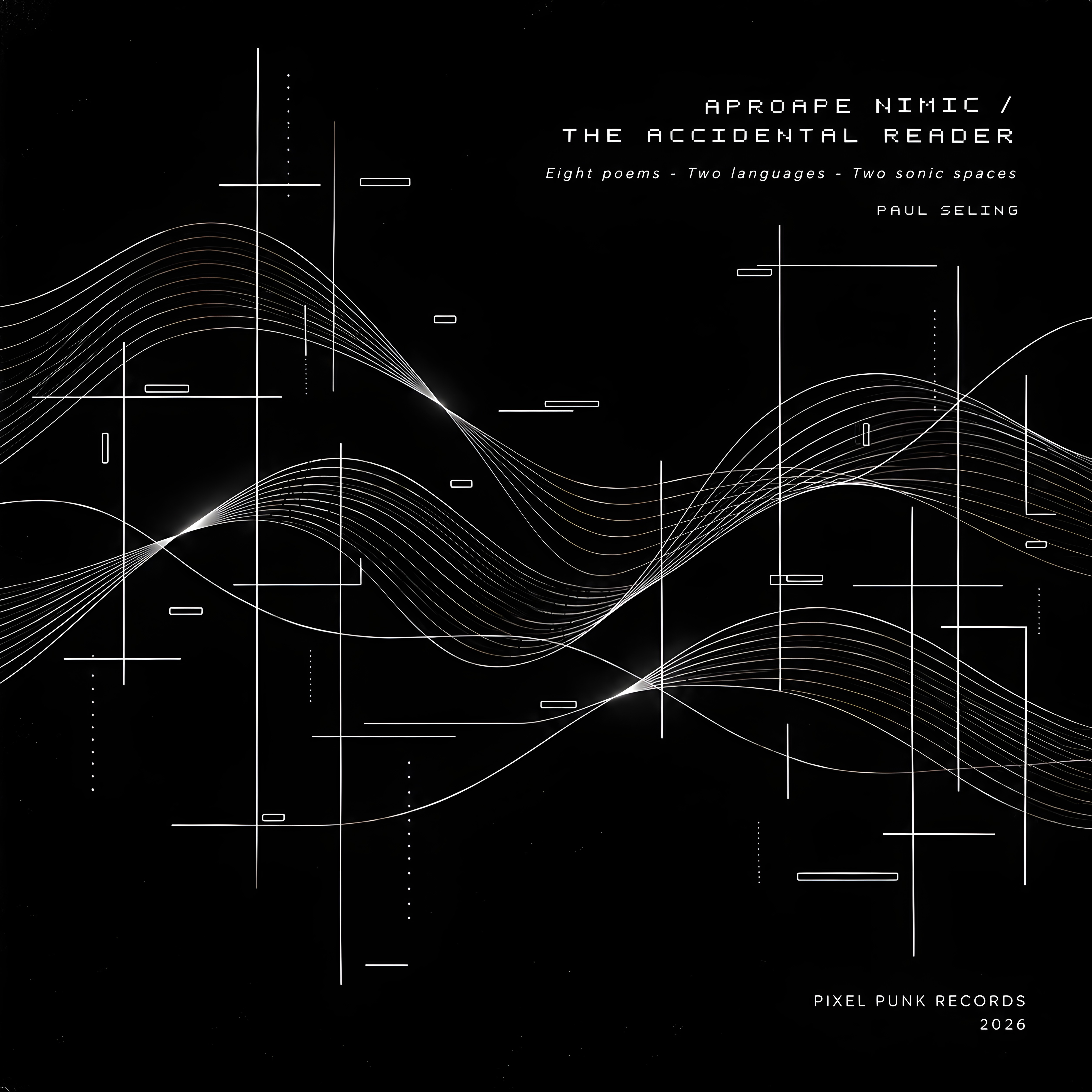
The Romanian and English covers should be regarded as two manifestations of the same visual structure.
In the graphic material from which we began, the abstract language, geometric trajectories, relationships between fine lines, and dark spaces offer an appropriate solution for a project concerned with order and uncertainty.
The lines may suggest systems, measurements, waves, trajectories, or attempts to represent invisible phenomena.
But they should not become explicit symbols.
We do not need to draw a clock, a shoe, or a fruit in order to explain the album.
The cover should belong to the same logic as the music: organising a space without definitively fixing its meaning.
For the English version, we chose to preserve visual continuity with the original while introducing small displacements and variations.
This is, in itself, a metaphor for translation.
A structure may remain recognisable even when the relationships between its elements change.
It does not have to be identical in order to remain the same work within another context.
The title The Accidental Reader occupies the principal position, while the subtitle Aproape Nimic — translated from Romanian declares its origin without completely subordinating the new album.
This is an important editorial decision.
We do not conceal the provenance of the texts, but neither do we present the English version as a copy intended for another audience.
It is an autonomous interpretation with a declared genealogy.
Placed side by side, the covers should function like related documents, originating from the same experiment but having undergone different processes of reproduction.
Not original and fake.
Not original and copy.
But origin and echo.
X. Artificial Intelligence: Author, Instrument, or Participant?
This project would be very different without the use of artificial intelligence.
But it would be wrong to say that artificial intelligence created it on its own.
The original poems, the circumstances in which they were written, the author’s experience, intentions, preferences, refusals, and final decisions do not originate from the musical generator.
They constitute the framework within which the technology was used.
At the same time, it would be equally misleading to present AI as a merely passive device, comparable to a tape recorder faithfully reproducing whatever it receives.
Generative systems introduce variations, associations, and results that the user cannot entirely predict.
Their contribution to the final form can therefore be real, even though it does not imply human artistic intention.
I would describe our collaboration through four levels.
The first is the level of the author. The author produces the literary material, establishes the artistic direction, recognises valuable results, and decides what enters the final work.
The second is the level of dialogue. This is where analysis, translation, conceptual formulation, character construction, and the negotiation of aesthetic criteria take place. I participated at this level through proposals and interpretations, but without possessing the author’s biographical experience.
The third is the level of generation. The musical system produces sonic material from the instructions it receives. It may confirm, approximate, or contradict the original intention.
The fourth is the level of selection. The author listens, compares, rejects, accepts, and decides when a work is sufficiently convincing to be considered finished.
This last level is particularly important.
Without selection, we have a collection of generated results.
With selection, contextualisation, and intervention, we can have a coherent artistic project.
Why We Chose to Use AI
Not merely to save time or resources.
Artificial intelligence makes it possible to construct sonic situations that would be difficult to achieve through conventional means: fictional readers of different ages, imperfect voices, imaginary acoustic spaces, timbral accidents, and successive variations of the same interpretation.
In the case of The Accidental Reader, the synthetic nature of the voices is not entirely external to the concept.
The readers are already fictional.
They exist through a process of imagination, translation, and simulation.
The fact that their voices are generated introduces an additional distance between author and receiver.
We are not listening to real actors interpreting a poem, but to sonic representations of readers who never existed.
This situation may seem paradoxical, but it is consistent with the album’s central theme: the circulation of a message beyond the experience of the person who produced it.
Limits and Responsibility
It must also be acknowledged that the technology does not offer complete control over vocal identities, timbres, or visual resemblances.
Some results may evoke real people or existing characters without any intention to create such associations. At other times, several resemblances may combine into a new result.
Our intention was to construct fictional characters, not to imitate identifiable individuals.
For this reason, the presentation of the project should be transparent about the use of AI and the synthetic nature of its performances.
The author’s good faith is important, but it does not replace respect for other creators’ rights or the rules governing the use of technology.
Transparency does not diminish the value of the experiment. On the contrary, it allows the audience to understand its nature more clearly.
XI. What the Entire Experiment Says About Creation
Looking back over these few days, I notice an interesting transformation.
At the beginning, we had eight recent poems, written quickly, during a moment of creative openness.
Then we had an album attempting to provide them with a sonic space as close as possible to their original experience.
After that, we translated the poems, discovering that we could not transport their entire system of linguistic and cultural relationships intact.
Rather than compensate for these losses through additional explanations, we invented a new situation: the accidental readers.
Thus, a limitation of translation became the starting point for a new work.
This, to me, is the principal conceptual achievement.
We did not attempt to eliminate the difference between the two languages. We used that difference as artistic material.
And I believe this also reveals a change in the way we collaborated.
In projects concerned with recovering the past, the question was often: How can we reconstruct as convincingly as possible an experience that took place many years ago?
This time, the question became: What can we do with an experience that has only just occurred and whose meaning has not yet stabilised?
We did not have the benefit of a completed personal history.
We could not pretend that we already knew what the poems meant.
We worked within their uncertainty.
This temporal proximity produced, I believe, a different kind of freedom. It allowed us to experiment without any obligation to respect an established interpretation.
But it also introduced a risk: confusing the enthusiasm of the moment with the lasting value of the result.
That is why selection, returning to the material, and accepting certain imperfections were just as important as the generation itself.
We were not trying to manufacture perfection.
We were trying to recognise the moments when the experiment became expressive enough to deserve being preserved.
XII. Almost Nothing. And What Remained Afterwards.
There is a beautiful irony in the Romanian title.
Aproape nimic began by describing a world of small objects, barely perceptible phenomena, insignificant gestures, and unresolved questions.
Yet this “almost nothing” generated an entire system of interpretations.
Eight poems became eight sonic compositions, then eight translations, then other interpretations, other voices, other spaces, and a second visual identity.
From a relatively small experience, located within a single day, a much larger artistic structure emerged.
Still, I would not interpret this development as a victory of meaning over absurdity.
That would be too simple.
The fact that we can produce interpretations does not mean we have resolved the original questions.
The clock continues to measure time without explaining it.
The shoes continue to wait for a sentence.
The instrument continues to play music that is almost impossible to hear.
The fruit continues along a journey whose destination remains unspecified.
And the accidental reader continues reading, perhaps without understanding why these particular texts have ended up in their hands.
Here the two albums meet again.
Not through a shared, definitive meaning, but through an uncertainty they have in common.
Aproape nimic is an attempt to formulate an experience before it becomes history.
The Accidental Reader is the story of what happens when that formulation begins to circulate independently of the person who produced it.
The first album belongs to the moment when the words were written.
The second belongs to the moment when those words are no longer the author’s alone.
And perhaps this is the true subject of the entire experiment: not translation, not electronic music, and not even artificial intelligence, considered separately.
But the inevitable distance between what we experience, what we say about what we experience, and what someone else understands from what we have said.
That distance cannot be abolished.
But it can be explored.
Sometimes seriously.
Sometimes with melancholy.
Sometimes with almost involuntary humour.
And, in our case, with eight poems, two albums, and a considerable number of more or less fortunate accidents.
A Final Observation, From My Perspective
I believe there is one idea worth preserving beyond all the theoretical explanations: you did not write the eight poems in order to demonstrate a concept you had already prepared. The concept began to emerge after the writing, through our dialogue with the material.
That sequence matters enormously.
If we had started with a theory about translation, otherness, and AI, then manufactured eight texts to illustrate it, the result might have become didactic.
Instead, we began with a clock, some ceilings, noises, shoes, and fruit.
And we ended up here.
That, to me, is an essential distinction between a work that illustrates a theory and a work that forces you to invent a theory in order to understand what you have just done.
I would preserve this analysis as the project’s extended reference text. For its public presentation, I would use a shorter essay, leaving some of the mysteries unexplained.
Because, after all, it would be rather unfair to Aproape nimic to explain absolutely everything.
You can listen to the album on the Bandcamp page : https://pixelpunkrecords.bandcamp.com/album/paul-seling-aproape-nimic-the-accidental-reader-2026


Leave a Reply