Localisation
Local Systems, Shared Languages — 1977–Present
Born in Baia Mare in 1977, I spent my first nineteen years there, followed by seven years in Bucharest and several years in other urban environments, including Cluj-Napoca. Returning to Baia Mare in 2014 offered an opportunity to revisit familiar places, memories and social relationships from a different perspective. I began approaching the city as a relatively contained system of interactions, shaped by its own historical circumstances, cultural conventions, economic structures and locally specific symbolic languages.
Architecture, public space, individual behavior and collective memory became interconnected forms of communication, continuously producing, exchanging and transforming meaning. This local environment also provided a point of comparison with larger communities, through independent exploration of sociology, psychology, design, music, architecture and digital culture. Increasingly, the physical network of people, places and institutions appeared inseparable from an expanding digital environment, where images, narratives and symbols circulate across geographical boundaries before returning to influence local perceptions and interactions.
The city became less a fixed geographical location than an observable intersection of material structures, human relationships and overlapping systems of representation — a small, evolving sample within a much larger network of communication.
Life Within a Closed Network
Baia Mare, 1977–1989
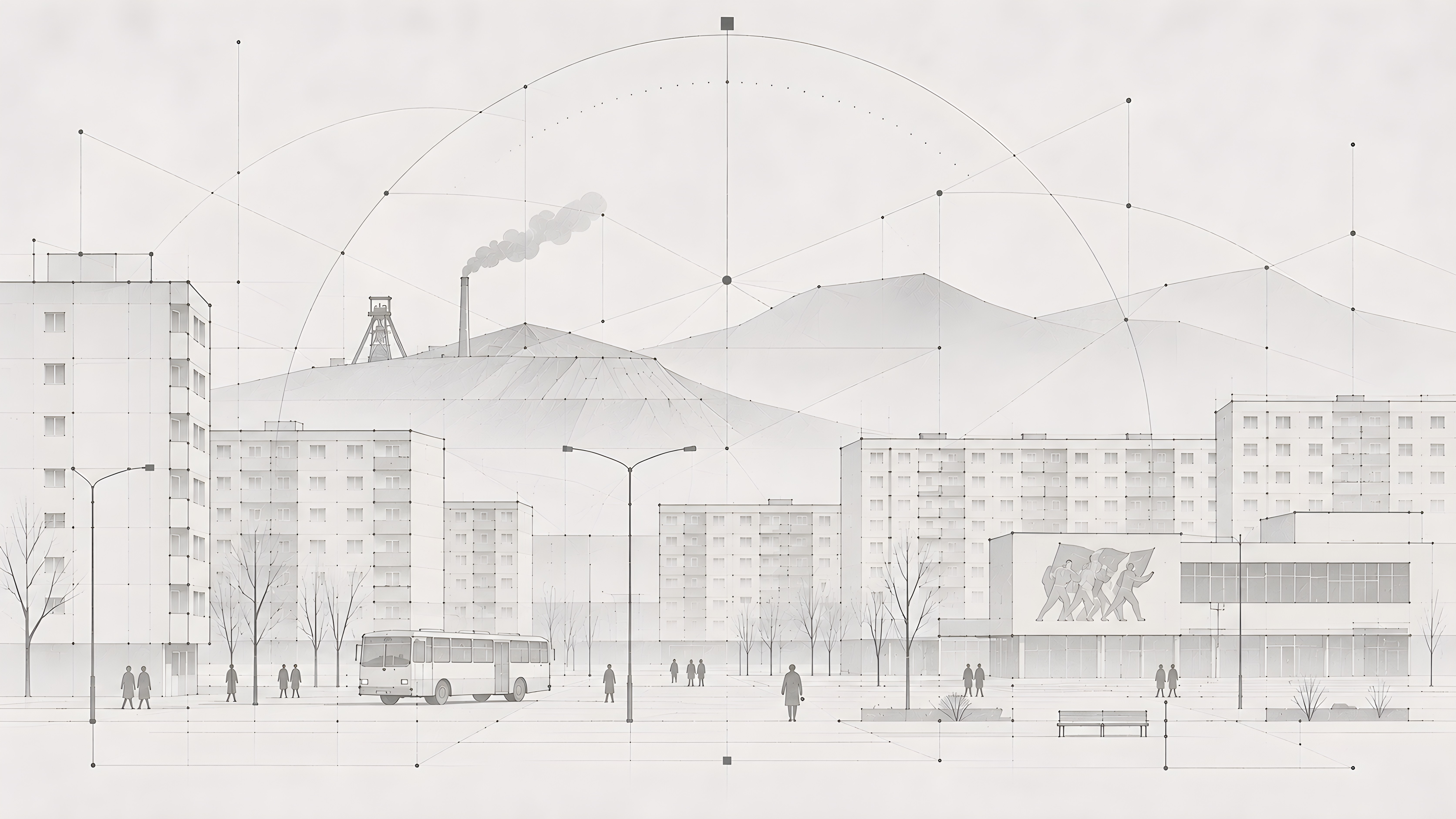
Baia Mare in the late 1970s and 1980s was an industrial city operating within the centralized political, economic and informational structures of communist Romania. Mining, manufacturing, schools and residential neighborhoods formed interconnected environments shaped by institutional routines, restricted mobility and limited access to information. Social relationships developed through families, workplaces and informal networks, where proximity encouraged communication but also reinforced conformity and shared expectations. Within these constraints, individuals developed their own languages, loyalties and strategies of adaptation, creating a complex local system of interactions beyond official structures.
At the national level, political authority and controlled media promoted a common ideological and symbolic vocabulary, while everyday experience generated alternative interpretations, private conversations, humor and occasional resistance. Individual possibilities depended on education, social position, personal connections and access to information. Technological limitations and restricted international exchange further shaped the circulation of ideas. Collective mentalities emerged not as uniform products of ideology, but through the interaction of institutional constraints, cultural traditions, individual choices and informal networks connecting local communities to the broader national system.
The Collapse of Predictability
Baia Mare, 1990–1991
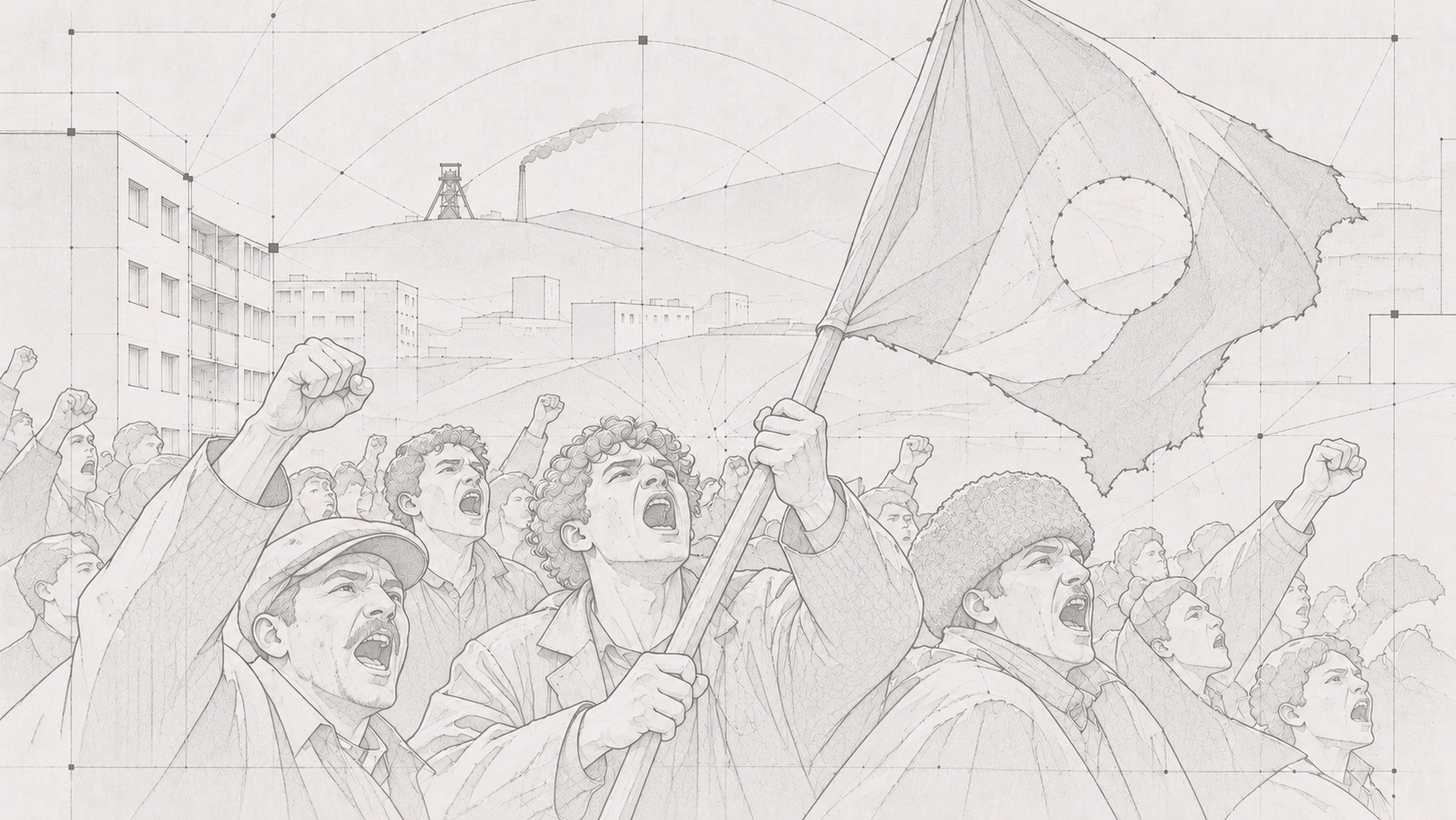
The Romanian Revolution of December 1989 dismantled a political system that had regulated nearly every aspect of public life, producing an extraordinary but temporary atmosphere of liberation, collective excitement and almost unlimited expectations. In Baia Mare, as elsewhere, established hierarchies lost much of their authority, familiar social conventions were questioned, and previously restricted information, cultural influences and political opinions began circulating through rapidly expanding networks. Yet the collapse of the old order also exposed an economically fragile society, dependent on obsolete industries, centralized institutions and structures poorly prepared for competition. As production declined, prices increased and employment became increasingly uncertain, the initial optimism gradually gave way to anxiety, improvisation, political polarization and competing visions of the future. Psychologically, the transition created a contradictory environment in which enthusiasm coexisted with insecurity, distrust and nostalgia for lost stability. Local communities began reorganizing their relationships and expectations within a national system whose new rules, institutions and long-term direction remained largely unpredictable.
Fragmented Expectations
Baia Mare, 1992-1996
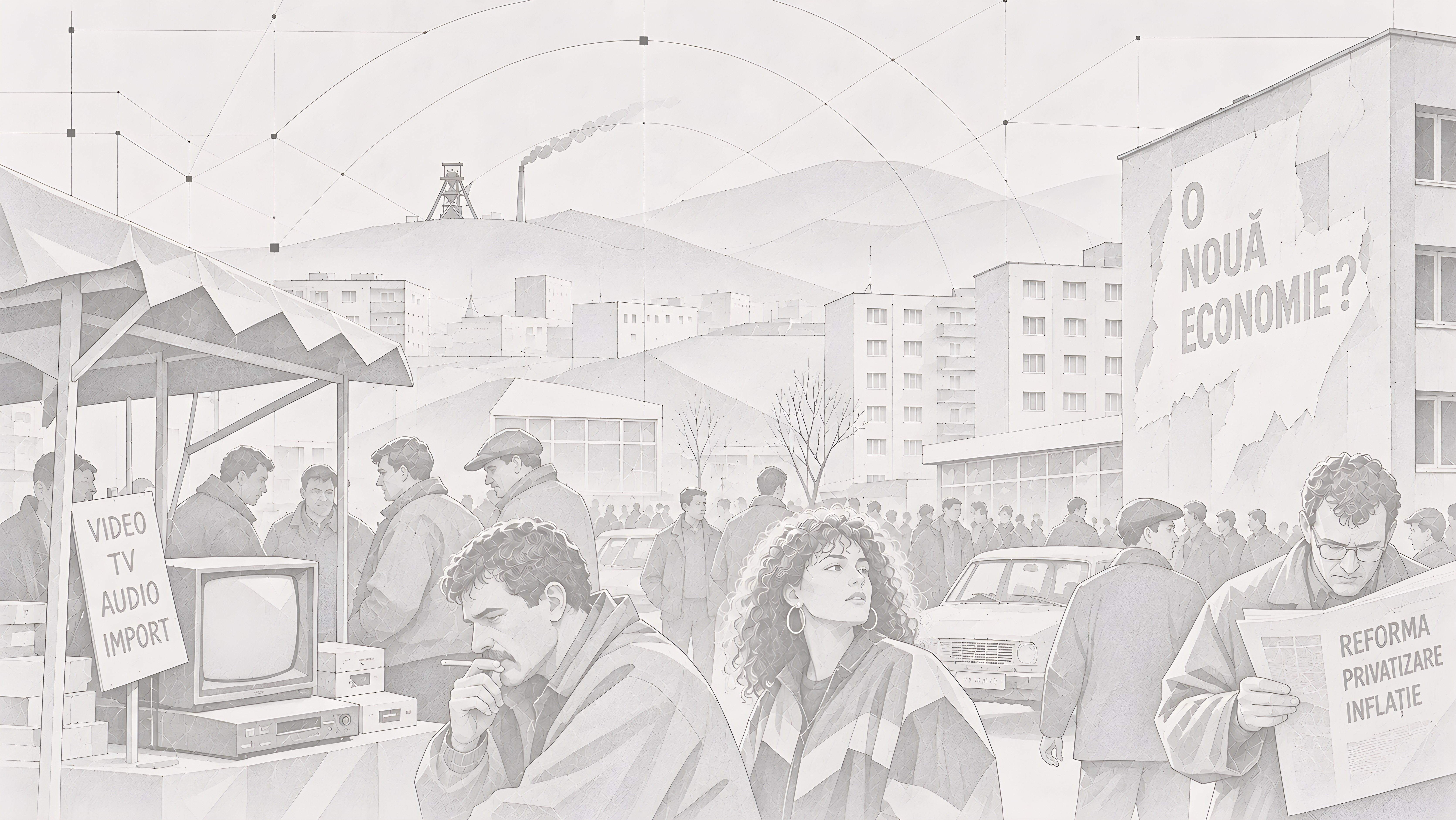
By the early 1990s, the extraordinary optimism that followed the Romanian Revolution had begun to dissolve into a more complicated social and economic reality. In Baia Mare, the transition from a centrally planned economy to an emerging market system exposed the vulnerabilities of an industrial city dependent on mining, metallurgy and large state enterprises. Inflation, declining purchasing power, uncertain employment and the gradual restructuring of established institutions disrupted familiar patterns of everyday life. New forms of private commerce appeared almost spontaneously, from improvised street markets and small family businesses to imported electronics, clothing and consumer goods. These developments introduced unfamiliar opportunities alongside growing inequalities, while the distinction between economic success, personal initiative and social privilege became increasingly difficult to interpret. Established professional hierarchies were challenged, and individuals began developing new strategies of adaptation, often relying on informal connections, improvisation and entrepreneurial experimentation.
Psychologically and culturally, the period was characterized by a peculiar coexistence of enthusiasm, frustration, insecurity and curiosity. Western television, advertising, music, films and consumer culture entered everyday life with unprecedented intensity, introducing new symbolic languages and models of personal achievement. Younger generations increasingly imagined their futures beyond the limitations of their immediate environment, while others struggled to reconcile newly acquired freedoms with the disappearance of familiar economic guarantees. The local community became a fragmented network of competing expectations, shaped by generational differences, uneven access to resources and conflicting interpretations of the political transition. Baia Mare was no longer a relatively predictable industrial system, but an unstable environment in which old structures persisted, new ones emerged, and the direction of social transformation remained fundamentally uncertain.
The Disintegration of the Industrial City
Baia Mare, 1997-2003
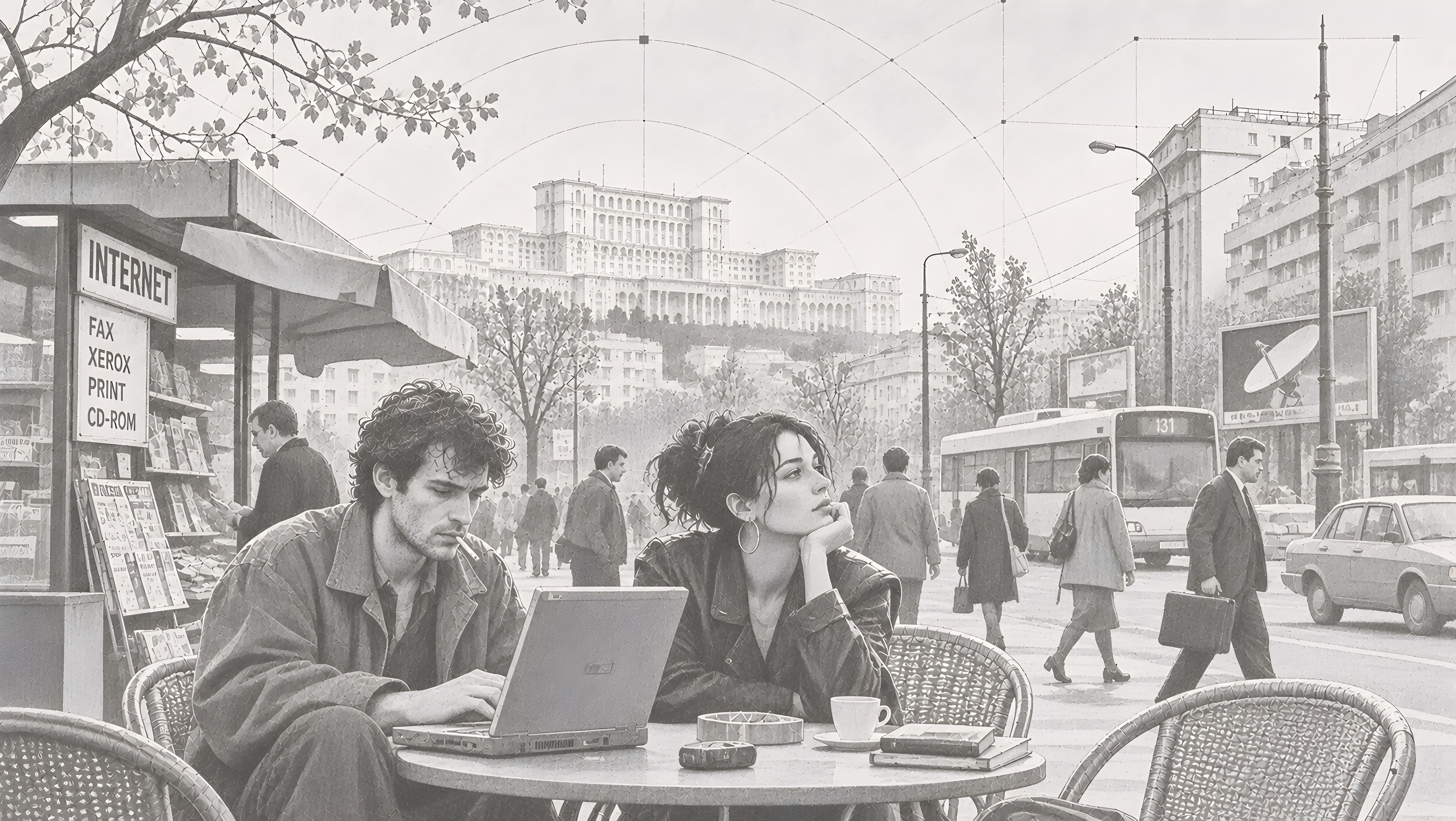
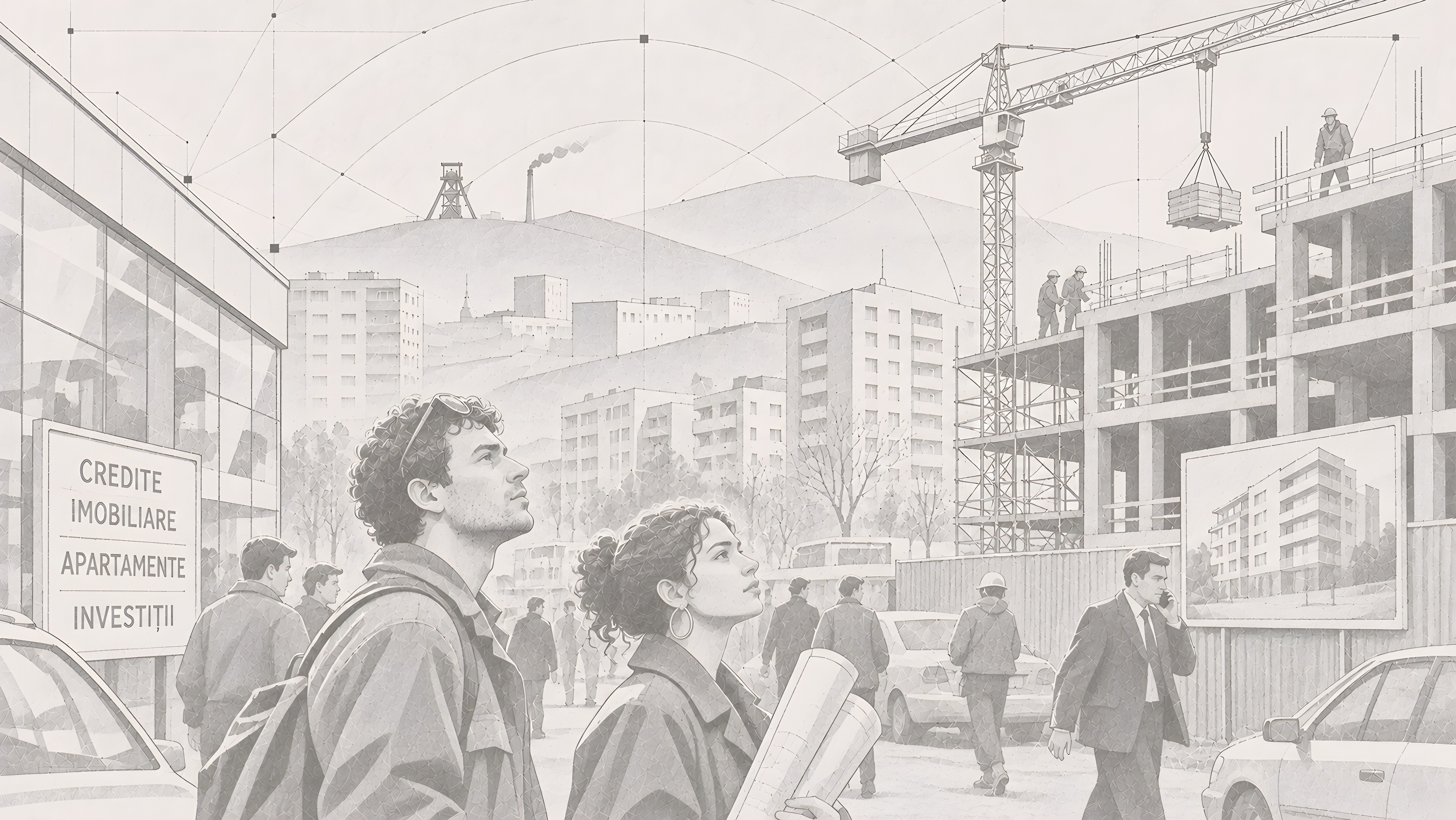
By the late 1990s, the economic transformation of Baia Mare had begun to alter not only its industrial infrastructure but also the social relationships and collective expectations built around it. Mining, metallurgy and large manufacturing enterprises, once central to the city’s economic identity, faced restructuring, declining activity and growing uncertainty. Factories and industrial facilities increasingly became symbols of an economic order losing its relevance, while unemployment, financial insecurity and migration gradually weakened established networks of professional and personal relationships. The transition created new divisions between generations, occupations and social groups, as some individuals discovered opportunities in private enterprise, commerce and international mobility, while others struggled to adapt to the disappearance of familiar institutions. Informal economic activities, small businesses and connections with communities abroad introduced alternative mechanisms of survival and social advancement, often operating alongside institutions still undergoing transformation.
The psychological atmosphere was marked by a mixture of resignation, pragmatism, frustration and cautious ambition. Traditional notions of professional stability and collective identity increasingly competed with emerging ideals of individual success, financial independence and geographical mobility. Younger generations encountered expanding cultural and informational horizons through foreign media, personal computers, mobile telephony and the early Internet, gradually developing symbolic languages that differed from those of their parents. The city itself became a landscape of overlapping historical layers: aging industrial structures, socialist residential neighborhoods, improvised commercial spaces and the first visible signs of a digitally connected society. Baia Mare was undergoing more than an economic restructuring; it was experiencing a gradual fragmentation of its former social architecture, as established communities lost some of their cohesion and new, less predictable networks of interaction began to emerge.
Accelerated Integration
Baia Mare, 2004–2008
By the mid-2000s, Baia Mare was entering a period of accelerated economic and cultural transformation, shaped by Romania’s growing integration into European markets and its accession to the European Union in 2007. Expanding private businesses, foreign investment, easier access to credit and increasing international mobility generated a renewed sense of opportunity. Construction sites, commercial developments, imported products and new consumer services gradually altered the urban landscape, introducing architectural and visual languages associated with prosperity and modernization. Meanwhile, the continuing decline of traditional industries encouraged a shift toward commerce, services, construction and smaller manufacturing enterprises. Economic growth, however, remained unevenly distributed, producing visible contrasts between emerging prosperity and communities still affected by industrial restructuring. Rising property values, consumer credit and increasingly ambitious expectations also introduced new forms of financial vulnerability, often concealed beneath the general atmosphere of optimism.
Socially and psychologically, the period was characterized by a growing fascination with individual achievement, material progress and the possibility of rapid personal advancement. Professional identity became less closely associated with established institutions and increasingly connected to entrepreneurship, mobility, consumption and access to international opportunities. Migration and employment abroad transformed family relationships and local expectations, while returning workers introduced new experiences, resources and cultural references into the community. Mobile phones, expanding Internet access, commercial television and digital media accelerated the circulation of information, images and aspirations, gradually connecting local social networks to larger systems of communication. Baia Mare was becoming a city of overlapping economic and symbolic realities: remnants of its industrial past coexisted with emerging commercial environments, while collective expectations increasingly reflected global models of success. Beneath this apparent convergence toward prosperity, however, structural inequalities, institutional weaknesses and growing dependence on credit left the new economic configuration vulnerable to the approaching financial crisis.
Crisis and Reconfiguration
Baia Mare, 2009–2014
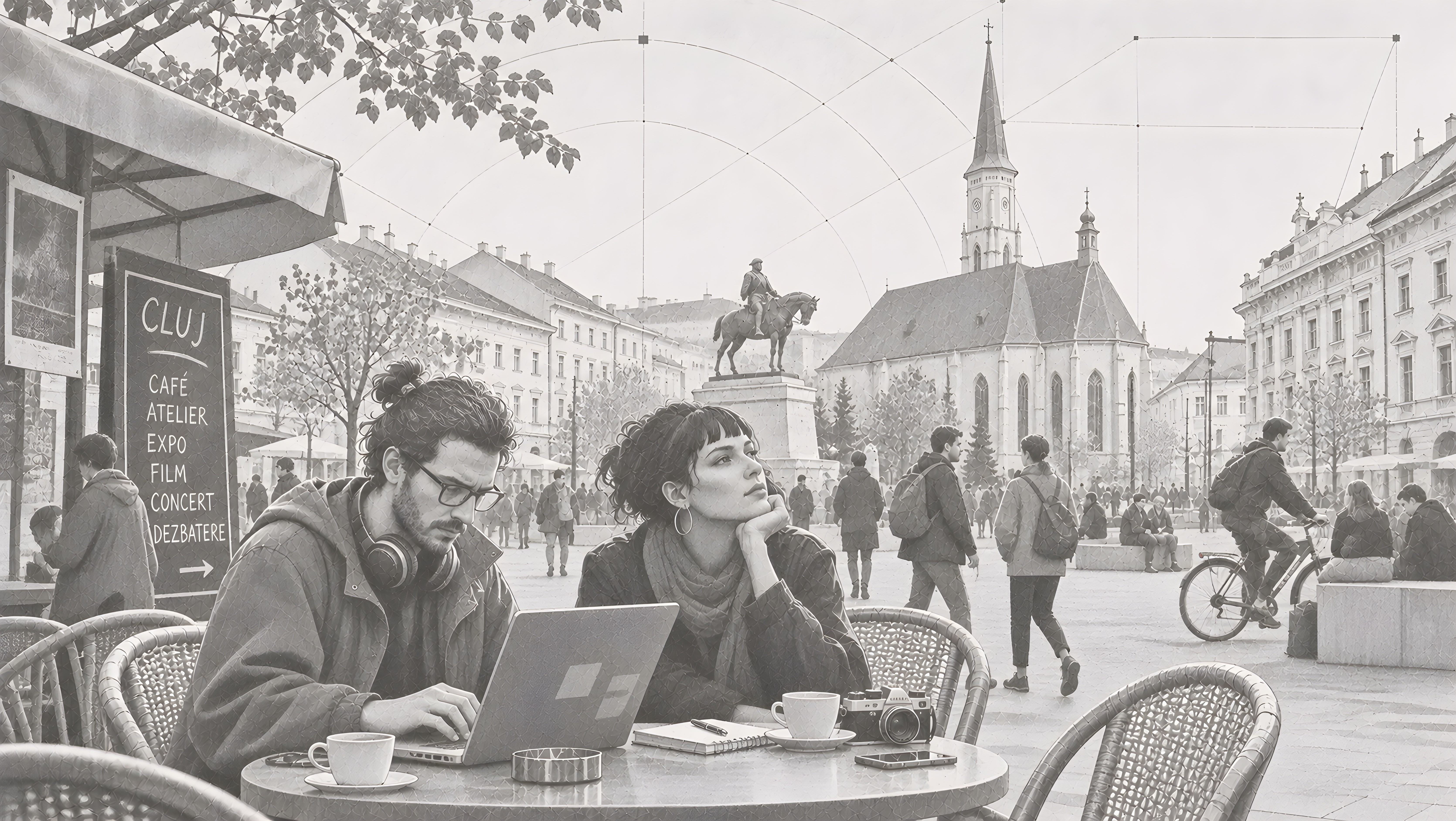
The global financial crisis interrupted Romania’s period of accelerated economic expansion, exposing the vulnerabilities of a society increasingly dependent on credit, consumption, construction and external investment. In Baia Mare, economic uncertainty reinforced the consequences of earlier industrial restructuring, while declining opportunities, financial pressures and continuing migration influenced both individual decisions and community relationships. The optimism of the preceding years gave way to greater caution, frustration and skepticism toward political and economic institutions. Professional ambitions were reconsidered, household priorities shifted, and the promise of rapid prosperity became increasingly difficult to sustain. The urban landscape reflected these contradictions: recently developed commercial spaces and residential projects coexisted with aging infrastructure, abandoned industrial facilities and signs of interrupted investment.
Simultaneously, a less visible transformation was accelerating. Social media, smartphones, online video and increasingly accessible digital technologies began reorganizing how individuals communicated, represented themselves and interpreted their surroundings. Personal relationships extended beyond geographical proximity, while information, cultural references and social expectations circulated through networks largely independent of traditional local institutions. The psychological atmosphere combined economic insecurity with unprecedented possibilities for communication, experimentation and individual expression. Baia Mare was gradually becoming a hybrid environment in which physical communities and digital networks overlapped, introducing new forms of visibility, comparison, belonging and social influence. The crisis had disrupted one model of progress, while technological change was quietly establishing the conditions for another, whose consequences remained largely unpredictable.
The Networked City
Baia Mare, 2015–2019
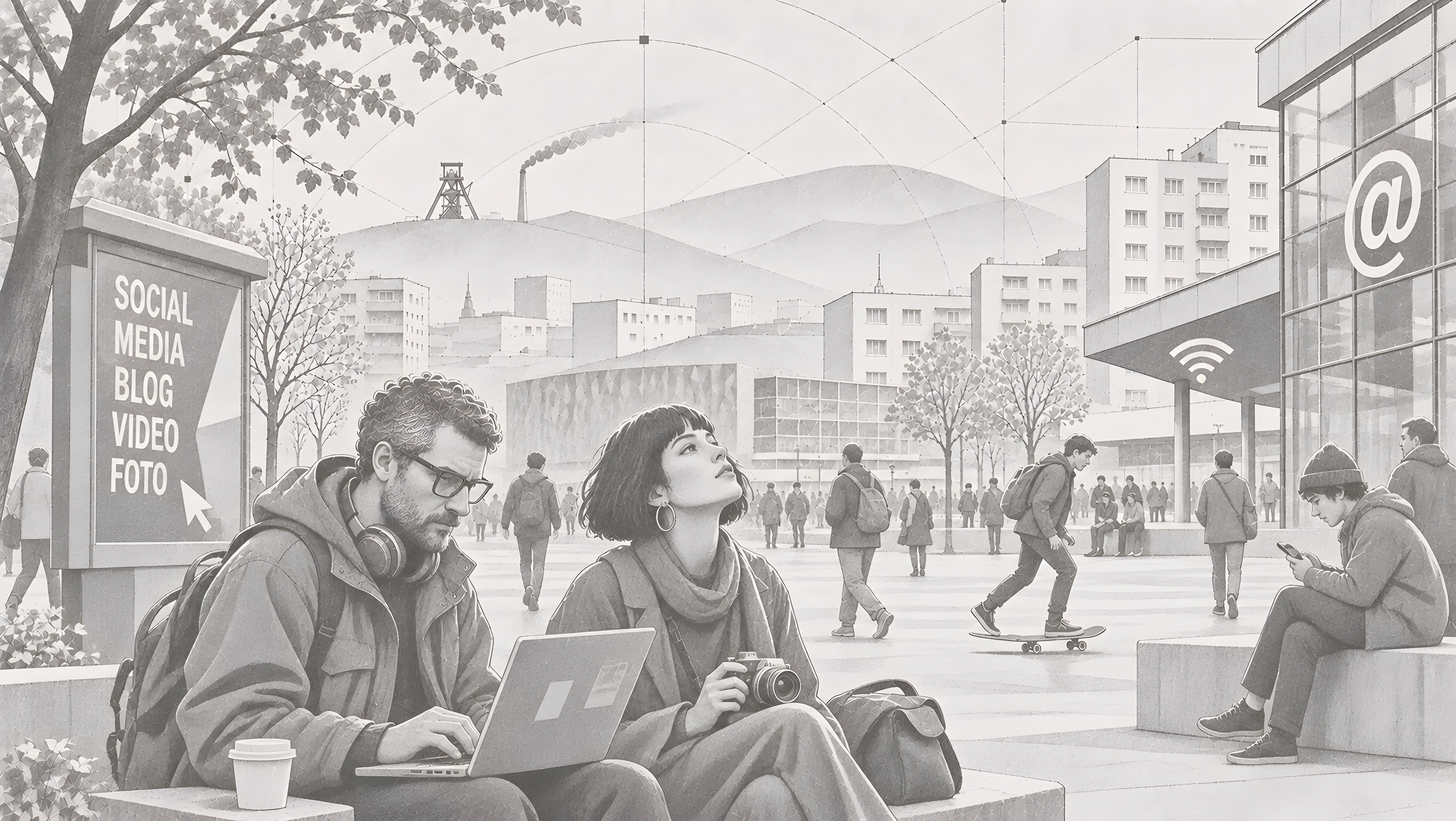
By the mid-2010s, Baia Mare was entering a new phase of social and cultural transformation, increasingly shaped by digital communication and the circulation of information across interconnected networks. Smartphones, social media platforms and online video had become familiar components of everyday life, changing how individuals maintained relationships, discovered cultural references and participated in public conversations. The city’s physical environment continued to evolve through commercial development, urban rehabilitation and changing patterns of economic activity, while its digital representation expanded through photographs, personal narratives, local media and online communities. Public spaces, institutions, businesses and cultural events increasingly acquired parallel identities online, where visibility and reputation could develop independently of direct physical experience. Local interactions were no longer confined to geographical proximity, as images, opinions and symbolic references circulated continuously between the community and a much larger informational environment.
Psychologically, this expanding connectivity introduced new possibilities for individual expression, creative experimentation and social participation, alongside growing pressures of comparison, self-presentation and public visibility. Traditional forms of local recognition increasingly coexisted with digital measures of attention, while personal and collective identities were negotiated through overlapping networks of acquaintances, institutions, audiences and online platforms. The distinction between observing the city and participating in its representation became progressively less clear: residents were simultaneously inhabitants, spectators and producers of its evolving public image. Baia Mare could therefore be understood not simply as an urban settlement, but as a hybrid communication system in which architecture, economic activity, personal experience and digital narratives continuously interacted, sometimes reinforcing established perceptions and sometimes challenging them.
Overlapping Realities
Baia Mare, 2020–…
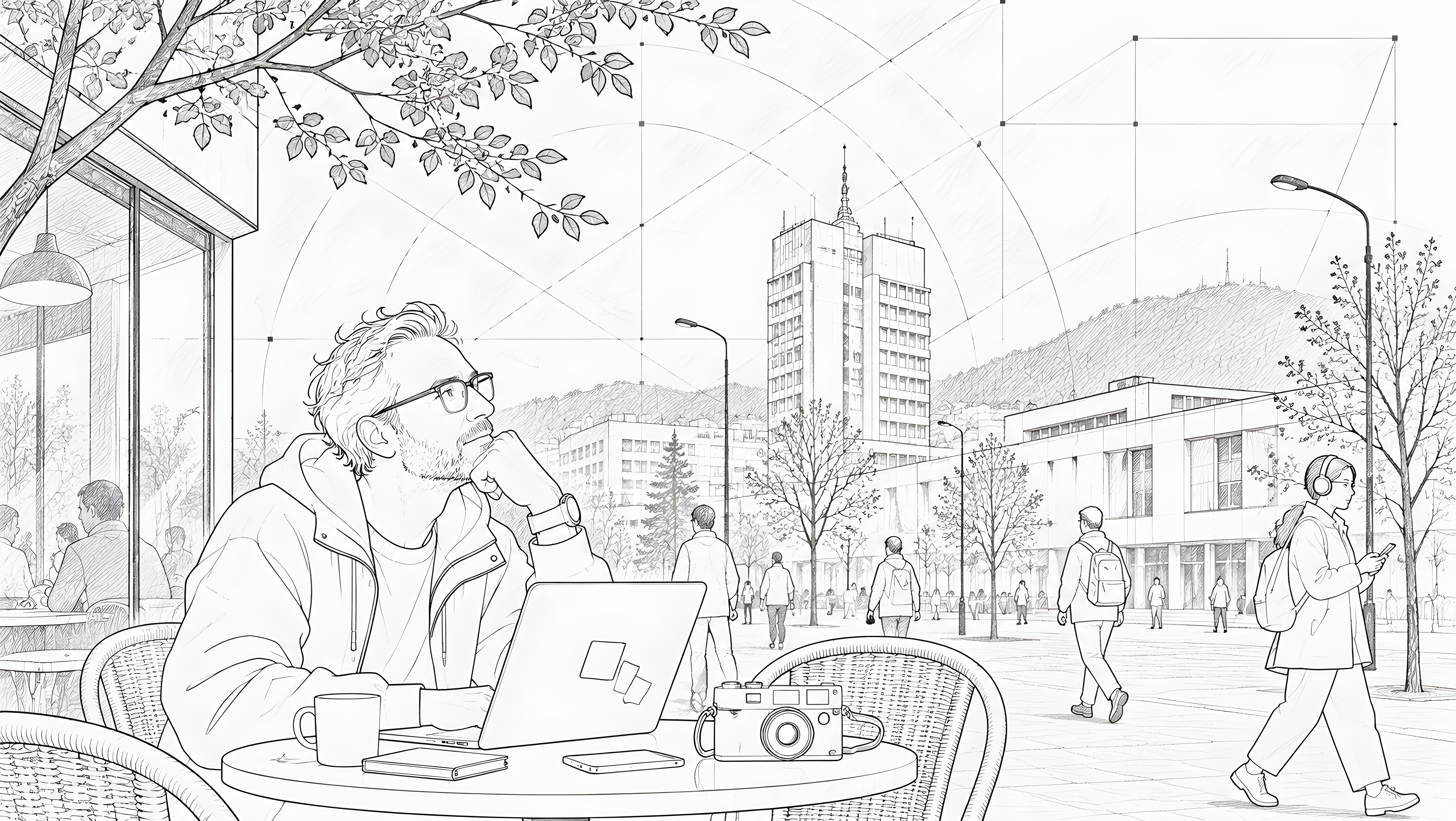
The early 2020s introduced a succession of disruptions that profoundly altered the relationship between individuals, institutions and their surrounding environment. The COVID-19 pandemic temporarily reorganized everyday life around physical isolation, restrictions on mobility and digitally mediated communication, while exposing existing inequalities and vulnerabilities within local communities. In Baia Mare, as elsewhere, workplaces, schools, families and public spaces adapted to rapidly changing conditions, generating new patterns of interaction, uncertainty and institutional dependence. The subsequent war in neighboring Ukraine, inflation, rising living costs and geopolitical instability reinforced a broader atmosphere of insecurity, while increasingly polarized public conversations revealed competing interpretations of political authority, scientific knowledge and collective responsibility. Economic and social expectations became more difficult to stabilize, as successive crises challenged familiar assumptions about progress, security and the predictability of everyday life.
Simultaneously, digital communication evolved from an additional layer of social interaction into an environment increasingly capable of shaping how reality itself was perceived and represented. Algorithmically organized information, short-form video, online communities and increasingly sophisticated artificial intelligence systems transformed the production and circulation of images, narratives and cultural content. Individuals gained unprecedented access to creative and communicative tools, while the distinction between direct experience, mediated representation and artificially generated material became progressively more complex. Local identities and relationships continued to develop within physical environments, but were increasingly influenced by informational processes extending far beyond geographical boundaries. Baia Mare could now be approached as an intersection of overlapping realities: architectural and economic structures inherited from previous decades, evolving human relationships, collective memories and continuously expanding digital networks. Rather than producing a single, coherent social experience, these interacting systems generated multiple perspectives, expectations and interpretations, whose long-term consequences remain uncertain.
Address:
Republicii 19, 430201, Baia Mare, Romania
Email:
paulselingmedia@gmail.com


