Română
Un experiment despre simetrie, intervenție și imposibila perfecțiune
Ăsta ar fi titlul meu preferat.
ATINS.
Pentru că este simplu, aproape banal, dar devine din ce în ce mai încărcat pe măsură ce înțelegi proiectul.
Oala este atinsă.
Copilul este atins de familie.
Individul este atins de societate.
Tradiția este atinsă de modernitate.
Omul este atins de ceilalți oameni.
Forma este atinsă de mâna care o modelează.
Iar la sfârșit, uneori, forma este călcată în picioare.
Și mai există o ambiguitate frumoasă: a fi atins poate însemna și a fi afectat, dar și a fi mișcat.
1. Punctul de plecare: o formă perfectă
În fotografiile tale, totul începe aproape obsesiv de ordonat.
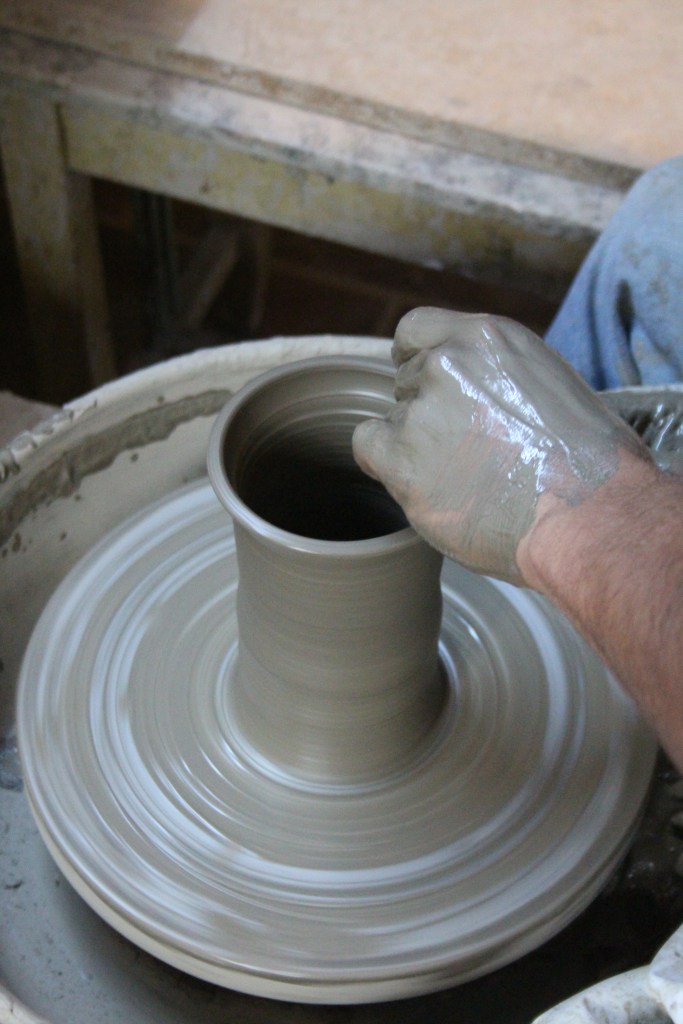
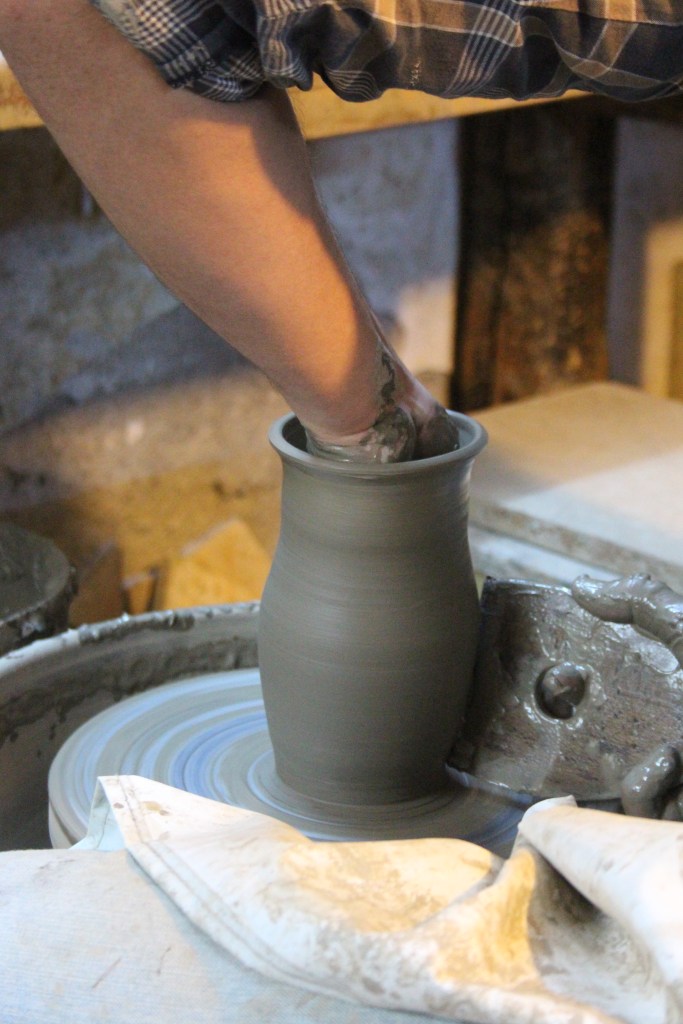
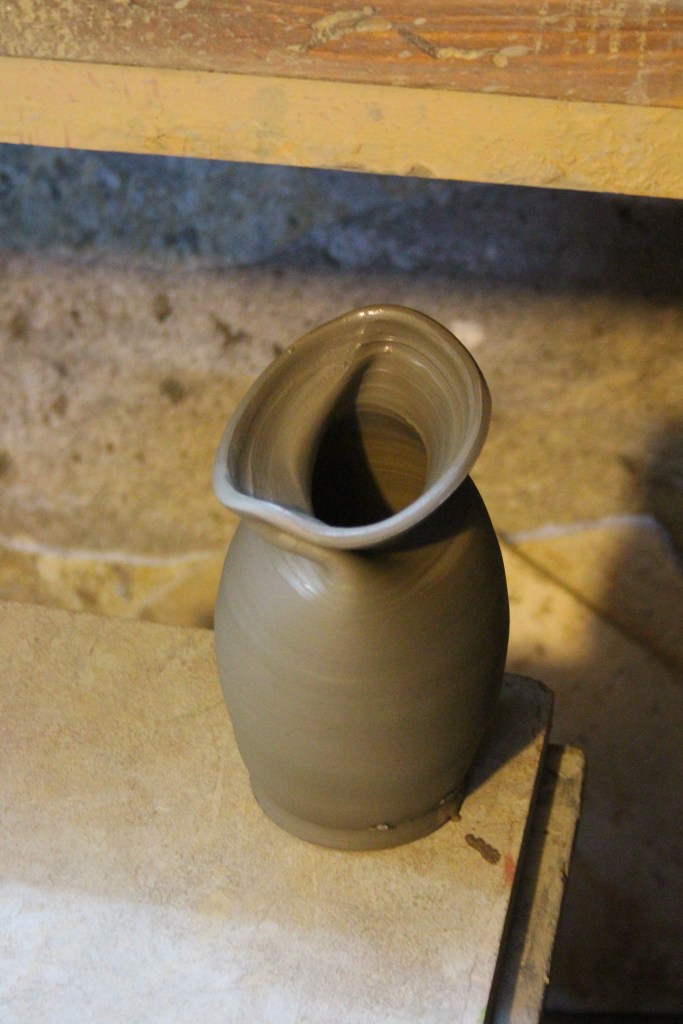
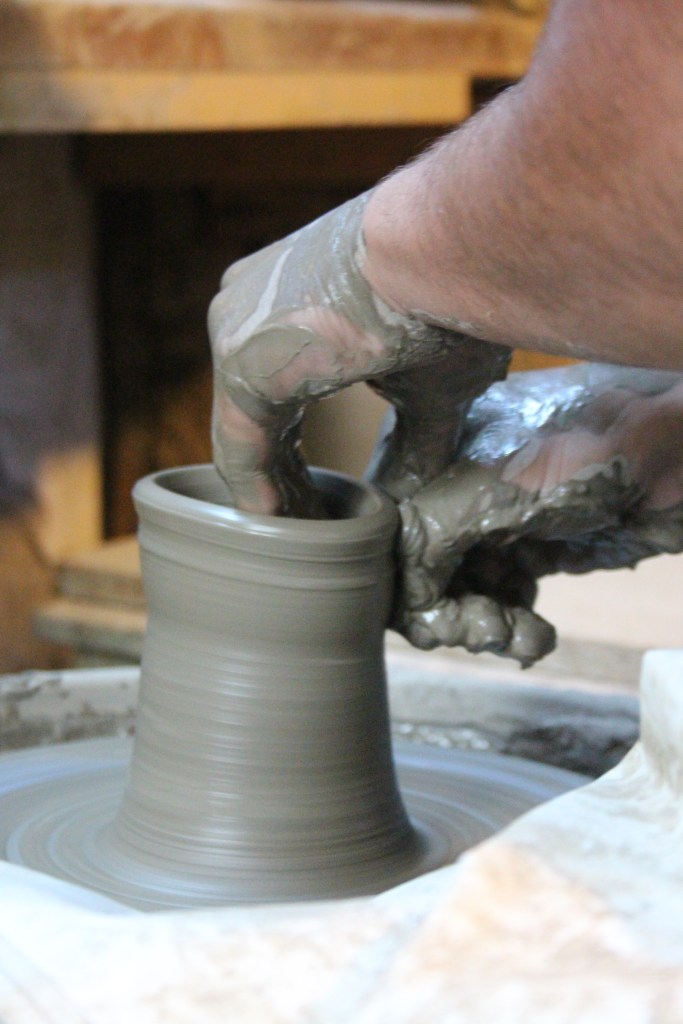
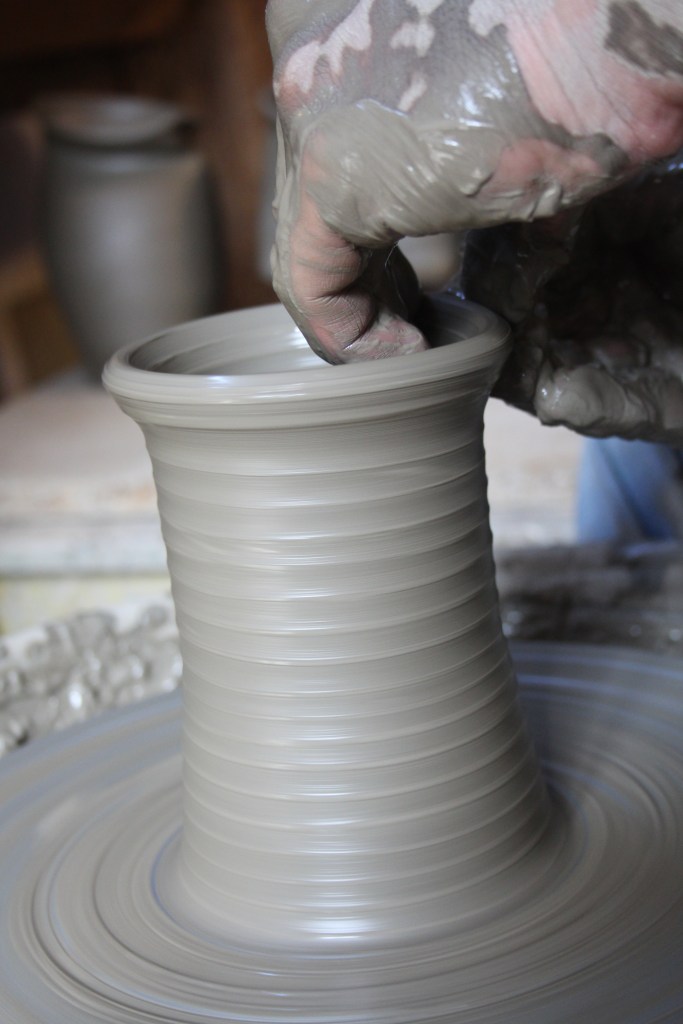
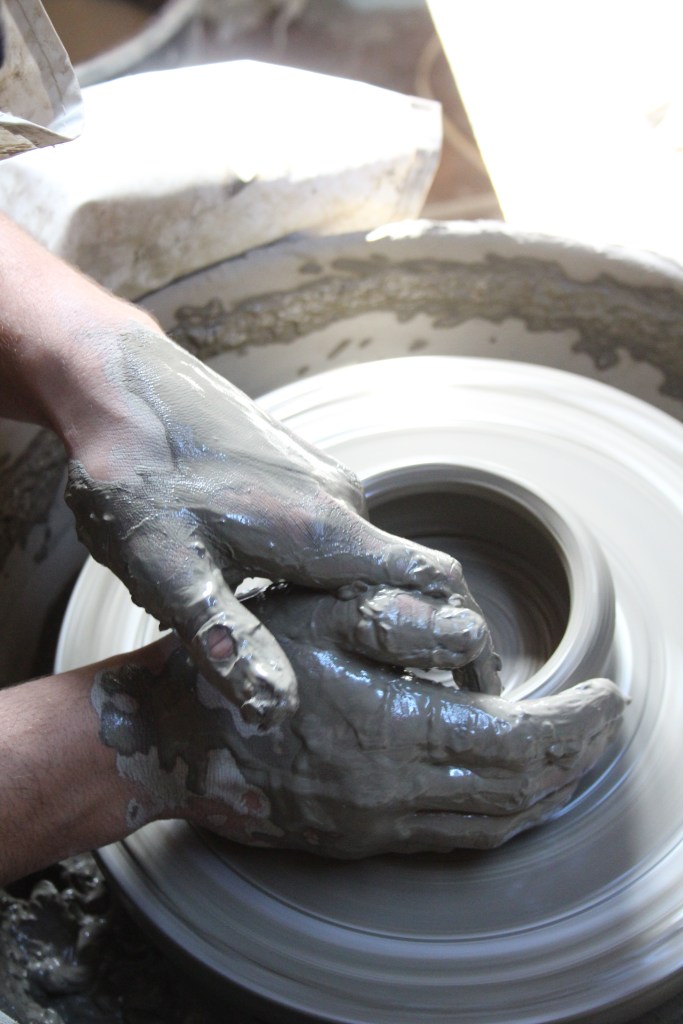
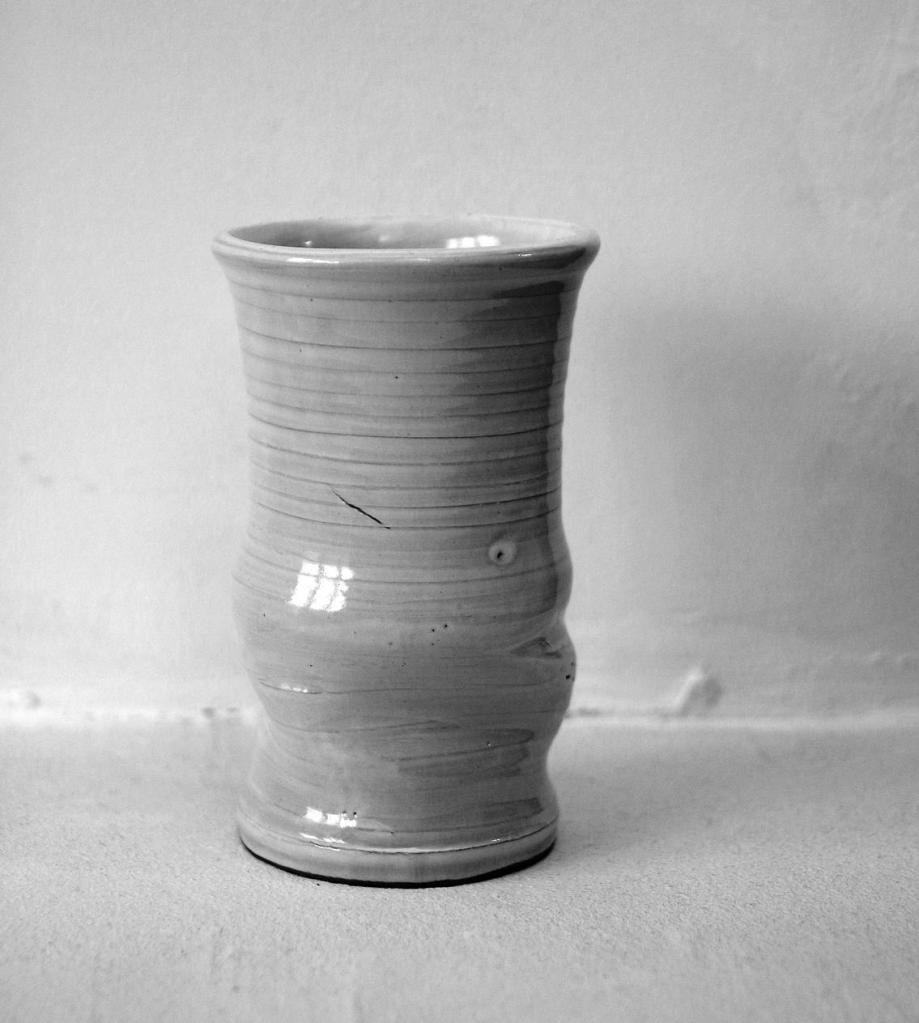
Roata se învârte. Lutul este centrat. Mâinile îl ridică. Forma devine cilindrică, regulată, aproape geometrică.
Este una dintre cele mai vechi operații umane: să iei materia amorfă și să-i dai ordine.
Și există ceva aproape cosmogonic în asta.
La început este lutul.
Nedefinit.
Apoi vine centrul.
Roata introduce axa.
Mâna introduce presiunea.
Și din combinația lor apare forma.
În sens simbolic, olarul face ceva ce omul face mereu: transformă haosul în cosmos.
Un bulgăre de materie devine vas.
Dar ce este interesant în proiectul tău este că tu nu începi cu haosul.
Începi după ce ordinea a fost deja obținută.
Asta schimbă tot.
Nu spui:
„Uitați, haosul poate fi frumos.”
Spui:
„Ce se întâmplă dacă perturbăm o ordine deja realizată?”
2. Roata este primul personaj al proiectului
Cred că roata olarului merită tratată aproape ca un personaj.
Ea este mecanismul simetriei.
Atâta timp cât lutul este centrat și mâna lucrează conform tehnicii, rezultatul tinde spre o formă rotundă, axială, repetabilă.
Roata spune:
„Întoarce-te mereu la centru.”
Și asta este deja o afirmație filosofică.
Centrul este stabilitate.
Axa este identitate.
Simetria este previzibilitate.
Repetiția produce tipul.
Forma poate fi refăcută.
Iar dacă poți reproduce aceeași formă de o sută de ori, ai obținut ceva apropiat de standard.
Aici începe să apară societatea industrială în spatele ceramicii.
Obiectul perfect este obiectul interșanjabil.
Unul poate fi înlocuit cu altul.
Nu contează care dintre cele zece oale este „oala aceea”.
Ele aparțin aceleiași clase.
3. Și atunci apare mâna care spune: NU.
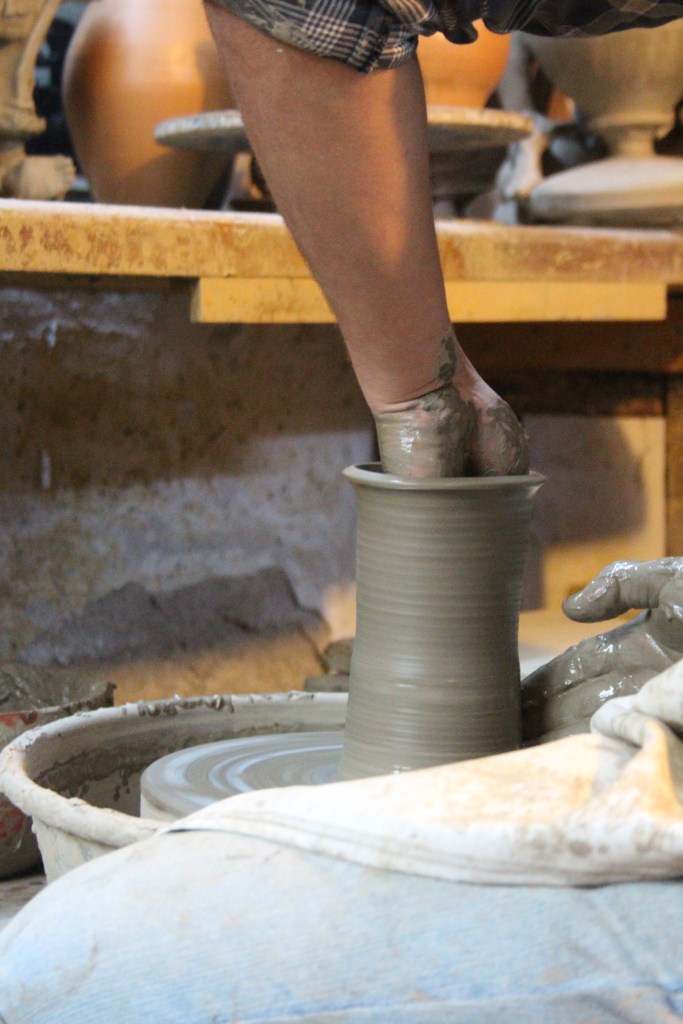
În prima fotografie, piciorul tânărului intră literalmente în vas.
Este o imagine excelentă pentru că este aproape ridicolă.
Și tocmai ridicolul este bun.
Pentru că ai introdus în mecanismul precis al roții ceva profund non-geometric:
corpul uman.
Mâna nu este un compas.
Piciorul nu este o unealtă de precizie.
Corpul este asimetric.
Are greutate.
Are tremur.
Are accident.
Are intenție.
Are dispoziție.
Și, mai ales, are istorie.
De aici începe adevărata metaforă.
4. Oala perfectă nu are biografie
Asta mi se pare una dintre cele mai puternice idei care pot fi scoase acum din proiect.
Imaginează-ți două vase perfect identice.
Ce știm despre ele?
Aproape nimic.
Sunt obiecte.
Tipuri.
Exemplare.
Dar deformarea introduce evenimentul.
„Aici cineva a apăsat.”
„Aici cineva a împins.”
„Aici forma a rezistat.”
„Aici s-a rupt.”
„Aici cineva a insistat.”
Forma devine astfel o biografie materială.
Nu mai este doar „ce este vasul”.
Devine:
ce i s-a întâmplat vasului.
Și aici metafora omului devine aproape inevitabilă.
Un individ complet „simetric” — perfect adaptat, perfect educat, perfect conform, perfect funcțional — este poate foarte eficient.
Dar unde este biografia lui?
Unde sunt accidentele?
Unde sunt întâlnirile?
Unde sunt oamenii care l-au modificat?
Unde este rezistența lui?
Unde sunt loviturile?
5. Dar aici proiectul tău refuză o concluzie sentimentală
Și asta îmi place enorm.
Ai fi putut ajunge la:
„Imperfecțiunea ne face frumoși.”
Un mesaj foarte comod.
Foarte Instagram, dacă vrei. 😂
Dar fotografiile nu spun asta.
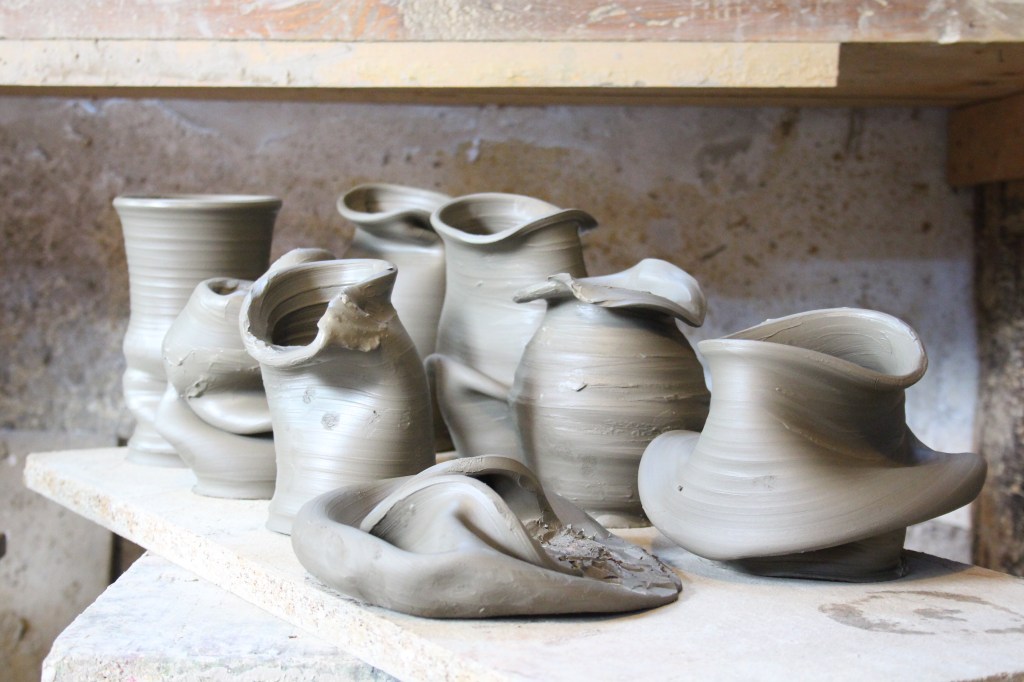
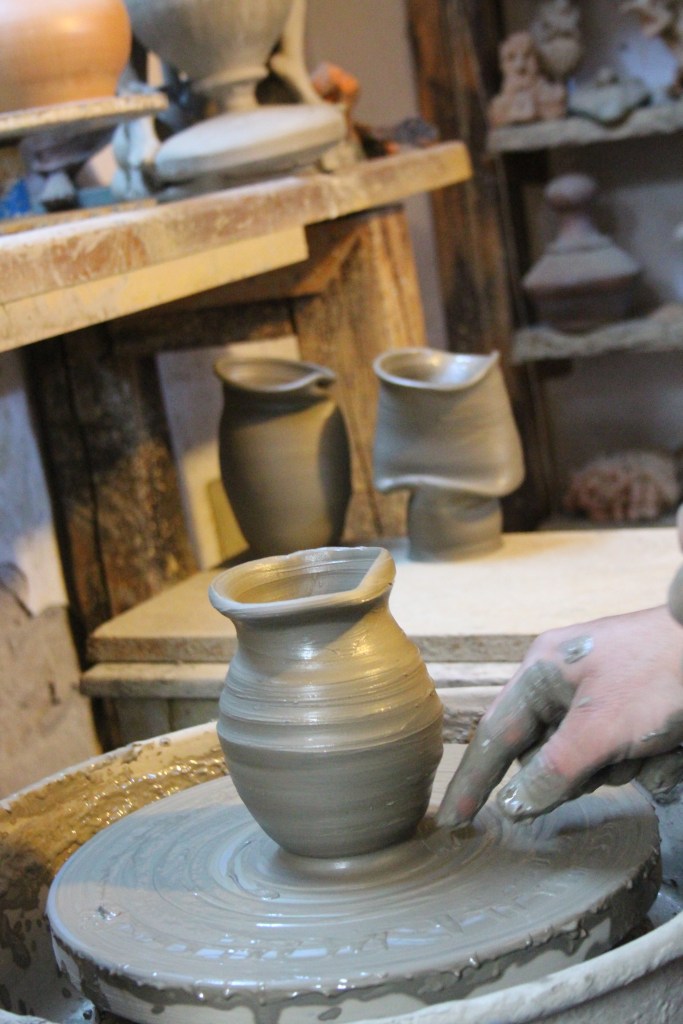
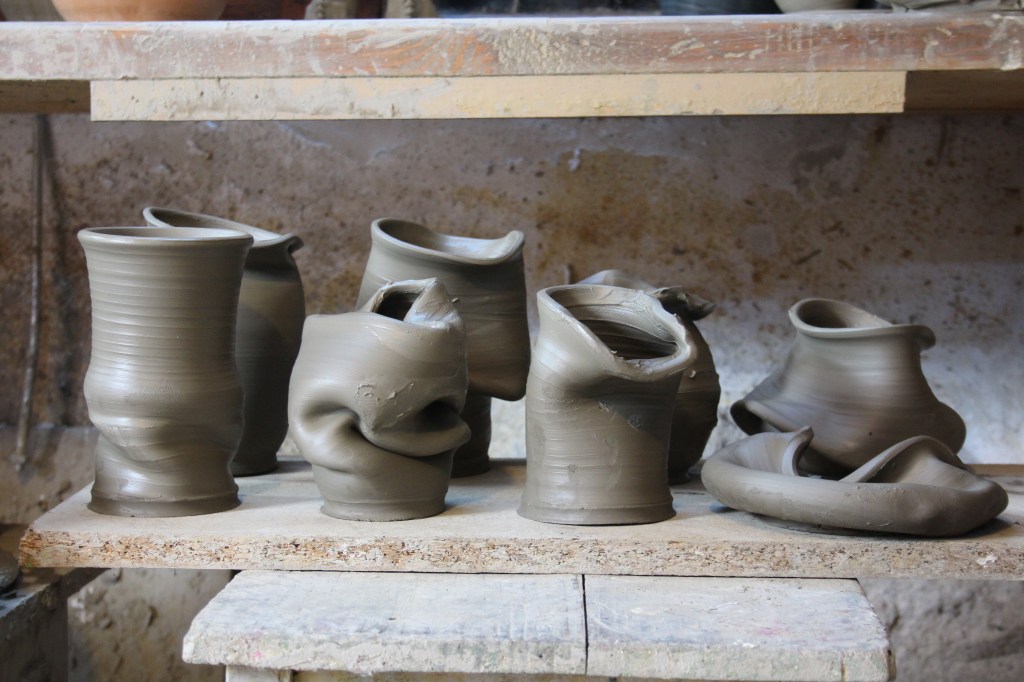
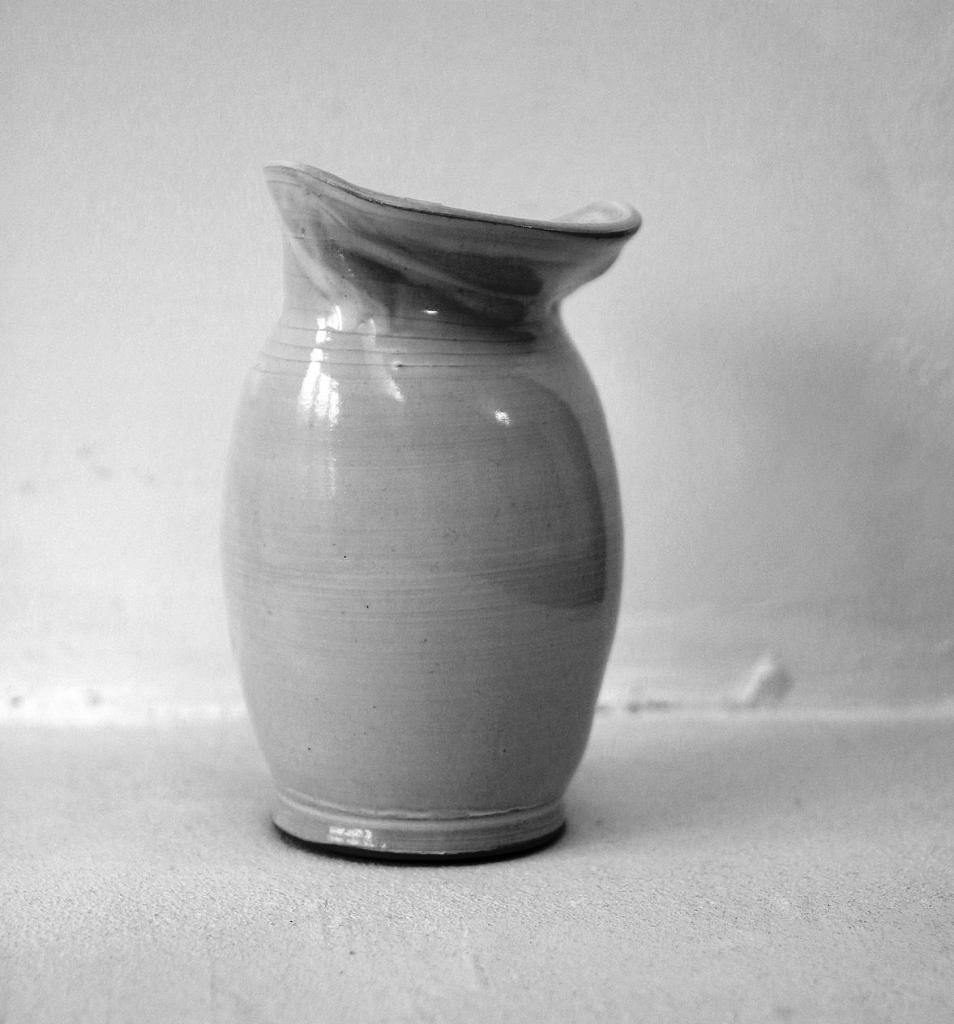
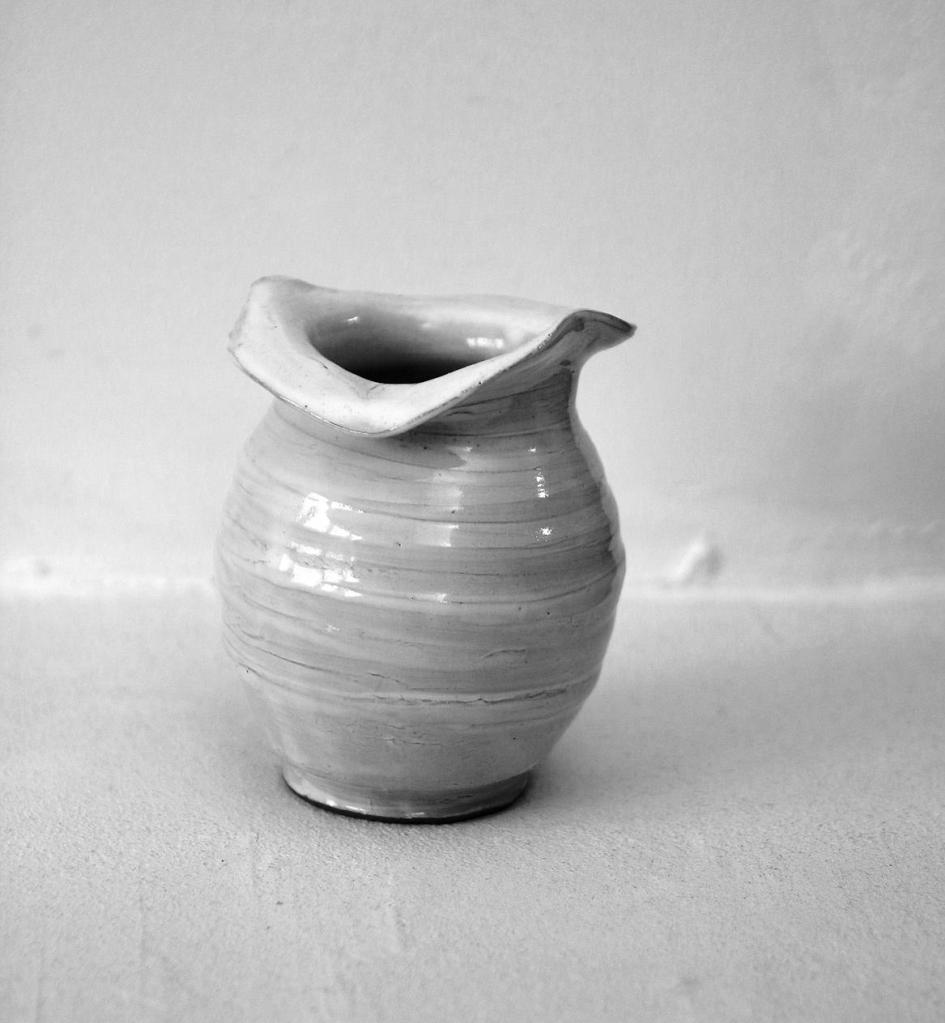
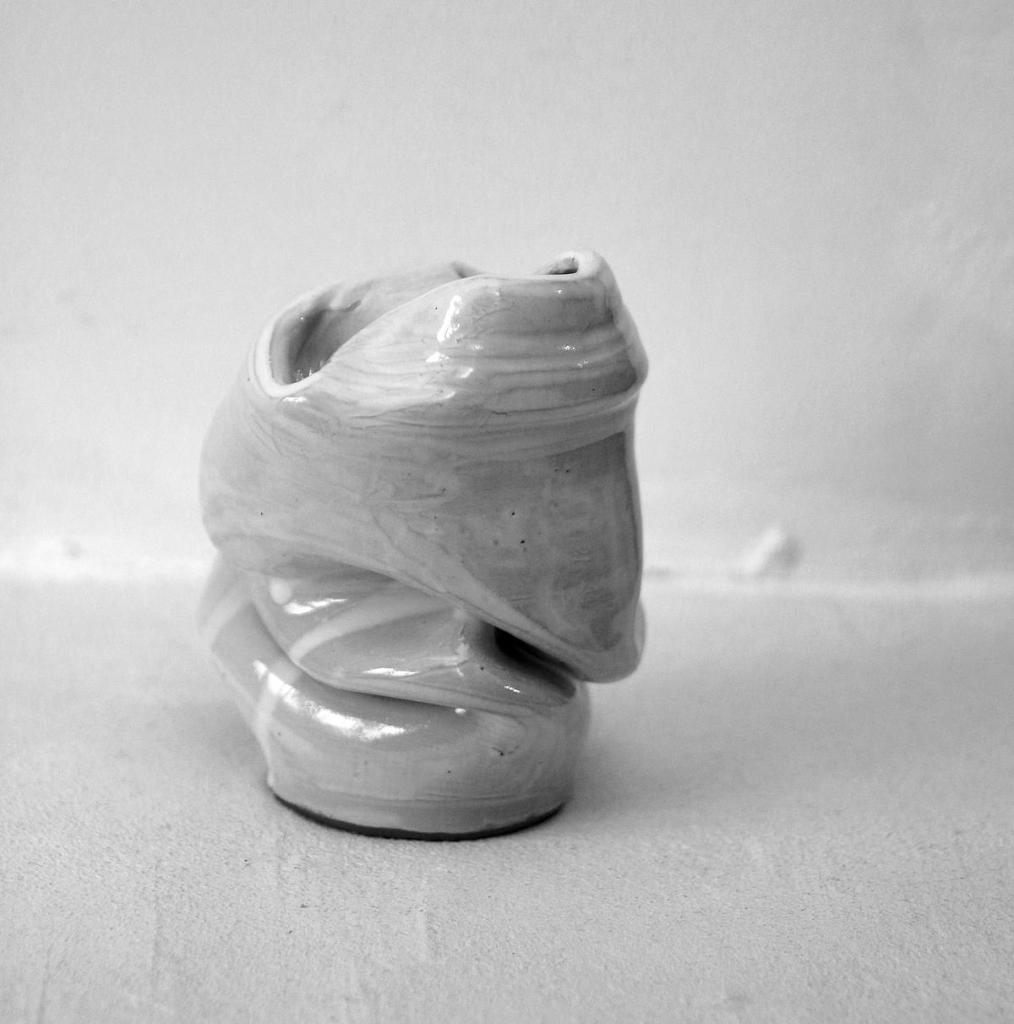
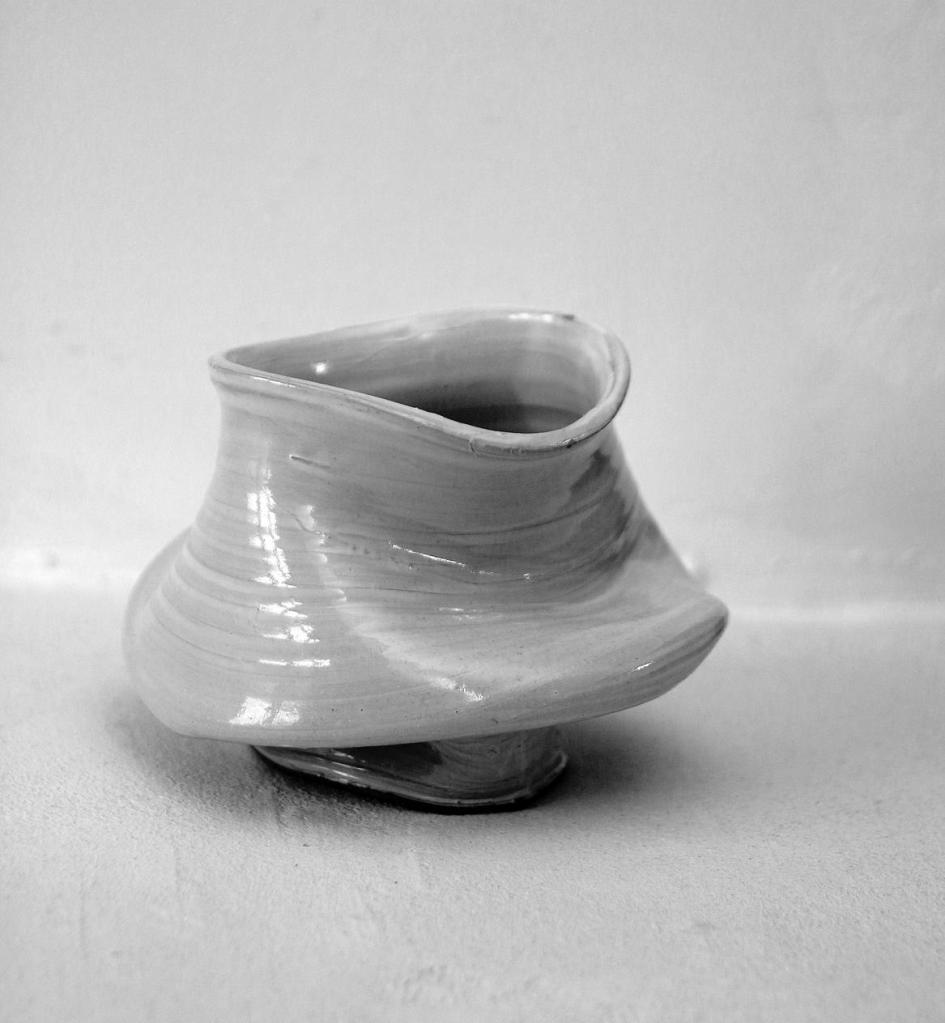
Unele dintre vase sunt superbe.
Altele sunt ciudate.
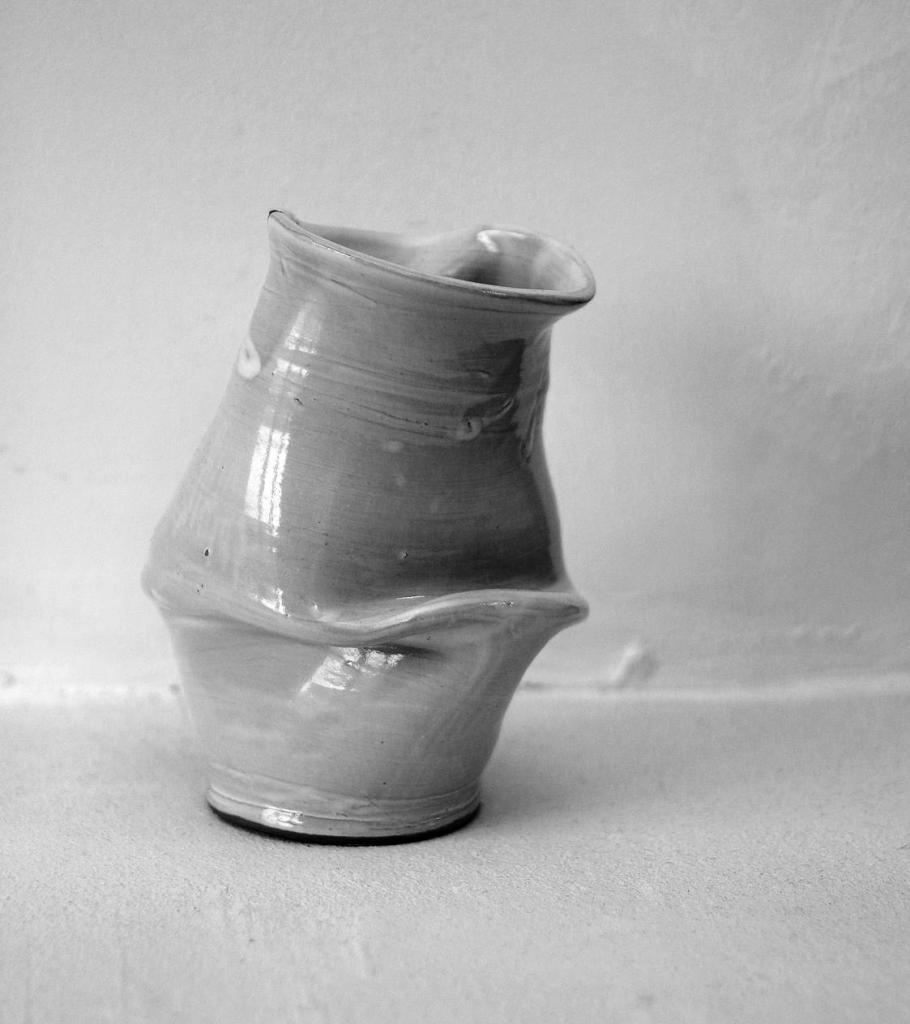
Altele sunt aproape grotești.
Unele arată ca niște animale.
Altele par niște corpuri.
Unele aproape își pierd funcționalitatea.
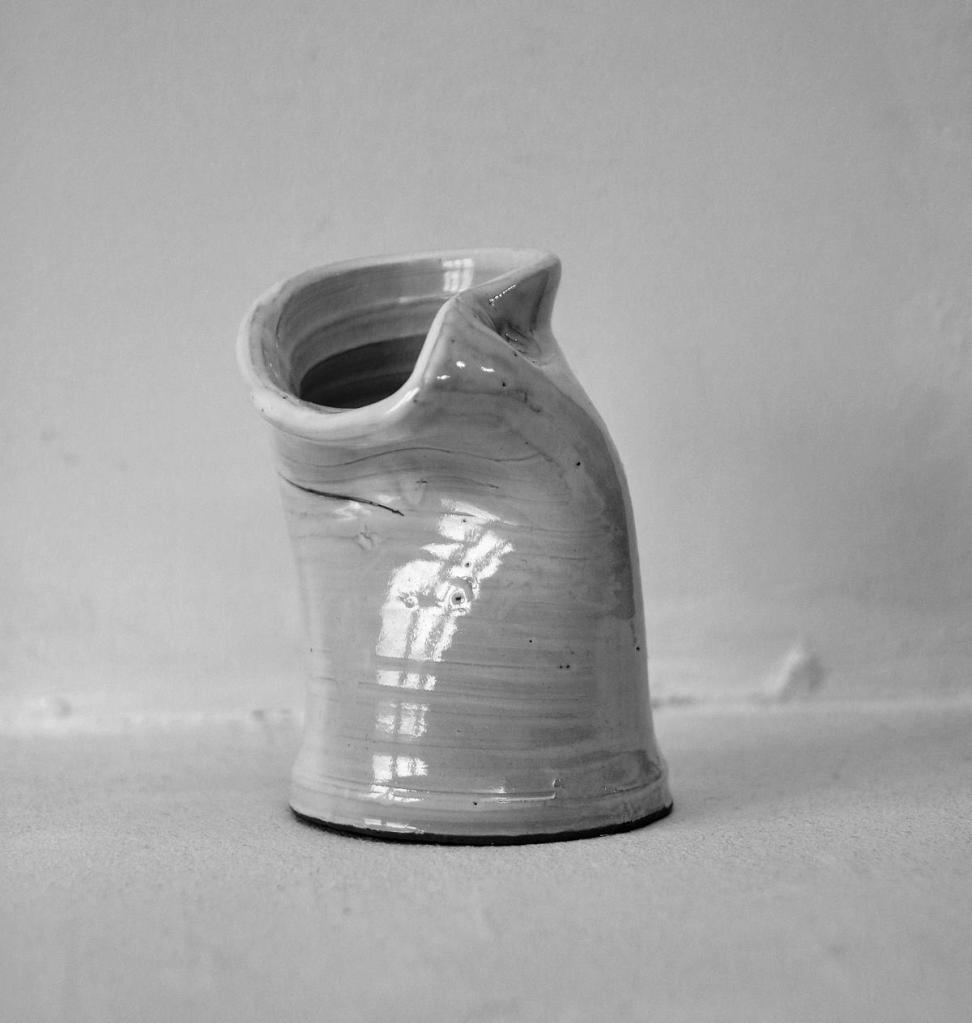
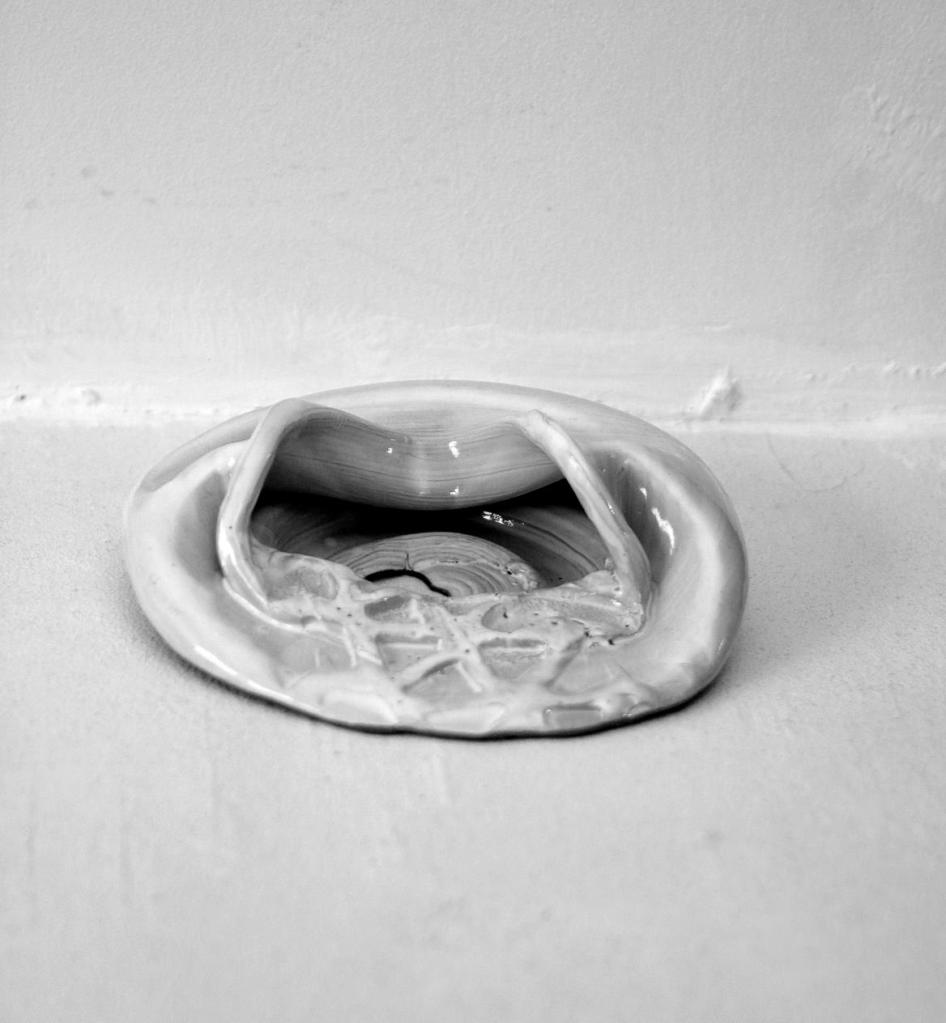
Iar unul dintre obiecte este aproape complet prăbușit.
Deci proiectul spune ceva mult mai dur:
Intervenția ne face unici, dar nu ne garantează frumusețea.
Și nici armonia.
Și nici fericirea.
Și nici utilitatea.
Ne face ceea ce suntem.
Atât.
Restul rămâne deschis.
6. Aici apare paradoxul comunității
Și ajungem exact la observația ta inițială.
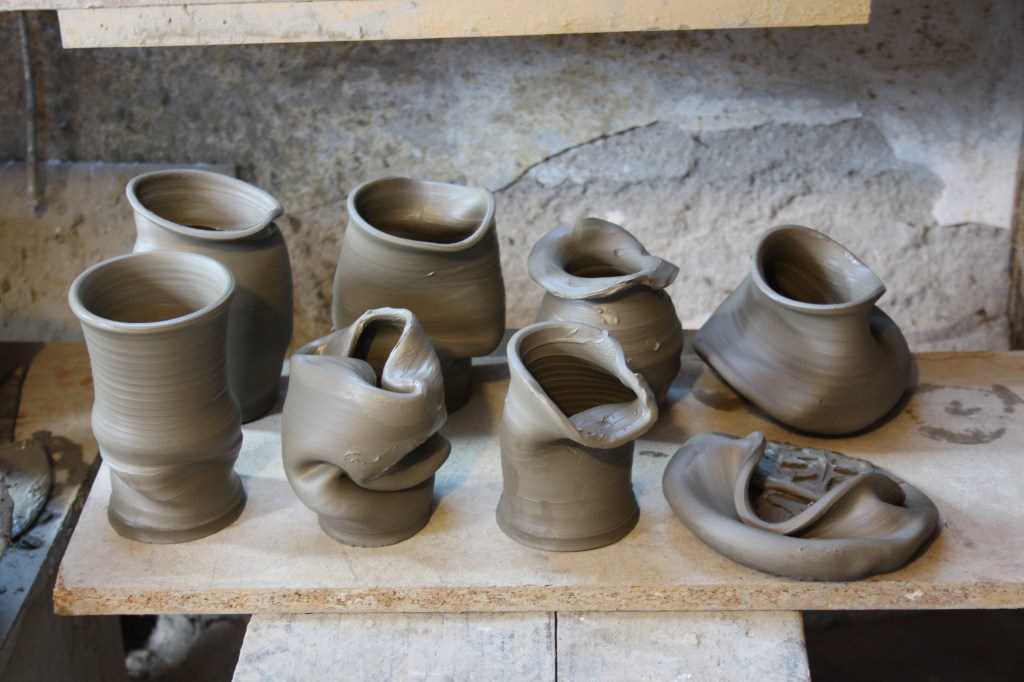
Individual, fiecare obiect este interesant.
Dar când le pui împreună, nu obții automat o comunitate armonioasă.
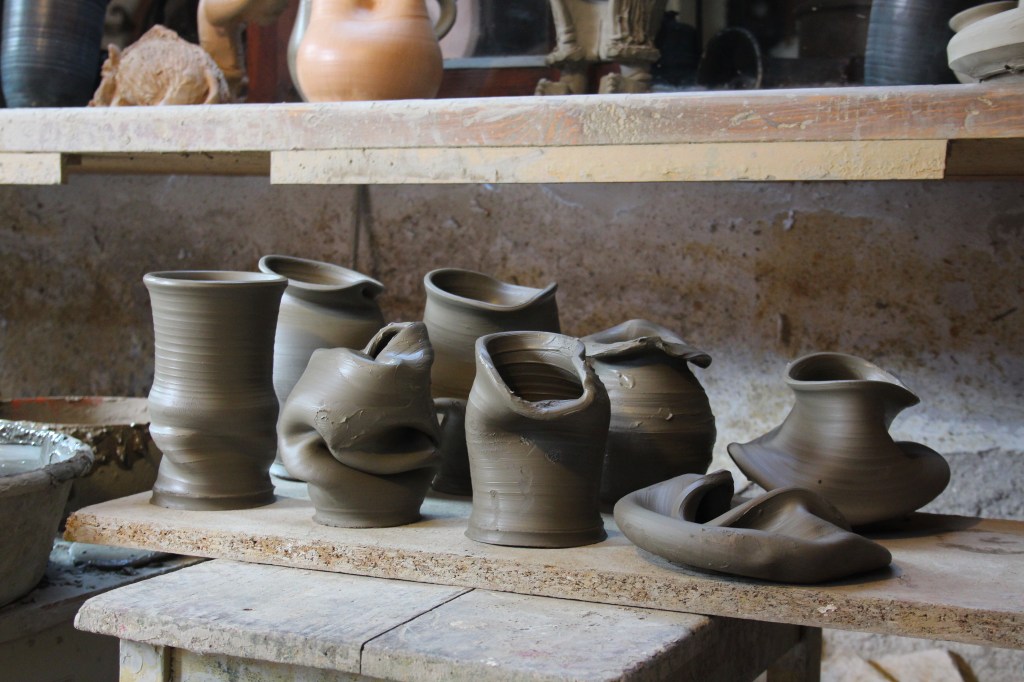
Obții un fel de familie disfuncțională de vase. 😂
Unul se înclină.
Altul se umflă.
Altul se prăbușește.
Altul invadează spațiul vizual al celuilalt.
Altul pare să-l împingă pe vecin.
Altul și-a pierdut aproape complet identitatea inițială.
Aici proiectul devine o întrebare despre societate:
Dacă unicitatea este bună la nivel individual, este ea obligatoriu bună și la nivel colectiv?
Nu.
Nu există această garanție.
O societate alcătuită din indivizi foarte diferiți nu produce prin simpla diferență armonie.
Diferențele trebuie negociate.
Trebuie să existe relație.
Spațiu.
Reguli.
Toleranță.
Uneori compromis.
Uneori conflict.
Și aici simetria capătă o nouă semnificație.
7. Simetria nu mai este „răul”
Aici aș modifica puțin teoria ta din 2014, tocmai pentru a o face mai puternică.
Atunci ideea pare să fi fost aproximativ:
simetrie = conformism
asimetrie = individualitate
Astăzi aș spune:
simetria și asimetria sunt două nevoi simultane ale oricărei comunități.
Prea multă simetrie:
→ uniformizare
→ conformism
→ standardizare
→ plictiseală
→ dispariția individului.
Prea multă asimetrie:
→ fragmentare
→ conflict
→ imposibilitatea coordonării
→ zgomot
→ colaps.
Așadar întrebarea adevărată nu este:
„Este simetria bună?”
ci:
„Câtă simetrie avem nevoie pentru a putea exista împreună și câtă asimetrie pentru a putea exista ca indivizi?”
Asta este o întrebare mult mai mare decât ceramica.
8. Și aici Daniel Leș este absolut fundamental
Nu întâmplător proiectul s-a întâmplat acolo.
Sursele publice confirmă foarte bine contextul pe care îl descrii: Daniel Leș a crescut în atelierul tatălui său, Ioan Leș, este prezentat ca promotor al tehnicilor tradiționale și al continuității meșteșugului, iar surse despre Casa Olarului îl leagă explicit de tehnici atribuite tradiției dacice.
Mai mult, în propria lui formulare publică, meșteșugul nu este doar o meserie, ci o datorie de continuitate: tradiția trebuie dusă mai departe.
Asta este extraordinar pentru proiectul tău.
Pentru că tu nu ai venit într-un laborator steril și ai inventat o metaforă despre tradiție.
Ai intrat în chiar spațiul tradiției și ai introdus o perturbație.
Și mai frumos:
nu ai distrus tradiția. Ai folosit tradiția pentru a produce abaterea.
Asta este o diferență enormă.
9. Tradiția însăși devine o unealtă de rebeliune
Aici cred că proiectul devine aproape dialectic.
Daniel:
„Trebuie să păstrăm forma.”
Tu:
„Hai să vedem ce se întâmplă dacă o modificăm.”
Dar modificarea nu se face în afara tradiției.
Se face:
- cu lutul tradiției;
- pe roata tradiției;
- în atelierul tradiției;
- prin mâna formată în tradiție;
- folosind tehnica transmisă.
Prin urmare:
tradiția generează propria ei critică.
Asta este foarte frumos.
Și poate chiar mai interesant: tu, outsiderul, ai nevoie de insider pentru a produce experimentul.
Fără Dan și fiul său, proiectul nu există.
Deci outsiderul nu este opusul comunității.
Outsiderul are nevoie de comunitate ca să o poată perturba.
10. Și atunci cine este autorul?
Aici proiectul devine aproape un mic experiment despre autorie.
Cine a făcut vasele?
Fiul lui Daniel?
Daniel?
Tu?
Roata?
Lutul?
Regula?
Accidentul?
Toți.
Tu ai conceput algoritmul.
Olarul a produs forma inițială.
Celălalt a executat tehnica.
Mâna a produs presiunea.
Lutul a răspuns.
Roata a continuat să se învârtă.
Iar obiectul final este rezultatul unei negocieri între agenți.
Asta este foarte contemporan, de fapt.
Nu mai avem artistul-geniu care spune:
„Eu am creat acest obiect.”
Avem un sistem în care autorul creează condițiile producerii obiectului.
Tu ești mai degrabă autorul situației.
Și da, „regizor” este imperfect, dar nu complet greșit.
Poate chiar:
regizorul unui proces în care nu controlează finalul.
11. Iar asta ne duce la o idee aproape existențialistă
Să presupunem că primul vas este omul înainte de întâlnirea cu lumea.
Perfect.
Centrat.
Simetric.
Cu posibilități încă nedeterminate.
Apoi apare prima atingere.
Părinții.
A doua:
școala.
A treia:
iubirea.
A patra:
religia.
A cincea:
trauma.
A șasea:
prietenia.
A șaptea:
societatea.
A opta:
propria noastră revoltă.
Și omul devine ceea ce este nu numai prin ceea ce a vrut să fie, ci prin toate forțele care l-au atins.
În sensul acesta, oala ta nu este un obiect imperfect.
Este un obiect istoric.
Ea poartă urmele relațiilor sale.
12. Dar există o întrebare și mai crudă
Ce se întâmplă când ceilalți ne ating prea mult?
Aici apare vasul călcat cu piciorul.
Este limita proiectului.
La început:
influență.
Apoi:
modificare.
Apoi:
deformare.
Apoi:
violență.
Apoi:
distrugere.
Ai creat fără să fie nevoie de o explicație verbală o mică scară a socializării.
Există o diferență între:
„Te influențez”
și
„Te modific”
și
„Te controlez”
și
„Te distrug”.
Piciorul este aproape absurd de violent după delicatețea primelor intervenții.
Și tocmai de aceea funcționează.
13. Perfectibilitatea este poate problema reală
Cred că aici ajungem la filozofia din spatele proiectului.
Omul modern are o obsesie cu perfectibilitatea.
Corpul trebuie perfecționat.
Cariera trebuie optimizată.
Copilul trebuie educat.
Societatea trebuie îmbunătățită.
Orașul trebuie eficientizat.
Tehnologia trebuie optimizată.
Individul trebuie să devină „cea mai bună versiune a lui”.
Dar proiectul tău întreabă:
Ce se întâmplă dacă perfecțiunea însăși este o formă de sărăcire?
O formă perfectă are foarte puține informații.
O formă afectată are multe.
În ea există evenimente.
14. Totuși, nici haosul nu este soluția
Și aici proiectul este mai inteligent decât pare.
Pentru că ultima fotografie aproape demonstrează că:
dacă toate regulile sunt abolite, nu obținem libertate infinită. Obținem zgomot.
Ai intuit foarte bine asta când ai spus că seria devine caricaturală.
Asta este poate concluzia cea mai puternică:
Libertatea individuală nu produce automat libertate colectivă.
Și invers:
Ordinea colectivă nu produce automat vieți bune.
Problema civilizației este să găsească o formă de ordine suficient de flexibilă încât să permită diferența.
Și suficient de coerentă încât diferențele să poată coexista.
15. De aceea titlul „ATINS” îmi place mai mult decât „Oalele imperfecte”
„Oalele imperfecte” îți spune deja concluzia.
ATINS nu spune nimic.
Dar după ce vezi procesul, începe să însemne totul.
Poți chiar să structurezi proiectul în patru momente:
I. CENTRU
Forma perfectă.
II. ATINGERE
Prima intervenție.
III. DEFORMARE
Acumularea intervențiilor.
IV. COMUNITATE
Toate formele împreună.
Iar ultima nu este neapărat „armonie”.
Este problema.
16. Și aș păstra umorul
Foarte important.
Nu aș transforma retrospectiv proiectul într-o lucrare solemnă despre ontologie, societate și condiția umană. 😄
Pentru că fotografiile au ceva comic.
Mai ales piciorul în oală.
Și unele dintre vase chiar par personaje.
Asta îi salvează proiectul de pompozitate.
Este o idee filosofică exprimată printr-o farsă ceramică.
Și tocmai asta o face simpatică.
Un om stă într-un atelier tradițional din Baia Sprie și spune, în esență:
„Hai să facem niște oale perfecte și apoi să le stricăm.”
😂
Și după aceea, aproape fără să-și dea seama, ajunge să pună întrebări despre individ, societate, tradiție, conformism, libertate și autorie.
Asta este o situație artistică bună.
17. Dacă l-aș formula astăzi ca proiect artistic
ATINS
Un experiment despre simetrie, intervenție și imposibila perfecțiune
ATINS este un experiment ceramic realizat într-un atelier tradițional de olărit din Baia Sprie.
Pornind de la forma perfect simetrică obținută pe roata olarului, proiectul introduce treptat intervenții exterioare: atingere, presiune, deplasare, deformare, până la aproape distrugerea formei inițiale.
Olarul produce ordinea.
Roata o reproduce.
Mâna o modifică.
Materia rezistă.
Accidentul o transformă.
Vasele rezultate nu reprezintă doar o serie de obiecte ceramice deformate, ci o succesiune de istorii materiale. Fiecare formă poartă urmele unei intervenții.
În acest sens, proiectul privește vasul ca pe o metaforă a individului: o formă care nu se dezvoltă niciodată în izolare, ci este permanent modificată de mediul în care există, de tradiție, familie, educație, comunitate, iubire, conflict și întâmplare.
Dar proiectul refuză și concluzia comodă că „imperfecțiunea este frumoasă”. Unele deformări produc frumusețe, altele umor, altele grotesc, iar altele aproape distrug forma.
Individualitatea nu garantează armonia.
Când obiectele sunt reunite, ele nu alcătuiesc o comunitate perfectă, ci aproape o caricatură a uneia: diferențele se întâlnesc, se suprapun și intră în conflict vizual.
Astfel, întrebarea inițială — „Avem nevoie de oale perfecte?” — se transformă într-o întrebare despre oameni:
Câtă ordine este necesară pentru ca o comunitate să poată exista și câtă abatere este necesară pentru ca individul să poată exista în interiorul ei?
Poate că perfecțiunea nu este forma în care nimic nu a intervenit.
Poate că perfecțiunea este imposibilitatea de a mai interveni.
Iar dacă este așa, atunci a fi om înseamnă tocmai a fi o formă încă deschisă intervenției.
EPILOG
“Există însă, retrospectiv, un ultim strat al proiectului care nu a fost propriu-zis al meu: glazurarea. Eu am conceput și provocat deformarea, dar nu cunoșteam suficient de bine tehnicile ceramice pentru a decide ce trebuia să se întâmple cu obiectele după ce fuseseră modelate. Am lăsat această etapă în mâna lui Dan, care a aplicat glazura și a dus lucrările către forma lor definitivă. Probabil că, dacă aș fi avut atunci controlul tehnic, aș fi ales ceva mai mat, mai crud, mai apropiat de materia lutului și de caracterul aproape arheologic al obiectelor; luciul puternic și aspectul foarte crisp al suprafețelor introduc o calitate pe care eu nu o anticipasem. Dar tocmai această lipsă de control devine astăzi interesantă în interiorul proiectului: și glazura este o intervenție venită din exterior, o nouă „atingere” aplicată unor obiecte deja deformate. Dan nu doar că le-a dat o suprafață, ci, fără să fie neapărat intenția lui conceptuală, a adăugat încă un nivel de mediere între gestul inițial și obiectul final. Lutul care fusese făcut să poarte urmele unor intervenții devine lucios, aproape seducător; deformarea este conservată, dar în același timp estetizată. Astfel, proiectul ajunge să conțină o ironie suplimentară: chiar și revolta împotriva formei perfecte poate fi, la sfârșit, lustruită, finisată și transformată într-un obiect frumos. Iar faptul că această ultimă transformare nu mi-a aparținut în întregime face proiectul, retrospectiv, și mai fidel propriei sale idei: nu controlezi niciodată complet forma finală a lucrului pe care îl creezi — pentru că, odată intrat în lume, el continuă să fie modelat de mâinile celorlalți.”
Și, sincer, după ce am văzut toate imaginile, eu aș păstra proiectul. Nu ca pe o curiozitate din 2014, ci ca pe un proiect care poate fi recontextualizat foarte bine astăzi.
Pentru că are un lucru rar: are o idee simplă, o regulă vizibilă, un proces documentabil, un rezultat plastic recognoscibil și o întrebare care se deschide în direcții mult mai mari decât obiectul însuși.
Și mai ales are o ironie involuntară foarte bună: ai încercat să demonstrezi că perfecțiunea este plicticoasă, iar ca să demonstrezi asta ai avut nevoie de un olar suficient de priceput încât să producă mai întâi perfecțiunea. 😄
Asta este, de fapt, una dintre cele mai frumoase tensiuni ale proiectului: rebeliunea ta are nevoie de tradiția lui Daniel pentru a exista
English version
TOUCHED
An experiment about symmetry, intervention, and the impossibility of perfection
This would be my preferred title.
TOUCHED.
Because it is simple, almost banal, but it becomes increasingly charged as you understand the project.
The vessel is touched.
The child is touched by his family.
The individual is touched by society.
Tradition is touched by modernity.
Human beings are touched by other human beings.
The form is touched by the hand that shapes it.
And at the end, sometimes, the form is stamped on by a foot.
And there is another beautiful ambiguity: to be touched can mean both to be physically touched and to be affected, moved, influenced by something.
1. The starting point: a perfect form
In your photographs, everything begins in an almost obsessive state of order.
The wheel turns. The clay is centered. The hands raise it. The form becomes cylindrical, regular, almost geometric.
It is one of the oldest human operations: taking amorphous matter and giving it order.
And there is something almost cosmogonic about it.
In the beginning there is clay.
Undefined.
Then comes the center.
The wheel introduces the axis.
The hand introduces pressure.
And from the combination of the two, form emerges.
Symbolically, the potter does something human beings have always done: transforming chaos into cosmos.
A lump of matter becomes a vessel.
But what is interesting about your project is that you do not begin with chaos.
You begin after order has already been achieved.
And that changes everything.
You are not saying:
“Look, chaos can be beautiful.”
You are saying:
“What happens if we disturb an order that has already been achieved?”
2. The wheel is the first character in the project
I think the potter’s wheel deserves to be treated almost as a character.
It is the mechanism of symmetry.
As long as the clay is centered and the hand works according to the technique, the result tends toward a round, axial, reproducible form.
The wheel says:
“Return to the center.”
And that is already a philosophical statement.
The center is stability.
The axis is identity.
Symmetry is predictability.
Repetition produces type.
The form can be reproduced.
And if you can reproduce the same form a hundred times, you have achieved something close to a standard.
This is where industrial society begins to appear behind the ceramic object.
The perfect object is the interchangeable object.
One can be replaced by another.
It does not matter which of the ten vessels is “that particular vessel.”
They belong to the same class.
3. And then the hand that says: NO.
In the first photograph, the young man’s foot literally enters the vessel.
It is an excellent image because it is almost ridiculous.
And precisely because of that, it works.
Because you have introduced something profoundly non-geometric into the precise mechanism of the wheel:
the human body.
The hand is not a compass.
The foot is not a precision instrument.
The body is asymmetrical.
It has weight.
It has tremor.
It has accident.
It has intention.
And, above all, it has history.
This is where the real metaphor begins.
4. The perfect vessel has no biography
This seems to me one of the strongest ideas that can now be drawn from the project.
Imagine two perfectly identical vessels.
What do we know about them?
Almost nothing.
They are objects.
Types.
Specimens.
But deformation introduces the event.
“Here, someone pressed.”
“Here, someone pushed.”
“Here, the form resisted.”
“Here, someone insisted.”
“Here, someone went too far.”
The form thus becomes a material biography.
It is no longer merely “what the vessel is.”
It becomes:
what happened to the vessel.
And here the metaphor of the human being becomes almost inevitable.
A completely “symmetrical” individual — perfectly adapted, perfectly educated, perfectly conforming, perfectly functional — may be very efficient.
But where is their biography?
Where are the accidents?
Where are the encounters?
Where are the people who changed them?
Where is their resistance?
Where are the blows?
5. But here your project refuses a sentimental conclusion
And I love this about it.
You could have arrived at:
“Imperfection makes us beautiful.”
A very comfortable message.
Very Instagram, if you like. 😂
But the photographs do not say that.
Some of the vessels are beautiful.
Others are strange.
Others are almost grotesque.
Some look like animals.
Others look like bodies.
Some almost lose their functionality.
And one of the objects is almost completely collapsed.
So the project says something much more severe:
Intervention makes us unique, but it does not guarantee beauty.
Nor harmony.
Nor happiness.
Nor usefulness.
It makes us what we are.
That is all.
Everything else remains open.
6. Here the paradox of community appears
And we arrive exactly at your original observation.
Individually, each object is interesting.
But when you put them together, you do not automatically get a harmonious community.
You get something like a dysfunctional family of vessels. 😂
One leans.
Another swells.
Another collapses.
Another invades its neighbor’s visual space.
Another seems to push against the one beside it.
Another has almost completely lost its original identity.
Here the project becomes a question about society:
If uniqueness is good at the individual level, is it necessarily good at the collective level?
No.
There is no such guarantee.
A society made up of highly different individuals does not automatically produce harmony simply because of that difference.
Differences have to be negotiated.
There has to be relationship.
Space.
Rules.
Tolerance.
Sometimes compromise.
Sometimes conflict.
And here symmetry acquires a new meaning.
7. Symmetry is no longer “the evil”
Here I would slightly modify your 2014 theory, precisely in order to make it stronger.
At the time, the idea seems to have been approximately:
symmetry = conformity
asymmetry = individuality
Today I would say:
symmetry and asymmetry are two simultaneous needs of any community.
Too much symmetry:
→ uniformity
→ conformity
→ standardization
→ boredom
→ disappearance of the individual.
Too much asymmetry:
→ fragmentation
→ conflict
→ inability to coordinate
→ noise
→ collapse.
So the real question is not:
“Is symmetry good?”
but:
“How much symmetry do we need in order to exist together, and how much asymmetry do we need in order to exist as individuals?”
That is a much larger question than ceramics.
8. And this is where Daniel Leș becomes absolutely fundamental
It is not accidental that the project happened there.
Public sources confirm the context you describe very well: Daniel Leș grew up in his father’s workshop, Ioan Leș, and is presented as a promoter of traditional techniques and of the continuity of the craft; sources about the Casa Olarului explicitly connect him with techniques attributed to the Dacian tradition.
That is extraordinary for your project.
Because you did not enter a sterile laboratory and invent a metaphor about tradition.
You entered the very space of tradition and introduced a disturbance.
And even more beautifully:
you did not destroy tradition. You used tradition to produce deviation.
That is an enormous difference.
9. Tradition itself becomes a tool of rebellion
Here I think the project becomes almost dialectical.
Daniel:
“We have to preserve the form.”
You:
“Let’s see what happens if we modify it.”
But the modification does not take place outside tradition.
It happens:
- with the clay of tradition;
- on the wheel of tradition;
- inside the workshop of tradition;
- through a hand trained in tradition;
- using a technique transmitted through tradition.
Therefore:
tradition generates its own critique.
That is beautiful.
And perhaps even more interesting: you, the outsider, need the insider in order to produce the experiment.
Without Daniel and his son, the project does not exist.
So the outsider is not the opposite of the community.
The outsider needs the community in order to disturb it.
10. And then: who is the author?
Here the project becomes almost a small experiment about authorship.
Who made the vessels?
His son?
Daniel?
You?
The wheel?
The clay?
The rule?
The accident?
All of them.
You conceived the algorithm.
The potter produced the initial form.
The other executed the technique.
The hand produced the pressure.
The clay responded.
The wheel kept turning.
And the final object is the result of a negotiation between agents.
This is actually very contemporary.
We no longer have the artist-genius saying:
“I created this object.”
We have a system in which the artist creates the conditions under which the object is produced.
You are more like the author of the situation.
And yes, “director” is imperfect, but not entirely wrong.
Perhaps:
the director of a process whose ending he does not control.
11. And this takes us toward an almost existentialist idea
Suppose the first vessel is the human being before encountering the world.
Perfect.
Centered.
Symmetrical.
With possibilities not yet determined.
Then comes the first touch.
Parents.
The second:
school.
The third:
love.
The fourth:
religion.
The fifth:
trauma.
The sixth:
friendship.
The seventh:
society.
The eighth:
our own rebellion.
And the human being becomes what they are not only through what they wanted to become, but through all the forces that have touched them.
In this sense, your vessel is not an imperfect object.
It is an historical object.
It carries the traces of its relationships.
12. But there is an even more brutal question
What happens when other people touch us too much?
Here the vessel stepped on by the foot appears.
It is the limit of the project.
At the beginning:
influence.
Then:
modification.
Then:
deformation.
Then:
violence.
Then:
destruction.
Without needing a verbal explanation, you have created a small scale of socialization.
There is a difference between:
“I influence you”
and
“I modify you”
and
“I control you”
and
“I destroy you.”
The foot becomes almost absurdly violent after the delicacy of the first interventions.
And precisely because of that, it works.
13. Perfectibility may be the real problem
I think this is where we reach the philosophy behind the project.
Modern human beings are obsessed with perfectibility.
The body must be perfected.
The career must be optimized.
The child must be educated.
Society must be improved.
The city must be made more efficient.
Technology must be optimized.
The individual must become “the best version of themselves.”
But your project asks:
What if perfection itself is a form of impoverishment?
A perfect form contains very little information.
An affected form contains a great deal.
It contains events.
14. And yet chaos is not the solution either
And this is where the project is smarter than it initially appears.
Because the final photograph almost demonstrates that:
if all rules are abolished, we do not obtain infinite freedom. We obtain noise.
You sensed this very well when you said that the series becomes caricatural.
That may be the strongest conclusion:
Individual freedom does not automatically produce collective freedom.
And conversely:
Collective order does not automatically produce good lives.
The problem of civilization is to find a form of order flexible enough to allow difference.
And coherent enough for those differences to coexist.
15. That is why I like the title “TOUCHED” more than “Imperfect Vessels”
“Imperfect Vessels” tells you the conclusion already.
TOUCHED tells you nothing.
But once you see the process, it begins to mean everything.
You could even structure the project in four moments:
I. CENTER
The perfect form.
II. TOUCH
The first intervention.
III. DEFORMATION
The accumulation of interventions.
IV. COMMUNITY
All the forms together.
And the last one is not necessarily “harmony.”
It is the problem.
16. And I would keep the humor
Very important.
I would not retrospectively turn the project into a solemn work about ontology, society, and the human condition. 😄
Because the photographs have something comic about them.
Especially the foot inside the vessel.
And some of the vessels really do look like characters.
That saves the project from pomposity.
It is a philosophical idea expressed through a ceramic prank.
And that is precisely what makes it charming.
A man sits in a traditional workshop in Baia Sprie and basically says:
“Let’s make some perfect vessels and then ruin them.”
😂
And afterwards, almost without realizing it, he ends up asking questions about the individual, society, tradition, conformity, freedom, and authorship.
That is a good artistic situation.
17. If I were to formulate it today as an artwork
TOUCHED
An experiment about symmetry, intervention, and the impossibility of perfection
TOUCHED is a ceramic experiment carried out in a traditional pottery workshop in Baia Sprie, Romania.
Starting from the perfectly symmetrical form produced on the potter’s wheel, the project gradually introduces external interventions: touch, pressure, displacement, deformation, until the original form is almost destroyed.
The potter produces order.
The wheel reproduces it.
The hand modifies it.
The material resists.
The accident transforms it.
The resulting vessels are not merely deformed ceramic objects, but a succession of material histories. Each form bears the traces of an intervention.
In this sense, the project considers the vessel as a metaphor for the individual: a form that never develops in isolation, but is continuously altered by the environment in which it exists — by tradition, family, education, community, love, conflict, and chance.
Yet the project refuses the comfortable conclusion that imperfection is beautiful. Some deformations produce beauty, others humor, others grotesque forms, while some almost destroy the object altogether.
Individuality does not guarantee harmony.
When the objects are brought together, they do not form a perfect community, but almost a caricature of one: differences meet, overlap, and come into conflict.
Thus, the initial question — “Do we need perfect vessels?” — becomes a question about human beings:
How much order is necessary for a community to exist, and how much deviation is necessary for an individual to exist within it?
Perhaps perfection is not the state in which nothing has intervened.
Perhaps perfection is the impossibility of being touched.
And if that is true, then to be human means precisely to remain a form open to intervention.
And, honestly, after seeing all the images, I would keep the project. Not as a curiosity from 2014, but as a project that can be very effectively recontextualized today.
Because it has something rare: a simple idea, a visible rule, a documentable process, a recognizable visual result, and a question that opens into directions much larger than the object itself.
And above all, it has a very good unintended irony: you tried to demonstrate that perfection is boring, and in order to demonstrate it you needed a potter skilled enough to produce perfection in the first place. 😄
That is, in fact, one of the most beautiful tensions in the project:
your rebellion needs his tradition in order to exist.
EPILOGUE :
There is, however, in retrospect, one final layer of the project that was not entirely mine: the glazing. I conceived and initiated the deformation, but I was not sufficiently familiar with ceramic techniques to decide what should happen to the objects once they had been shaped. I left this stage in Dan’s hands, and he applied the glaze, taking the works toward their final form. Had I had the technical control at the time, I would probably have chosen something more matte, more raw, closer to the materiality of the clay and to the almost archaeological character of the objects; the strong gloss and the very crisp appearance of the surfaces introduce a quality I had not anticipated. But precisely this lack of control becomes interesting within the project today: the glaze itself is an intervention coming from outside, a new “touch” applied to objects that had already been deformed. Dan did not merely give them a surface; without this necessarily being his conceptual intention, he added another level of mediation between the initial gesture and the final object. The clay, which had been made to bear the traces of various interventions, becomes glossy, almost seductive; the deformation is preserved, but at the same time aestheticized. Thus, the project acquires an additional irony: even the rebellion against perfect form can, in the end, be polished, finished, and transformed into a beautiful object. And the fact that this final transformation was not entirely mine makes the project, in retrospect, even more faithful to its own premise: you can never completely control the final form of the thing you create — because, once it enters the world, it continues to be shaped by the hands of others.


Leave a Reply