Română
Vă povesteam în însemnarea trecută despre cum l-am cunoscut pe Alex Ionescu, acum devenit un fel de trainer sau coach, sau ceva asemănător, cu un canal de YouTube dedicat.
De-a lungul anilor ’90–’00 ne-am întâlnit sporadic – îl vizitam la el acasă uneori, discutând despre muzică, cinema, fotografie. La vremea aceea încă nu studiasem nicio artă vizuală, așa că palierul de comunicare mai tehnic dintre noi era muzica electronică.
Alex era mare fan Gotan Project, un experiment care reinterpreta, cu mijloace moderne, soundul tangoului clasic. Din punctul meu de vedere, ideea era destul de facilă, deși bine realizată și produsă. Eu încă ascultam Pat Metheny, muzică nițel mai de nișă, chestie care l-a mirat nițel pe Alex, care se considera, probabil, autoritatea supremă în materie de… „everything artistical”. Am tresărit nițel, mirat de condescendența cu care Alex trata interesele mele muzicale. Să fim sinceri, nu poți compara Gotan Project cu Pat Metheny și, oricum, e ca și cum ai compara mere cu… nuci, sau ce altceva doriți.
Vedeți voi, atitudinea superioară, ego-urile supradimensionate trebuie totuși susținute cumva. Iată că, într-o vreme, Alex Ionescu produce o piesă ce avea să devină extrem de populară la televiziunile muzicale. Trupa „Ionescu”, cu piesa „România de vânzare”:
YouTube – „România de vânzare”
În opinia mea de atunci, opera era extrem de dark, creepy și absolut nemuzicală. M-am întrebat de ce un absolvent de conservator produce atât de precar și de inabil.
În câteva dintre întâlnirile noastre aveam să-i cunosc și colegii de facultate ai viitorului regizor, fotograf, instructor și coach: băieți tineri, entuziaști, actori cu mari ambiții. O parte dintre ei se regăsesc în distribuție, în videoclipul postat mai sus. Mai departe aveam s-o cunosc și pe iubita lui Alex de la acea vreme: o tipă extrem de frumoasă, cu un ten închis, prezentă uneori alături de băieți la întâlnirile lor creative.
Acum, la acea vreme eram nițel cam naiv și cam pudic. L-am întrebat pe Alex, regizorul, cum poate să-și distribuie iubita în film și s-o pună să se pupe cu un alt actor. Sincer să fiu, n-aș fi putut face așa ceva, dar m-am gândit atunci că artiștii din facultățile de teatru, regie sau film sunt nițel mai experimentați când e vorba de a juca roluri sau de a se detașa de „masca socială”. E și normal, ai zice; până la urmă, pe asta se bazează meseria lor.
Oribil, totuși, mi s-a părut un act de agresiune al lui Alex față de prietena lui. Un șut în fund dat fetei, de față cu mine și cu cei din jur, m-a siderat. M-am gândit pe loc că acest bărbat depășește nițel limitele bunului-simț sau ale normalității și că, pe undeva, mintea, personalitatea și caracterul lui sunt nițel dizarmonice.
Veșnic lubric, bănuitor, ironic uneori și alteori sarcastic, omul îmi pare acum nițel depășit de situație de fiecare dată când ne-am întâlnit. Privind retrospectiv, găsesc extrem de multe conexiuni radiale în timp (și spațiu), bazate pe detalii ale comunicării sporadice dintre noi, comunicare care, în ce mă privește, a fost întotdeauna bazată pe curiozitate și pe dorința de a învăța de la cineva mai experimentat.
Cu două sau trei facultăți cu profil artistic în portofoliu – regie, conservator și, cred, și fotografie – mă gândeam că voi avea ce învăța, în timp, de la Alex și de la anturajul său.
Haideți să vă povestesc câteva detalii drăguțe din timpul acestor ani de comunicare:
1) Gluma studenților de la conservator care m-a amuzat nițel: cântecul studiat, probabil, în programă, „Kyrie Eleison”, completat de tinerii muzicieni cu „întreținere leison”. Da, drăguță gluma, facilă și totuși de efect. „Chirie leison / întreținere leison” și așa mai departe. De aici se poate merge mai departe cu o grămadă de improvizații amuzante: chiria în euro, întreținerea în lei, plata facturilor la utilități și așa mai departe.
2) Alex povestindu-mi despre momentul când, întorcându-se de la Paris, unde își continua cariera, s-a plimbat prin centrul Bucureștiului. Cum tipul este întotdeauna elegant îmbrăcat, atipic, așa cum stă bine oricărui artist atipic, purta și o pălărie cu boruri largi. O mașină se oprește în dreptul său și cineva de la volan îi strigă: „Auzi, bă! Mă c* în pălăria ta!”
Nu prea m-am amuzat și probabil nici Alex. În anii 2000 trebuia, nu-i așa, să respectăm „normele” în vigoare în ceea ce privește standardele de prost gust. Toată lumea era musai să poarte blugi cât mai rupți, culori extravagante și coliere aurii pentru a ne integra în peisaj. Aici am empatizat cu sărmanul artist neînțeles, deși, sincer să fiu, nici prezența lui scenică nu mi se părea neapărat una extrem de potrivită pentru un manifest artistic în plină Capitală retrogradă.
Numaidecât mi-am adus aminte de prietenul părinților mei, Ami, bătrânul care mă adoptase temporar ca nepot, împreună cu soția sa, Bobo, și care fusese arestat în anii ’70–’80 pe străzile Bucureștiului pentru „atitudine malagambistă”. Cei care sunt curioși pot căuta pe internet detalii despre cine a fost Malagamba.
3) Ce îmi mai aduc aminte: pe la mijlocul anilor 2000, Alex Ionescu avea un portofoliu online, denumit www.ax.ro. Tagline-ul acestui site era ceva de genul „Welcome!”, în limba engleză, iar în română indicația era: „Români, plecați mă de-aici!”
Sincer să fiu, m-a mirat mica instalație online, dar am pus-o pe seama exasperării artistului, după probabil o seamă de experiențe nefaste în sistemul media autohton. Pe de altă parte, rememorând atâtea împrumuturi din toate direcțiile, inclusiv piesa mea pusă ca soundtrack pe filmul său de absolvire feat. Cătălina Mustață (despre care povestesc în însemnările anterioare), îmi părea că artistul experimental s-a comportat aidoma oricărui alt român din media, așa că atitudinea sa față de români, cei de bun-simț, pare să-l acuze mai degrabă decât să-l scuze.
Aș fi intuit că era vorba de a „afirma” pioni inconștienți în situații ce puteau să evolueze doar local, la nivel național. Din păcate, odată cu dezvoltarea și ramificarea internetului și a social media, la mijlocul și finalul anilor ’90, calculele inițiale trebuiau probabil să fie refăcute, metodele actualizate. Asta dacă, bineînțeles, era vorba de manipulări mediatice.
4) Afirmația ironică a lui Alex, la finalul anilor ’90, că există în lume un joc mortal: o organizație secretă ar fi organizat vânători de oameni, puse la cale din plăcerea sadică de a urmări până la exterminare un asemenea „target”. Mai târziu, internetul a speculat această teorie a conspirației, aruncând-o în spatele mai multor feluri de societăți secrete apărute parcă de niciunde: ba „Illuminati”, ba „oculta mondială”, cu nenumărate variațiuni și scheme, structuri, ramificații.
Bineînțeles, ideea mi s-a părut ridicolă. M-am amuzat nițel, incredul, să aud un asemenea intelectual perorând asemenea scenarii. Dar, în privirile regizorului exista și o urmă de seriozitate pe care, după 20 și ceva de ani, încep să mi-o explic nițel. Fie omul se juca doar cu ideile, fie avea deja intuiția unor evoluții ale lucrurilor spre ceva extrem de nefast. Poate că, în adâncurile societății, chiar există asemenea deprinderi și delicii. Doar pentru cunoscători, nu-i așa?
5) Am ieșit din București, la o cabană, undeva înspre munți, cu un grup de prieteni ai lui Alex. Am dus cu noi băutură și ne-am îmbătat nițel. Sincer să fiu, eram în blackout total deja de multă vreme și, în euforia generată de nițel alcool, i-am spus lui Alex: „Nu pot să cred că nu ai băut niciodată și că nu vrei să trăiești într-o asemenea realitate” – cea dată de alcool. La aceasta, Alex mi-a răspuns: „Ei, ei… nu pot să cred că TU nu vrei să trăiești în realitatea complet lucidă în care trăiesc eu” – adică lipsa oricărei forme de abuz prin orice fel de substanță.
Iată că, ceva ani mai târziu, mi-am adus aminte de îndemnul regizorului și am petrecut aproape un deceniu fără să pun o picătură de alcool, cafea sau țigară în gură. Sincer să fiu, omul avea dreptate: a fi complet lucid este o dovadă de mare stăpânire de sine. Dar, uneori, necazurile ne apasă atât de profund, încât chiar nu le mai poți face față fără un pahar de tărie.
Să nu uit mica observație a amicului meu care, privindu-mă din spate, a observat că „am un posterior destul de feminin”. M-am amărât nițel; era vorba mai degrabă de fitness și de o formă fizică bună. Ca întotdeauna, adevărul stă în ochiul privitorului. Dar, dragii mei, nu a fost singurul care a făcut asemenea afirmații. Încă de când mă antrenez în sălile de fitness, tot aud, din când în când, mici asemenea afirmații.
Normal, nu putem să nu ne aducem aminte de vorba neaosă (de autobază): „Din față liceu, din spate muzeu” sau invers. De gustibus. Cum spuneam, nu poți opri gura lumii să-și spună glumițele sau să speculeze cum știe, micile meme sociale apărute parcă de niciunde.
6) Probabil că, la începutul anilor 2000, fascinat de talentul de fotograf al lui Alex – singura sa deprindere pe care o apreciam sincer –, fie i-am cerut un CD cu portofoliul, fie mi l-a oferit el, spre conspectare sau inspirație. Vedeți voi, acest mic detaliu se pierde în negura vremurilor, deși, sincer să fiu, nu e ca și cum n-am fi discutat nițel și online, și telefonic, despre tehnica acestui frumos domeniu creativ.
Pozele erau făcute pe film analogic, culori superbe, subiecte de excepție. Nu mă consideram apt să mă ridic la nivelul său de măiestrie, dar, după ani și ani, începând să fotografiez la rândul meu, am înțeles și mai bine cât de frumos lucra omul în acele vremuri în care fotografia era o artă mai dificil de stăpânit. Fotografia analogică necesita experiment și experiență, cheltuieli pentru developare, cunoștințe de chimie, substanțe specifice și așa mai departe.
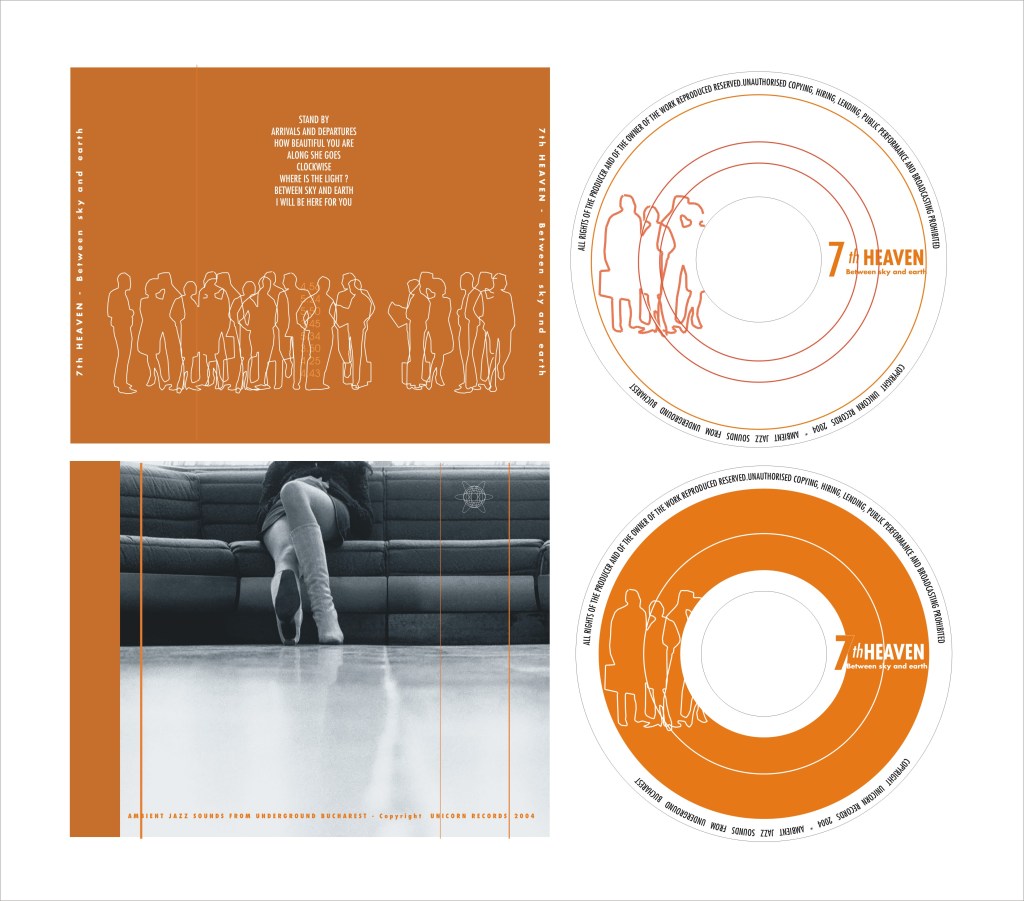
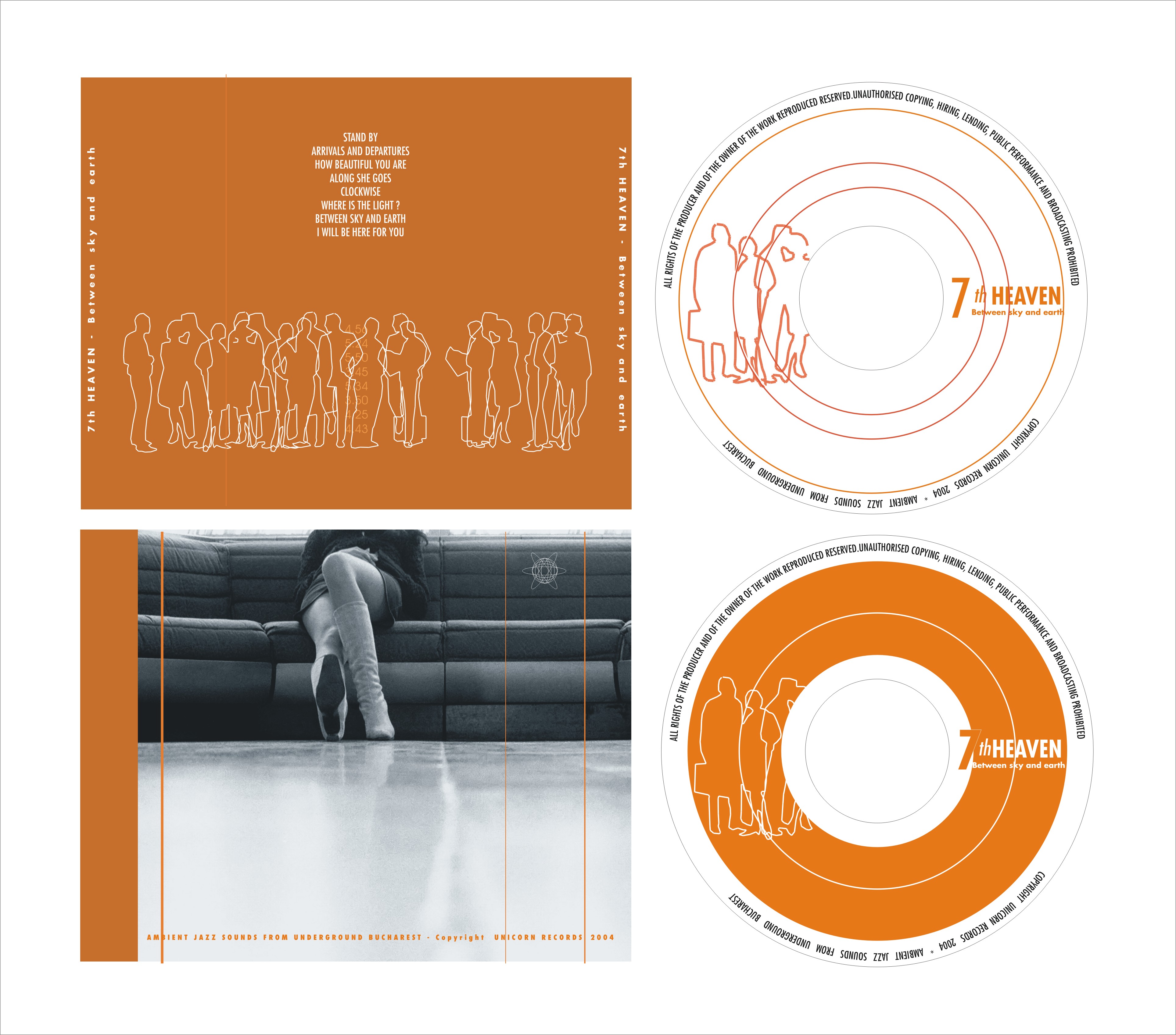
Haideți să mergem nițel la portofoliul meu de grafician de la mijlocul anilor 2000. Paula, soră-mea, tocmai crea un nou proiect muzical, cu o nouă trupă, denumită „7tth Heaven”. Dacă m-a rugat să concep o machetă de imagine pentru primul lor CD sau doar a fost o joacă a imaginației mele, iar nu mai rețin exact. Cert este că, în opinia mea, a ieșit o propunere destul de reușită: pornind de la două fotografii din portofoliul lui Alex, având ca model chiar iubita din anii ’90 (cea care apărea și în filmele sale de absolvire), am suprapus elemente de grafică vectorială, contururi de personaje din ArchiCAD și niște titluri fictive de piese. Line-up-ul trupei este, din câte îmi aduc aminte, cel de la acea vreme.
Evident, i-am arătat, mândru de rezultat, macheta finală și lui Alex, și Paulei, care cu siguranță l-a trimis și managerului de atunci, Paul N. Din câte vag îmi amintesc, proiectul fie n-a fost dus mai departe, fie n-a avut prea mare succes.
După ce mica machetă a stat ani de zile pe hard-diskurile computerelor mele, l-am expus pe website-ul meu personal, în secțiunea „portofoliu/grafică mixtă”. În opinia mea, proiectul rămâne un frumos experiment la limita dintre fotografia analogică și grafica vectorială.
Micul detaliu al cizmulițelor retro, de inspirație din moda anilor ’70, ale fetei din poze va apărea, după o vreme, în mod ciudat, în anturajul nostru și nu numai. Să nu uităm acest detaliu, pe care îl vom dezvolta în însemnări ulterioare. Astăzi realizez că, în anii în care portofoliul meu a rămas inactiv online, diverse personaje se vor fi uitat peste el și se vor fi inspirat. Iată de ce astăzi completăm nițel cu informație toate aceste posibile ramificații, ca să descoperim complicate fire invizibile ce vor fi pornit, fără știrea noastră, probabil, din unele lucrări expuse de mine online.
Observație: se pare că prezența în portofoliul meu a acestei machete ar fi putut fi chestionată. Dacă, într-adevăr, nu i-aș fi arătat fotografului Alex Ionescu proiectul și acesta nu l-ar fi acceptat sau mi-ar fi interzis folosirea lucrării lui, nu l-aș fi expus. Dar artistul nu a comentat acest lucru și am sperat ca, în viitor, să îl pot folosi ca demonstrație pentru a câștiga noi proiecte, noi clienți. Totuși, de dragul continuității parcursului meu creativ, voi expune aici macheta.
De remarcat că este posibil ca fiecare componentă a acestei machete să fi fost examinată de cineva în detaliu: fonturi, conexiunea cu softul ArchiCAD (dezvoltat la început de o companie maghiară, se pare), a cărui licență am cumpărat-o încă de la mijlocul anilor 2000, softul CorelDRAW, pe care atunci, recunosc, nu-l aveam cu licență și așa mai departe. Discuția despre copyright sau, cum se va fi speculat mai târziu, „noi suntem copii, right?” poate fi dusă destul de departe, dragi cetitori.
Să nu uităm că până și astăzi majoritatea artiștilor români dețin software fără licență – de la graficieni la muzicieni, de la arhitecți la autori sau poeți. Când e vorba să scoți bani pentru un editor de text, poți foarte ușor negocia această corectitudine în minte cu un simplu, lubric: „Da’ ce-s copil?” Și așa mai departe.
Softul ArchiCAD, atât de apreciat în comunitatea locală de arhitecți, este, într-adevăr, destul de scump. Și totuși, orice creativ serios și-l poate permite, probabil, după două-trei încasări din proiecte de mărime medie.
Mai putem iarăși discuta despre o terță speță: are oare fotograful permisiunea modelului, fosta sa iubită, să ofere mai departe produsul artistic? Este suficient acordul verbal între mine, grafician, și fotograf? Păi, bineînțeles că nu, din punct de vedere legal. Dar, având în vedere aceste posibile combinații și ramificații de situații nefaste, consider necesar să îl expun aici, măcar parțial.
Ei, dragi cetitori, conexiunea mea cu fotograful Alex Ionescu s-a întrerupt multă vreme. Discutam la doi-trei ani, telefonic. Omul era plecat deja prin Europa, declarând că se mișcă între Italia, Franța și, în ultima vreme, și Rusia.
Și iată că, în 2009, într-o excursie la snowboard în Franța, în domeniul Paradiski, în martie, renunț la sejur după doar trei zile: era prea cald, pârtiile erau pline de gheață. Excursia era organizată de fosta prietenă din liceu, Cristina S., alături de iubitul ei de atunci. Atmosfera din cameră era atât de ostilă și nocivă încât, sincer să fiu, puteai să tai agresivitatea cu cuțitul. În asemenea condiții, te dai singur pe pârtii până te plictisești. La câți eram înghesuiți într-un spațiu de vreo 3 × 4 metri (vreo șapte la număr), nici nu e de mirare.
Iau drumul Parisului, să-l văd pe fostul meu amic. Am luat TGV-ul din zona Grenoble și, în câteva ore, l-am întâlnit. Alex era cam ostil, absent, distant. În numele unei vechi prietenii – sau așa consideram atunci –, m-a găzduit câteva zile la el în garsonieră. Tipul mi-a arătat ce lucrează: fotografie profesională de modă, în timp ce preda și la o școală particulară de film (montaj, tehnici de producție).
Alex are un nou website: https://alessandroprincipe.com/ (sau ceva de genul), unde expune fotografii artistice. Ciudată redenumire, îmi spun: de la ax.ro (topor, secure, ax) la nobiliarul „prințul”, nu-i așa?
Sincer să fiu, am analizat pozele: erau, în opinia mea, ireproșabile, tehnic vorbind. Omul a evoluat, a studiat, a experimentat, a lucrat. După cum spune o veche vorbă printre fotografi, „o fotografie se construiește pas cu pas”. Și totuși, undeva, într-un sublayer, pozele sunt, în opinia mea, cam dark.
Ieșim într-o seară în centrul Parisului, într-un bar din apropierea casei lui Alex, și bem probabil o bere-două, sprijiniți de bar, discutând chestii inofensive. Lângă noi, un grup de francezi drăguți stau la taclale. Ei bine, dragi cetitori, mă îndrăgostesc fulgerător de o tipă frumușică cu care schimb câteva vorbe. Și, dintr-una în alta, ne apucăm să ne pupăm. Pur și simplu eram amândoi nițel amețiți, în diferite grade de alcoolizare. Ce să-i faci, ale tinereții valuri.
Bun. Dau să ies din locație – barul din centru –, iar frantuzoaica cu care mă pupasem un pic îmi cere un contact, un telefon, o întrevedere viitoare. Ar fi fost frumos, mi-am spus eu: ca niciodată în România, ca întotdeauna într-o societate civilizată, a romantismului și a iubirii autentice, bazate pe respect reciproc și respect de sine și de celălalt, ne-am fi putut plimba pe străzile Parisului, cunoscându-ne mai bine, împărtășind experiențe de viață, cunoscându-ne istoria personală mai în detaliu.
Dar, dragi cetitori, acest lucru nu era de fapt posibil. Am mărturisit fetei și grupului ei de prieteni că, în doar două zile, urma să iau avionul înapoi înspre țară și că orice continuare a unui nevinovat flirt era sortită eșecului. Și totuși, momentul contează, să știți, dragi cetitori. Ceea ce se întâmpla aici, acum, era mult mai important decât ceea ce alți actori ai unor rețele de influență ar fi putut pune la cale, ca mici pioni ai manipulărilor de orice fel, în timp și în spațiu. Aș vrea să admit, să recunosc că chiar mi-aș fi dorit continuarea acestor posibile interacțiuni, dacă nu aș fi intuit că asupra noastră veghează forțe nevăzute și că orice observator nevăzut raportează în timp util orice acțiune, întru speculațiuni ulterioare.
Haideți să ne mai amuzăm nițel. Aceleași zile, același Paris. După doar trei-patru zile de ski fără protecție solară la purtător, în zona Grenoble, eram destul de ars pe față. Expus la radiații UV la altitudini de 3000+ de metri, pe ghețarii Alpilor francezi, m-am prăjit destul de bine. Plimbându-mă aiurea pe străzile capitalei franceze, o doamnă trecătoare a observat, amuzată, privindu-mă: „Celui fait bien du ski!” Da, dragii mei, nu toată lumea are chef să-și aplice creme hidratante sau cu protecție solară la fiecare ieșire în décor. Pur și simplu, unii dintre noi ne asumăm rolul de sportivi relativ extremi, fără atâta grijă de sine, de ten și de sănătate. Mai târziu, mult mai târziu, observând modul în care, expunându-ne la elemente, pielea ne îmbătrânește accelerat, am decis că, totuși, am nevoie de protecție și de creme specializate. Observând târziu aceste efecte, înainte de fiecare ieșire cu bicicleta, astăzi aplic pe pielea feței și a mâinilor creme de protecție solară cu SPF 50.
Și iată-mă, acum doi-trei ani, cu Alex Ionescu vizitându-mă la reședința de pe Republicii 19/13, în călătoriile sale spre vastitatea Europei Centrale și de Vest/Est. Stăm vreo două ceasuri împreună, acasă la mine, în vastele mele apartamente.
Alex îmi prezintă noul său proiect audio. Am reacționat instant: vocea sa solo peste o orchestrație relativ decentă. Nu mi-a plăcut deloc. Același lubric ca de obicei, un ton aparent cald, duios. Păi și, îi răspund eu, doar te știu de peste 30 de ani. De unde acest nou proiect, de ce această nouă abordare care, până la urmă, nu dovedește altceva decât lipsă de autenticitate și de sinceritate?
Alex îmi descrie cu minuțiozitate metoda și mijloacele de producție, microfoanele utilizate, aparatura de studio folosită. Irelevant, îmi spun eu, urechea mea fină știe să detecteze în detaliu când cineva afirmă ceva sincer sau când timbrul sau tonul vocii vibrează nesigur. Eu îi arăt, în același timp, noile mele pasiuni: randări arhitecturale în D5 Render, noul software de origine chineză, acum adoptat de o largă majoritate din lumea creativilor de orice fel din lumea întreagă. Dacă Alex a fost impresionat de metoda mea de lucru și de dotările tehnice necesare este de văzut. Normal, tipul nu are o educație suficient de vastă în design, arhitectură sau randări pe plăci video cu mult VRAM.
Și, la urma urmei, mă întreb eu în final, ce caută acest artist, la 30 de ani după ce ne-am cunoscut accidental în biroul unui anume Lorin de etnie romă, sub bagheta unui manager necunoscut – Paul N. –, la mine acasă în Baia Mare, ca prin minune? Mai ales că adastă cu mama sa, într-o locație necunoscută, în oraș, în drum spre vastitatea spațiului european?
Da, dragii mei, nu întotdeauna suntem conștienți, la vârste fragede, de situațiile complicate în care ne vom regăsi de-a lungul vieții, conectați doar printr-o întâmplare nefastă cu un personaj aparent necunoscut care, în anii ce vor urma, se va regăsi în structuri și rețele de influență de neimaginat pentru moment.
Însă modul în care gestionăm modul de a ne raporta la asemenea indivizi și relația noastră cu ei este definitoriu pentru caracterul și evoluția noastră de mai târziu. Putem să trădăm, putem să compromitem, putem să manipulăm, putem să devenim detractori sau acuzatori la rândul nostru. Și toate acestea din frică, paranoia, exces de zel sau chiar amuzament, joacă, uneori. Sau, de ce nu, pentru un pumn de dolari.
English version
I was telling you in the previous entry about how I met Alex Ionescu, who has since become some kind of trainer or coach, or something along those lines, with a dedicated YouTube channel.
Throughout the ’90s and 2000s, we met sporadically – I would sometimes visit him at home, and we would talk about music, cinema and photography. At the time, I had not yet studied any visual art, so the more technical level of communication between us was electronic music.
Alex was a big fan of Gotan Project, an experiment that reinterpreted the sound of classical tango using modern means. From my point of view, the idea itself was rather facile, although well executed and produced. I was still listening to Pat Metheny, slightly more niche music, which surprised Alex a little – he probably considered himself the ultimate authority on… “everything artistical.” I was somewhat taken aback by the condescending way Alex treated my musical interests. Let’s be honest, you can’t really compare Gotan Project with Pat Metheny and, anyway, it’s like comparing apples with… nuts, or whatever else you fancy.
You see, superior attitudes and oversized egos have to be supported somehow. And so, at some point, Alex Ionescu produced a track that was to become extremely popular on music television. The band “Ionescu,” with the song “România de vânzare” (“Romania for Sale”):
YouTube – “România de vânzare”
In my opinion at the time, the work was extremely dark, creepy and absolutely unmusical. I wondered how a conservatory graduate could produce something so technically precarious and inept.
During some of our meetings, I also came to know the future director, photographer, instructor and coach’s fellow students: young, enthusiastic men, actors with great ambitions. Some of them appear in the cast of the video posted above. Later on, I also met Alex’s girlfriend at the time: an extremely beautiful young woman with a dark complexion, who would sometimes be present alongside the guys at their creative gatherings.
Now, at the time I was rather naïve and somewhat prudish. I asked Alex, the director, how he could cast his own girlfriend in a film and have her kiss another actor. To be honest, I don’t think I could have done such a thing myself, but I thought that artists coming out of theatre, directing or film schools were probably a little more experienced when it came to playing roles and detaching themselves from the “social mask.” It makes sense, you might say; after all, that is essentially what their profession is built around.
Still, I found one particular act of Alex’s toward his girlfriend absolutely appalling. A kick in the backside that he gave the girl in front of me and the others left me stunned. My immediate thought was that this man was crossing the boundaries of what I considered common sense or normal behavior, and that, somewhere along the line, his mind, personality and character seemed somewhat out of balance.
Perpetually slick, suspicious, ironic at times and sarcastic at others, the man now seems to me slightly overwhelmed by circumstances whenever we meet. Looking back, I can see an enormous number of radial connections across time (and space), based on details from our sporadic communication, which, as far as I was concerned, had always been driven by curiosity and by a desire to learn from someone more experienced.
With two or three university degrees in artistic fields under his belt – directing, the conservatory and, I believe, photography as well – I thought I would have plenty to learn, over time, from Alex and from his circle.
Let me tell you about a few charming little details from those years of communication:
1) A joke among conservatory students that amused me a little: the song probably studied as part of the curriculum, “Kyrie Eleison,” completed by the young musicians with “întreținere leison” – something like “maintenance leison.” Yes, a cute joke, facile and yet effective. “Chirie leison / întreținere leison” – rent in Romanian, maintenance in Romanian – and so on. From there, you could go on with all sorts of amusing improvisations: rent in euros, maintenance in lei, utility bills, and so forth.
2) Alex once told me about the time when, returning from Paris, where he was continuing his career, he went for a walk through central Bucharest. Since the guy was always elegantly dressed, somewhat unconventional, as befits any unconventional artist, he was also wearing a wide-brimmed hat. A car stopped beside him, and someone behind the wheel shouted: “Hey, you! I’ll shit in your hat!”
I wasn’t particularly amused, and presumably neither was Alex. In the 2000s, we were expected, weren’t we, to respect the prevailing “norms” when it came to standards of bad taste. Everyone simply had to wear jeans with as many holes as possible, extravagant colors and gold-colored necklaces in order to blend into the scenery. Here I sympathized with the poor misunderstood artist, although, to be honest, even his stage presence didn’t strike me as particularly suitable for an artistic manifesto in the middle of a backward-looking Capital.
I immediately remembered my parents’ friend Ami, the old man who had temporarily adopted me as a nephew, together with his wife, Bobo, and who had been arrested on the streets of Bucharest in the ’70s or ’80s for having a “Malagambist attitude.” Those who are curious can search the internet for details about who Malagamba was.
3) What else do I remember? Around the mid-2000s, Alex Ionescu had an online portfolio called www.ax.ro. The site’s tagline was something along the lines of “Welcome!” in English, while the Romanian message read: “Romanians, get the hell out of here!”
To be honest, this little online installation puzzled me, but I attributed it to the artist’s exasperation after, presumably, a series of unpleasant experiences within the Romanian media system. On the other hand, remembering all those borrowings from every possible direction, including my own track used as the soundtrack for his graduation film feat. Cătălina Mustață, which I wrote about in earlier entries, it seemed to me that the experimental artist had behaved much like any other Romanian in the media world. So his attitude toward Romanians, toward ordinary people of good sense, seemed to accuse him rather than excuse him.
I might have guessed that the whole thing was about “positioning” unconscious pawns in situations that could initially evolve only locally, at a national level. Unfortunately, with the development and branching-out of the internet and social media during the mid- and late ’90s, the initial calculations would presumably have had to be revised and the methods updated. That is, of course, assuming we were talking about media manipulation in the first place.
4) Alex’s ironic claim, toward the end of the ’90s, that there existed a deadly game in the world: a secret organization supposedly arranged human hunts, supposedly driven by the sadistic pleasure of pursuing a particular “target” all the way to extermination. Later, the internet began speculating about this conspiracy theory, attributing it to various kinds of secret societies that seemed to have appeared out of nowhere: the “Illuminati,” the “global occult,” and countless variations, schemes, structures and branches.
Of course, I thought the idea was ridiculous. I was mildly amused, incredulous, listening to such an intellectual holding forth about such scenarios. But there was also a trace of seriousness in the director’s eyes which, after twenty-something years, I am beginning to understand a little better. Either the man was simply playing with ideas, or he already had an intuition that things might evolve toward something extremely ominous. Perhaps, deep down in society, such habits and pleasures really do exist. For connoisseurs only, right?
5) I left Bucharest for a cabin somewhere toward the mountains, with a group of Alex’s friends. We brought some alcohol with us and got a little drunk. To be honest, I had already been in a state of total blackout for quite some time, and, in the euphoria generated by a little alcohol, I told Alex: “I can’t believe you’ve never drunk and that you don’t want to live in such a reality” – the reality produced by alcohol. Alex replied: “Well, well… I can’t believe that YOU don’t want to live in the completely lucid reality I live in” – meaning a life without any form of substance abuse whatsoever.
And so, a few years later, I remembered the director’s advice and spent almost a decade without putting a drop of alcohol, coffee or a cigarette to my lips. To be honest, the man had a point: being completely lucid is a sign of considerable self-control. But sometimes troubles weigh on us so deeply that you simply can’t cope without a stiff drink.
I shouldn’t forget my friend’s little observation when, looking at me from behind, he remarked that “I have quite a feminine backside.” I was a little offended; I saw it more as the result of fitness and being in good physical shape. As always, truth lies in the eye of the beholder. But, my dear readers, he wasn’t the only one to make such remarks. Ever since I started working out in fitness gyms, I have occasionally heard little comments of this sort.
Naturally, we cannot fail to remember the good old, bus-station-style saying: “From the front, high school; from behind, museum” – or the other way around. De gustibus. As I said, you can’t stop the grapevine from making its little jokes or speculating in its own way, creating those little social memes that seem to appear out of nowhere.
6) Probably sometime in the early 2000s, fascinated by Alex’s talent as a photographer – the only one of his skills I genuinely appreciated – I either asked him for a CD containing his portfolio, or he gave me one himself, for study or inspiration. You see, this little detail has been lost in the mists of time, although, to be honest, it’s not as if we hadn’t also discussed the technical side of this beautiful creative field, both online and over the phone.
The photographs were shot on analog film, with beautiful colors and exceptional subjects. I did not consider myself capable of reaching his level of mastery, but years later, when I began taking photographs myself, I understood even better how beautifully the man worked in those days, when photography was a more difficult art to master. Analog photography required experimentation and experience, money for developing, knowledge of chemistry, specialized chemicals, and so on.
Let’s move on a little to my own graphic-design portfolio from the mid-2000s. Paula, my sister, was just creating a new musical project with a new band called “7tth Heaven.” I no longer remember whether she asked me to design a visual mock-up for their first CD or whether it was simply a game of my own imagination. What I do know is that, in my opinion, the proposal turned out rather well: starting from two photographs from Alex’s portfolio, featuring his girlfriend from the ’90s as the model – the same woman who also appeared in his graduation films – I superimposed vector-graphic elements, character outlines from ArchiCAD, and some fictional song titles. As far as I remember, the band lineup was the one they had at the time.
Naturally, proud of the result, I showed the finished mock-up to both Alex and Paula, who almost certainly passed it on to her manager at the time, Paul N. As far as I vaguely remember, the project either went no further or did not achieve much success.
After the little mock-up had spent years sitting on my computer hard drives, I eventually displayed it on my personal website, in the “mixed graphics portfolio” section. In my opinion, the project remains a nice experiment somewhere on the borderline between analog photography and vector graphics.
The little detail of the girl’s retro ankle boots, inspired by ’70s fashion, would later appear, rather strangely, within our circle and beyond. Let’s not forget this detail; we will develop it in later entries. Today I realize that, during the years when my portfolio remained dormant online, various people may have looked through it and drawn inspiration from it. This is why, today, I am adding a little more information to all these possible branches, so that we can discover the complicated invisible threads that may have originated, without our knowledge, in some of the works I had displayed online.
Observation: it seems that the presence of this mock-up in my portfolio might have been questioned. If I had not actually shown the project to photographer Alex Ionescu and he had not accepted it, or had forbidden me to use his work, I would not have displayed it. But the artist never commented on the matter, and I hoped that, in the future, I might use it as a demonstration piece to win new projects and new clients. Still, for the sake of continuity in my creative journey, I will display the mock-up here.
It is worth noting that every component of this mock-up might have been examined by someone in detail: the fonts, the connection with ArchiCAD (apparently originally developed by a Hungarian company), whose license I purchased as early as the mid-2000s, the CorelDRAW software, which, I admit, I did not have properly licensed at the time, and so on. The discussion about copyright – or, as it might have been jokingly interpreted later, “we are children, right?” – can be taken quite a long way, dear readers.
Let’s not forget that even today, most Romanian artists use unlicensed software – from graphic designers to musicians, from architects to writers and poets. When it comes to paying money for a text editor, you can very easily negotiate that sense of correctness in your own mind with one lubric little phrase: “What am I, a child?” And so on.
ArchiCAD, so highly valued within the local architecture community, is indeed rather expensive. And yet, any serious creative professional can probably afford it after two or three medium-sized project payments.
We can also discuss a third issue: does the photographer have permission from the model, his former girlfriend, to pass the artistic work on to someone else? Is a verbal agreement between me, the graphic designer, and the photographer sufficient? Well, obviously not, from a legal standpoint. But given these possible combinations and branches of unfortunate circumstances, I consider it necessary to display the work here, at least partially.
Well, dear readers, my connection with photographer Alex Ionescu was interrupted for a long time. We would speak on the phone every two or three years. He was already living somewhere in Europe, saying that he moved between Italy, France and, more recently, Russia.
And then, in 2009, during a March snowboarding trip to France, in the Paradiski area, I abandoned the holiday after only three days: it was too warm, and the slopes were covered in ice. The trip had been organized by my former high-school girlfriend, Cristina S., together with her boyfriend at the time. The atmosphere in the room was so hostile and toxic that, honestly, you could have cut the aggression with a knife. Under such circumstances, you simply go skiing on your own until you get bored. With around seven of us crammed into a space of roughly 3 by 4 meters, it is hardly surprising.
I headed for Paris to see my former friend. I took the TGV from the Grenoble area and met him a few hours later. Alex was somewhat hostile, absent, distant. In the name of an old friendship – or so I regarded it at the time – he put me up for a few days in his studio apartment. He showed me what he was working on: professional fashion photography, while also teaching at a private film school, covering editing and production techniques.
Alex had a new website, https://alessandroprincipe.com/ (or something along those lines), where he displayed artistic photography. A strange renaming, I thought: from ax.ro – axe, hatchet, ax – to the rather noble-sounding “prince,” right?
To be honest, I examined the photographs: technically speaking, they were impeccable, in my opinion. The man had evolved, studied, experimented, worked. As an old saying among photographers goes, “a photograph is built step by step.” And yet, somewhere in a sublayer, the photographs seemed rather dark to me.
One evening we went out in central Paris, to a bar near Alex’s place, and probably had a beer or two, leaning against the bar and discussing harmless things. Next to us, a nice group of French people were chatting. Well, dear readers, I fell instantly for a pretty girl with whom I exchanged a few words. And one thing led to another, and we started kissing. We were simply both a little tipsy, at different levels of intoxication. What can you do? The waves of youth.
Right. As I was about to leave the bar, the French girl I had been kissing asked me for some contact information, a phone number, a future meeting. It would have been beautiful, I told myself: unlike in Romania, as one might expect in a civilized society built around romance and genuine love, based on mutual respect and respect for oneself and for the other, we could have walked the streets of Paris, getting to know each other better, sharing life experiences, learning more about each other’s personal histories.
But, dear readers, that was not actually possible. I told the girl and her group of friends that I was flying back home in only two days and that any continuation of this innocent flirtation was doomed to failure. And yet, the moment matters, you know, dear readers. What was happening here, now, was much more important than whatever other actors in networks of influence might have been planning, with little pawns serving various forms of manipulation across time and space. I would like to admit, to acknowledge, that I genuinely would have liked these possible interactions to continue if I had not had the intuition that unseen forces were watching over us and that some invisible observer would duly report every action for later speculation.
Let’s have a little more fun. Same days, same Paris. After only three or four days of skiing without any sunscreen with me, in the Grenoble area, my face was pretty badly burned. Exposed to UV radiation at altitudes above 3,000 meters, on the glaciers of the French Alps, I got thoroughly roasted. Walking aimlessly through the streets of the French capital, a passing woman looked at me and, amused, observed: “Celui fait bien du ski!” Yes, my dear readers, not everyone feels like applying moisturizer or sunscreen every time they go out. Some of us simply embrace the role of relatively extreme athletes, without quite so much concern for our skin, our health or ourselves. Much later, much much later, after noticing how exposure to the elements accelerates the aging of our skin, I decided that I really did need protection and specialized creams. Having realized these effects rather late, today I apply SPF 50 sunscreen to my face and hands before every bike ride.
And here I am, two or three years ago, with Alex Ionescu visiting me at my residence on Republicii 19/13, during his travels through the vastness of Central and Western/Eastern Europe. We spent about two hours together, at my place, in my vast apartments.
Alex showed me his new audio project. I reacted instantly: his solo voice over a relatively decent orchestration. I didn’t like it at all. The same slickness as usual, an apparently warm, tender tone. “Well,” I replied, “I’ve known you for over 30 years. Where does this new project come from? Why this new approach, which, in the end, seems to demonstrate nothing but a lack of authenticity and sincerity?”
Alex described his production methods and tools in meticulous detail, the microphones he used, the studio equipment. Irrelevant, I told myself. My trained ear knows how to detect in detail when someone is saying something sincerely and when the timbre or tone of their voice vibrates with uncertainty. At the same time, I showed him my new passions: architectural rendering in D5 Render, the new software originating in China and now adopted by a large part of the global creative community. Whether Alex was impressed by my working method and the technical equipment required remains to be seen. Naturally, the man does not have a sufficiently broad education in design, architecture or GPU-based rendering involving large amounts of VRAM.
And, in the end, I ask myself, what is this artist doing, 30 years after we accidentally met in the office of a certain Lorin, a Roma businessman, under the baton of an unknown manager – Paul N. – now sitting in my home in Baia Mare, almost as if by magic? Especially since he is staying with his mother somewhere in the city, in an unknown location, on his way toward the vastness of Europe?
Yes, my dear readers, we are not always aware, when we are young, of the complicated situations in which we will find ourselves throughout our lives, connected merely by an unfortunate coincidence to an apparently unknown character who, years later, may find himself inside structures and networks of influence that would have been unimaginable at the time.
Yet the way we manage our relationship with such people, and the way we choose to relate to them, ultimately defines our character and our later development. We can betray, we can compromise, we can manipulate, we can become detractors or accusers ourselves. And all of this out of fear, paranoia, excessive zeal, or sometimes even amusement, play. Or, why not, for a fistful of dollars.
 PAUL SELING
Leave a comment