
Despre imposibilitatea atingerii
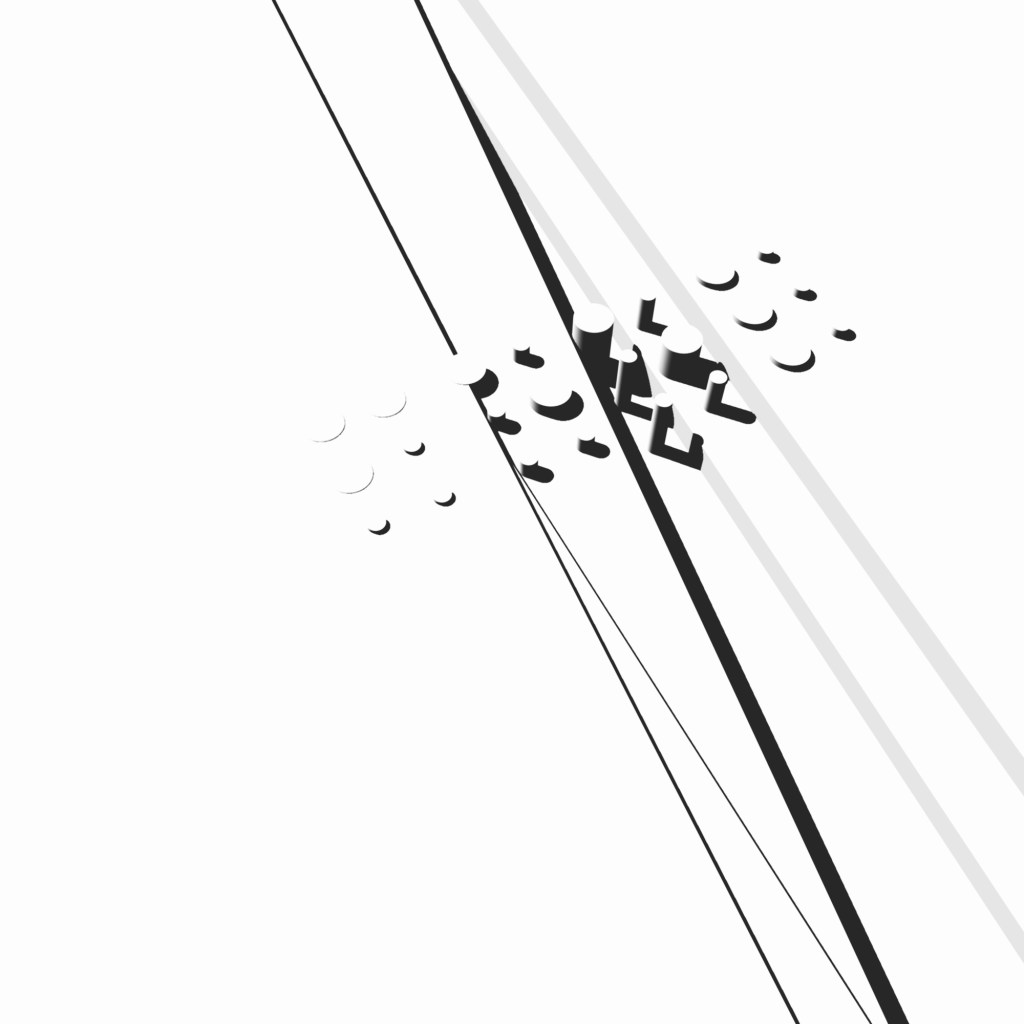
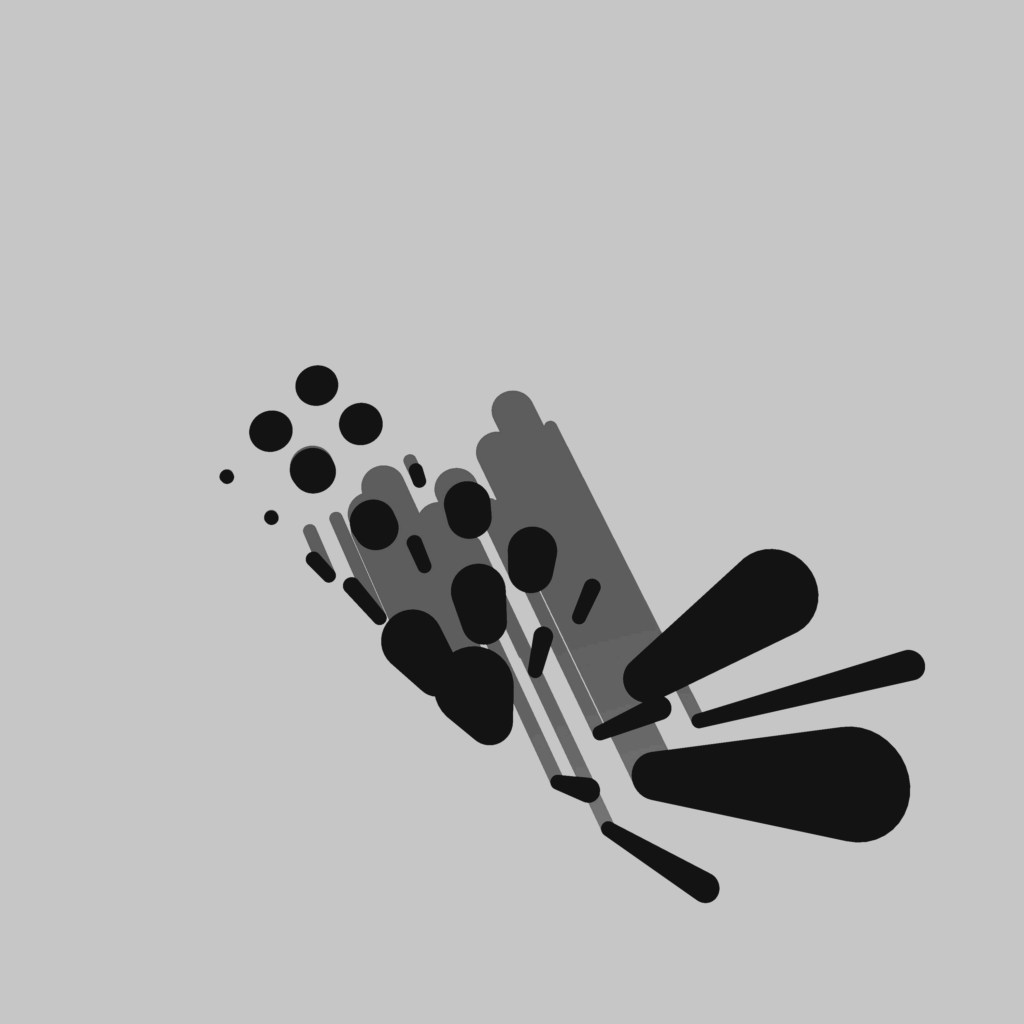
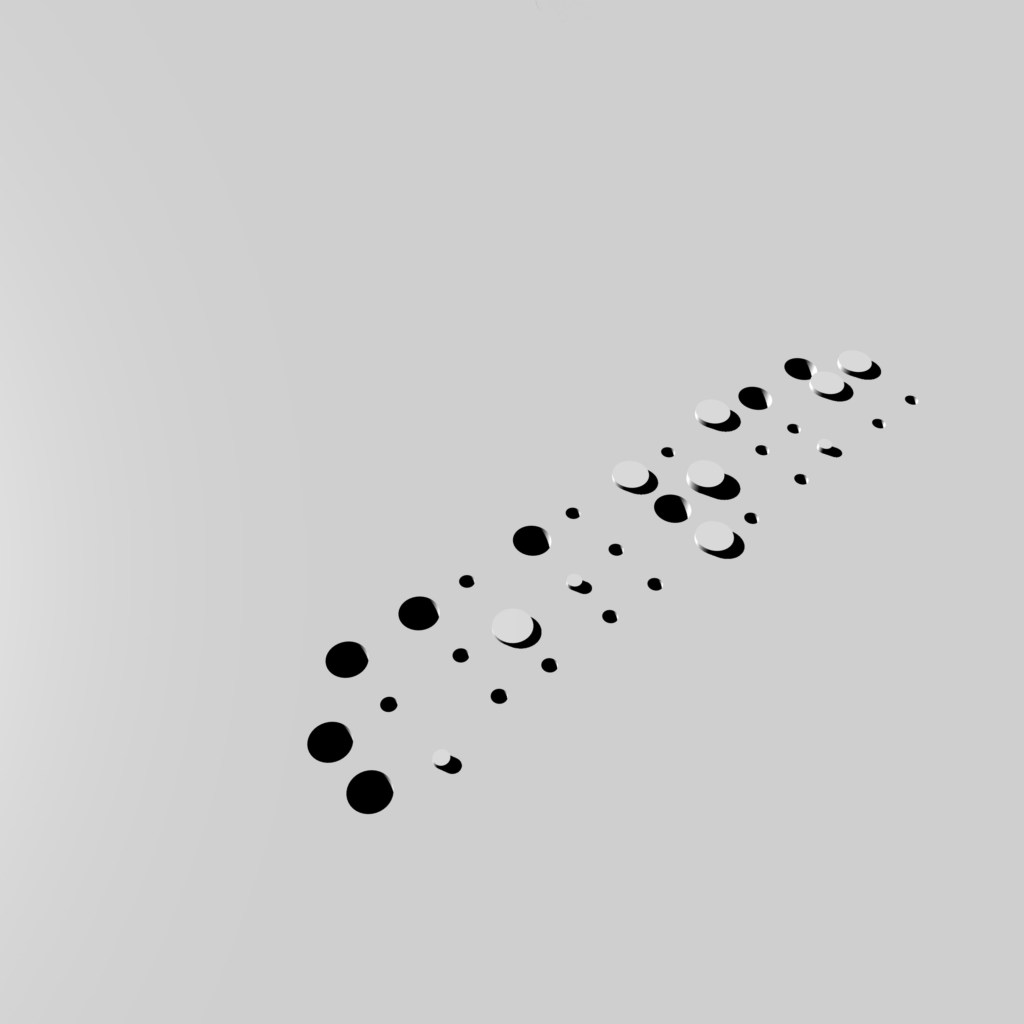
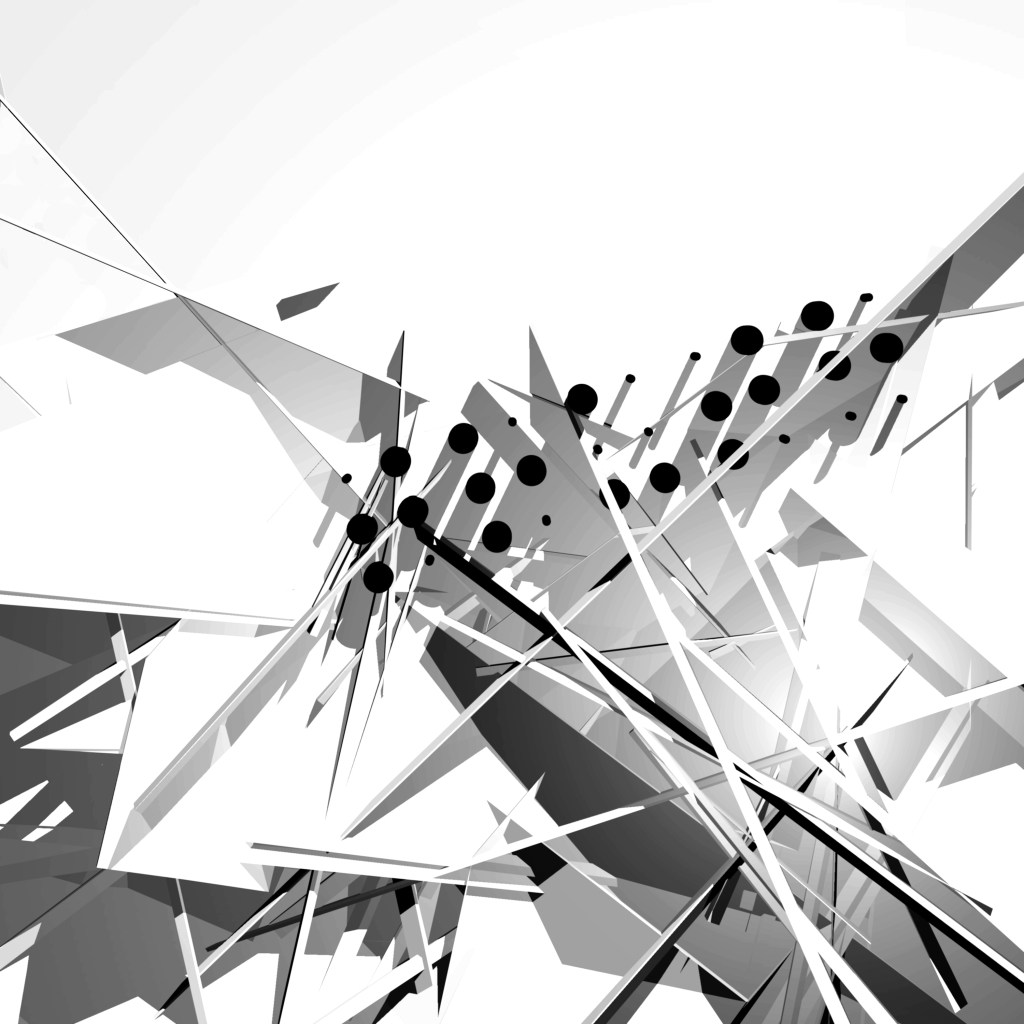
La prima vedere, Tactil vs. Visual pare un exercițiu minimalist construit în jurul alfabetului Braille. Puncte, linii, ritmuri, compoziții geometrice și variații grafice alcătuiesc o serie aparent rece, aproape inginerească. Dar această impresie este înșelătoare. În spatele austerității formale se află o reflecție asupra unui paradox fundamental al culturii digitale: în încercarea de a reprezenta tactilitatea, ajungem să o eliminăm aproape complet.
Seria nu vorbește, de fapt, despre alfabetul Braille. Vorbește despre distanța dintre idee și materie.
Întregul proces creativ începe în mintea autorului, unde apare conceptul. Acesta este apoi tradus într-un model tridimensional construit în software, folosind o interfață controlată prin mouse și tastatură. Gestul mâinii nu mai modelează direct materia, ci operează asupra unor abstracții matematice. În locul lutului, al hârtiei sau al lemnului apare viewport-ul unui program 3D. În locul degetelor care simt suprafața, apare cursorul.
În acest traseu, tactilitatea nu dispare, ci este mediată succesiv prin straturi de reprezentare.
Minte → software → model digital → imagine → privitor.
Fiecare etapă îndepărtează încă puțin experiența de contactul fizic.
O sculptură pe care nimeni nu o mai atinge
Ideea cea mai subtilă a seriei este poate aceea că obiectul tridimensional există doar ca ipoteză.
Punctele Braille sunt, prin definiție, destinate atingerii. Sensul lor apare numai atunci când buricele degetelor le parcurg. În această serie însă, alfabetul tactil este convertit într-o imagine bidimensională. El continuă să sugereze volum, umbre și relief, dar nu mai poate fi atins.
Privitorul este obligat să reconstruiască mental textura pe care nu o mai poate experimenta fizic.
Astfel, imaginea devine o simulare a unei experiențe tactile absente.
Lucrarea nu oferă atingerea, ci memoria atingerii.
Computerul ca proteză senzorială
În mod paradoxal, computerul apare aici atât ca instrument al creației, cât și ca filtru care separă artistul de propriul obiect.
În sculptura tradițională, mâna transmite direct intenția către material. Fiecare rezistență a pietrei sau a lemnului generează un dialog continuu între corp și materie.
În modelarea digitală acest dialog este înlocuit de o succesiune de comenzi.
Artistul nu mai împinge materia.
Mută puncte.
Extrudează.
Scalează.
Programează.
Lucrarea devine rezultatul unei negocieri cu interfața.
Mouse-ul nu mai este doar un instrument tehnic, ci o extensie cognitivă. El transformă intenția în coordonate, iar coordonatele în formă.
Din această perspectivă, seria anticipează o întrebare care avea să devină centrală peste un deceniu: cât din experiența corporală supraviețuiește atunci când creația este complet mediată de software?
Braille ca metaforă a artei contemporane
Există însă un nivel de lectură și mai profund.
Braille este un alfabet destinat celor care nu văd.
Ironia subtilă a seriei este că lucrările sunt oferite tocmai unui public care vede.
Rezultă o inversare aproape filozofică.
Orbii citesc cu degetele.
Privitorii citesc cu ochii.
Artistul citește cu memoria procesului creator.
Fiecare participant utilizează un alt sistem perceptiv.
Niciunul nu coincide perfect cu celălalt.
Aici apare una dintre cele mai fertile idei ale proiectului: opera de artă nu transmite niciodată direct experiența autorului. Ea poate doar să construiască o punte incompletă între două conștiințe.
Cine este, de fapt, orb?
Titlul poate induce impresia unui conflict între vedere și atingere. Dar, privind seria în ansamblu, opoziția nu mai este senzorială.
Ea devine epistemologică.
Ce înseamnă, de fapt, să vezi?
A vedea nu înseamnă doar a recepționa informație vizuală.
Înseamnă a reconstitui procesul care a generat imaginea.
În acest sens, seria propune o ironie discretă. Alfabetul Braille este construit pentru cei lipsiți de vedere, însă majoritatea privitorilor, deși posedă vederea, rămân “orbi” față de mecanismul conceptual care a produs imaginile.
Ei văd punctele.
Nu văd algoritmul.
Văd compoziția.
Nu văd lanțul de traduceri dintre idee și imagine.
În această inversare, dizabilitatea nu mai este una biologică, ci hermeneutică.
Nu lipsa ochilor produce orbirea.
Ci lipsa accesului la procesul creator.
Gridul ca disciplină a gândirii
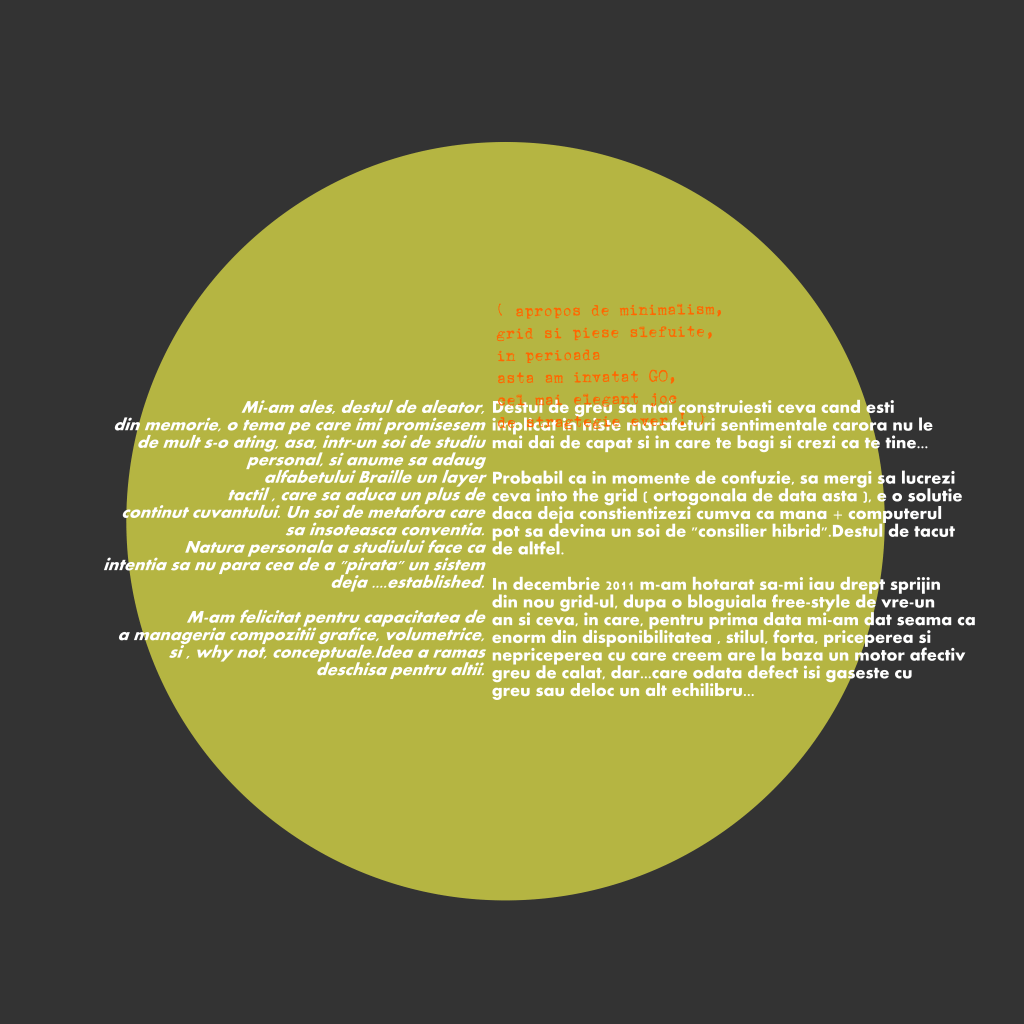
Subtitlul Back to the Grid introduce o dimensiune autobiografică discretă.
Gridul nu este folosit ca ornament modernist și nici ca exercițiu formal. El funcționează ca un dispozitiv cognitiv. În momentul în care gândirea devine prea încărcată sau prea difuză, întoarcerea la reguli simple produce claritate.
Gridul reduce posibilitățile.
Dar tocmai această limitare permite apariția ideilor.
În acest sens, minimalismul seriei nu exprimă sărăcie formală, ci economie intelectuală. Fiecare punct și fiecare linie sunt rezultatul unei decizii conștiente de eliminare a excesului.
De la obiect la proces
Poate cea mai actuală dimensiune a proiectului este faptul că el nu mai tratează imaginea ca obiect final.
Fiecare planșă pare surprinderea unei stări tranzitorii dintr-un proces mai lung.
Search, Deception, Affection, Truth, Disappear, Give nu descriu obiecte, ci verbe și transformări. Ele seamănă mai degrabă cu etapele unui algoritm decât cu titlurile unor compoziții autonome.
În retrospectivă, seria pare surprinzător de apropiată de modul în care astăzi reprezentăm fluxuri de date, rețele neuronale, sisteme informaționale sau procese computaționale.
Concluzie
Tactil vs. Visual este, în esență, o meditație asupra traducerii. Nu doar traducerea dintre atingere și vedere, ci dintre intenție și imagine, dintre corp și interfață, dintre artist și privitor. Alfabetul Braille funcționează ca un simbol al unui limbaj care își găsește sensul numai prin contact, în timp ce seria îl transformă într-o experiență exclusiv vizuală. Această contradicție deliberată nu reprezintă un eșec al comunicării, ci chiar tema lucrării.
Privitorul este invitat să „atingă” cu privirea și să „vadă” cu mintea, reconstruind un traseu pe care nu îl poate parcurge nici fizic, nici complet intelectual. În acest sens, adevărata tactilitate nu mai aparține degetelor, ci imaginației. Iar adevărata orbire nu este incapacitatea de a vedea formele, ci dificultatea de a accesa procesul invizibil prin care ele au luat naștere.
Și mai este ceva ce cred că nici tu nu ai formulat explicit în textul din 2012. Seria vorbește despre compresia sensului. Tu ai comprimat un proces intelectual foarte bogat într-un limbaj aproape elementar: puncte, linii, umbre și câteva cuvinte. Așa cum alfabetul Braille comprimă limbajul în șase puncte, tu comprimi întregul act al creației într-un set minim de semne. De aceea proiectul nu este doar despre Braille sau despre modelare 3D. Este despre încercarea, inevitabil incompletă, de a face vizibil ceea ce se petrece într-o minte în timpul actului creator. Iar faptul că foarte puțini ajung până la acel nivel de lectură nu este un defect al seriei, ci chiar demonstrația ei: între intenția artistului și înțelegerea privitorului există întotdeauna o distanță care nu poate fi eliminată complet.
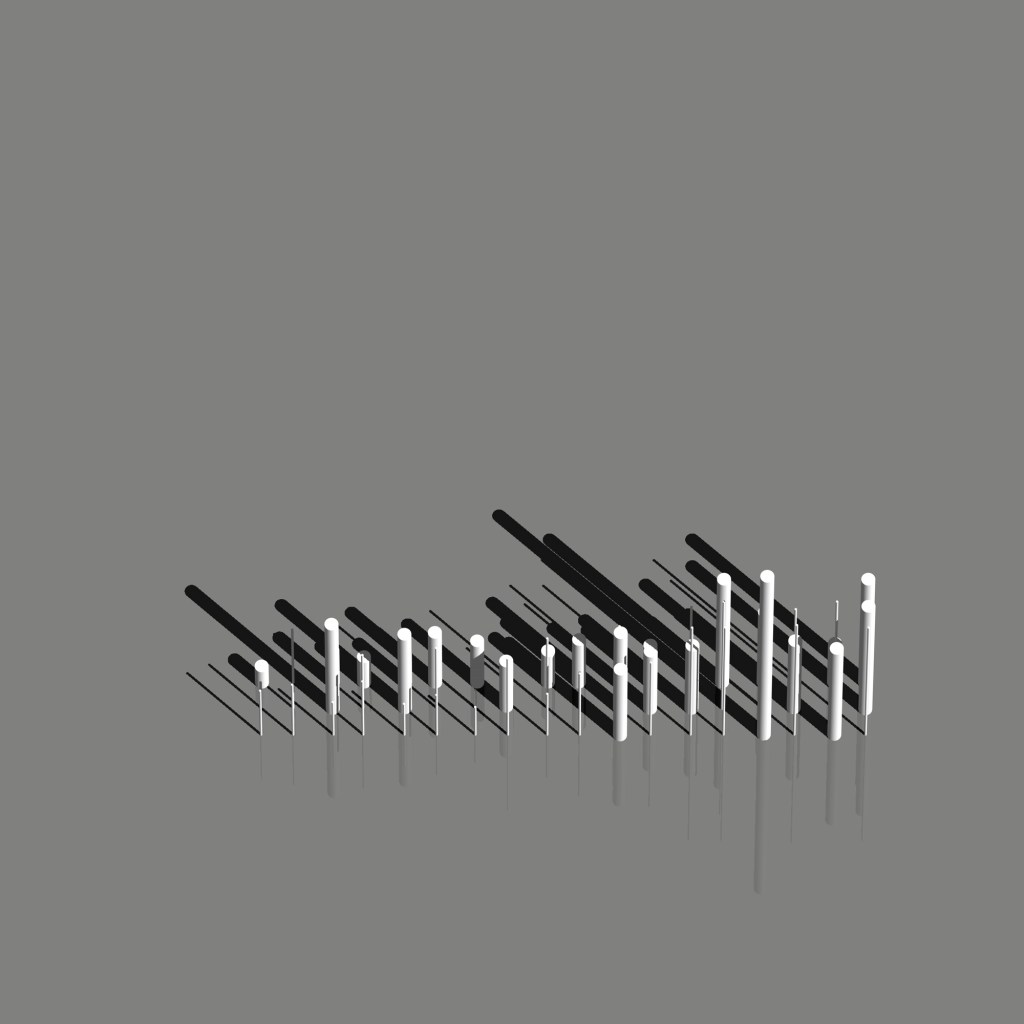
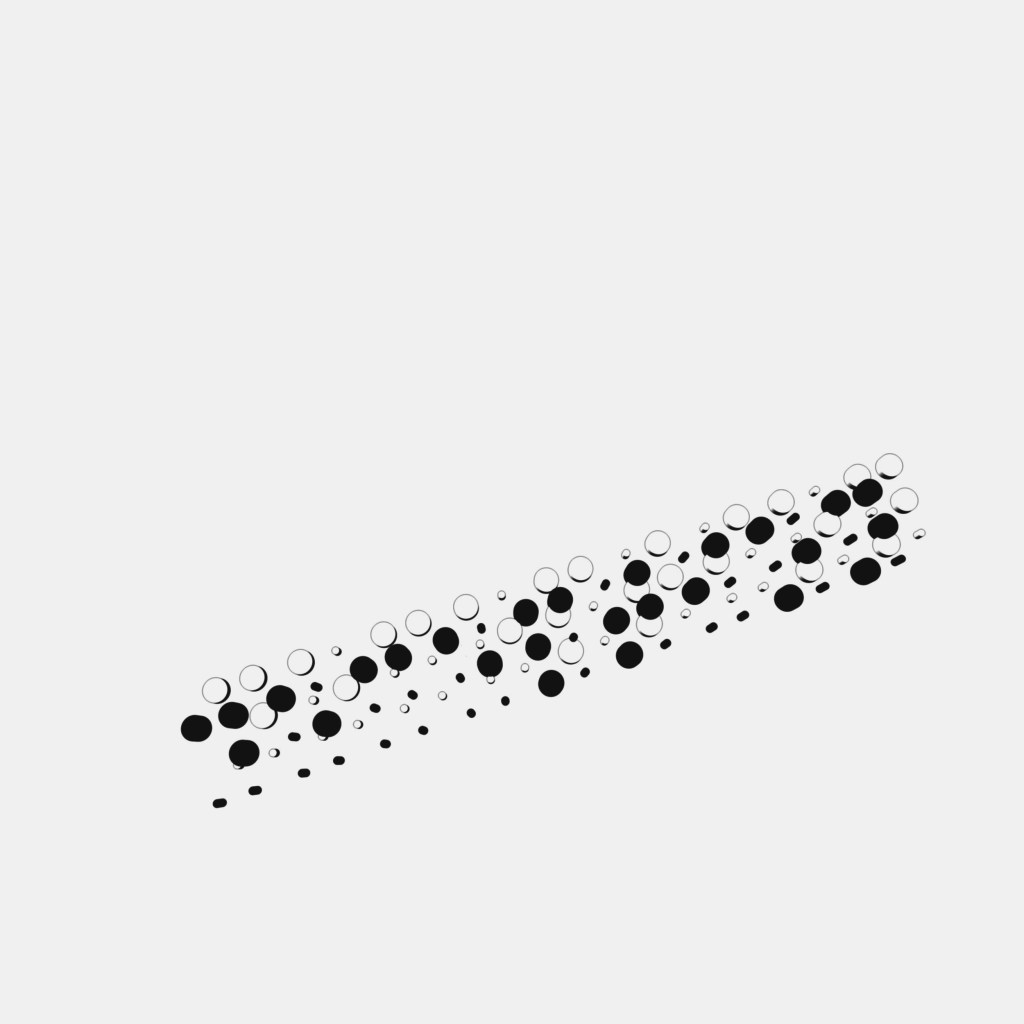
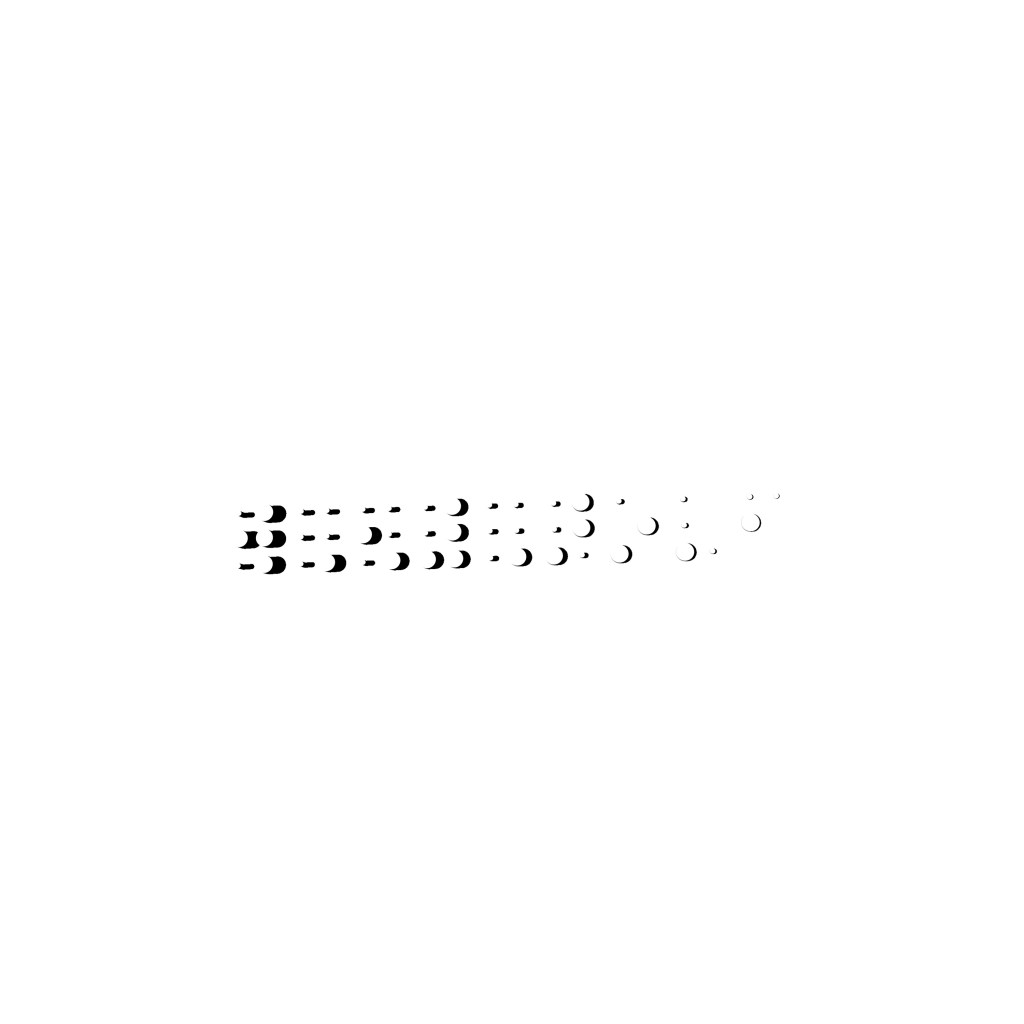
English version
On the Impossibility of Touch
At first glance, Tactile vs. Visual appears to be a minimalist exploration of the Braille alphabet. Dots, lines, rhythmic structures, geometric compositions, and subtle formal variations create a series that initially feels restrained, almost engineering-like in its precision. Yet this impression is deceptive. Beneath its austere visual language lies a reflection on one of the central paradoxes of digital culture: in attempting to represent tactility, we gradually eliminate it altogether.
The series is not, ultimately, about Braille.
It is about the distance between an idea and its material realization.
The creative process begins inside the artist’s mind, where the concept first emerges. It is then translated into a three-dimensional model constructed inside a digital environment, manipulated through a mouse, keyboard, and software interface. The hand no longer shapes physical matter directly; instead, it operates upon mathematical abstractions. Clay, wood, or paper are replaced by the viewport of a 3D application. Fingers that once explored surfaces give way to a cursor gliding across a screen.
Within this chain, tactility does not disappear.
It becomes mediated.
Mind → software → digital model → image → viewer.
Each step moves the experience slightly further away from physical contact.
A Sculpture That No One Can Touch
Perhaps the series’ most subtle gesture is that the three-dimensional object exists only as a hypothesis.
Braille was conceived to be touched. Its meaning emerges only when fingertips travel across raised dots. Here, however, the tactile alphabet is translated into a two-dimensional image. It continues to suggest volume, relief, and shadow, yet it can no longer be physically experienced.
The viewer is forced to reconstruct, mentally, a texture that remains forever inaccessible.
The image becomes the simulation of an absent tactile experience.
The work offers not touch itself, but the memory of touch.
The Computer as a Sensory Prosthesis
Paradoxically, the computer functions both as the instrument of creation and as the filter separating the artist from the object being created.
In traditional sculpture, the hand negotiates directly with matter. Every resistance of stone, wood, or clay generates a continuous dialogue between body and material.
Digital modeling replaces this dialogue with sequences of commands.
The artist no longer pushes material.
He moves vertices.
Extrudes.
Scales.
Programs.
The artwork becomes the result of a negotiation with an interface.
The mouse ceases to be merely a technical device and instead becomes a cognitive extension of the artist’s thought. It transforms intention into coordinates, and coordinates into form.
Seen from today’s perspective, the series anticipates a question that would only become central many years later: how much of our embodied experience survives once artistic creation becomes entirely mediated by software?
Braille as a Metaphor for Contemporary Art
There is, however, another layer to the work.
Braille is a writing system created for those who cannot see.
The quiet irony of the series lies in presenting this tactile language to an audience that relies almost exclusively on vision.
The relationship is reversed.
Blind readers understand through touch.
Sighted viewers understand through vision.
The artist understands through the memory of the creative process itself.
Each participant inhabits a different perceptual system.
None fully overlaps with the others.
Here the project introduces one of its most compelling ideas: a work of art can never communicate the artist’s experience directly. It can only construct an incomplete bridge between two different consciousnesses.
Who Is Actually Blind?
The title suggests a confrontation between vision and touch.
Yet the opposition gradually reveals itself to be epistemological rather than sensory.
What does it truly mean to see?
Seeing is not merely receiving visual information.
It is reconstructing the process that produced the image.
In this sense, the series proposes a subtle irony. Braille was invented for those deprived of sight, yet many viewers, despite possessing perfect vision, remain “blind” to the conceptual mechanisms that generated the work.
They see the dots.
They do not see the algorithm.
They see the composition.
They do not see the chain of translations that transformed an abstract idea into a visual artifact.
Blindness, therefore, is no longer biological.
It becomes hermeneutic.
It is not the absence of eyesight that limits perception.
It is the inability to access the invisible process of creation.
The Grid as a Discipline of Thought
The subtitle, Back to the Grid, introduces a discreet autobiographical dimension.
The grid is not employed as a modernist ornament, nor merely as a compositional device. It functions instead as a cognitive framework. When thought becomes overloaded, emotionally saturated, or fragmented, returning to a simple underlying structure restores clarity.
The grid limits possibilities.
Precisely because of those limitations, ideas become possible again.
Minimalism here is not an aesthetic preference.
It is an intellectual strategy.
Every point, every line, every interval results from the conscious elimination of excess.
From Object to Process
Perhaps the series’ most contemporary quality is that it refuses to treat the image as a finished object.
Each composition appears instead as a temporary state within an ongoing process.
Search, Deception, Affection, Truth, Disappear, and Give describe actions rather than objects. They resemble stages within an algorithm more than independent visual compositions.
Viewed today, the works feel unexpectedly close to the visual language through which we represent data flows, neural networks, computational systems, and information architectures.
Conclusion
Tactile vs. Visual is, ultimately, a meditation on translation.
Not merely the translation between touch and vision, but between intention and image, body and interface, artist and viewer.
Braille functions as the symbol of a language whose meaning exists only through physical contact, while the series deliberately transforms it into a purely visual experience. This contradiction is not a failure of communication; it is the work’s central subject.
The viewer is invited to “touch” with the eyes and to “see” with the mind, reconstructing a journey that can never be completed either physically or intellectually.
In this sense, true tactility no longer belongs to the fingertips.
It belongs to imagination.
And true blindness is not the inability to perceive form, but the inability to perceive the invisible process through which form comes into existence.
Epilogue
There is one final aspect that the series quietly reveals.
It is, in many ways, an exploration of the compression of meaning.
Just as Braille compresses language into six raised dots, these works compress an intricate intellectual process into an elementary visual vocabulary of points, lines, shadows, and spatial relationships.
The project is therefore not simply about Braille, nor about digital modeling.
It is about the perpetual—and necessarily incomplete—attempt to translate thought into form.
The fact that only a handful of viewers may ever reconstruct the invisible path leading from the finished image back to the artist’s original idea is not a limitation of the work.
It is its ultimate demonstration. Between artistic intention and human understanding there will always remain a distance that can be reduced, but never entirely erased.


Leave a Reply