
Română
Titanic, with…
Există situații-limită în care orice mască socială ar trebui să cadă. Momente în care profesia, hobby-ul, convingerile sau micile obsesii cotidiene devin irelevante în fața unei realități imposibil de negociat.
Dar dacă nu s-ar întâmpla asta?
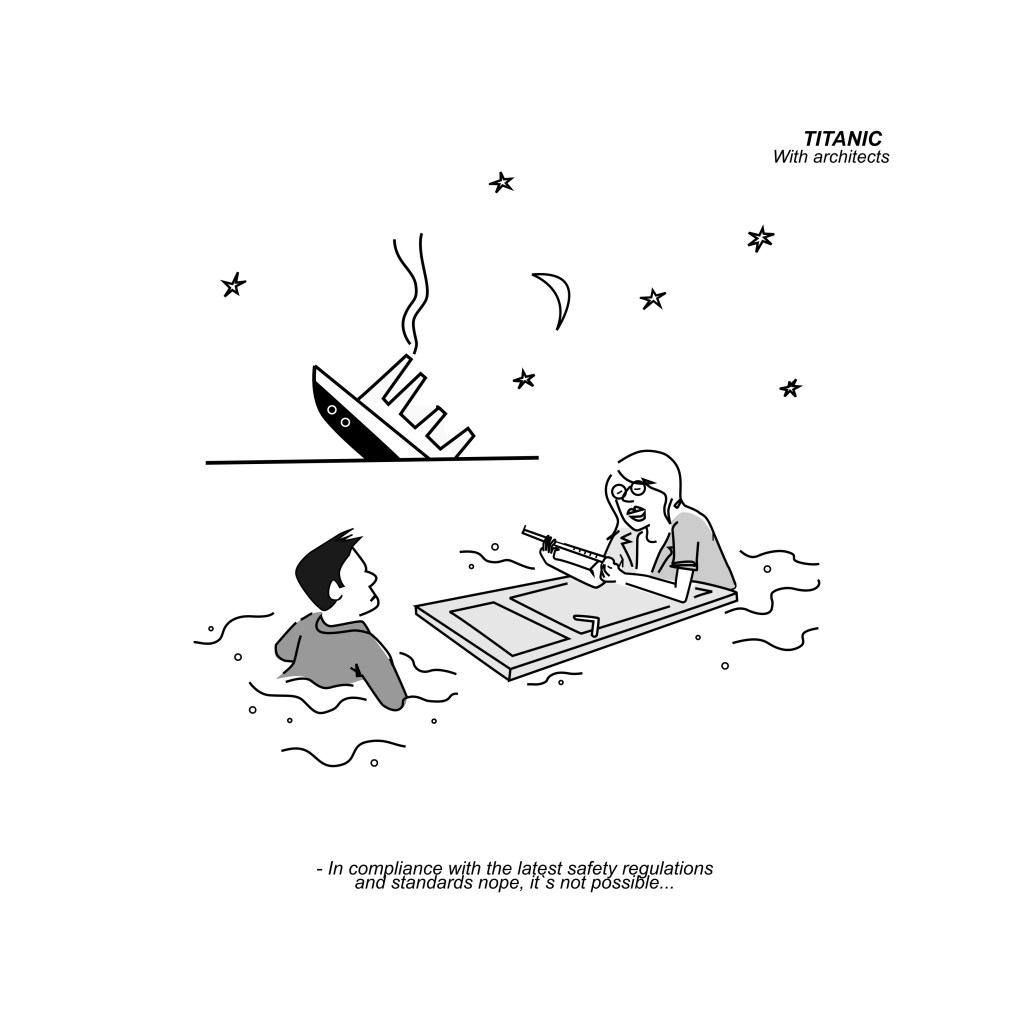
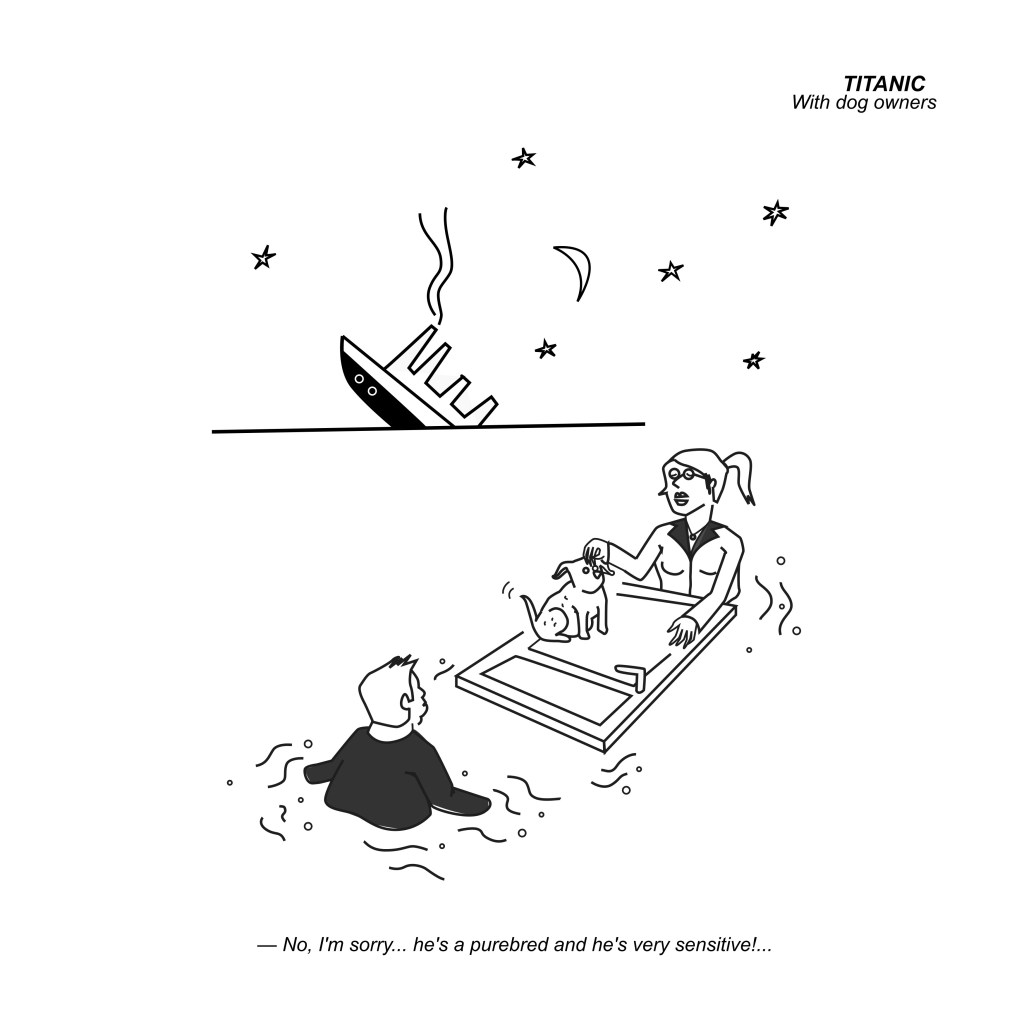
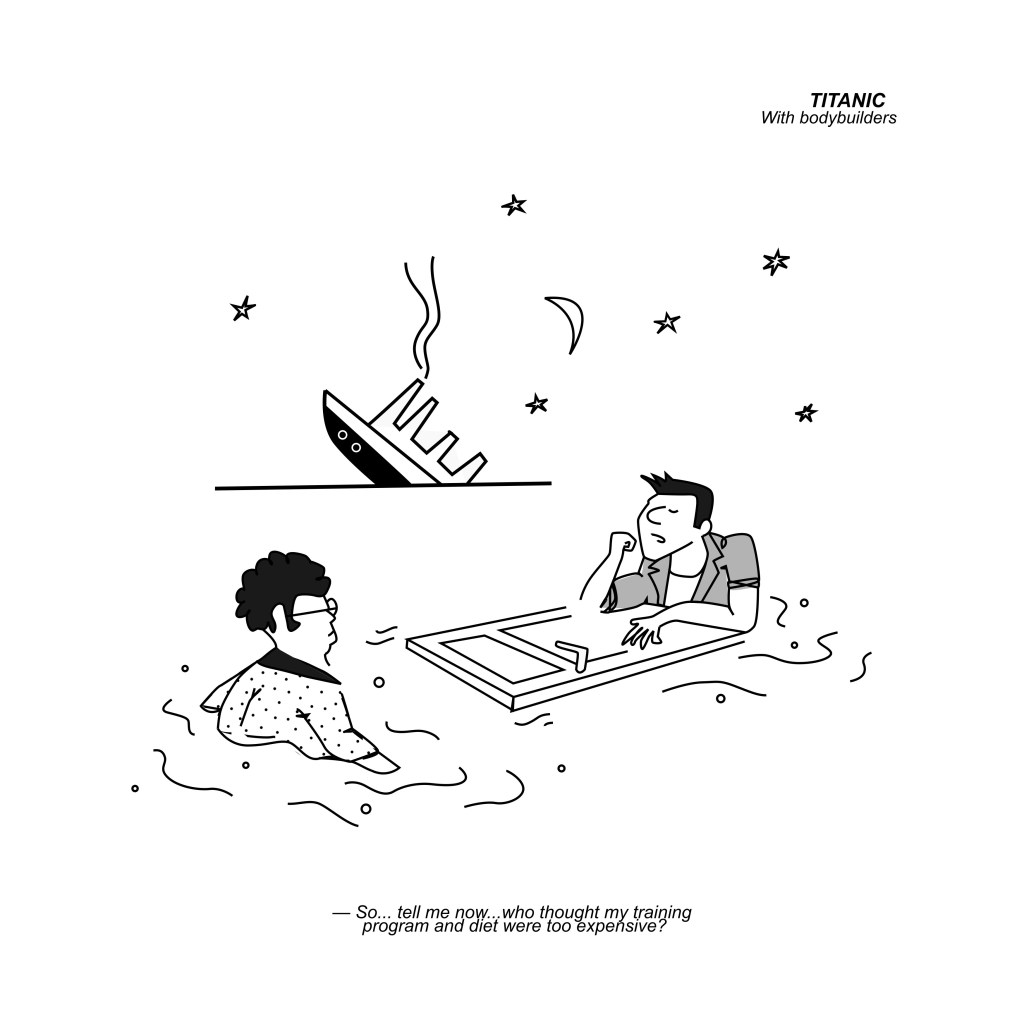
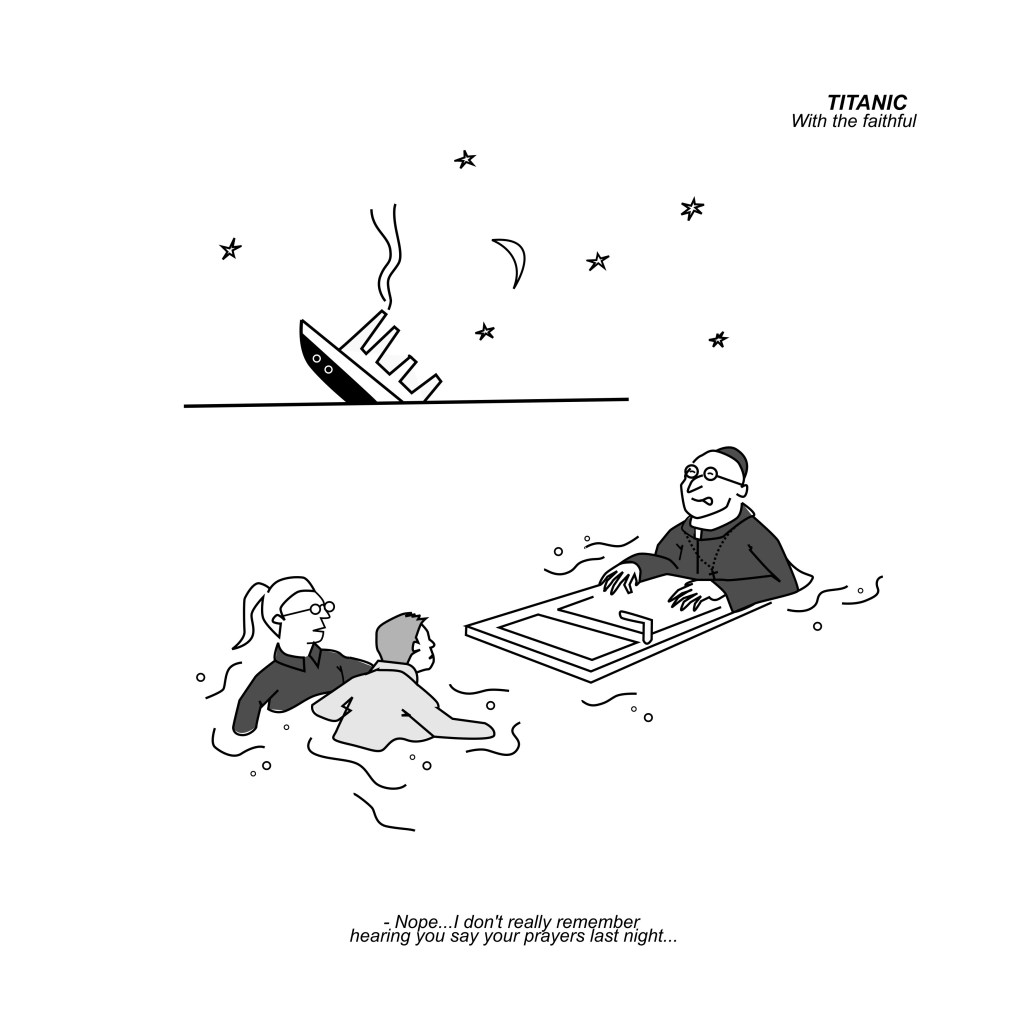
Seria Titanic, with… pornește de la o premisă absurdă: aceea că omul nu poate ieși nici măcar pentru o clipă din propriul rol. Arhitectul continuă să vorbească despre normative, culturistul despre antrenament și dietă, preotul despre rugăciune, proprietarul de câine despre bichonul său, scafandrul despre echipament, iar rechinul găsește chiar și acum un mod de a relativiza vina.
Titanicul nu este subiectul acestor caricaturi. El este doar cadrul, un experiment mental în care aceeași situație este filtrată prin mentalități complet diferite. Tragedia rămâne aceeași, însă explicațiile, prioritățile și justificările se schimbă odată cu personajele.
Umorul apare din contrastul dintre gravitatea momentului și banalitatea preocupărilor. În fața inevitabilului, fiecare personaj rămâne fidel propriei identități, ca și cum lumea întreagă ar continua să funcționeze după regulile pe care le cunoaște deja.
Din punct de vedere vizual, seria urmărește deliberat economia de mijloace. Același decor minimalist se repetă aproape identic de la un desen la altul. Nava, marea, ușa plutitoare și cerul nopții devin o scenă fixă pe care se schimbă doar actorii și replica finală. Repetiția nu este o limitare, ci însăși structura comică a proiectului: aceeași întrebare primește, de fiecare dată, un alt răspuns.
În fond, seria nu ironizează profesii sau categorii sociale. Ea vorbește despre un mecanism profund uman: tendința de a interpreta lumea exclusiv prin propriile filtre. Suntem, într-o anumită măsură, prizonierii propriilor preocupări, iar acestea continuă să ne definească chiar și atunci când contextul le face complet absurde.
Poate că acesta este și rolul umorului negru. Nu acela de a minimaliza tragedia, ci de a crea o mică distanță față de ea. Suficientă cât să putem privi absurdul existenței fără să întoarcem privirea. Uneori, râsul nu este opusul gravității, ci una dintre cele mai inteligente forme prin care reușim să coexistăm cu ea.
English version
Titanic, with…
There are moments when every social role should disappear. Moments when our profession, hobbies, beliefs, and everyday obsessions become meaningless in the face of an undeniable reality.
But what if they didn’t?
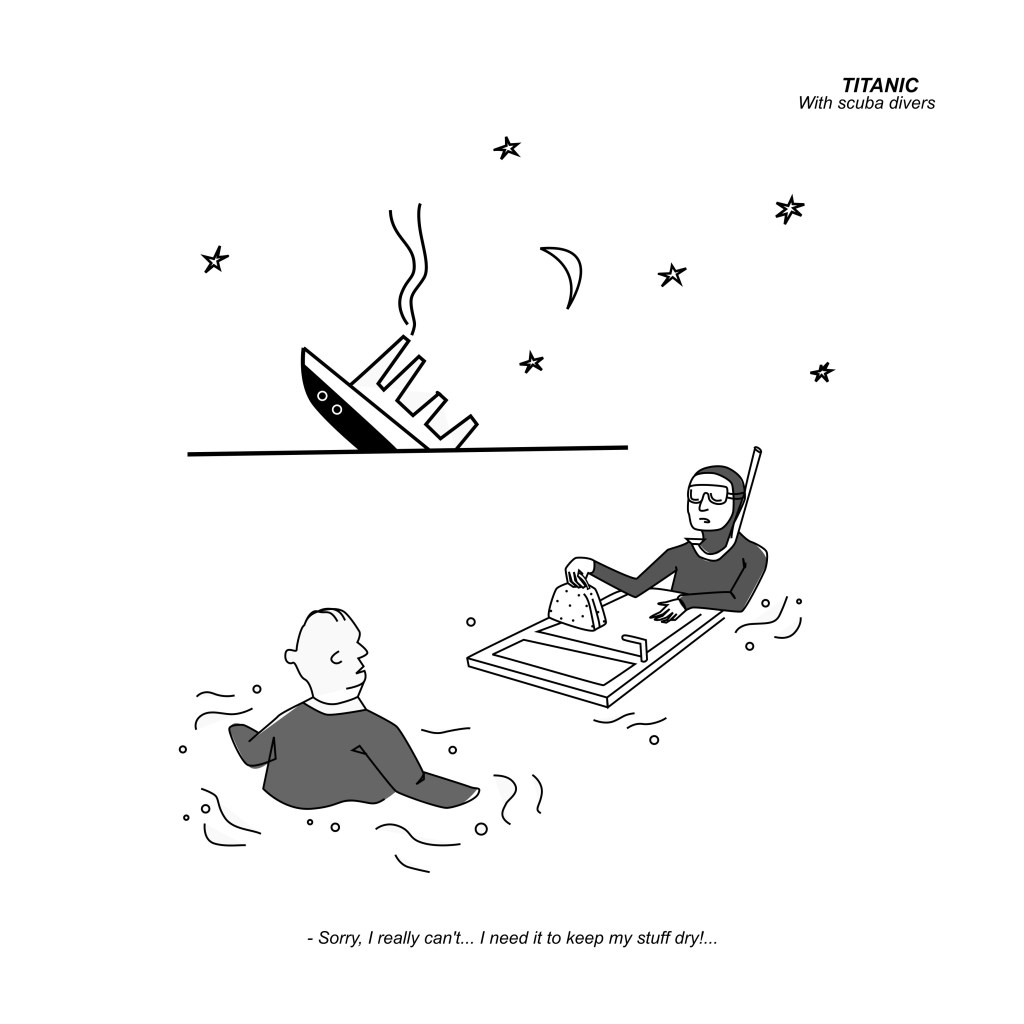
Titanic, with… is built around an absurd premise: that people remain incapable of stepping outside their own identity, even in the most extreme circumstances. The architect still talks about regulations. The bodybuilder still defends his training program and diet. The parishioner still thinks in terms of prayer. The dog owner still prioritizes the bichon. The scuba diver worries about keeping his gear dry. Even the shark finds a way to offer moral reassurance.
The Titanic itself is not the subject of these cartoons. It merely provides the stage—a thought experiment in which the exact same situation is filtered through completely different mindsets. The tragedy never changes; only the priorities, explanations, and justifications do.
The humor emerges from the contrast between the gravity of the situation and the triviality of each character’s concerns. Faced with the inevitable, everyone remains remarkably faithful to who they are, as though the world still operates according to the same familiar rules.
Visually, the series embraces deliberate minimalism. The same sparse setting is repeated almost unchanged from one drawing to the next: the sinking ship, the floating door, the sea, and the night sky. Only the characters and the final line change. This repetition is not a limitation but the very structure of the joke—one scenario, endlessly reinterpreted through different personalities.
Ultimately, the series is not a satire of professions or social groups. It explores something far more universal: our tendency to interpret reality almost exclusively through the lens of our own experiences, habits, and identities. To a certain extent, we all become prisoners of our own perspective, carrying it with us even when it has become completely irrelevant.
Perhaps that is also the purpose of dark humor. Not to diminish tragedy, but to create just enough distance to look directly at it. Sometimes laughter is not the opposite of seriousness—it is one of the most intelligent ways we have of living alongside it.


Leave a Reply