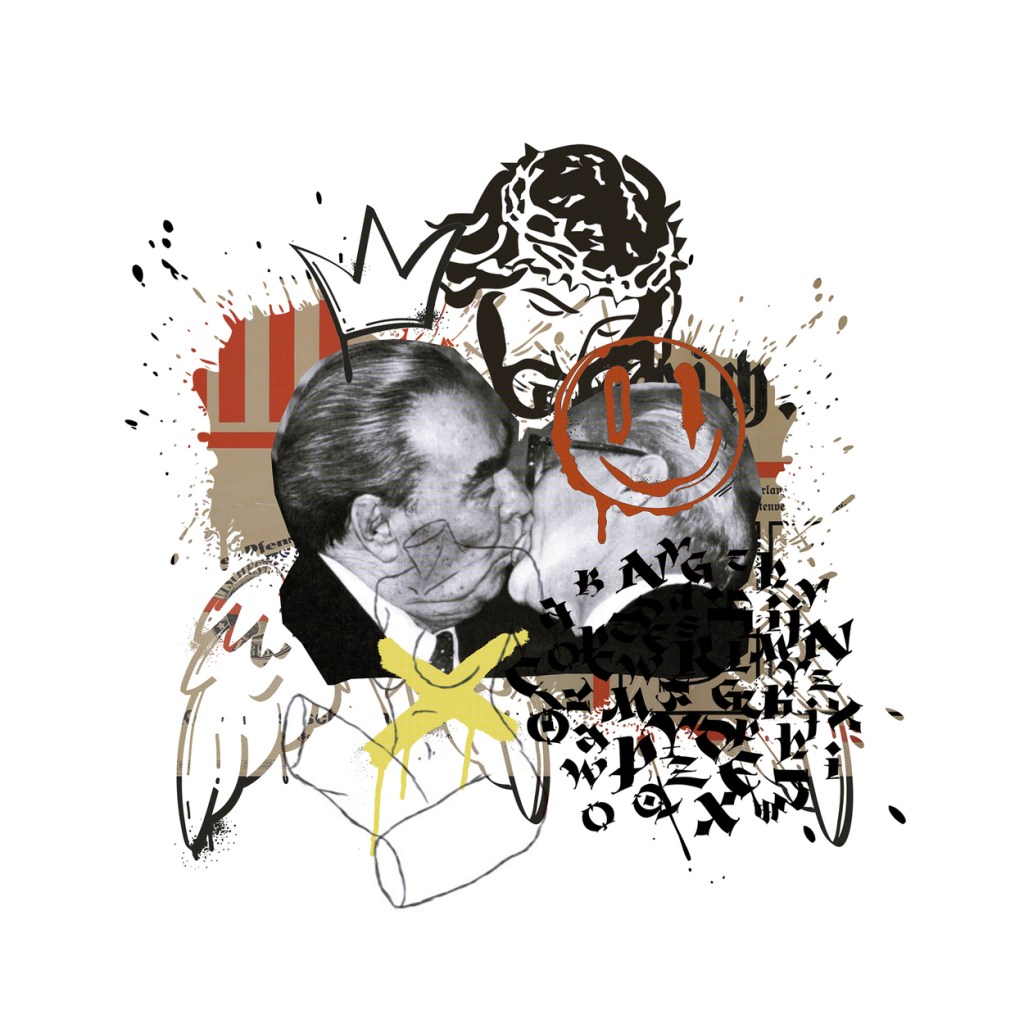
Arta ca tehnologie cognitivă
Poate că întrebarea fundamentală ridicată de această serie nu privește colajul, anxietatea sau chiar biografia autorului. Ea privește însăși funcția artei în evoluția conștiinței umane.
În cultura occidentală, arta este descrisă de cele mai multe ori ca mijloc de expresie, comunicare sau reprezentare. Artistul ar transforma emoții în imagini, iar privitorul le-ar interpreta. Această definiție este însă insuficientă. Ea presupune că experiența există deja într-o formă coerentă și că imaginea nu face decât să o traducă într-un alt limbaj.
Experiența creatorului sugerează un proces diferit.
În anumite situații, imaginea nu traduce o experiență deja organizată. Ea participă activ la organizarea ei.
Ordinea nu precede actul artistic.
Ordinea apare în timpul acestuia.
Această diferență schimbă radical statutul artei.
Imaginea încetează să mai fie doar un obiect cultural și devine un instrument cognitiv.
În timp ce lucrează, artistul nu manipulează doar culori, forme sau simboluri. El manipulează relații. Mută centre de greutate, creează proximități neașteptate, elimină redundanțe, stabilește ritmuri și introduce ierarhii acolo unde, cu câteva minute înainte, exista doar o masă nediferențiată de informații și afecte.
Cu alte cuvinte, el organizează.
Dar ceea ce organizează nu este doar imaginea.
Își organizează propriul model intern al lumii.
Acest lucru explică de ce actul artistic poate produce uneori senzația unei clarificări care nu poate fi formulată imediat în cuvinte. Nu pentru că imaginea ar conține răspunsuri, ci pentru că procesul construirii ei modifică însăși arhitectura relațiilor dintre reprezentările mentale.
Imaginea devine astfel o simulare externă a propriului proces cognitiv.
Ea permite conștiinței să se privească pe sine în timp ce funcționează.
În acest sens, fiecare lucrare este un model redus al unei lumi posibile.
Artistul nu reproduce realitatea.
Construiește o versiune temporară și controlabilă a acesteia.
Iar această diferență este esențială.
Realitatea nu poate fi reorganizată imediat.
Imaginea poate.
Această organizare locală nu rezolvă conflictul exterior.
Dar produce un efect important.
Demonstrează conștiinței că organizarea rămâne posibilă.
Poate tocmai de aceea oamenii creează imagini de zeci de mii de ani.
Nu doar pentru a comunica.
Ci pentru a-și externaliza propriile procese cognitive.
Picturile rupestre, icoanele, hărțile, diagramele, manuscrisele, partiturile muzicale, planurile arhitecturale și colajele digitale aparțin, poate, aceleiași familii funcționale.
Toate sunt mecanisme prin care conștiința transferă o parte din propria organizare într-un obiect exterior, suficient de stabil pentru a putea fi observat, modificat și reinterpretat.
În această perspectivă, cultura însăși începe să capete o funcție nouă.
Ea nu mai apare doar ca patrimoniu simbolic.
Devine infrastructura externă a conștiinței umane.
O bibliotecă, un muzeu, un atelier, un hard disk, un folder cu imagini sau chiar un feed de Instagram pot deveni, în anumite condiții, extensii temporare ale proceselor cognitive.
Conștiința încetează astfel să mai fie un fenomen complet închis în interiorul individului.
Ea începe să circule prin obiecte, imagini, texte și rețele.
Nu pentru a se pierde în ele.
Ci pentru a se putea reîntoarce asupra propriei sale organizări.
În acest sens, actul artistic nu este doar expresiv.
Este reflexiv.
El permite conștiinței să devină propriul ei obiect de lucru.
Iar aici apare poate cea mai importantă consecință.
Cu timpul, această organizare nu mai este necesară doar în interiorul atelierului.
Ea începe să fie interiorizată.
După ani sau decenii de practică artistică, artistul nu învață doar să deseneze, să compună sau să fotografieze mai bine.
Învață să gândească diferit.
Să observe tipare acolo unde înainte vedea doar evenimente izolate.
Să tolereze ambiguitatea fără a o elimina imediat.
Să accepte contradicții fără a le reduce forțat la o singură explicație.
Să reorganizeze în loc să reacționeze.
Să construiască relații înainte de a formula concluzii.
Aceste competențe depășesc cu mult domeniul artistic.
Ele devin moduri de funcționare ale conștiinței.
În acest punct, arta încetează să mai fie doar o activitate.
Devine o practică de autoreglare cognitivă.
Nu în sens terapeutic.
Nu în sens medical.
Ci într-un sens structural.
Conștiința învață, prin exercițiu repetat, să se reorganizeze folosind aceleași mecanisme prin care reorganizează imaginile.
Poate tocmai de aceea, pentru un artist, diferența dintre viață și creație este adesea mai mică decât pare din exterior.
Nu pentru că întreaga viață ar deveni artă.
Ci pentru că mecanismele folosite în atelier încep, treptat, să fie utilizate și în interpretarea lumii.
A crea înseamnă atunci mai mult decât a produce obiecte.
Înseamnă a exersa, în mod repetat, capacitatea conștiinței de a produce ordine fără a elimina complexitatea.
Poate aceasta este una dintre funcțiile cele mai profunde ale artei.
Nu aceea de a explica lumea.
Nici de a o înfrumuseța.
Ci de a antrena conștiința să locuiască o lume care nu va deveni niciodată complet ordonată.


English version
Art as Cognitive Technology
Perhaps the fundamental question raised by this series is not about collage, anxiety, or even the artist’s biography. It concerns something far more profound: the function of art itself in the evolution of human consciousness.
Within Western culture, art has traditionally been described as a means of expression, communication, or representation. According to this view, the artist transforms emotions into images, while the viewer interprets them. Yet such a definition is ultimately insufficient. It assumes that experience already exists in a coherent form, and that the artwork merely translates it into another language.
The creative process suggests something quite different.
Under certain conditions, the image does not translate an already organized experience. It actively participates in organizing it.
Order does not precede the artistic act.
Order emerges through it.
This distinction radically changes the status of art.
The image ceases to be merely a cultural artifact and becomes a cognitive instrument.
While working, the artist is not simply manipulating colors, shapes, or symbols. He is manipulating relationships. He shifts centers of gravity, creates unexpected proximities, eliminates redundancies, establishes rhythms, and introduces hierarchies where, only moments before, there existed nothing but an undifferentiated mass of information, perception, and emotion.
In other words, the artist is organizing.
Yet what is being organized is not merely the image.
It is the artist’s own internal model of the world.
This may explain why artistic practice can sometimes produce a sense of clarity that cannot immediately be expressed in words. Not because the artwork contains answers, but because the very act of constructing it reorganizes the architecture of relationships between mental representations.
The artwork thus becomes an external simulation of the artist’s own cognitive process.
It allows consciousness to observe itself while it is operating.
In this sense, every artwork functions as a reduced model of a possible world.
The artist does not reproduce reality.
He constructs a temporary, controllable version of it.
This distinction is crucial.
Reality cannot be reorganized at will.
An image can.
Such local organization does not resolve external conflicts.
Yet it accomplishes something equally important.
It demonstrates to consciousness that organization itself remains possible.
Perhaps this is one of the reasons human beings have been creating images for tens of thousands of years.
Not merely to communicate.
But to externalize their own cognitive processes.
Cave paintings, religious icons, maps, diagrams, illuminated manuscripts, musical scores, architectural drawings, and digital collages may all belong to the same functional family.
Each represents a mechanism through which consciousness transfers part of its internal organization into an external object—stable enough to be observed, modified, revisited, and reinterpreted.
From this perspective, culture itself acquires an entirely different function.
It ceases to be merely symbolic heritage.
Instead, it becomes the external infrastructure of human consciousness.
A library, a museum, a studio, a hard drive, an image archive, or even an Instagram feed can, under certain circumstances, function as temporary extensions of cognitive processes.
Consciousness is therefore no longer understood as something entirely enclosed within the individual mind.
It begins to circulate through objects, images, texts, and networks.
Not in order to dissolve itself within them,
but in order to return to itself with a newly reorganized structure.
In this sense, artistic practice is not merely expressive.
It is fundamentally reflective.
It enables consciousness to become its own object of investigation.
Here we encounter perhaps the most significant consequence of artistic practice.
Over time, this process of organization is no longer confined to the studio.
It gradually becomes internalized.
After years—or even decades—of artistic practice, an artist does not simply learn to draw more accurately, compose more effectively, or photograph more skillfully.
The artist learns to think differently.
To recognize patterns where others perceive isolated events.
To tolerate ambiguity without rushing to eliminate it.
To hold contradictions without forcing them into premature explanations.
To reorganize rather than merely react.
To construct relationships before arriving at conclusions.
These abilities extend far beyond artistic production itself.
They gradually become characteristic modes of consciousness.
At this point, art ceases to be merely an activity.
It becomes a practice of cognitive self-organization.
Not in a therapeutic sense.
Not in a medical sense.
But in a structural one.
Through repeated artistic practice, consciousness gradually learns to reorganize itself using the same mechanisms through which it reorganizes images.
Perhaps this also explains why, for many artists, the boundary between life and artistic practice becomes remarkably porous.
Not because life itself becomes art.
But because the cognitive operations repeatedly exercised in the studio slowly migrate into everyday perception and interpretation.
Creation therefore becomes something greater than the production of objects.
It becomes the continuous exercise of consciousness’s ability to generate order without eliminating complexity.
Perhaps this is one of the deepest functions of art.
Not to explain the world.
Not to beautify it.
But to train consciousness to inhabit a world that will never become completely ordered.


Leave a Reply