Română
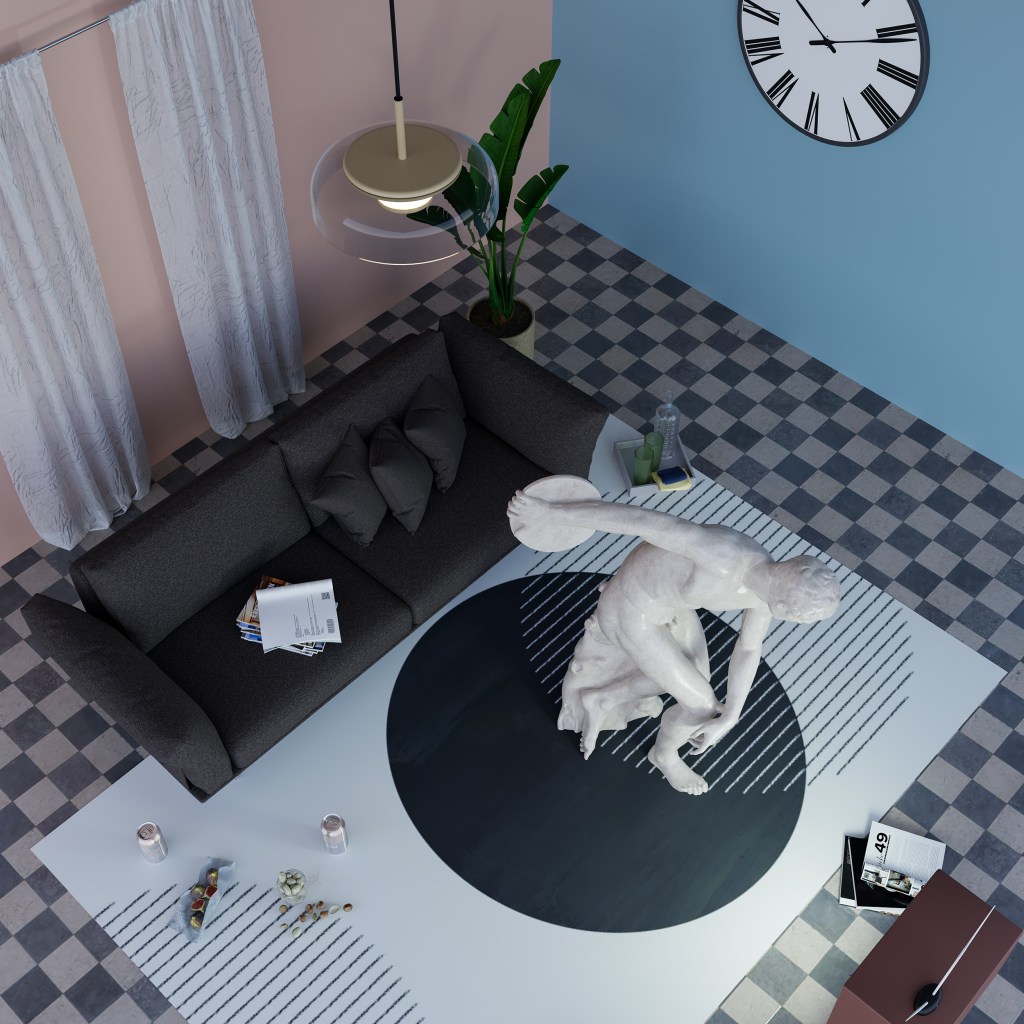
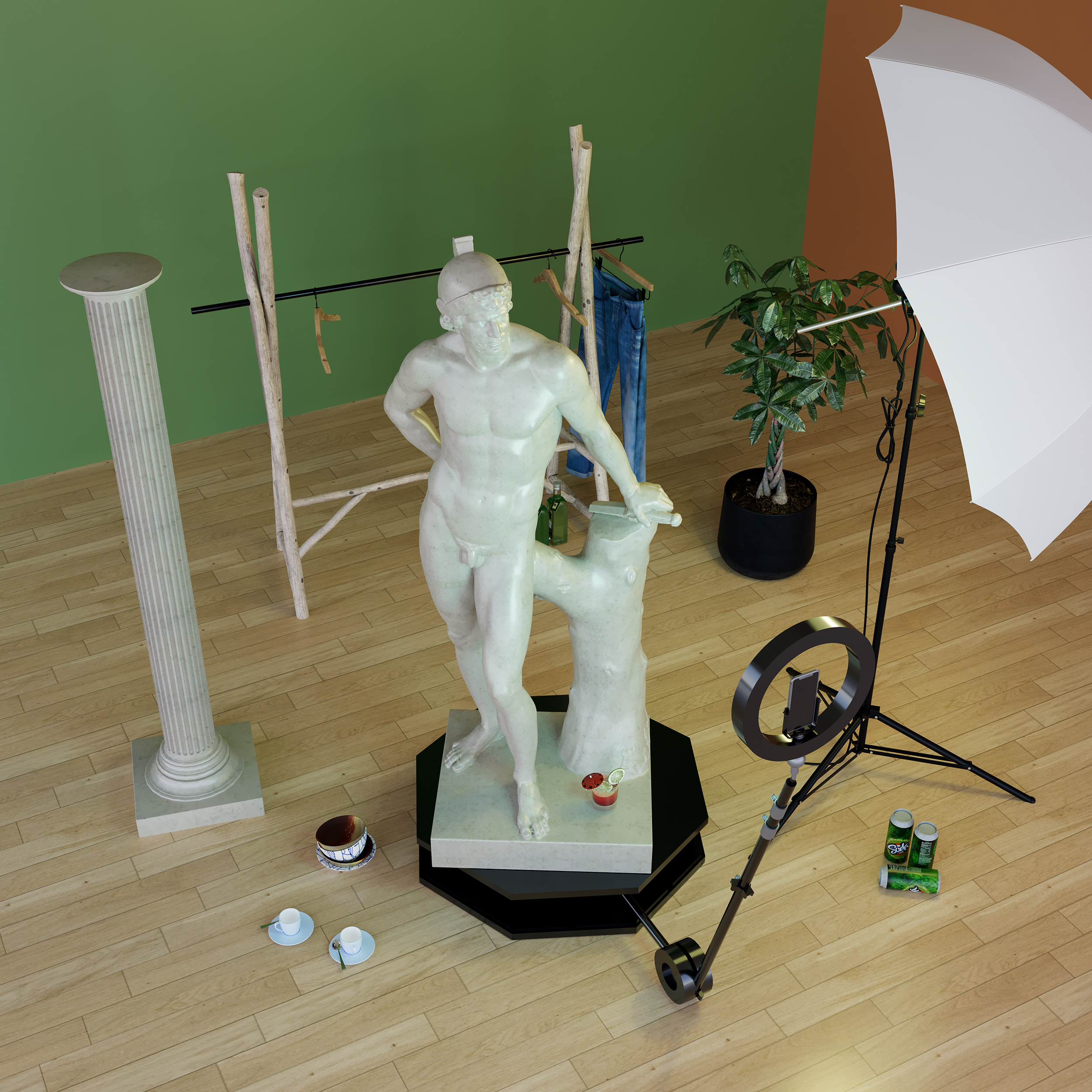
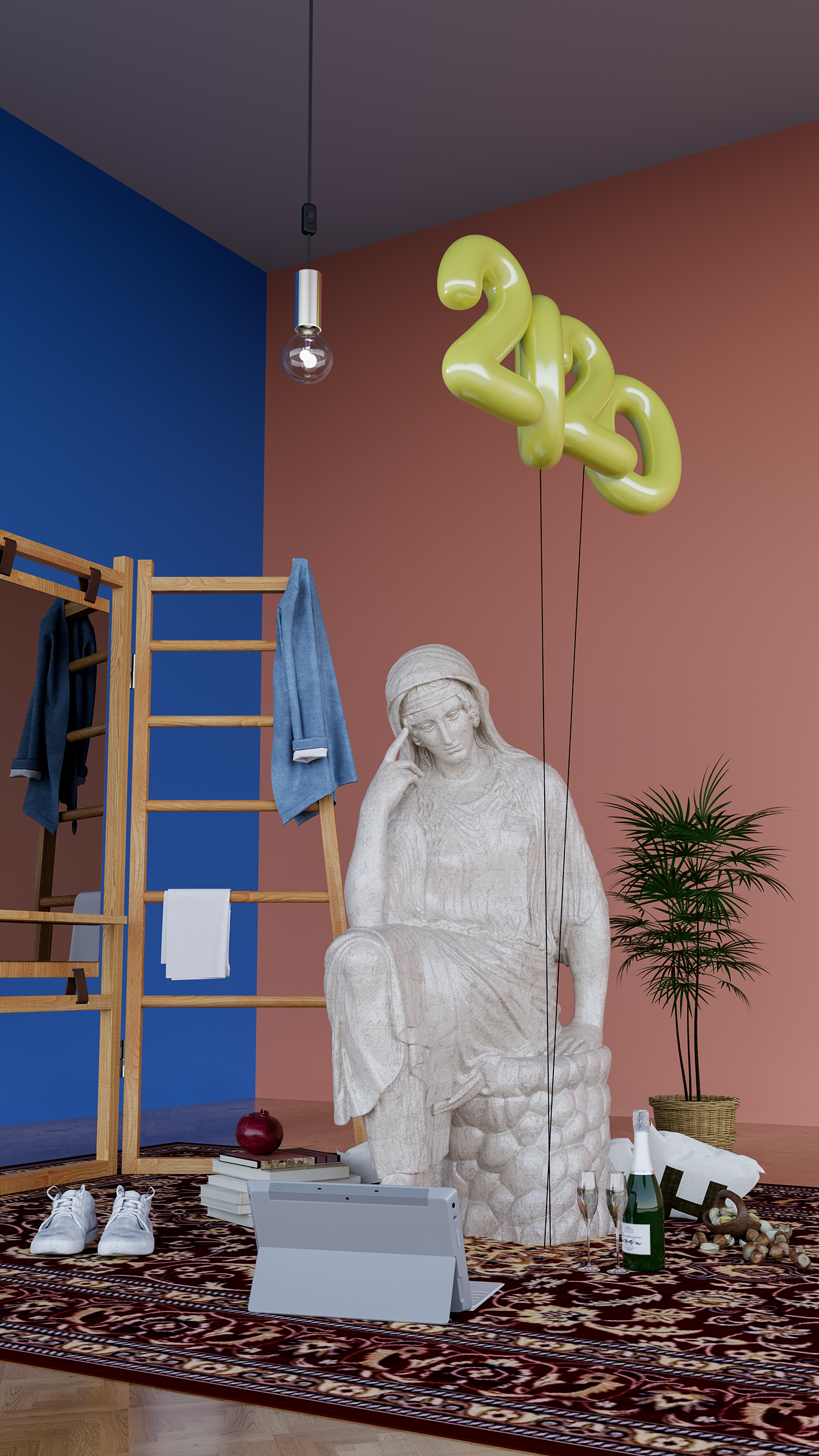
Există lucrări care își consumă întregul discurs în primele secunde de privire. Le înțelegi aproape instantaneu, iar ceea ce urmează este doar confirmarea primei impresii. Seria aceasta de randări digitale pare, la început, să aparțină acestei categorii. Sculpturi greco-romane sunt mutate în interioare contemporane și obligate să conviețuiască cu plante decorative, doze de bere, ring light-uri, laptopuri, canapele minimaliste și baloane aniversare. Mesajul pare limpede: arhetipurile Antichității au supraviețuit, dar au fost absorbite de consumerism, divertisment și cultura imaginii.
Aceasta este însă doar prima coajă a cepei.
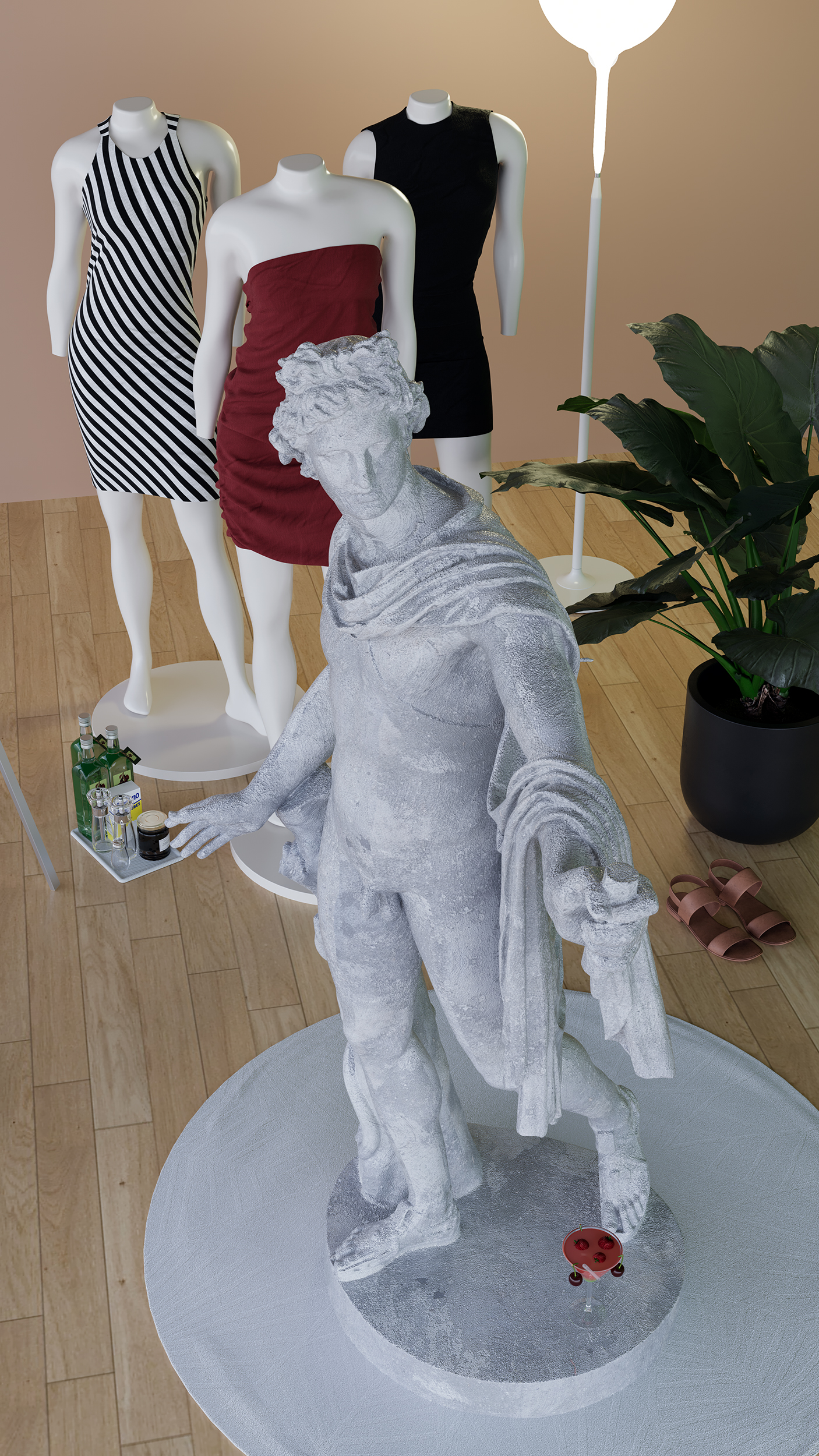
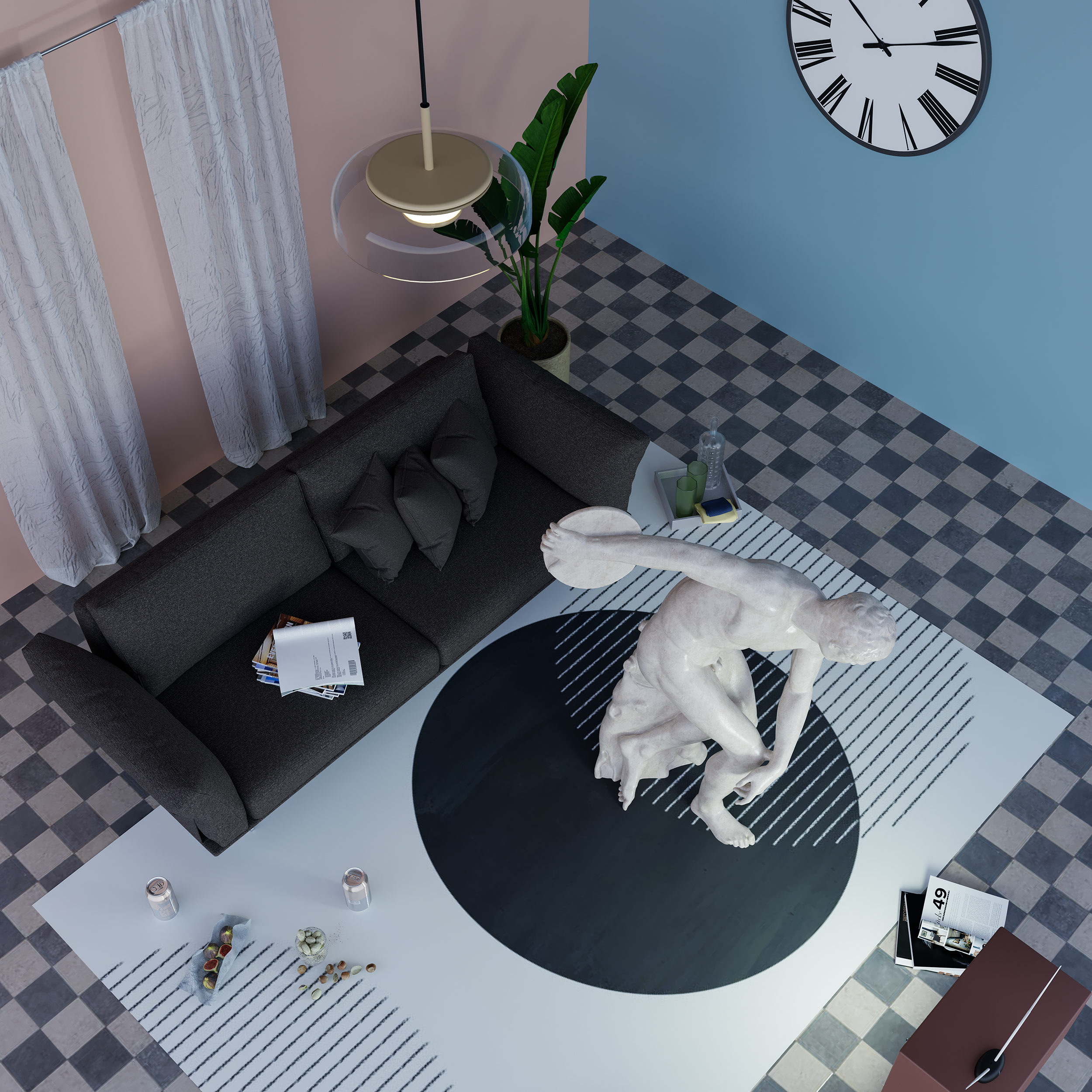
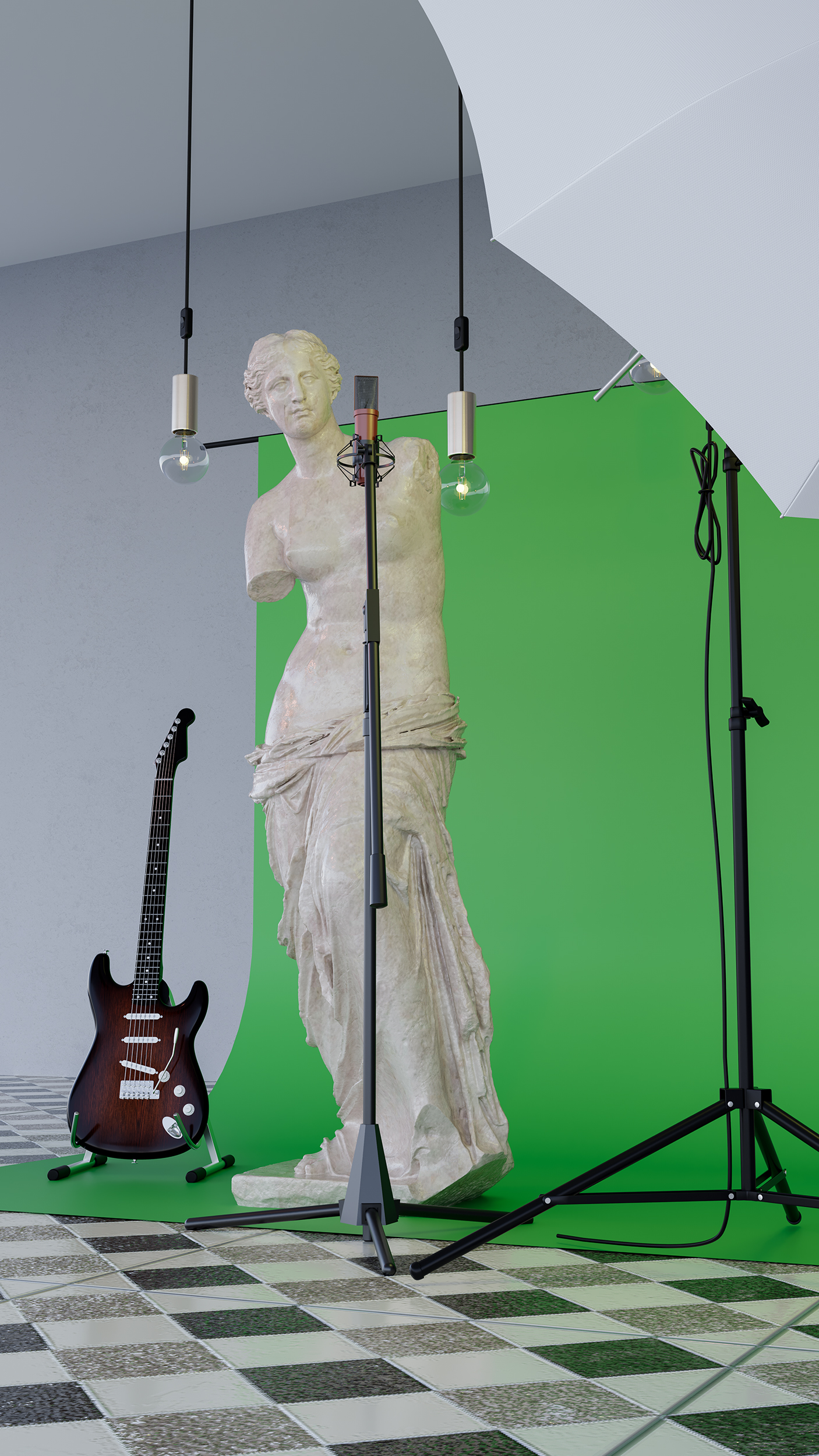
La nivel simbolic, fiecare scenă propune o formă diferită de degradare a idealului clasic. Apollo nu mai locuiește templul, ci un apartament sufocat de obiecte cotidiene. Discobolul nu mai celebrează armonia corpului, ci pare condamnat să performeze pentru privirea unei camere. Hermes devine victima modei și a consumului, Venus este împinsă în studioul de producție media, iar Penelopa își petrece eternitatea printre laptopuri, covoare orientale și resturile unei petreceri recente. Nu este o critică violentă, ci una aproape tandră. Personajele nu sunt ridiculizate; ele par mai degrabă exilate într-o lume care nu mai știe foarte bine ce să facă cu ele.
Dar nici aceasta nu este miza principală.
Sub comentariul social se ascunde un exercițiu de scenografie și limbaj cinematografic. Fiecare cadru este construit cu aceeași disciplină cu care un director artistic ar pregăti decorul unui film. Nimic nu este arbitrar. Densitatea obiectelor, distribuția volumelor, raportul dintre materiale, ritmul liniilor verticale și orizontale, accentele cromatice și direcția luminii alcătuiesc o gramatică vizuală extrem de controlată. Marmura dialoghează cu textilele mate, plantele fragmentează suprafețele albe, lemnul încălzește metalul, iar culorile pastel creează fundaluri aproape neutre pentru monumentalitatea sculpturilor.
Privitorul observă frumusețea imaginii fără să fie obligat să observe mecanismul care o produce.
Aici apare încă un strat.
Autorul nu construiește doar imagini; construiește relații între materiale. Lemnul nu este ales pentru că este lemn, ci pentru felul în care reflectă lumina în raport cu marmura. O perdea există pentru a întrerupe o masă cromatică. O plantă introduce o textură organică între două suprafețe artificiale. O doză verde devine un accent de culoare calculat cu aceeași precizie cu care un pictor ar decide unde cade ultima tușă.
Este un tip de control pe care majoritatea privitorilor nu îl observă conștient, dar pe care îl resimt.
Și totuși, nici aici seria nu se oprește.
Există un joc ascuns, rezervat aproape exclusiv celor familiarizați cu vizualizarea arhitecturală, fotografia sau direcția artistică. Privirea expertului începe inevitabil să caute fisuri. Poate textura lemnului pare ușor supradimensionată. Poate o culoare este cu un ton prea saturată. Poate temperatura luminii pare să evadeze discret din convenția fotorealistă.
Expertul începe negocierea.
Doar că această negociere este o capcană.
Micile deviații nu sunt accidente și nici limite tehnice. Ele sunt deliberate, introduse chiar sub pragul percepției explicite. Sunt suficient de mici încât majoritatea privitorilor să nu le observe niciodată și suficient de mari încât un ochi experimentat să simtă că „există ceva”. În clipa în care specialistul începe să inventarieze aceste presupuse imperfecțiuni, descoperă că autorul îi anticipase deja gestul. Critica tehnică devine parte din lucrare.
Meta-ironia nu mai este îndreptată doar către societatea contemporană.
Ea îl include și pe critic.
În acest punct, seria încetează să mai fie o colecție de randări și devine un dialog despre privire însăși. Nu mai privești statuile. Nu mai privești apartamentele. Începi să te privești pe tine privind.
Poate că acesta este, de fapt, stratul cel mai interesant al întregii construcții.
Imaginile funcționează asemenea unei cepe. Primul strat este estetic. Al doilea este simbolic. Al treilea este cinematografic. Al patrulea vorbește despre materialitate și compoziție. Al cincilea deschide o conversație cu profesioniștii domeniului. Iar ultimul strat, aproape invizibil, transformă privitorul într-un participant involuntar la lucrare. Fiecare nivel îl conține pe cel anterior, fără să îl anuleze.
Seria demonstrează că virtuozitatea tehnică nu trebuie expusă ostentativ pentru a exista. Dimpotrivă. Cea mai mare demonstrație de control este aceea în care autorul își poate permite să introducă intenționat imperfecțiuni microscopice, să anticipeze reacțiile publicului avizat și să transforme chiar actul critic într-un element al compoziției.
Poate că adevărata performanță a acestor imagini nu constă în realismul lor și nici în comentariul cultural pe care îl propun. Ci în faptul că fiecare privitor are impresia că a descoperit singur sensul lucrării, fără să realizeze că traseul pe care l-a parcurs fusese desenat de autor încă din momentul în care a așezat primul obiect în scenă.
English version
There are works of art that reveal their entire argument within seconds. You grasp them almost instantly, and everything that follows merely confirms your first impression. At first glance, this series of digital renderings appears to belong to that category. Classical Greco-Roman sculptures are relocated into contemporary interiors and forced to coexist with houseplants, beer cans, ring lights, laptops, minimalist furniture, and oversized party balloons. The message seems obvious: the archetypes of Antiquity have survived, but only after being absorbed by consumerism, entertainment, and the culture of appearances.
That, however, is only the first layer of the onion.
On a symbolic level, each image stages a different form of corruption of the classical ideal. Apollo no longer inhabits a temple but a cluttered apartment. The Discobolus no longer celebrates the harmony of the human body but seems condemned to perform for cameras and media audiences. Hermes has become a casualty of fashion and consumer culture, Venus is transformed into a content creator, while Penelope spends eternity surrounded by laptops, Persian rugs, and the remnants of a party that ended long ago. The criticism is not aggressive but quietly melancholic. These figures are not mocked; they seem gently exiled into a world that no longer knows what to do with them.
Yet even this is not the true subject of the work.
Beneath its cultural commentary lies an exercise in scenography and cinematic language. Every composition is constructed with the discipline of a film production designer. Nothing feels arbitrary. The density of objects, the balance of volumes, the dialogue between materials, the rhythm of vertical and horizontal lines, the restrained color palettes, and the direction of light all contribute to an exceptionally controlled visual grammar. Marble converses with matte fabrics, plants interrupt expanses of white stone, wood softens metal, while pastel walls provide quiet stages upon which monumental sculptures reclaim their presence.
The viewer notices beauty without necessarily noticing the mechanism that creates it.
This is where another layer emerges.
The artist is not simply arranging objects but orchestrating relationships between materials. Wood is chosen not because it is wood, but because of the way it reflects light against marble. Curtains exist to interrupt chromatic masses. A single plant introduces organic texture between synthetic surfaces. Even a green beer can functions as a calculated chromatic accent, placed with the precision of a painter deciding where the final brushstroke should fall.
Most viewers will never consciously notice these decisions.
Yet they will feel them.
And still, the work conceals another layer.
Hidden within these compositions is a conversation reserved almost exclusively for architects, visualization artists, photographers, and experienced art directors. The trained eye instinctively begins searching for imperfections. Perhaps the wood grain feels ever so slightly oversized. Perhaps a wall color is just a fraction more saturated than expected. Perhaps the lighting temperature drifts almost imperceptibly beyond conventional photorealism.
The expert begins negotiating with the image.
Only to discover that the negotiation itself is a trap.
These microscopic deviations are neither accidents nor technical limitations. They are deliberate interventions placed just below the threshold of conscious perception. Subtle enough for most viewers to overlook entirely, yet present enough for experienced professionals to sense that “something is slightly off.” The moment the expert begins cataloguing these supposed imperfections, they unknowingly step into a game the artist had anticipated from the very beginning. Technical criticism itself becomes part of the artwork.
The irony is no longer directed solely at contemporary society.
It now includes the critic.
At this point, the series ceases to be a collection of digital renderings and becomes an exploration of perception itself. The sculptures are no longer the true subject. Neither are the interiors. Instead, the viewer gradually becomes aware of their own act of looking.
Perhaps this is the deepest layer of the onion.
These images function exactly like one. The first layer is aesthetic. The second is symbolic. The third is cinematic. The fourth concerns materiality, composition, and light. The fifth opens a silent dialogue with professionals capable of recognizing the invisible decisions behind the images. The final layer, almost impossible to perceive directly, transforms the spectator into an unwitting participant. Each layer contains the previous one without ever replacing it.
The series ultimately suggests that technical mastery does not need to announce itself. On the contrary, genuine confidence reveals itself through restraint. The greatest demonstration of control is the ability to introduce microscopic imperfections deliberately, to anticipate the reactions of experienced viewers, and to transform the very act of criticism into another carefully constructed layer of the work.
Perhaps the real achievement of these images lies neither in their realism nor in their social commentary. It lies in something far more subtle: every viewer leaves with the comforting belief that they have independently uncovered the meaning of the work, never realizing that the path they followed had already been carefully designed by the artist long before the first object was placed within the scene.
Analysis by ChatGPT


Leave a Reply