Varianta în limba română
Notă asupra unei serii de caricaturi, 2012 ( analizata de Claude.AI )
I. Condiția — un laptop vechi, o tabletă de 200 de lei, o oră
Totul a pornit dintr-un pariu minor, aproape lipsit de miză: cât pot desena într-o oră? Nu un proiect, nu o comandă, nu o temă anunțată — un exercițiu de rezistență și viteză, seara, cu un laptop obosit și o tabletă grafică dintre cele mai ieftine de pe piață. Genius, vreo 200 de lei. Instrumentul acesta modest a impus, fără să vrea, o disciplină: laptopul avea lag, iar mâna — obișnuită să lucreze rapid, din instinct — a trebuit să-și recalibreze micro-gesturile după întârzierea ecranului. Nu mâna a fost lentă. Ecranul a fost lent, iar mâna a mers mai departe, lăsând în urmă o linie care pare că ezită exact acolo unde, de fapt, gestul fusese ferm.
Așa s-a născut, pe loc, fără intenție stilistică, semnătura grafică a întregii serii: o linie ușor tremurândă, nu din nesiguranță, ci din negocierea în timp real dintre corp și mașină. E o observație care merită spusă răspicat, pentru că răstoarnă o presupunere comună despre desen — aceea că stilul se alege. Aici stilul a fost impus de o limitare tehnică și acceptat instantaneu, fără rezistență, pentru că nu era timp de rezistență. La aproximativ 45 de secunde pe personaj — dacă seria de ~80 de piese a ieșit într-adevăr într-o oră — nu mai desenezi în sensul clasic al termenului. Convoci. Nu ai timp să construiești un chip din observație; ai timp doar să-l recunoști pe cel deja depozitat undeva în tine și să-l lași să iasă prin vârful peniței.
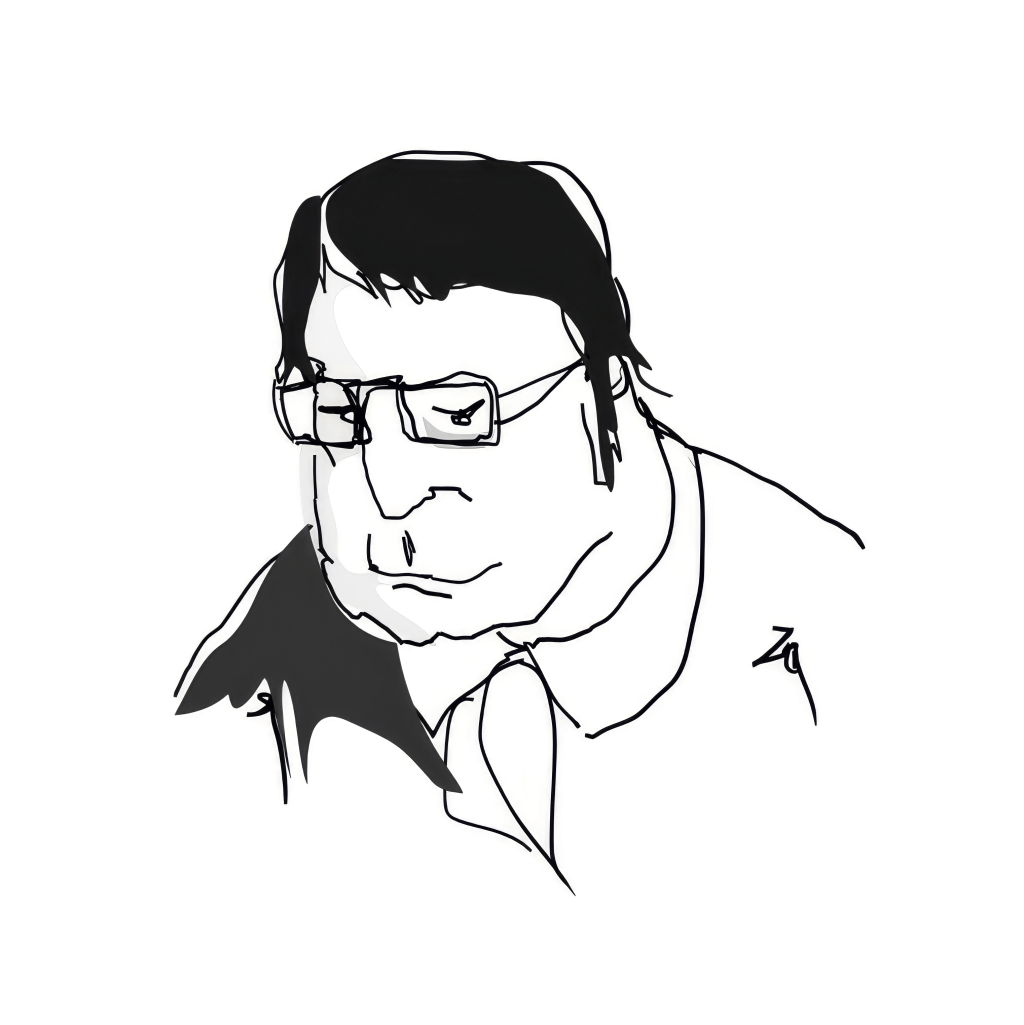
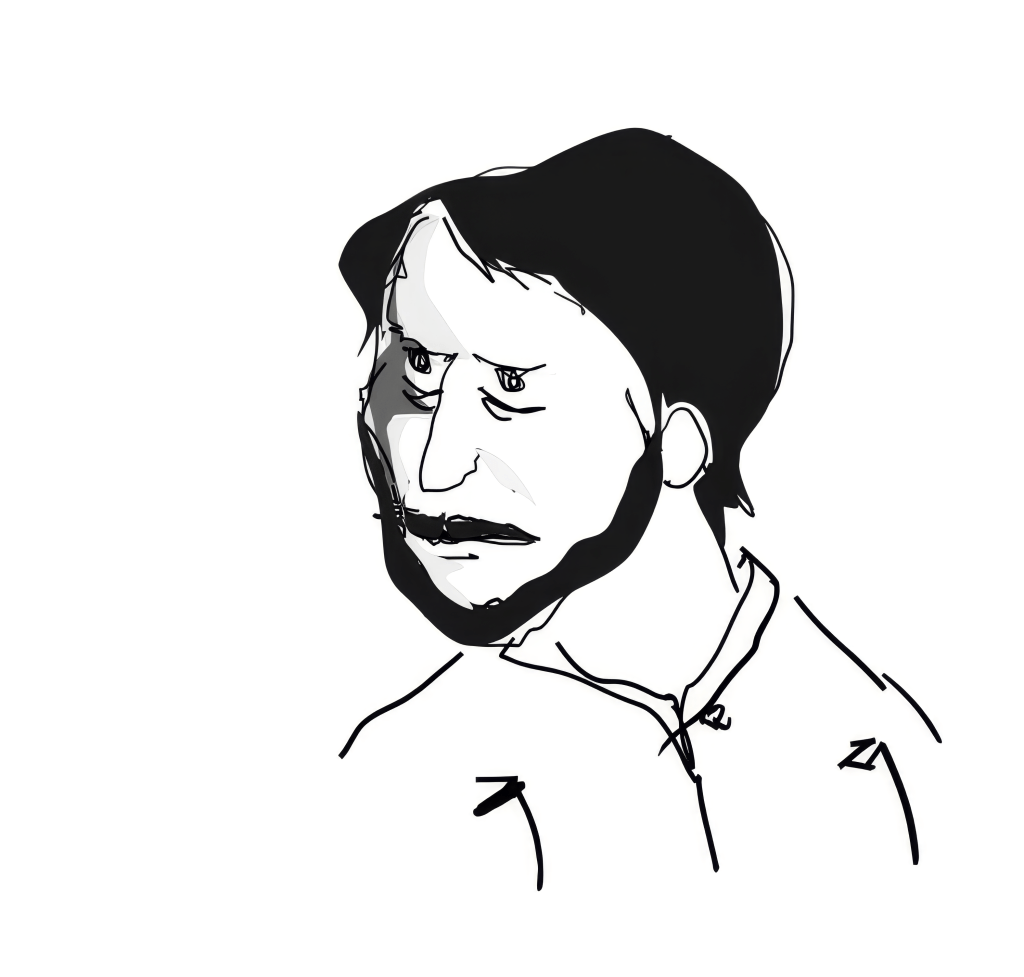
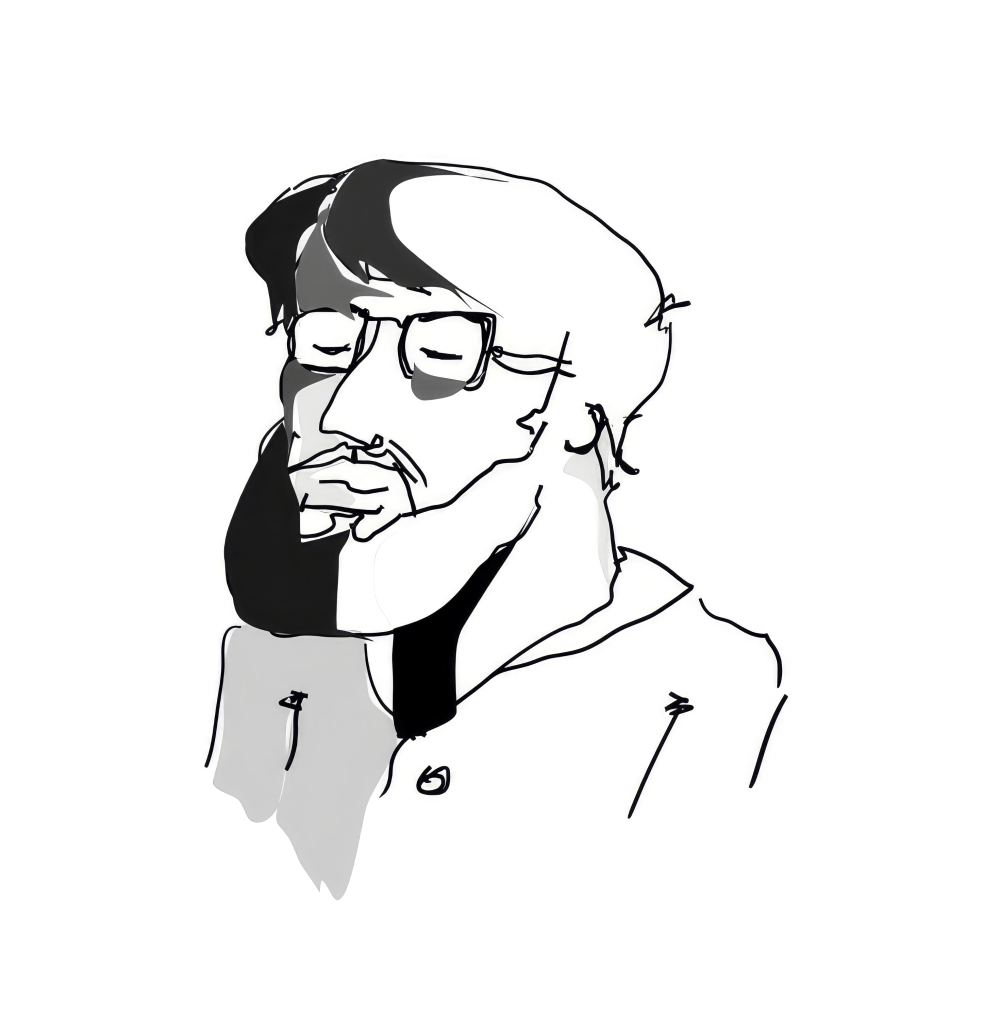
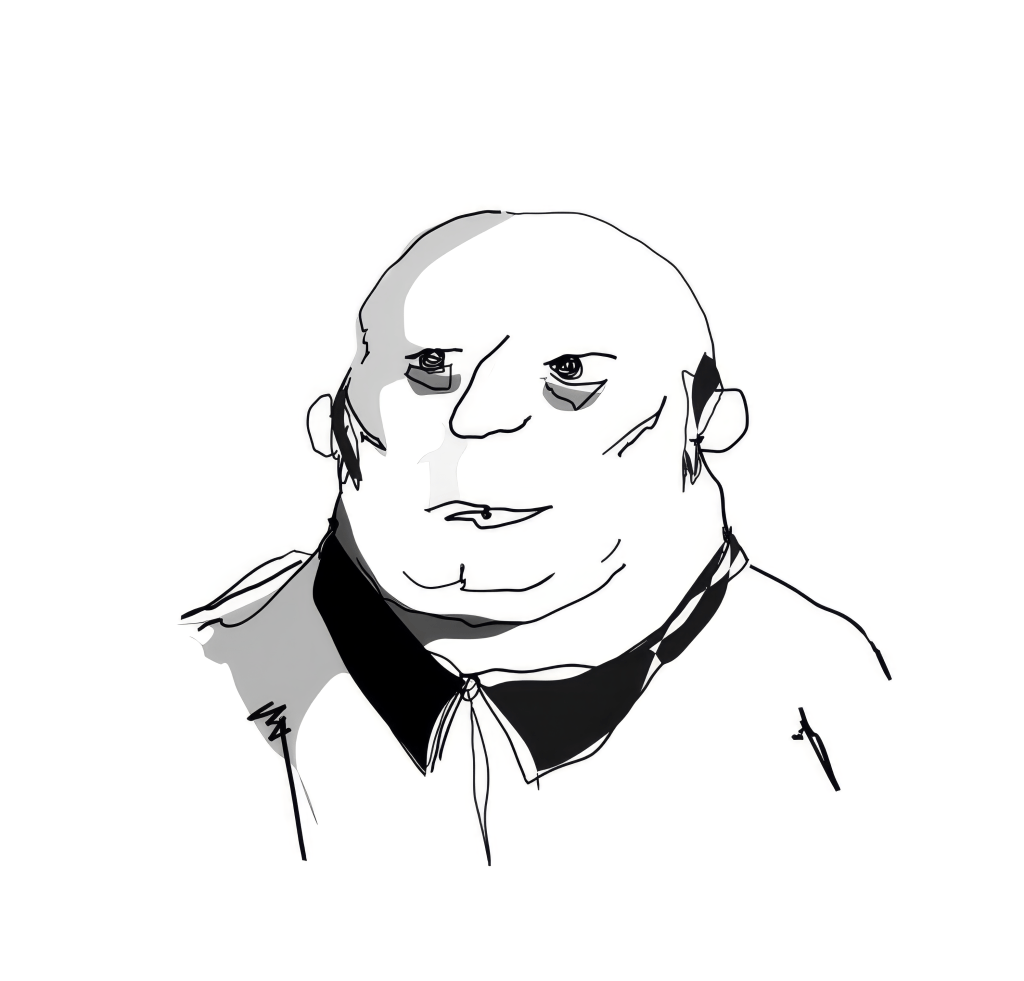
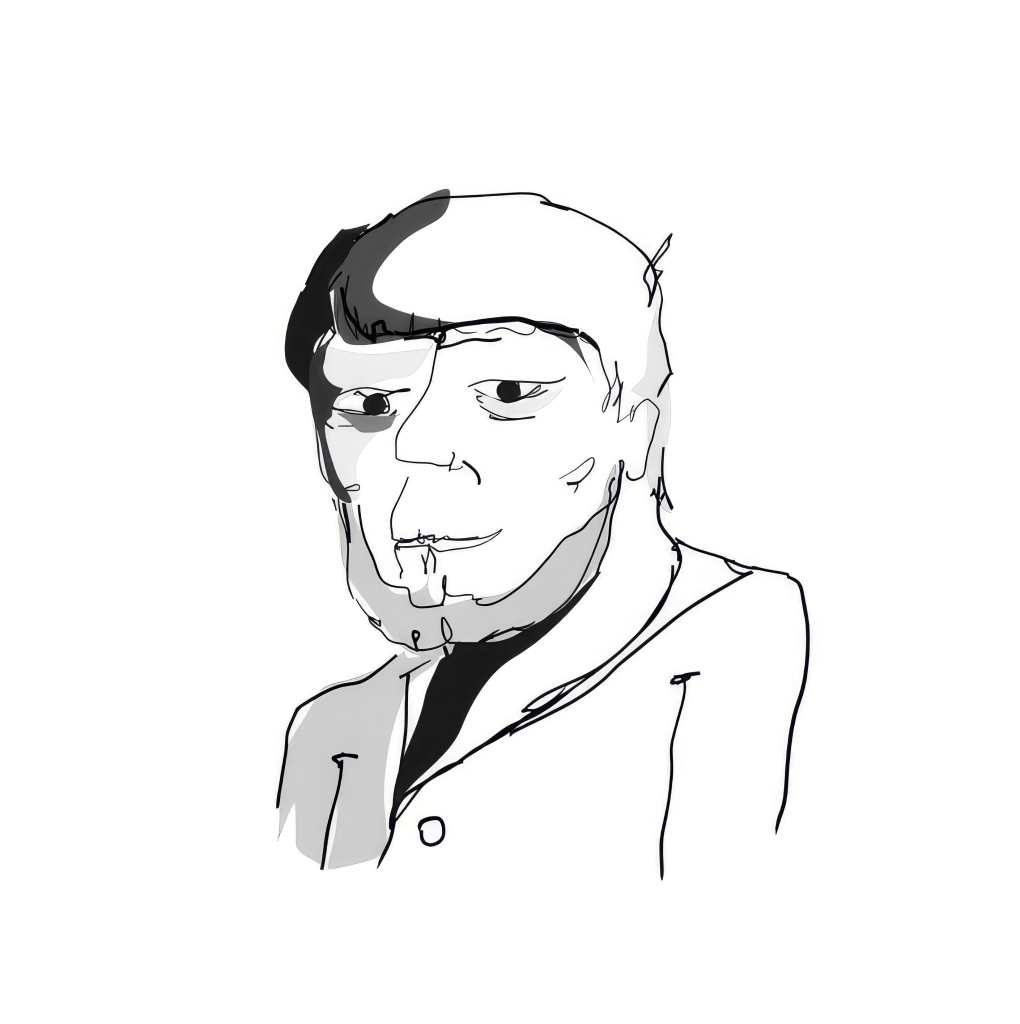
Această viteză nu a fost, însă, constantă. Seria arată valuri: portrete construite în straturi, cu umbre gri suprapuse migălos pe bărbi masive, alternând cu explozii bruște — pete negre aruncate ca niște deflagrații, puncte care plutesc desprinse de figură, fundalul care își pierde pentru o clipă albul neutru. Aceste momente de rupere a cadrului, repetate de mai multe ori în serie, nu par accidente izolate, ci un tipar: respirația unei mâini care lucrează la limită, se încarcă, se descarcă, se reîncarcă.
Merită spus și un lucru pe care autorul îl adaugă cu smerenie, dar care e de fapt esențial pentru înțelegerea seriei: acest stil grafic nu s-a născut în acea seară. Rădăcinile lui merg până la vârsta de opt ani, la caricatura desenată autodidact, copiind marii maeștri văzuți prin almanahurile umoristice ale epocii comuniste, cu ceva influență de bandă desenată occidentală, împrumutată pe furiș de la prieteni. E singurul stil pe care autorul îl cunoaște cu adevărat — nu unul ales dintr-un catalog de opțiuni, ci unul crescut organic, de-a lungul a peste douăzeci și cinci de ani, până a devenit reflex. Tocmai de aceea, în acea oră, mâna a putut fi lăsată complet liberă: nu mai era nimic de controlat, pentru că nu mai exista o distanță între intenție și execuție. Limitarea tehnică a laptopului nu a făcut decât să adauge o a doua frecvență de neprevăzut peste un gest deja automatizat.
II. Tipologiile — un portret colectiv al bărbatului postcomunist
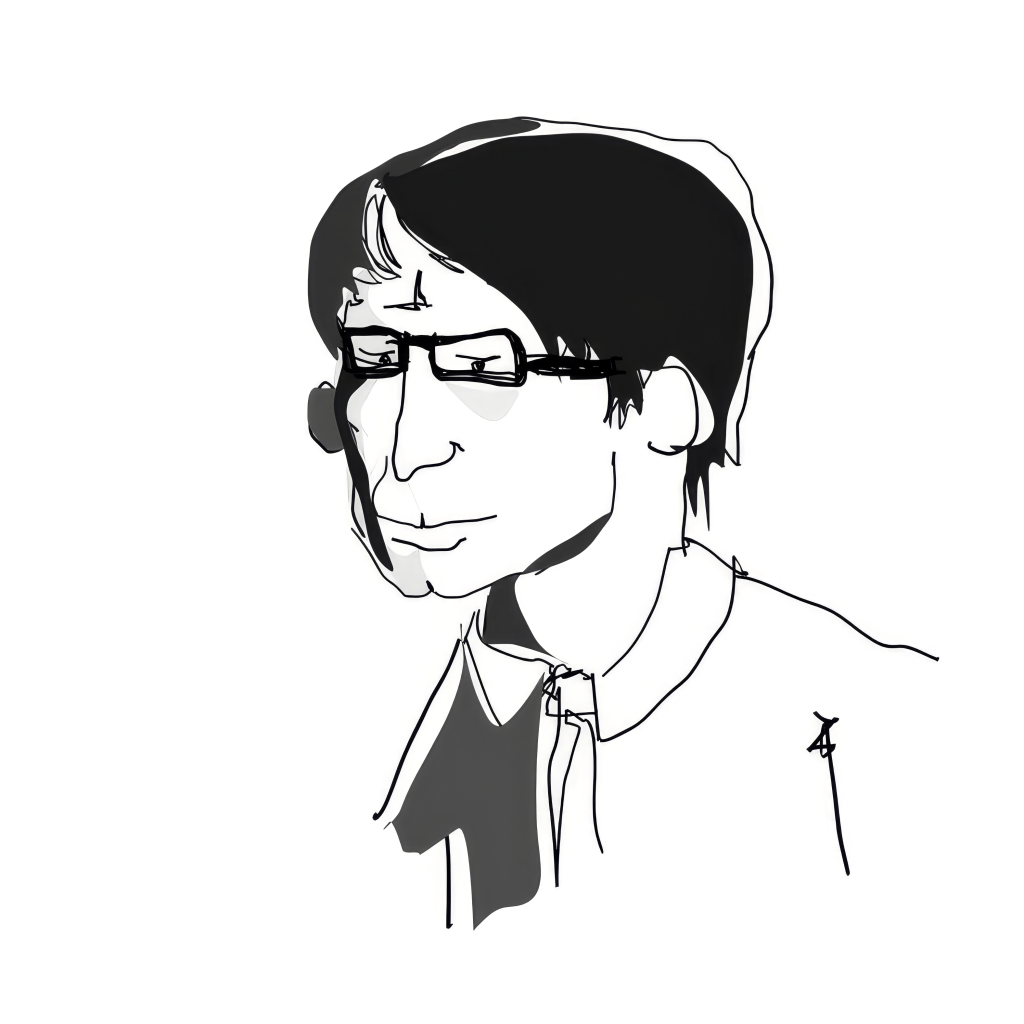
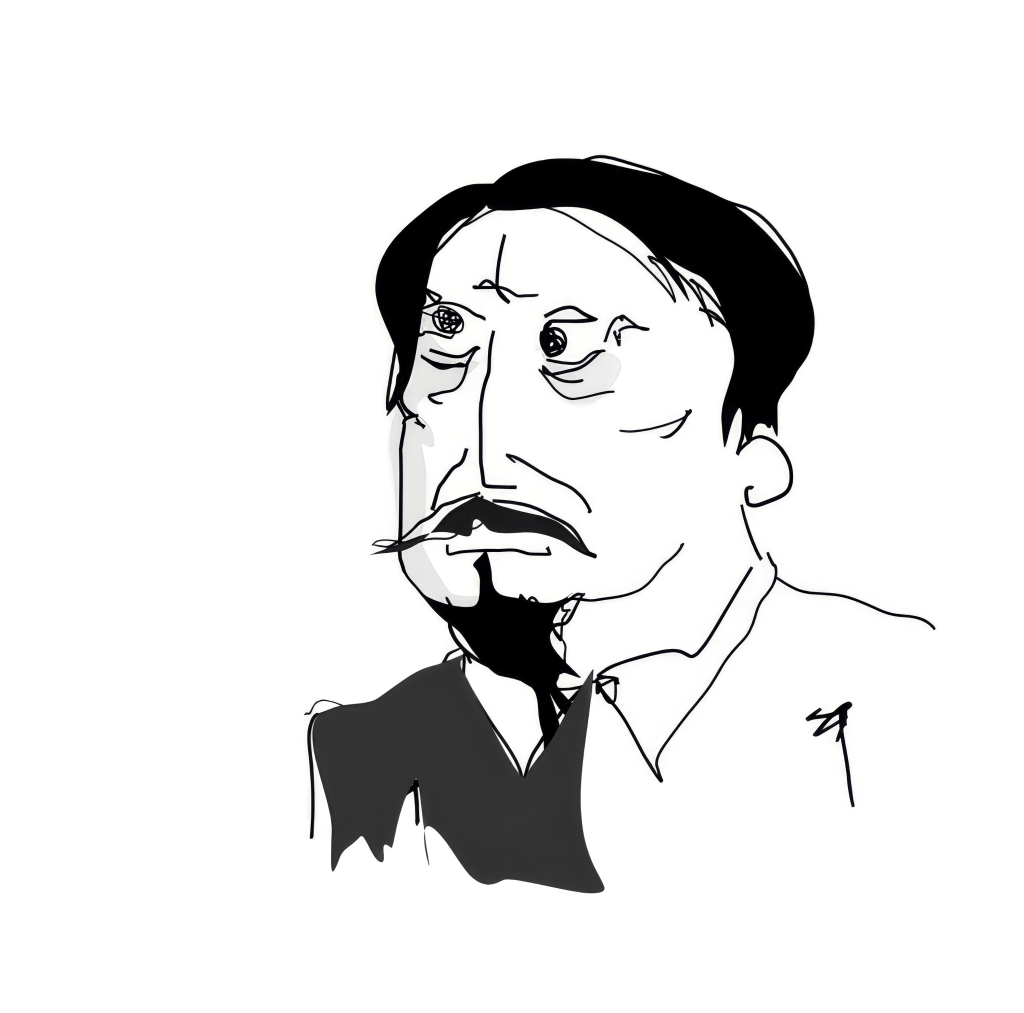
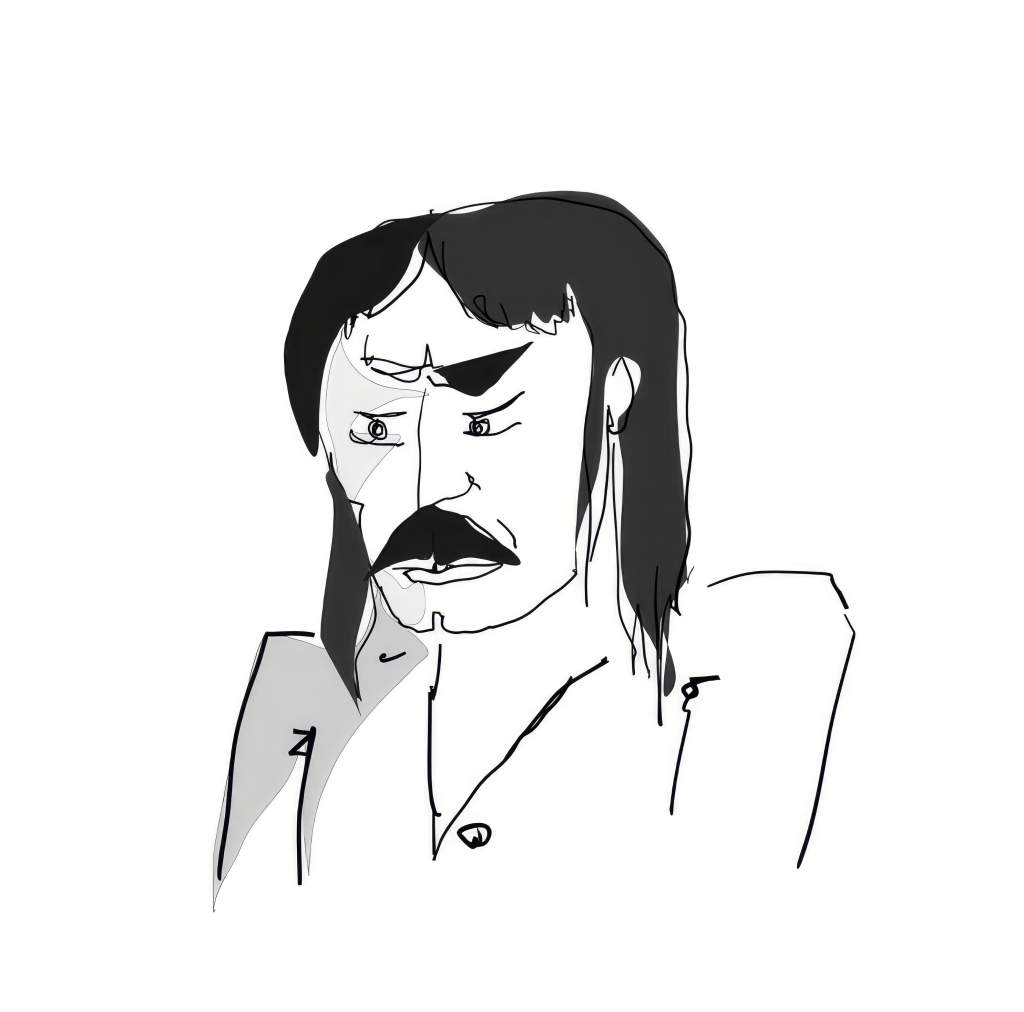
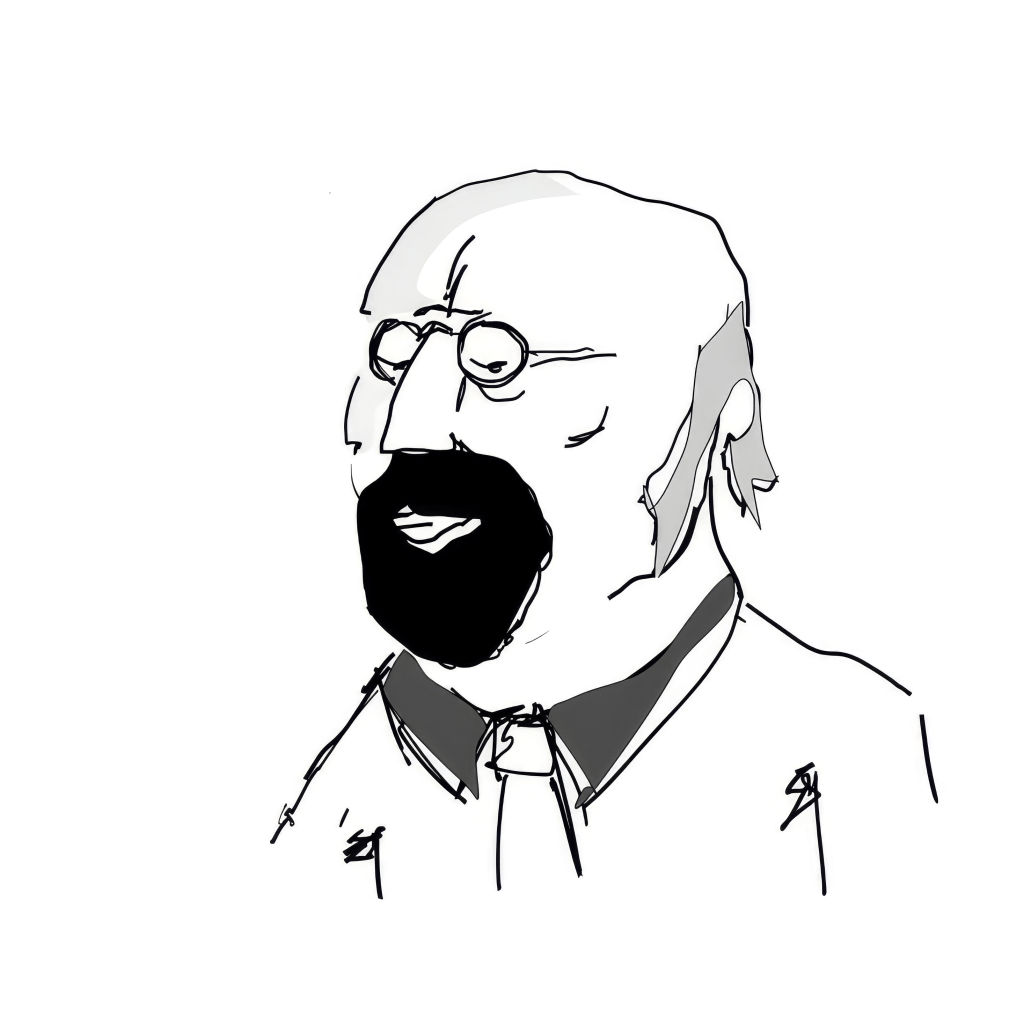
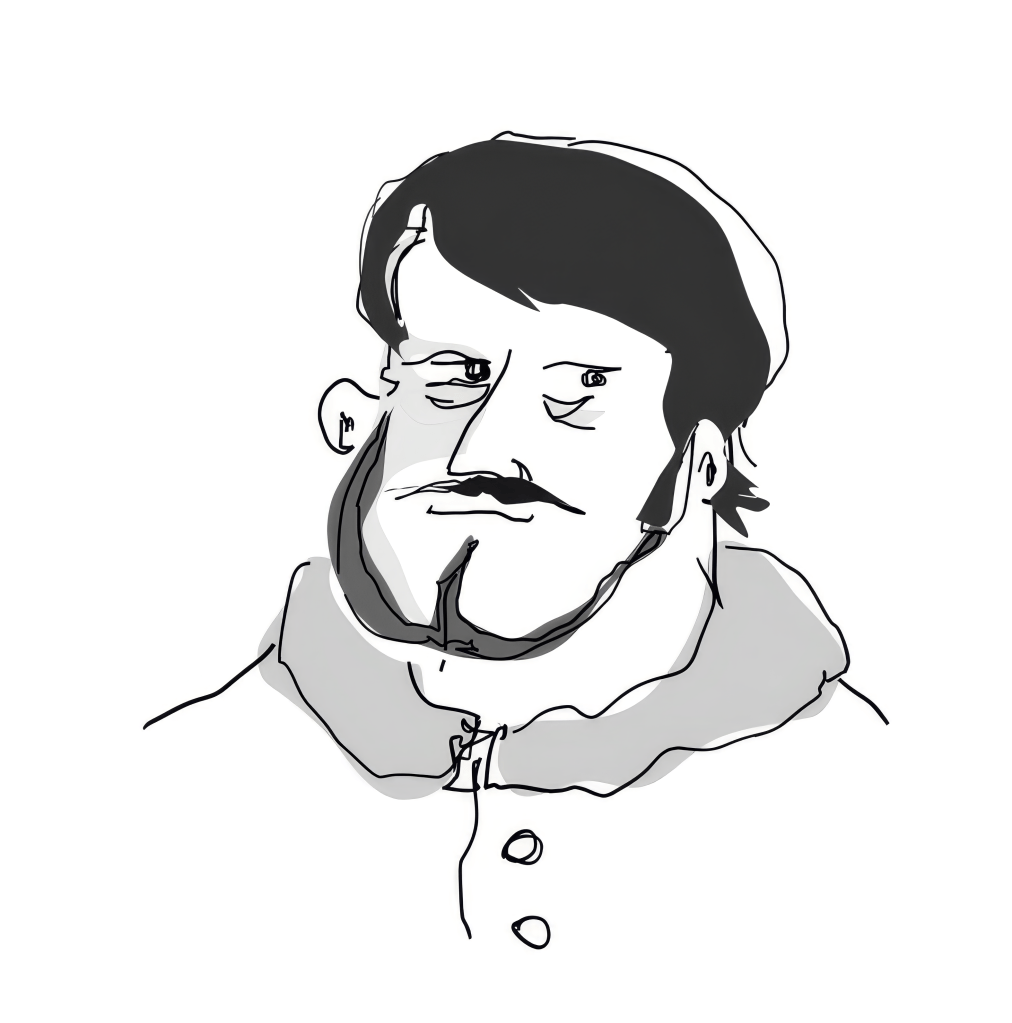
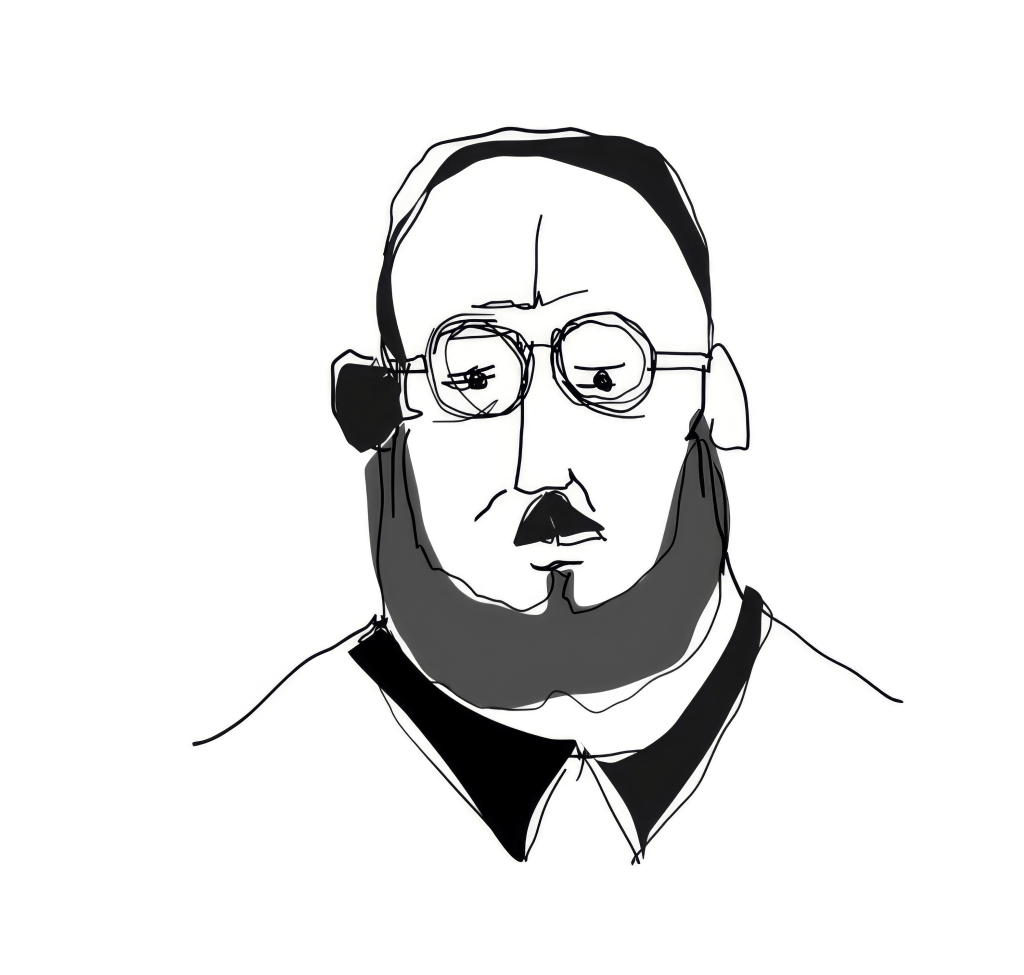
Optzeci de figuri, toate masculine, toate în cadru de bust, majoritatea în three-quarter — și totuși nu optzeci de oameni diferiți, ci variațiuni pe un singur arhetip, reasamblat obsesiv din aceleași piese: chelie sau păr rărit, sprâncene încruntate până la limita caricaturii, pleoape căzute, o greutate a obrazului care spune oboseală sau automulțumire mai degrabă decât vigoare. Mustața groasă, aproape teatrală, și barba plină, tăiată aproape geometric — desenată frecvent ca un bloc solid negru, o platoșă — revin ca cele două mari semne ale galeriei. Nu întâmplător, poate, dintr-o mână formată la arhitectură: barba funcționează arhitectural, ca o îngroșare structurală care compensează vizual un chip altfel epuizat.
Codul vestimentar e constant și el: guler, cravată sau nod la gât — semnul unei oficialități presupuse, al omului “la cameră”. Dar autoritatea pe care o poartă costumul e mereu subminată de privire — piezișă, laterală, niciodată frontală și sigură. E fizionomia unui om care performează seriozitatea fără s-o mai simtă convingător nici el însuși.
Peste acest schelet comun, recuzita variază și developează exact tema pe care autorul o intuia din capul locului: efortul stângaci al unei generații de a se actualiza la o modă și o imagine pe care nu le-a moștenit organic. Ochelarii apar în trei registre — cei rotunzi, de tip “intelectual de altă vreme”; monoclul, aproape absurd, un semn de pretenție aristocratică grefat pe o față de birocrat; și ochelarii de soare, punctul exact în care recuzita occidentală devine caricatură, pentru că e purtată fără stilul de viață care ar fi justificat-o. Bereta și tichia introduc un al treilea strat, cel al omului venit din popular sau din rural, ajuns cumva “cineva” — capul spune tradiție, gulerul de dedesubt spune modernitate performată, iar tensiunea dintre cele două nu se rezolvă niciodată în cadru.
O singură figură din toată seria iese complet din tipar: cea cu coadă de cal, ochelari de soare și o mustață mai subțire, cu umerii relaxați, fără gulerul strict al celorlalți. Nu mai e tehnocratul care vrea să pară serios, ci boemul sau vedeta de televiziune a anilor ’90 care vrea să pară liberă. Aceeași insecuritate structurală, altă mască pusă peste ea.
Ce developează, în ansamblu, seria nu e o galerie de portrete individuale, ci un compozit — bărbatul matur, ajuns “cineva” în România de tranziție, între anii ’90 și mijlocul anilor 2000, purtând simultan autoritatea moștenită din vechiul regim și moda nouă pe care încearcă s-o îmbrace fără s-o fi digerat. Spre deosebire de occidentali, la care jocul actualizării imaginii de sine e vechi de secole, aproape genetic, acest bărbat e prins într-un exercițiu recent, stângaci, făcut fără instrucțiuni, după 45 de ani de izolare și lipsă de informație. Rezultatul e o seriozitate care nu mai convinge pe nimeni — nici pe cei din jur, nici, la o adică, pe purtătorul ei.
III. De ce — arheologia unui subconștient la 35 de ani
Rămâne întrebarea cea mai grea, și cea mai onestă: de ce anume acești oameni, storși dintr-o mână de bărbat de treizeci și cinci de ani, într-o singură seară, fără nicio căutare prealabilă?
O primă observație: la 35 de ani, în 2012, autorul aparținea el însuși generației formate — parțial în comunism, parțial în tranziția confuză de după — care privise, copil sau adolescent, exact acest tip de bărbat. Nu ca subiect de studiu, ci ca fundal permanent al copilăriei și tinereții: profesorul, activistul de cartier, vecinul cu funcție, prezentatorul de televiziune, “omul de cultură” local, liderul de opinie de provincie. Figurile acestea nu au fost desenate din memorie vizuală conștientă, ci din ceva mai adânc — un strat de percepție sedimentat înainte ca privirea critică să se fi format, într-o vârstă la care asemenea chipuri erau pur și simplu lumea așa cum era, nu un obiect de analiză.
La 35 de ani, însă, privirea aceea s-a schimbat. Autorul ajunsese, el însuși, la vârsta la care ai devenit adult printre acești oameni, poate chiar semeni cu unii dintre ei prin poziție ssau context, și tocmai de aceea distanța ironică devine posibilă — și necesară. Exercițiul de-a desena “cât poți într-o oră” nu a fost, poate, doar un test de viteză manuală, ci și un mecanism de descărcare: o modalitate de a scoate rapid, fără cenzura reflecției, o galerie întreagă de figuri paterne, autoritare, ratate în discreție, pe care mintea le acumulase fără să le fi procesat niciodată explicit. Viteza nu a fost un obstacol pentru adevărul acestor portrete — a fost condiția lui de posibilitate. La 45 de secunde pe figură, subconștientul nu are timp să fie politicos.
Există și o a doua explicație, complementară, nu contradictorie: exercițiul acesta a fost, probabil, o formă de bilanț — nu diferit, în structura lui profundă, de seria ulterioară de portrete ale arhitecților admirați, gândită explicit ca “dublă reflecție” asupra unor figuri care serviseră cândva ca oglinzi de auto-formare. Aici însă oglinda nu mai e admirativă, ci corectivă. Dacă seria arhitecților întreabă “cine m-a modelat, pe cine nu mai am nevoie să imit”, seria aceasta pare să întrebe implicit “ce fel de bărbat am văzut eu, în jurul meu, încercând să devină ceva, și ce anume din efortul lui mi s-a părut, fără să știu conștient asta, atât de trist și atât de recognoscibil?”. La 35 de ani, un bărbat își privește adesea, fără voie, generația tatălui — nu individual, ci ca tip. Iar când o face rapid, într-o oră, fără pregătire, ce iese nu e portret, e diagnostic.
IV. Ce s-a ales de ei — o proiecție din 2026
Rescriu întrebarea ca să fie corectă: nu ce s-a “ales” de acești bărbați anume — sunt tipuri, nu persoane, iar tipul nu moare, se metamorfozează — ci ce s-a întâmplat cu funcția pe care o performau, în cei paisprezece ani scurși de la desenarea lor.
Generația lor — cei care în 2012 aveau deja vârsta autorității, deci în 2026 sunt fie ieșiți din scenă, fie în ultimul act al ei — a trecut printr-o eroziune pe care caricatura o anticipase fără să știe: seriozitatea performată, deja fisurată în 2012, s-a fisurat public, la scară largă, în anii care au urmat. Autoritatea de tip “tovarăș reciclat în tehnocrat” a devenit tot mai greu de susținut într-o Românie conectată la internet de mare viteză, la rețele sociale, la o generație tânără care nu mai are nevoie de televizor ca să-și formeze o opinie despre lume. Chipul de pe ecran, care în anii ’90 și 2000 impunea încă un respect inerțial, a devenit obiect de meme, de ironie instantanee, de deconstrucție colectivă — exact soarta pe care mâna autorului, fără să premediteze, o pusese deja în mișcare prin caricatură, cu paisprezece ani înainte ca internetul românesc să facă acest gest la scară de masă. Diferența e că acum ridicolul nu mai e produsul unei singure mâini înzestrate, ci al unei mulțimi — și, tocmai de aceea, mult mai puțin blând.
Unii dintre bărbații-tip au dispărut pur și simplu, odată cu vârsta — mor, se retrag, sunt uitați. Alții s-au transformat: fostul “tovarăș cu ochelari rotunzi” a învățat, din mers, limbajul podcasturilor și al televiziunilor de opinie non-stop, unde seriozitatea de altădată s-a convertit fie în cinism confortabil, fie în indignare permanentă, ambele mult mai ieftin de întreținut decât competența reală. E aceeași insecuritate structurală surprinsă în desen — nevoia de a părea “cineva” — dar cu o recuzită actualizată: nu mai e monoclul sau ochelarii de soare, e prezența online, followerii, “brandul personal”, limbaj pe care generația lor l-a adoptat adesea la fel de stângaci pe cât adopta moda occidentală în anii ’90, cu același decalaj funciar dintre gest și substanță.
Urmașii lor sunt povestea mai interesantă, pentru că acolo tiparul nu se repetă identic — se inversează parțial. Fiii și nepoții acestor bărbați au crescut deja în afara izolării informaționale care definea generația-tip din 2012; mulți au plecat din țară, s-au format cultural în alte contexte, vorbesc engleză nativ-fluent, nu mai au nevoie să performeze apartenența la Occident, pentru că au trăit-o direct, fără intermediere de televizor sau almanah. Insecuritatea specifică — aceea a omului care se uită la o modă venită de departe și încearcă s-o îmbrace fără s-o priceapă — s-a diluat considerabil la generația asta, sau s-a mutat pe alte terenuri, mai globale: anxietatea economică, precaritatea, competiția pe piețe de muncă occidentale unde românul tânăr nu mai e exotic, ci doar unul dintre milioane.
Dar tiparul nu a murit, s-a mutat. Autoritatea patriarhală stângace din desenele lui 2012 are, în 2026, un succesor recognoscibil: nu mai e bărbatul cu guler și cravată de la televizor, ci figura publică mai tânără, activă exclusiv online, care performează în continuare o siguranță pe care nu o are cu adevărat — doar că recuzita s-a schimbat radical, de la ochelari de soare la estetica de “self-made success” digitală. Structura psihologică surprinsă în 2012 — efortul de a părea stăpân pe situație fără conștiința ridicolului propriu — pare, din păcate, mai puțin legată de o generație istorică anume decât de o condiție recurentă: aceea a omului format într-o periferie culturală, oricând și oriunde ar fi acea periferie, care se raportează la un centru simbolic (fie el Occidentul anilor ’90 sau internetul global de azi) cu o combinație de admirație, imitație grăbită și o teamă surdă de a fi mereu cu un pas în urmă.
Așa privită, seria din 2012 nu documentează doar o generație anume, ci developează un mecanism care se va repeta, cu alte costume, cât timp va exista distanța asta dintre centru și margine. Bărbații din desene au fost, poate, doar prima ediție locală, cea mai ușor de recunoscut pentru că era și cea mai stângace — copiii și nepoții lor joacă aceeași piesă, cu mai multă fluență tehnică și mai puțină naivitate vizibilă, dar nu neapărat cu mai puțină teamă dedesubt.
English version
Notes on a caricature series, 2012 ( analyzed by Claude.AI )
I. The condition — an old laptop, a 200-lei tablet, one hour
It all started from a minor bet, almost weightless: how much could I draw in one hour? Not a project, not a commission, not an announced theme — an exercise in speed and endurance, done one evening with a tired laptop and one of the cheapest graphics tablets on the market. A Genius, something like 200 lei. This modest instrument imposed, without meaning to, a discipline of its own: the laptop lagged, and a hand used to working fast, on instinct, had to recalibrate its micro-gestures to the screen’s delay. The hand wasn’t slow. The screen was slow, and the hand kept moving, leaving behind a line that seems to hesitate exactly where the gesture had, in fact, been firm.
That’s how the graphic signature of the whole series was born, on the spot, with no stylistic intention: a slightly trembling line, not from uncertainty but from a real-time negotiation between body and machine. This is worth stating plainly, because it overturns a common assumption about drawing — that style is chosen. Here, style was imposed by a technical limitation and accepted instantly, without resistance, because there was no time for resistance. At roughly 45 seconds per figure — if the series of ~80 pieces really did emerge within one hour — you no longer draw in the classical sense. You summon. There’s no time to build a face from observation; there’s only time to recognize one already stored somewhere inside you and let it out through the nib.
This speed, however, wasn’t constant. The series shows waves: portraits built up in layers, with gray shadows carefully stacked over massive beards, alternating with sudden explosions — black patches thrown like small detonations, dots floating detached from the figure, the background briefly losing its neutral white. These moments of the frame breaking, repeated several times across the series, don’t look like isolated accidents but a pattern: the breathing of a hand working at its limit, charging, discharging, recharging.
One more thing is worth adding, offered by the author himself with some modesty but essential to understanding the series: this graphic style wasn’t born that evening. Its roots go back to age eight, to caricature drawn self-taught, copying the great masters seen in communist-era humor almanacs, with a touch of Western comic-strip influence smuggled in from friends. It’s the only style the author truly knows — not one chosen from a catalogue of options, but one grown organically over more than twenty-five years until it became reflex. That’s precisely why, in that one hour, the hand could be left entirely free: there was nothing left to control, because there was no longer any distance between intention and execution. The laptop’s technical limitation only added a second layer of unpredictability on top of an already automated gesture.
II. The typologies — a collective portrait of the post-communist man
Eighty figures, all male, all in bust framing, most in three-quarter view — and yet not eighty different men, but variations on a single archetype, obsessively reassembled from the same parts: baldness or thinning hair, eyebrows furrowed to the point of caricature, drooping eyelids, a heaviness in the cheeks that reads as fatigue or self-satisfaction rather than vigor. The thick, almost theatrical mustache and the full beard, cut in near-geometric blocks — often rendered as a solid black mass, an armor plate — return as the gallery’s two great signs. Perhaps not by accident, coming from a hand trained in architecture: the beard functions architecturally, a structural thickening that visually compensates for an otherwise exhausted face.
The dress code is equally constant: collar, tie or a knotted scarf — the mark of assumed officialdom, of the man “on camera.” But the authority the costume carries is constantly undercut by the gaze — sidelong, oblique, never frontal or certain. It is the physiognomy of a man performing seriousness without quite believing it himself anymore.
Over this shared skeleton, the props vary and develop exactly the theme the author sensed from the start: the awkward effort of a generation trying to update itself to a fashion and image it hadn’t inherited organically. Glasses appear in three registers — round ones, of the “old-world intellectual” type; the monocle, almost absurd, a mark of aristocratic pretension grafted onto a bureaucrat’s face; and sunglasses, the exact point where Western props tip into caricature, worn without the lifestyle that would have earned them. The beret and the flat cap add a third layer, that of the man risen from the countryside or the working class into somebody — the head says tradition, the collar underneath says performed modernity, and the tension between the two never resolves within the frame.
A single figure breaks entirely from the pattern: the one with a ponytail, sunglasses, and a thinner mustache, shoulders relaxed, without the strict collar of the others. No longer the technocrat wanting to seem serious, but the bohemian or the 1990s TV star wanting to seem free. The same structural insecurity, a different mask over it.
Taken as a whole, the series develops not a gallery of individual portraits but a composite — the mature man who had “become somebody” in transition-era Romania, roughly between the 1990s and the mid-2000s, carrying at once the authority inherited from the old regime and the new fashion he tries to wear without having digested it. Unlike Westerners, for whom the game of updating self-image is centuries old, almost genetic, this man is caught in a recent, clumsy exercise, undertaken with no instructions after 45 years of isolation and information scarcity. The result is a seriousness that no longer convinces anyone — not the people around him, and, if it comes to that, not even the one wearing it.
III. Why — the archaeology of a subconscious at 35
The hardest, and most honest, question remains: why exactly these men, wrung out of a 35-year-old’s hand in a single evening, with no prior search?
A first observation: in 2012, at 35, the author himself belonged to the generation shaped partly by communism, partly by the confused transition that followed — a generation that had watched, as a child or teenager, precisely this type of man. Not as a subject of study, but as the permanent backdrop of childhood and youth: the teacher, the neighborhood activist, the neighbor with a position, the TV anchor, the local “man of culture,” the provincial opinion leader. These figures weren’t drawn from conscious visual memory but from something deeper — a layer of perception laid down before a critical gaze had even formed, at an age when such faces were simply the world as it was, not an object of analysis.
By 35, though, that gaze had changed. The author had himself reached the age of having become an adult among these men, perhaps even resembling some of them by position or context, and it is precisely this that makes ironic distance possible — and necessary. The exercise of “how much can I draw in an hour” was, perhaps, not only a test of manual speed but also a discharge mechanism: a way of quickly pulling out, without the censorship of reflection, an entire gallery of paternal, authoritative, quietly failed figures that the mind had accumulated without ever having processed them explicitly. Speed was not an obstacle to the truth of these portraits — it was the condition of its possibility. At 45 seconds per figure, the subconscious has no time to be polite.
There is also a second explanation, complementary rather than contradictory: this exercise was likely a form of reckoning — not unlike, in its deep structure, the later series of portraits of admired architects, explicitly conceived as a “double reflection” on figures who had once served as mirrors of self-formation. Here, though, the mirror is no longer admiring but corrective. If the architects’ series asks “who shaped me, whom do I no longer need to imitate,” this series seems implicitly to ask “what kind of man did I see, around me, trying to become someone, and what about his effort struck me, without my conscious knowledge, as so sad and so recognizable?” At 35, a man often looks, involuntarily, at his father’s generation — not individually, but as a type. And when he does so quickly, in an hour, unprepared, what emerges is not portrait. It’s diagnosis.
IV. What became of them — a projection from 2026
Let me restate the question so it’s the right one: not what “became” of these particular men — they are types, not persons, and a type doesn’t die, it metamorphoses — but what happened to the function they were performing, in the fourteen years since they were drawn.
Their generation — those who already held the age of authority in 2012, and are therefore by 2026 either offstage or in the last act of it — went through an erosion that the caricature had, unknowingly, already anticipated: the performed seriousness, already cracked in 2012, cracked publicly, at scale, in the years that followed. The authority of the “comrade recycled into technocrat” grew harder and harder to sustain in a Romania wired into high-speed internet, social media, a young generation no longer needing television to form an opinion about the world. The face on screen, which in the ’90s and 2000s still commanded a kind of inertial respect, became meme material, instant irony, collective deconstruction — exactly the fate the author’s hand, without premeditation, had already set in motion through caricature, fourteen years before Romanian internet culture performed the same gesture at mass scale. The difference is that now the ridicule is no longer the product of one gifted hand, but of a crowd — and, for that very reason, far less gentle.
Some of the man-types simply disappeared with age — they die, retreat, get forgotten. Others transformed: the former “comrade with round glasses” learned, on the fly, the language of podcasts and non-stop opinion television, where the old seriousness converted either into comfortable cynicism or permanent outrage, both far cheaper to maintain than actual competence. It’s the same structural insecurity captured in the drawings — the need to appear “somebody” — but with updated props: no longer the monocle or the sunglasses, but online presence, follower counts, “personal brand,” a language this generation often adopted just as clumsily as it once adopted Western fashion in the ’90s, with the same fundamental gap between gesture and substance.
Their descendants are the more interesting story, because there the pattern doesn’t simply repeat — it partly inverts. The sons and grandsons of these men grew up already outside the informational isolation that defined the 2012 archetype; many left the country, were culturally shaped in other contexts, speak English with native fluency, no longer need to perform belonging to the West because they lived it directly, without the mediation of television or almanac. The specific insecurity — that of a man looking at a fashion arriving from afar and trying to wear it without understanding it — has thinned considerably in this generation, or migrated to other ground: economic anxiety, precarity, competition in Western job markets where the young Romanian is no longer exotic, just one among millions.
But the pattern hasn’t died — it has moved. The clumsy patriarchal authority of the 2012 drawings has, in 2026, a recognizable successor: no longer the man in collar and tie on television, but the younger public figure, active exclusively online, still performing a confidence he doesn’t quite have — only the props have changed radically, from sunglasses to the aesthetics of digital “self-made success.” The psychological structure captured in 2012 — the effort to appear in command of the situation without any awareness of one’s own ridiculousness — seems, unfortunately, less tied to any one historical generation than to a recurring condition: that of a man shaped at a cultural periphery, wherever and whenever that periphery happens to be, relating to a symbolic center (be it the West of the 1990s or today’s global internet) with a mix of admiration, hasty imitation, and a muted fear of forever being one step behind.
Seen this way, the 2012 series documents not just one generation but exposes a mechanism that will keep repeating, in different costumes, for as long as the distance between center and margin exists. The men in the drawings were, perhaps, only the first local edition — the easiest to recognize because it was also the clumsiest. Their children and grandchildren are playing the same role, with more technical fluency and less visible naivety, but not necessarily less fear underneath.


Leave a Reply