Varianta în limba română
IN/OFF — Între percepție și realitate
Există momente în care lumea din jur nu se schimbă, dar felul în care o percepem începe să urmeze alte reguli. Obiectele rămân aceleași, oamenii continuă să-și joace rolurile obișnuite, iar viața își păstrează aparența de normalitate. Și totuși, ceva esențial se modifică: relația dintre conștiință și realitate. În astfel de momente, întrebarea nu mai este ce există, ci cum ajungem să construim sensul a ceea ce vedem.
Seria IN/OFF, realizată în jurul anului 2012, s-a născut din această fisură.
A fost o perioadă marcată de anxietate profundă, depresie și un sentiment persistent de dezorientare, în care încercam să înțeleg nu doar lumea din jur, ci și propriile mecanisme de percepție. Din când în când participam la ședințe de psihoterapie, nu atât pentru a primi răspunsuri definitive, cât pentru a intra, măcar pentru o oră, într-un spațiu în care realitatea părea mai calmă, mai coerentă și mai ușor de înțeles.
Psihoterapeuta îmi spunea adesea că, în timpul ședințelor, nu face altceva decât să pună o oglindă în fața mea.
Mult timp nu am înțeles pe deplin această afirmație. Privind astăzi seria IN/OFF, îmi dau seama că lucrările reprezintă încercarea mea de a prelua tocmai această atitudine. Nu de a copia persoana aflată în fața mea, ci de a împrumuta pentru câteva ore modul ei de a privi lumea. Încercam să înlocuiesc reacția cu observația, confuzia cu analiza și neliniștea cu o formă de ordine. Arta devenea astfel un exercițiu de distanțare, o modalitate de a transforma experiența într-un obiect pe care îl puteam contempla fără a fi complet absorbit de ea.
Din punct de vedere vizual, seria este construită aproape exclusiv din volume geometrice, forme fragmentate și tonuri reci de gri. Alegerea nu a fost întâmplătoare. Într-o perioadă în care realitatea părea dificil de organizat, geometria oferea impresia unei structuri stabile. Muchiile, suprafețele și poligoanele deveneau un limbaj prin care haosul putea fi, măcar temporar, ordonat. Corpurile nu mai sunt anatomice, ci arhitecturale; identitatea nu mai apare ca o formă organică, ci ca o construcție aflată într-un permanent proces de reasamblare.
Aceeași funcție o îndeplinește și paleta aproape monocromă. Griurile diluate nu exprimă tristețe, ci suspendarea emoției. Atmosfera aseptică amintește de spațiul unui laborator sau al unui cabinet medical, unde afectul este lăsat temporar deoparte pentru a face loc observației. Privite retrospectiv, lucrările par să reproducă, fără intenție conștientă, chiar postura terapeutului: aceea de a privi fără a judeca.
Titlul IN/OFF trimite la termenul folosit în teatru și în radio pentru a desemna spațiul aflat în afara scenei, locul unde actorul se pregătește, unde se aud indicațiile de regie și unde spectacolul nu a început încă. Pentru mine, această metaforă a devenit imaginea unei stări intermediare. Între interior și exterior. Între echilibru și dezechilibru. Între ceea ce trăim și ceea ce reușim să exprimăm.
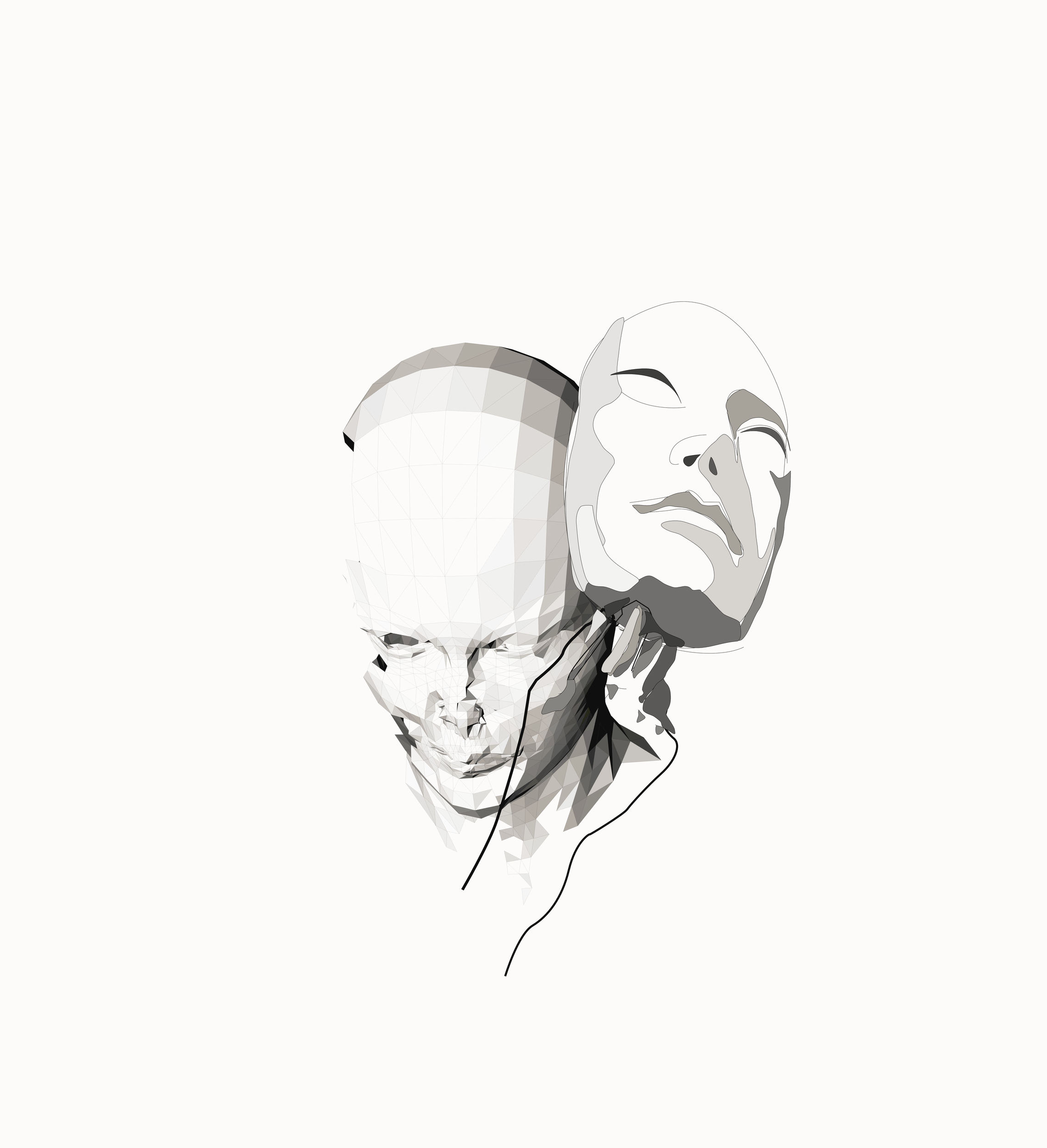
Una dintre imaginile centrale ale seriei prezintă un cap geometric și o mască suspendată deasupra lui. Masca poate fi interpretată, desigur, ca persona, identitatea socială prin care fiecare dintre noi intră în relație cu lumea. Dar ea reprezintă și altceva: arta însăși. Spre deosebire de rigiditatea poligonală a capului, masca este modelată din suprafețe mai fluide, aproape picturale, construite din pete și nuanțe de gri care amintesc de urmele unei pensule. Ea nu ascunde adevărul, ci îl mediază. Este forma prin care experiența interioară poate deveni comunicabilă.
Paradoxal, după îndepărtarea măștii, capul rămas dedesubt apare ușor deformat, fragil și incomplet. Imaginea sugerează că arta nu este doar un înveliș estetic, ci o structură care susține identitatea atunci când aceasta își pierde temporar coerența. Masca nu este opusul autenticității; ea este una dintre condițiile prin care autenticitatea poate deveni vizibilă.
Privind seria după mai bine de un deceniu, nu o mai văd ca pe o încercare de a explica o anumită perioadă din viața mea. O văd ca pe o cercetare asupra felului în care percepția construiește realitatea și asupra fragilității acestui proces. În fond, fiecare dintre noi locuiește într-o lume pe care mintea o interpretează înainte de a o înțelege.
Poate că tocmai de aceea IN/OFF nu vorbește despre o experiență individuală, ci despre o condiție profund umană: încercarea permanentă de a găsi o formă de ordine într-o realitate care nu încetează niciodată să fie mai complexă decât explicațiile pe care le putem da despre ea.
Analiza lucrărilor
1. IN/OFF
Prima imagine deschide seria asemenea unui manifest. Capul este secționat, însă interiorul lui nu dezvăluie un creier, ci un spațiu populat de fragmente abstracte, asemănătoare unor semne sau structuri suspendate. Mintea nu apare ca un organ biologic, ci ca un teritoriu aflat într-un continuu proces de reorganizare. Textul autobiografic plasat în lateral nu explică imaginea, ci marchează începutul transformării experienței în reflecție.
2. Corpul fragmentat
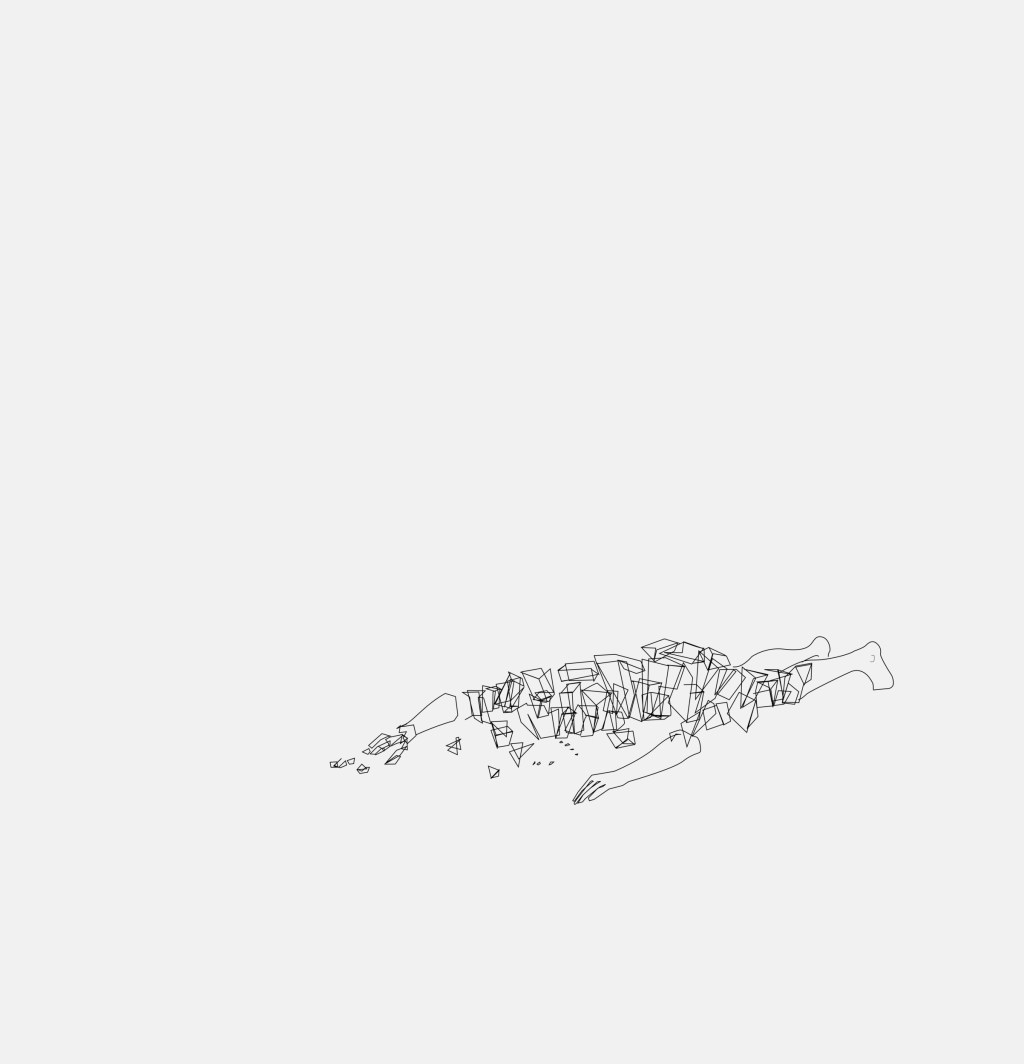
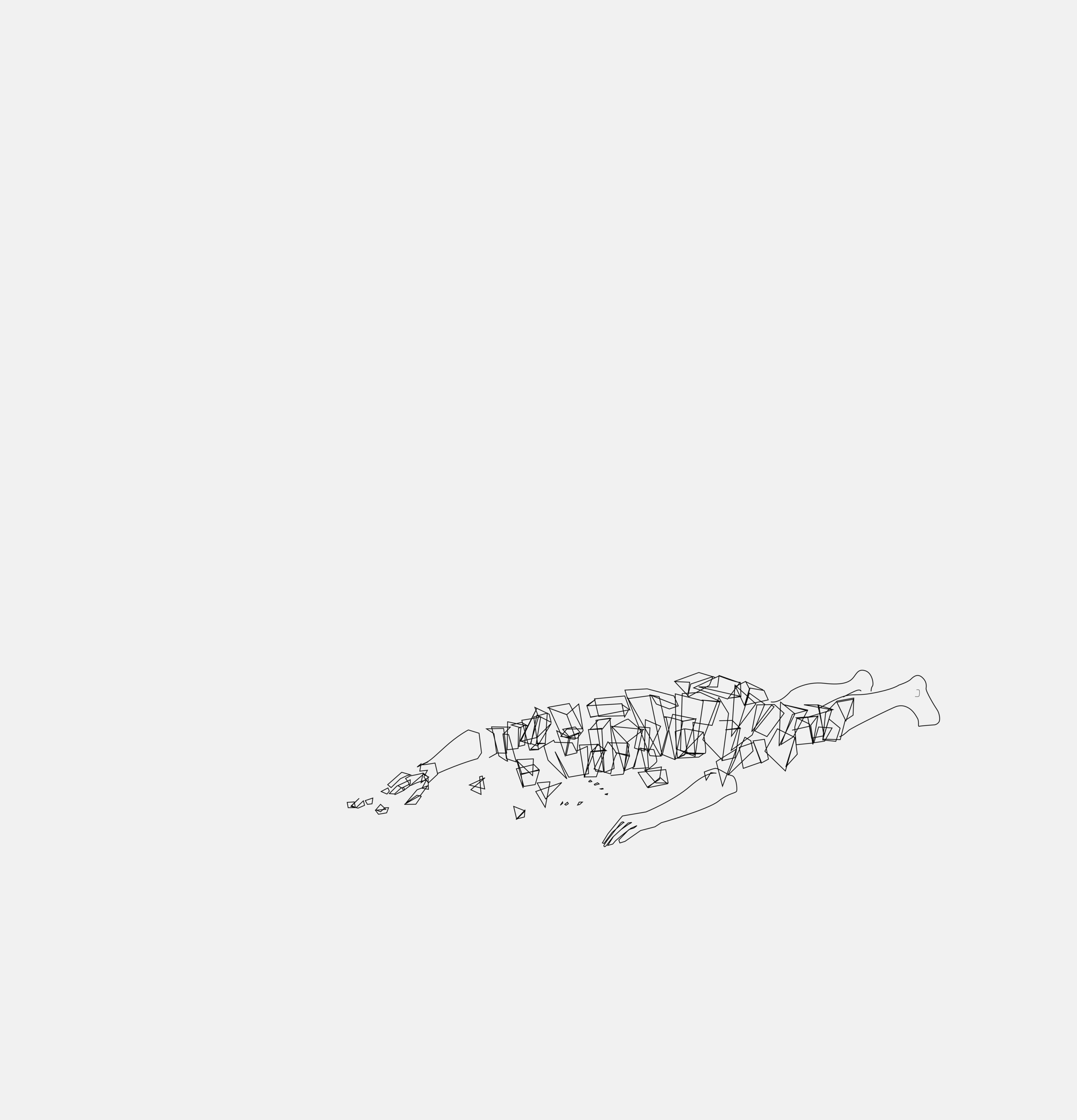
Figura umană pare desfăcută din interior, în timp ce conturul exterior rămâne intact. Lucrarea sugerează tensiunea dintre imaginea coerentă pe care o proiectăm în lume și complexitatea invizibilă a spațiului interior. Fragmentarea nu este violentă, ci aproape analitică, asemenea unui obiect desfăcut pentru a-i înțelege structura.
3. Masca
Probabil cea mai importantă lucrare a seriei. Relația dintre cap și mască depășește opoziția dintre identitatea privată și cea socială. Masca simbolizează și actul artistic, capacitatea creației de a transforma experiența într-o formă comunicabilă. Prin contrast, capul rămas dedesubt apare ușor deformat, sugerând vulnerabilitatea unei identități care nu poate exista fără propriile ei forme de expresie.
4. Cristalizarea formei
Obiectul oscilează între cap, piatră și cristal. Dintr-o structură aparent compactă izbucnește o acumulare de muchii și fragmente care destabilizează întreaga compoziție. Imaginea vorbește despre tensiunea dintre ordine și dezordine, dintre construcție și disoluție, fără ca niciuna dintre ele să câștige definitiv.
5. Nucleul
O variațiune mai concentrată asupra aceleiași idei. Volumul pare suspendat într-un spațiu neutru, asemenea unui obiect aflat sub observație. Fragmentele care ies din el pot fi citite ca procese de transformare, interferențe sau începuturi ale unei noi organizări. Lucrarea evită orice răspuns definitiv și rămâne deschisă interpretării.
6. Figura și fragmentele
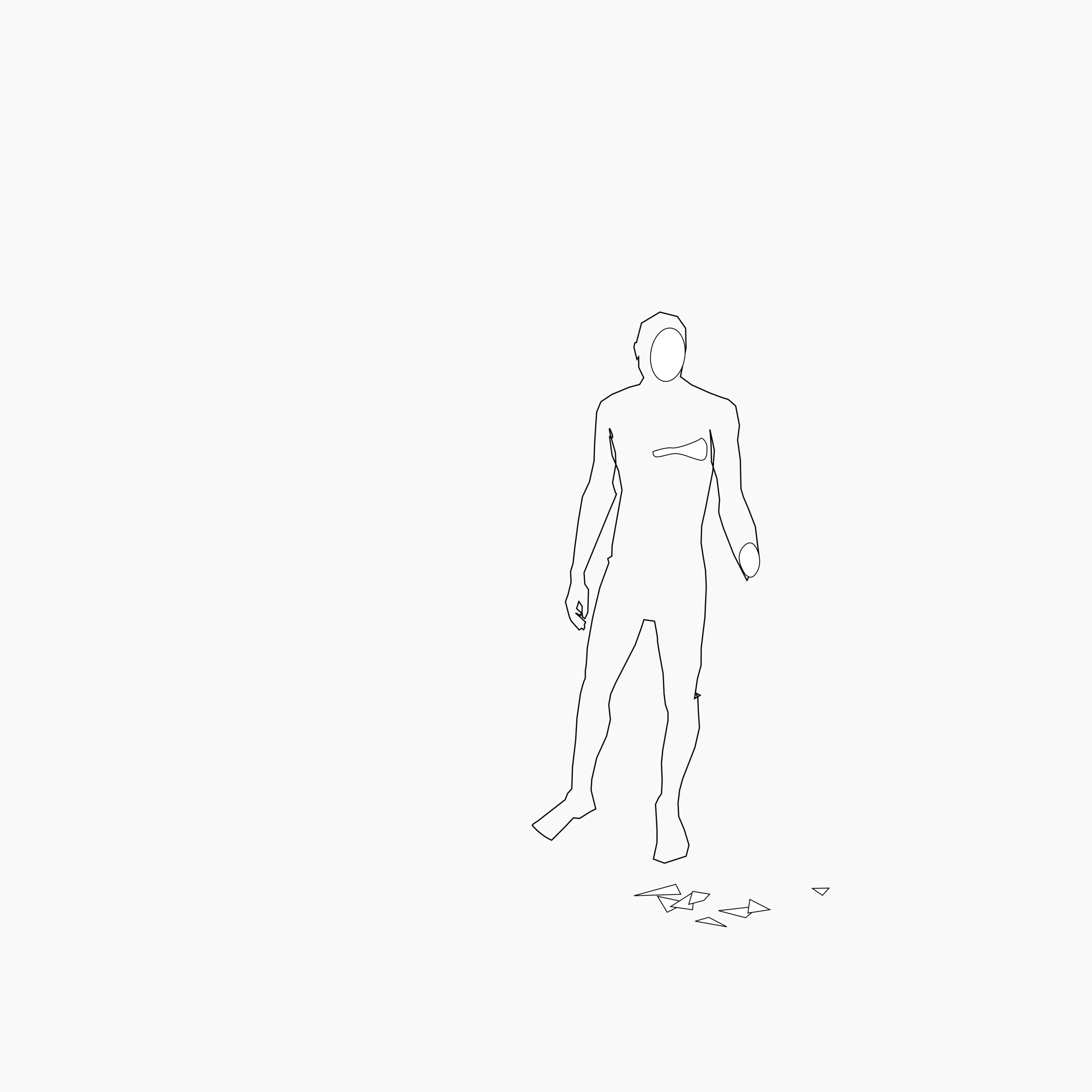
Ultima imagine reduce limbajul vizual la esențial. Un personaj schițat din câteva linii și câteva forme geometrice plasate în fața lui sunt suficiente pentru a crea o tensiune profundă. Nu știm dacă fragmentele aparțin lumii exterioare sau chiar personajului. Tocmai această ambiguitate transformă lucrarea într-un final potrivit al seriei. După toate încercările de analiză și reconstrucție, rămâne doar omul în fața propriilor întrebări.
IN/OFF nu oferă concluzii și nu încearcă să explice lumea. Ea propune doar un moment de suspendare, invitând privitorul să reflecteze asupra unui adevăr simplu și profund: înainte de a locui în realitate, fiecare dintre noi locuiește în propria percepție.



English version
IN/OFF — Between Perception and Reality
There are moments when the world itself does not change, yet the way we experience it begins to follow different rules. Objects remain the same, people continue to play their familiar roles, and everyday life preserves its appearance of normality. Yet something fundamental shifts: the relationship between consciousness and reality. In such moments, the question is no longer what exists, but how we construct meaning from what we perceive.
IN/OFF, created around 2012, emerged from that very fracture.
The series belongs to a period marked by profound anxiety, recurring depression, and a persistent sense of disorientation, during which I found myself questioning not only the world around me but also the mechanisms through which I perceived it. From time to time I attended psychotherapy sessions, not in search of definitive answers, but simply to spend an hour within a space where reality seemed calmer, more coherent, and somehow easier to understand.
My therapist often told me that, during our sessions, she was doing nothing more than holding a mirror in front of me.
For a long time, I never fully understood what she meant. Looking back today, I realize that IN/OFF became my own attempt to adopt that same attitude. Not to imitate the person sitting across from me, but to borrow, if only temporarily, her way of observing the world. I was trying to replace reaction with observation, confusion with analysis, and anxiety with a sense of structure. Art gradually became an exercise in psychological distance—a way of transforming experience into something I could contemplate instead of being completely consumed by it.
Visually, the series is built almost entirely from geometric forms, fragmented volumes, and muted shades of grey. This choice was far from accidental. At a time when reality itself seemed difficult to organize, geometry offered the reassuring illusion of stability. Edges, planes, and polygons became a language through which disorder could, at least momentarily, be arranged into something coherent. The figures are no longer anatomical; they become architectural. Identity itself appears less as an organic condition than as a structure constantly attempting to reassemble itself.
The nearly monochromatic palette serves a similar purpose. These diluted greys do not express sadness; they evoke emotional suspension. Their clinical, almost aseptic atmosphere recalls a laboratory rather than an emotional landscape—a place where feelings are temporarily set aside in order to make room for observation. Looking back, I realize that the visual language of the series unconsciously mirrors the position of the therapist herself: to observe without judgment.
The title IN/OFF refers to the theatrical and broadcasting meaning of off: the invisible space beyond the stage, where actors prepare, technical instructions are exchanged, and the performance has not yet begun. That metaphor eventually became a way of describing my own condition—a state suspended between interior and exterior, between stability and uncertainty, between lived experience and the attempt to give it form.
One of the central images of the series depicts a geometric head accompanied by a detached mask. The mask can certainly be understood as persona—the social identity through which we enter the world. Yet within IN/OFF, it also carries another meaning.
The mask represents art itself.
Unlike the rigid, polygonal structure of the head beneath it, the mask is composed of softer, painterly surfaces built from flowing patches of grey reminiscent of brushstrokes. It belongs less to geometry than to painting. Rather than concealing truth, it mediates it. It becomes the form through which inner experience can be transformed into something shareable.
Paradoxically, once the mask is removed, the exposed head appears slightly distorted, fragile, and incomplete. The image suggests that art is not merely an aesthetic surface but a structure capable of supporting identity whenever that identity begins to lose its coherence. The mask is therefore not the opposite of authenticity. It is one of the conditions that allows authenticity to become visible.
More than a decade later, I no longer see IN/OFF as an attempt to explain a particular period of my life. I see it as an investigation into the fragile relationship between perception and reality, and into the remarkable way consciousness continuously reconstructs the world it inhabits.
Ultimately, each of us lives not only within reality itself, but within our own interpretation of it.
Perhaps that is why IN/OFF no longer speaks only about an individual experience. It reflects something fundamentally human: the endless effort to create order within a reality that will always remain more complex than the explanations we give it.
Artwork Analysis
1. IN/OFF
The opening image functions as a manifesto for the entire series. The head is opened, yet instead of revealing a brain it exposes an interior populated by abstract fragments resembling unfinished symbols or suspended structures. The mind is presented not as a biological organ but as a territory undergoing constant reorganization. The autobiographical text placed beside the figure does not explain the image; rather, it marks the moment when lived experience begins to transform into reflection.
2. Fragmented Body
The human figure appears dismantled from within while its external contour remains intact. The work explores the tension between the coherent image we project into the world and the far more complex inner landscape that remains invisible. The fragmentation is not violent but analytical, almost as if the body had been carefully disassembled in order to understand its internal architecture.
3. The Mask
Perhaps the conceptual centre of the entire series. The relationship between the head and the mask extends beyond the distinction between private and social identity. Here, the mask also symbolizes artistic creation itself—the capacity of art to transform lived experience into a communicable form. In contrast, the exposed head beneath it remains subtly distorted, suggesting the vulnerability of an identity that cannot fully exist without the symbolic structures through which it expresses itself.
4. Crystallizing Form
The object oscillates between a head, a stone, and a crystal. From an otherwise stable structure emerges an eruption of sharp fragments that destabilizes the entire composition. The work reflects the perpetual tension between order and disorder, construction and dissolution, allowing neither state to prevail completely.
5. The Core
A more condensed variation of the previous image, this work isolates the form within a neutral space, almost like a specimen placed under observation. The fragments projecting from its surface may be interpreted as transformations in progress, perceptual interferences, or the early stages of a new internal order. Rather than offering answers, the image deliberately remains open to interpretation.
6. Figure and Fragments
The final work reduces its visual language to the essential. A figure defined by only a few lines stands before several geometric fragments whose origin remains uncertain. We cannot know whether they belong to the surrounding world or to the figure itself. It is precisely this ambiguity that gives the image its quiet power. After every attempt to analyse, reconstruct, and understand, what ultimately remains is a human being standing before a handful of unresolved fragments.
IN/OFF does not seek to explain reality, nor does it offer definitive conclusions. Instead, it proposes a moment of suspension, inviting the viewer to reflect upon a simple yet profound truth: before we inhabit the world, we first inhabit our own perception of it.


Leave a Reply