Varianta în limba română
Desene pentru necunoscut
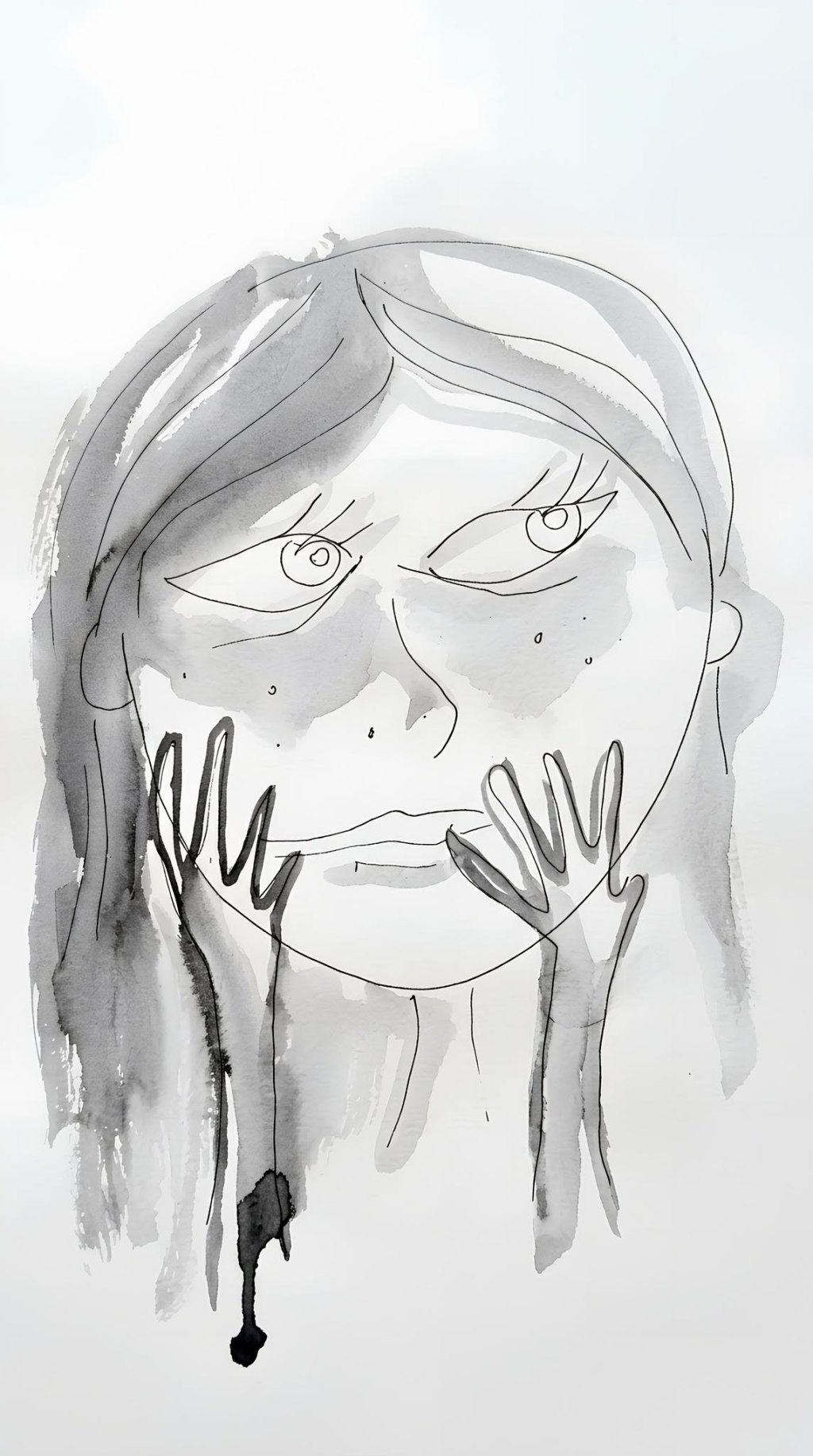
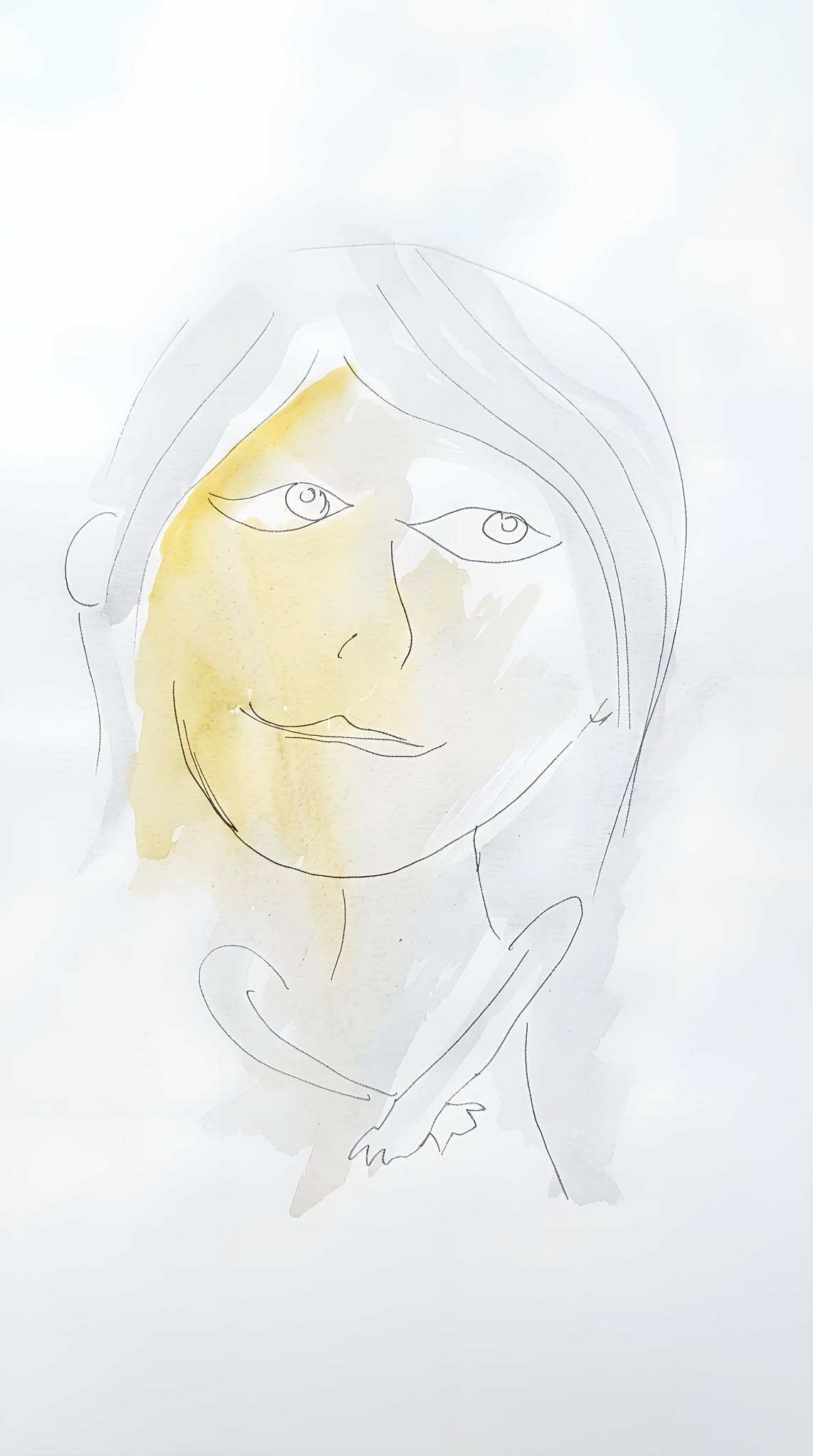
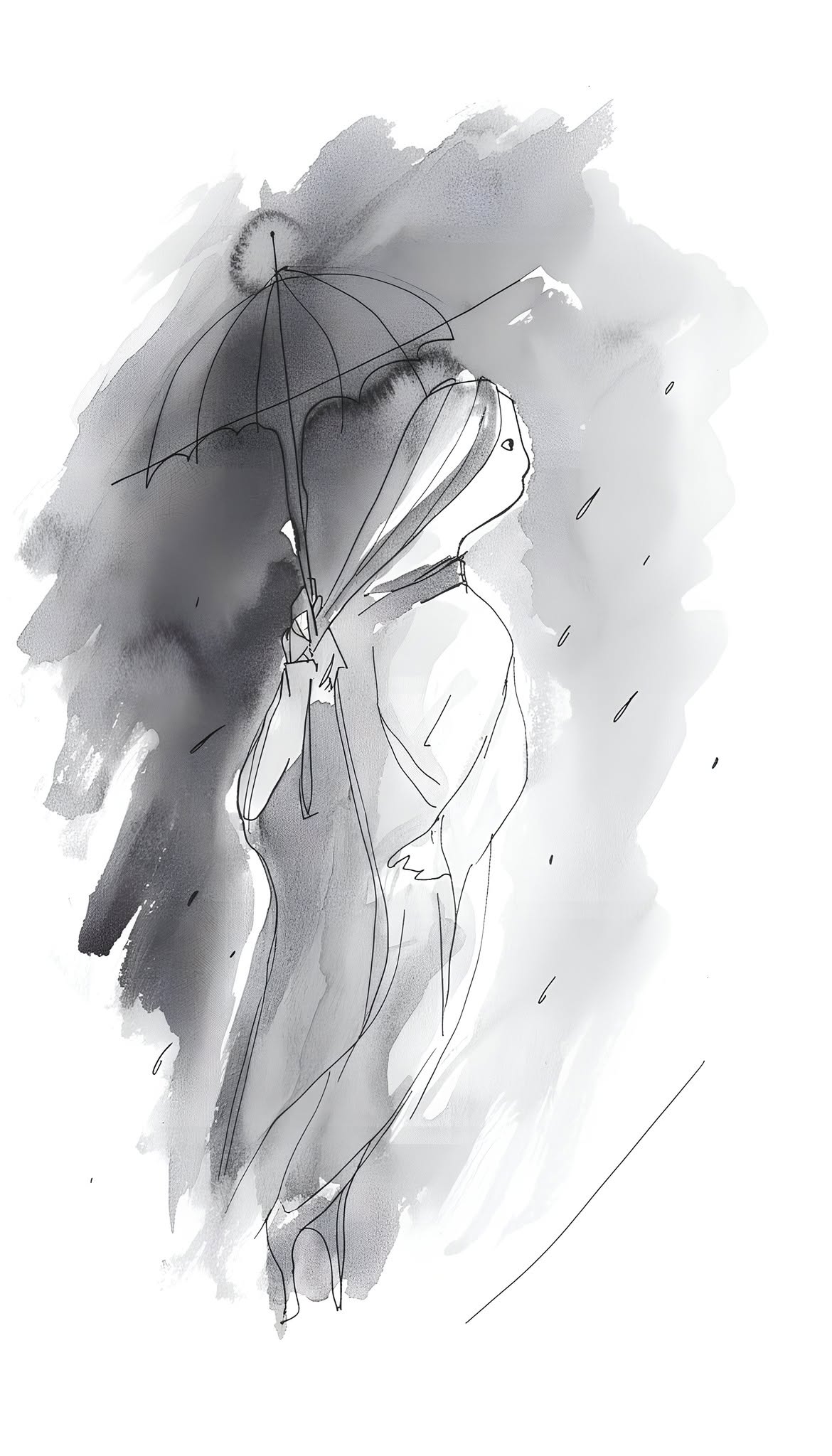
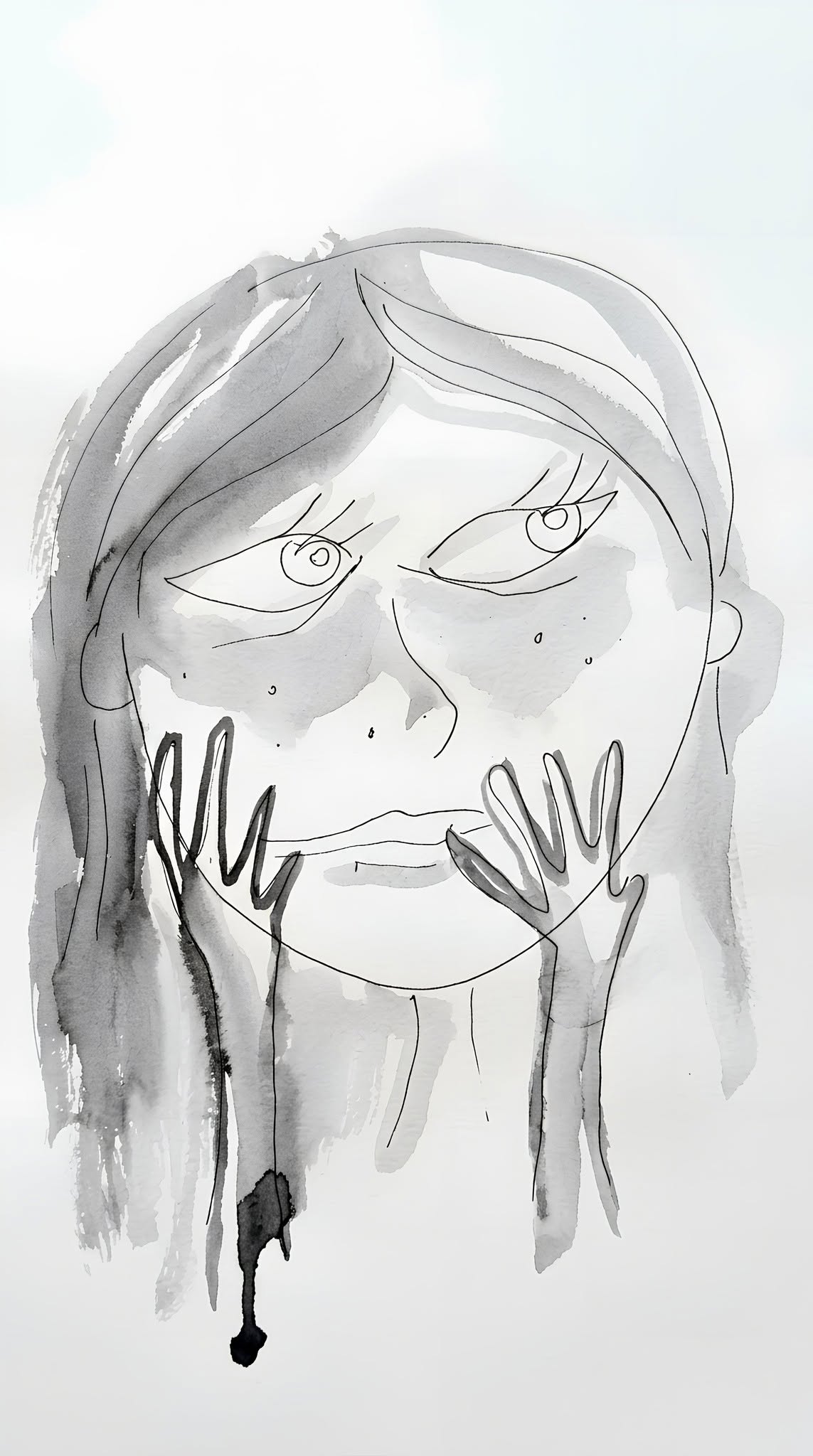
La prima vedere, aceste desene pot părea schițe delicate și spontane ale unor figuri feminine, realizate cu mijloace minime: câteva linii, pete diluate de acuarelă, suprafețe largi de alb și o aparentă simplitate aproape copilărească a expresiei. Totuși, dincolo de această fragilitate vizuală se ascunde un demers mult mai complex. Asemenea proiectului Camera Obscura for Dummies, nici această serie nu este cu adevărat despre imagini. Este despre folosirea imaginilor ca instrumente de investigație.
Desenele au apărut într-o perioadă de tranziție și introspecție profundă. La mulți ani după consumarea unor experiențe emoționale formative, anumite relații continuau să rămână nerezolvate — nu neapărat în realitate, ci în memorie. Conversații rămase neterminate, sentimente niciodată mărturisite complet, ambiguități afective suspendate în timp. Persoanele implicate aparțineau trecutului, însă ceva din interiorul artistului continua să le perceapă ca pe niște povești încă neîncheiate.
Ceea ce face proiectul cu adevărat neobișnuit este metoda prin care a fost realizat.
Desenele nu au fost abordate ca acte de reprezentare. Nu au fost compoziții planificate și nici încercări de a portretiza fidel anumite persoane. Din contră, artistul a urmărit deliberat diminuarea controlului conștient. Lucrând în semiîntuneric, adesea cu ochii aproape închiși, a permis mâinii să se miște liber pe hârtie, cu intervenții minime din partea rațiunii. Ani întregi de desen cultivaseră deja o încredere într-un proces mai profund, în care gestul, instinctul, memoria, emoția și imaginația puteau funcționa independent de intenția deliberată.
Scopul era înșelător de simplu:
Să vadă ce apare.
În acest sens, desenele ocupă un teritoriu aflat undeva între practică artistică, explorare psihologică și o formă personală de divinație. Hârtia devine mai puțin un suport de expresie și mai degrabă un dispozitiv de ascultare. În loc să impună o imagine asupra paginii, artistul creează condițiile în care imaginea se poate revela singură.
Această schimbare modifică fundamental sensul lucrării.
Figurile rezultate nu sunt portrete în sens convențional. Chiar dacă își au originea în amintirea unor femei reale, ele încetează treptat să funcționeze ca reprezentări ale unor indivizi. Memoria nu păstrează oamenii intact. Cu trecerea timpului, chipurile se amestecă, emoțiile se suprapun, experiențele se contaminează reciproc. Subconștientul nu arhivează biografii. El arhivează structuri afective.
Ceea ce reapare constant în această serie nu este o colecție de persoane distincte, ci emergența repetată a unei singure prezențe psihice. O figură arhetipală alcătuită din fragmente adunate din momente, relații, dorințe, pierderi și posibilități diferite. Femeile din aceste desene sunt simultan reale și imaginare, amintite și reinventate. Ele există într-un spațiu intermediar, între memorie și simbol.
Acest lucru explică și ambiguitatea care traversează întreaga serie.
Multe dintre personaje evită contactul vizual direct. Chipurile sunt ascunse, întoarse, acoperite de mâini, dizolvate în pete de culoare sau reduse la cele mai simple semne grafice. Identitatea lor rămâne imposibil de fixat. Ele par suspendate între apariție și dispariție, între dezvăluire și ascundere.
Seria nu încearcă să recupereze fapte.
Încearcă să recupereze prezență.
Iar prezența este întotdeauna mai dificil de definit.
Ceea ce pare să caute artistul nu este informația despre ceea ce s-a întâmplat cândva, ci accesul la realitatea emoțională care a supraviețuit trecerii timpului. Desenele devin o încercare de a stabili contactul cu teritorii nerezolvate ale memoriei, la care gândirea rațională nu mai poate ajunge direct.
Această căutare dezvăluie o tensiune mai profundă care traversează întregul proiect.
Conștiința umană caută închidere. Caută explicații, concluzii, narațiuni complete și răspunsuri definitive. Memoria rareori cooperează. Relațiile importante continuă adesea să existe mult timp după ce existența lor practică s-a încheiat. Ele supraviețuiesc în interior sub forme transformate, nu ca evenimente, ci ca peisaje afective.
Desenele apar exact din acest spațiu.
Ele sunt urmele unei negocieri cu memoria însăși.
Și totuși, ceea ce face seria remarcabilă este faptul că nu cere în cele din urmă răspunsuri. Pe măsură ce proiectul avansează, urgența rezolvării misterului pare să lase loc unei atitudini mai liniștite. Personajele nu mai apar ca întrebări care așteaptă explicații. Ele devin prezențe care locuiesc un teritoriu interior. Ambiguitatea lor nu reprezintă un eșec al înțelegerii, ci o acceptare a complexității.
În acest sens, desenele pot fi privite ca documente vizuale ale unui dialog dintre conștiință și subconștient. Mâna funcționează ca un mediator între cele două. Fiecare linie devine dovada unei suspendări temporare a controlului rațional, permițând asociațiilor ascunse, emoțiilor uitate și intuițiilor latente să iasă la suprafață într-o formă simbolică.
Economia mijloacelor vizuale amplifică acest efect. O singură linie continuă poate purta greutatea unei întregi stări emoționale. Gesturi minime generează spații psihologice surprinzător de bogate. Lipsa detaliului vizual lasă loc proiecției, permițând figurilor să rămână fluide și deschise, în loc să fie fixe și definitive.
La fel ca în Camera Obscura for Dummies, procesul creativ nu se încheie însă odată cu realizarea lucrării.
Desenele sunt publicate imediat în mediul online.
Acest gest transformă din nou proiectul. Internetul devine o extensie a experimentului însuși. Imaginile funcționează asemenea unor sonde trimise într-o rețea socială, purtând cu ele întrebări emoționale codificate. Artistul observă nu doar desenele, ci și reacțiile pe care acestea le generează. Cine răspunde? Cine rămâne tăcut? Cine recunoaște ceva? Cine ignoră? Ce se întoarce din rețea după ce imaginea a fost eliberată?
Astfel, lucrarea devine parte a unui sistem mai amplu de feedback, care conectează explorarea subconștientului cu observarea mediului social.
Paralela cu Camera Obscura for Dummies este remarcabilă.
Cele două proiecte utilizează instrumente radical diferite — unul se bazează pe fotografie, manipulare digitală și spațiu urban, celălalt pe tuș, acuarelă, memorie și gest. Totuși, sub suprafață, împărtășesc aceeași structură fundamentală.
Ambele pornesc de la intuiția că există informații importante dincolo de limitele rațiunii conștiente.
Ambele folosesc practica artistică drept metodă de accesare a acestor informații.
Ambele transformă lucrarea într-o sondă trimisă în exterior.
Iar ambele tratează feedback-ul rezultat ca parte integrantă a operei.
Diferența constă doar în teritoriul explorat.
Camera Obscura for Dummies încerca să cartografieze structurile ascunse ale realității.
Aceste desene încearcă să cartografieze structurile ascunse ale memoriei.
În cele din urmă, seria nu este despre romantism, nostalgie sau despre femeile care au inspirat-o. Este despre persistența misterioasă a experienței afective. Despre urmele lăsate de relații care nu dispar niciodată complet, chiar și atunci când nu mai pot fi explicate. Despre posibilitatea ca subconștientul să continue să păstreze forme de cunoaștere inaccesibile gândirii raționale.
Mai presus de toate, este despre actul de a asculta.
De a asculta memoria.
De a asculta intuiția.
De a asculta ceea ce apare atunci când controlul este suspendat temporar, iar mâna este lăsată să se miște liber pe hârtie.
În acel moment, desenul încetează să mai fie o imagine.
Devine un instrument prin care invizibilul devine, pentru o clipă, vizibil.
English version
“Drawings for the unknown”
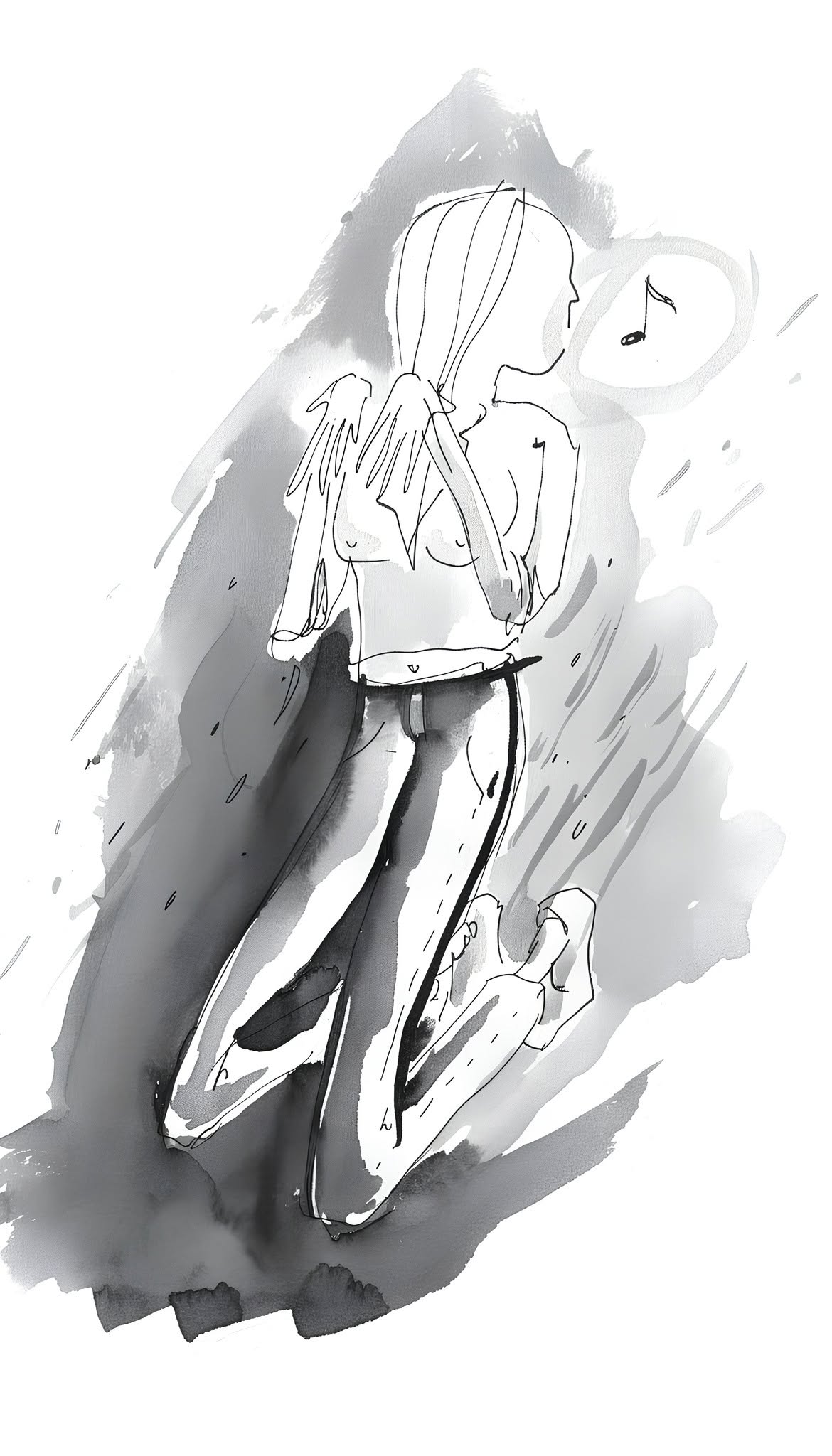
At first glance, these drawings may appear to be delicate, spontaneous sketches of feminine figures executed with minimal means: a few lines, diluted washes of watercolor, large areas of empty space, and an almost childlike simplicity of expression. Yet beneath their apparent lightness lies a far more complex undertaking. Much like Camera Obscura for Dummies, this series was never truly about the images themselves. It was about using images as instruments of inquiry.
The drawings emerged during a period of profound transition and introspection. Years after formative emotional experiences had taken place, certain relationships remained unresolved—not necessarily in reality, but within memory. Conversations left unfinished, feelings never fully confessed, emotional ambiguities suspended in time. The people involved belonged to the past, yet something within the artist continued to experience their presence as unfinished narratives.
What makes the project particularly unusual is the method through which it was created.
The drawings were not approached as acts of representation. They were not planned compositions, nor attempts to faithfully depict particular individuals. On the contrary, the artist deliberately sought to reduce conscious control. Working in semi-darkness, often with eyes partially closed, he allowed the hand to move across the paper with minimal intervention from rational thought. Years of drawing experience had cultivated a trust in a deeper process—one in which gesture, instinct, memory, emotion, and imagination could operate independently of deliberate intention.
The goal was deceptively simple:
To see what would emerge.
In this sense, the drawings occupy a space somewhere between artistic practice, psychological exploration, and a form of personal divination. The paper became less a surface for expression than a device for listening. Rather than imposing an image upon the page, the artist created conditions under which an image might reveal itself.
This shift fundamentally alters the meaning of the work.
The resulting figures are not portraits in the conventional sense. Although they may have originated from memories of specific women, they gradually cease to function as representations of individuals. Memory does not preserve people intact. Over time, faces merge, emotions overlap, experiences blend together. The subconscious rarely stores biographies; it stores emotional structures.
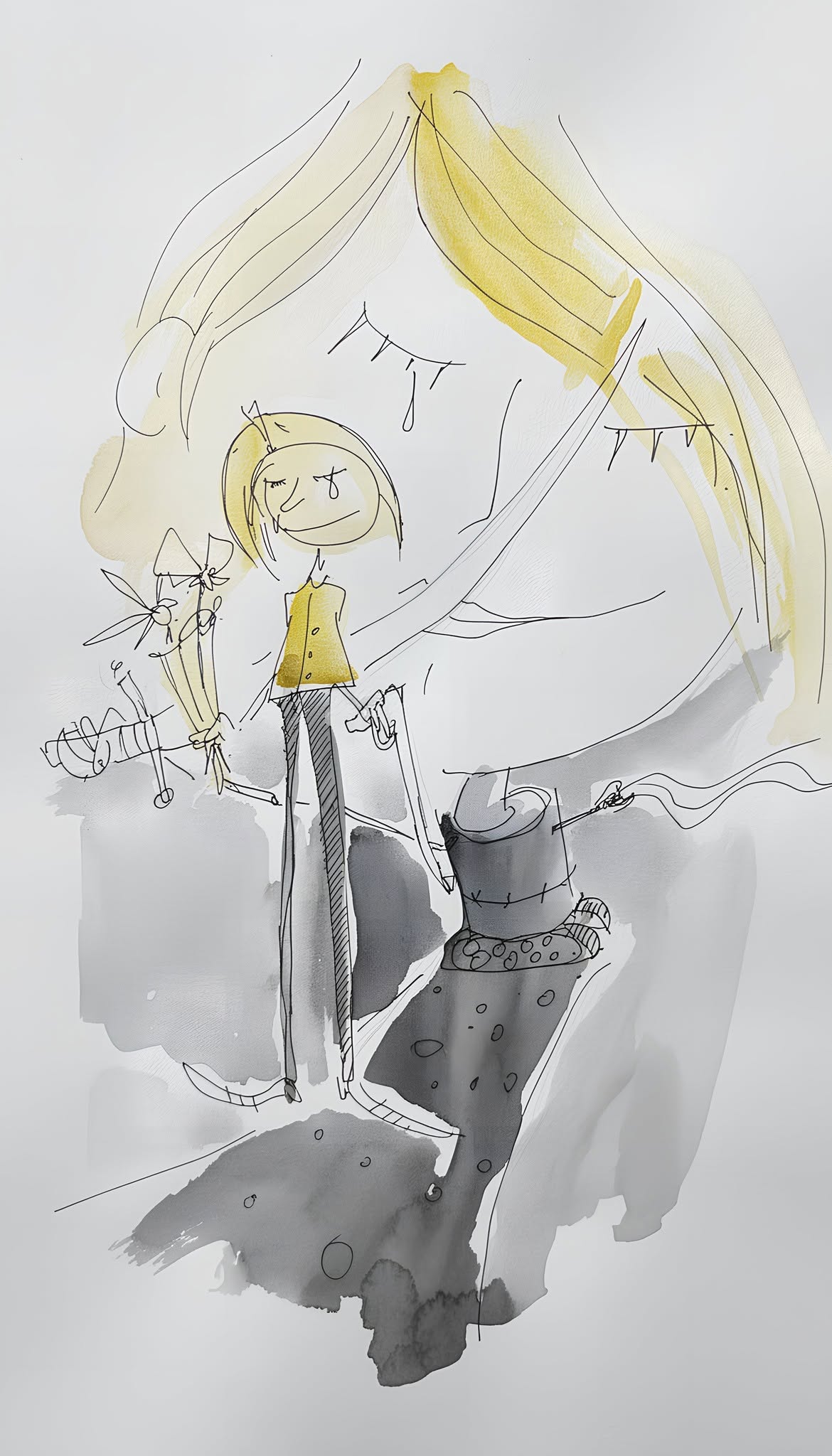
What appears throughout the series is therefore not a collection of separate individuals but the repeated emergence of a singular psychic presence. An archetypal figure composed of fragments gathered from different moments, relationships, desires, losses, and possibilities. The women in these drawings are simultaneously real and imagined, remembered and reinvented. They exist somewhere between memory and symbol.
This explains the recurring sense of ambiguity that permeates the work.
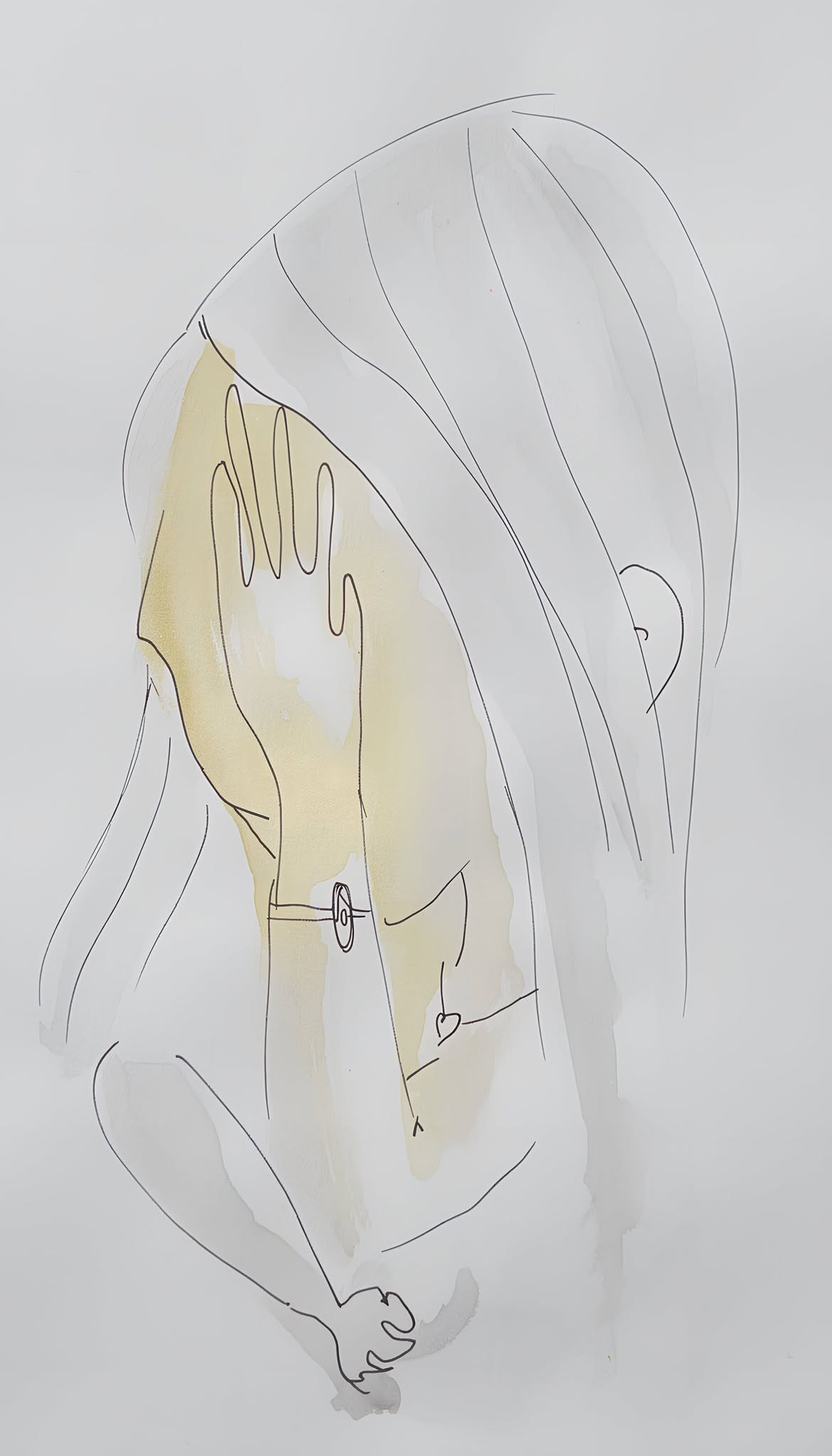
Many figures avoid direct eye contact. Faces are hidden, partially obscured, turned away, covered by hands, dissolved into washes of color, or reduced to the simplest possible marks. Their identities remain elusive. They seem suspended between appearance and disappearance, between revelation and concealment.
The series does not attempt to recover facts.
It attempts to recover presence.
And presence is always more difficult to define.
What the artist appears to be searching for is not information about what happened in the past. Rather, he is searching for access to the emotional reality that survived the passage of time. The drawings become an effort to establish contact with unresolved territories of memory that rational thought can no longer reach directly.
This pursuit reveals a deeper tension running through the entire body of work.
Human consciousness seeks closure. It desires explanations, conclusions, completed narratives, and definitive answers. Memory rarely cooperates. Significant relationships often remain active long after their practical existence has ended. They continue to inhabit the inner world in altered forms, no longer as events but as emotional landscapes.
The drawings emerge from precisely this space.
They are traces of an attempt to negotiate with memory itself.
Yet what makes the project remarkable is that it does not ultimately demand answers. As the series unfolds, the urgency of solving the mystery seems to give way to something quieter. The figures no longer appear as questions waiting to be answered. They become companions inhabiting an interior landscape. Their ambiguity is not a failure of understanding but an acceptance of complexity.
In this sense, the drawings can be understood as visual records of a dialogue between consciousness and the subconscious. The hand functions as a mediator between the two. Each line becomes evidence of a brief suspension of rational control, allowing hidden associations, forgotten emotions, and latent intuitions to surface in symbolic form.
The economy of means reinforces this effect. A single uninterrupted line often carries the weight of an entire emotional state. Minimal gestures generate surprisingly rich psychological spaces. The absence of visual detail creates room for projection, allowing the figures to remain fluid and open rather than fixed and defined.
As in Camera Obscura for Dummies, however, the creative process did not end with the completion of the artwork.
The drawings were immediately shared online.
This gesture transformed the project once again. The internet became an extension of the experiment itself. The images functioned as probes sent into a social network, carrying with them encoded emotional questions. The artist observed not only the drawings, but also the reactions they generated. Who responded? Who remained silent? Who recognized something? Who ignored it? What returned from the network after the image had been released?
The artwork thus became part of a larger feedback system linking subconscious exploration with social observation.
This parallel with Camera Obscura for Dummies is striking.
The two projects employ radically different tools—one relies on photography, digital manipulation, and urban space; the other on ink, watercolor, memory, and gesture. Yet beneath the surface they share the same fundamental structure.
Both begin with the intuition that important information exists beyond the reach of conscious reasoning.
Both use artistic practice as a means of accessing that information.
Both transform the artwork into a probe sent outward.
And both treat the resulting feedback as part of the work itself.
The difference lies only in the territory being explored.
Camera Obscura for Dummies attempted to map hidden structures within reality.
These drawings attempt to map hidden structures within memory.
Ultimately, the series is not about romance, nostalgia, or the women who may have inspired it. It is about the mysterious persistence of emotional experience. It is about the traces left behind by relationships that never fully disappear, even when they can no longer be explained. It is about the possibility that the subconscious continues to hold forms of knowledge unavailable to rational thought.
Most of all, it is about the act of listening.
Listening to memory.
Listening to intuition.
Listening to what emerges when control is temporarily suspended and the hand is allowed to move freely across the page.
In that moment, the drawing ceases to be an image.
It becomes an instrument through which the invisible briefly makes itself visible.


Leave a comment