Varianta în limba română
Pentru mine, White Noise nu a început ca un videoclip muzical și nici ca o ilustrare a unei piese. A început ca o întrebare. O întrebare despre felul în care percepem lumea într-o epocă dominată de imagini, ecrane, fluxuri de informație și semnale permanente. Trăim într-un mediu saturat de date, notificări, transmisii și reprezentări, iar experiența directă pare să fie din ce în ce mai rară. În acest context, White Noise explorează posibilitatea unei forme de sensibilitate care nu încearcă să elimine zgomotul, ci să locuiască în interiorul lui.
Titlul trimite la noțiunea de „zgomot alb”, un fenomen asociat de regulă cu lipsa de informație, cu uniformitatea sau cu anularea semnalului. În această lucrare însă, zgomotul nu este înțeles ca absență a sensului, ci ca mediul în care sensul apare. Nu este ceva care trebuie eliminat pentru a ajunge la esență. Dimpotrivă, esența însăși se manifestă prin fluctuații, interferențe, imperfecțiuni și suprapuneri. Într-un anumit sens, videoclipul propune ideea că identitatea umană funcționează asemănător: nu este un semnal pur, stabil și perfect definit, ci un câmp de variații permanente.
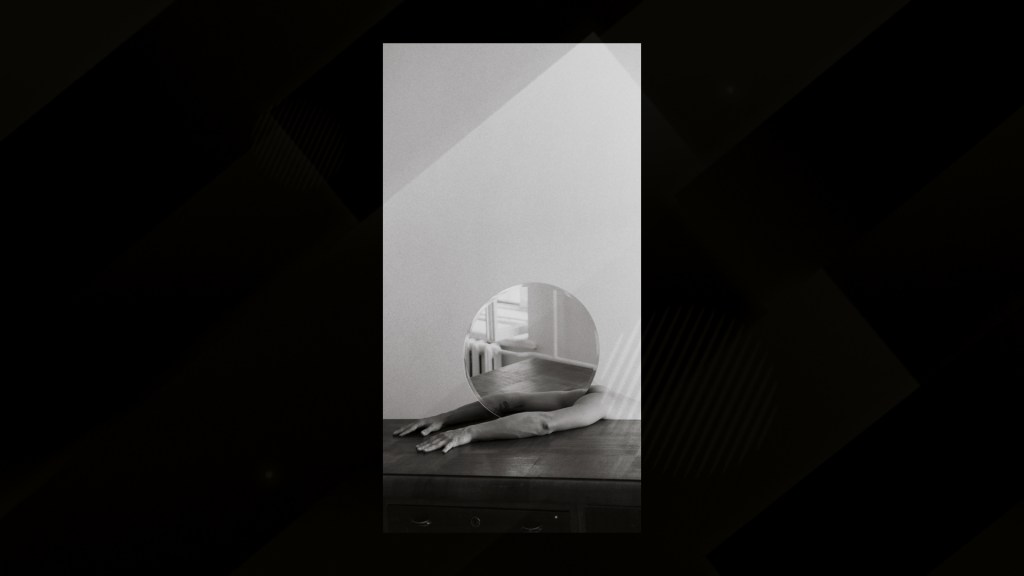
Această perspectivă se reflectă în construcția vizuală a lucrării. Corpul uman apare constant, dar rareori în întregime. Mâini, picioare, fragmente de piele, siluete, umbre și reflexii compun o prezență care nu poate fi redusă la un portret sau la o identitate precisă. Nu există un personaj în sens narativ. Nu există o poveste care trebuie urmărită. Există doar urme ale unei prezențe. Corpul este tratat mai degrabă ca o formă sculpturală decât ca un vehicul al expresiei psihologice directe. Lumina și compoziția îl transformă într-un peisaj, într-un obiect de contemplare, într-o structură fragilă aflată într-un proces continuu de apariție și dispariție.
În paralel cu aceste imagini apar elemente asociate tehnologiei și reprezentării digitale: oscilații, zgomot electronic, interferențe, ecrane, linii, glitch-uri și structuri grafice abstracte. În multe contexte artistice contemporane, aceste imagini sunt folosite pentru a sugera alienare, distopie sau anxietate tehnologică. În White Noise ele au o funcție diferită. Nu reprezintă o forță opusă umanului. Nu există un conflict între corp și tehnologie, între natură și semnal. Dimpotrivă, videoclipul încearcă să sugereze că toate aceste forme aparțin aceluiași proces.
Un fir de iarbă mișcat de vânt și o undă electronică aflată pe un monitor devin expresii ale aceleiași dinamici. O interferență video și o siluetă văzută printr-o perdea transparentă funcționează după aceeași logică perceptivă. În ambele cazuri, privitorul nu primește obiectul în mod direct. Primește o urmă, o mediere, o apariție incompletă. Astfel, natura și tehnologia încetează să mai fie poli opuși și devin două manifestări ale aceleiași realități.
Această idee este susținută și de prezența constantă a reflexiei. Oglinzi, umbre, geamuri, siluete și suprafețe translucide traversează întregul videoclip. Aproape nimic nu este prezentat frontal. Aproape totul este filtrat. Această alegere nu este doar una estetică. Ea reflectă o condiție fundamentală a experienței contemporane. Accesul nostru la lume este din ce în ce mai mediat de imagini și reprezentări. Rareori întâlnim lucrurile în mod direct. Le întâlnim prin ecrane, prin fotografii, prin interpretări, prin algoritmi și prin nenumărate straturi de traducere. În acest sens, reflexia devine o metaforă pentru modul în care funcționează percepția însăși.
Din punct de vedere psihologic, lucrarea explorează identitatea ca proces și nu ca obiect. Persoana nu este prezentată niciodată ca o entitate fixă și complet definită. Ea apare când ca umbră, când ca reflexie, când ca fragment de corp, când ca simplă urmă luminoasă. Această instabilitate nu este însă reprezentată ca o criză. Nu există dramatism sau anxietate. Există mai degrabă acceptarea faptului că identitatea este fluidă, schimbătoare și imposibil de redus la o singură imagine despre sine.
Poate tocmai de aceea videoclipul evită deliberat convențiile obișnuite ale reprezentării corpului. Deși conține numeroase cadre cu piele și fragmente anatomice, ele nu sunt construite pentru seducție sau spectacol. Corpul nu este erotizat. Este observat. Este contemplat. Devine un teritoriu al atenției și al prezenței, nu un obiect de consum vizual. În acest sens, lucrarea se apropie mai mult de limbajul artei contemporane și al fotografiei conceptuale decât de cel al videoclipului comercial.
În aceeași măsură, White Noise nu este interesat de tehnologie ca spectacol. Glitch-urile, interferențele și zgomotele vizuale nu sunt efecte decorative. Ele funcționează ca idei. Sunt expresii vizuale ale unei lumi în care semnalul și zgomotul coexistă permanent și în care sensul nu apare în ciuda imperfecțiunii, ci prin intermediul ei.
Relația dintre muzică și imagine urmează aceeași logică. Muzica nu ilustrează imaginile, iar imaginile nu traduc muzica. Cele două medii coexistă și dezvoltă aceeași temă din perspective diferite. Atât compoziția sonoră, cât și construcția vizuală sunt bazate pe repetiție, variație lentă și acumulare graduală. Nu există contraste dramatice și nici puncte de explozie emoțională. În schimb, există transformări subtile care modifică percepția în timp. Privitorul și ascultătorul sunt invitați să observe aceste transformări, nu să consume o narațiune.
În cele din urmă, White Noise poate fi privit ca o meditație asupra atenției. Într-o cultură dominată de viteză, suprastimulare și flux continuu de informație, lucrarea propune o altă formă de raportare la lume. Nu caută să reducă zgomotul. Nu încearcă să evadeze din el. În schimb, caută acele momente rare în care zgomotul însuși devine transparent și lasă să se întrevadă ceva profund uman.
Poate că aceasta este ideea centrală a proiectului: liniștea nu se află dincolo de zgomot, ci în interiorul lui. Iar prezența autentică nu apare atunci când toate interferențele dispar, ci atunci când învățăm să le ascultăm.
English version
For me, White Noise did not begin as a music video, nor as an illustration of a musical composition. It began as a question. A question about the way we perceive the world in an age dominated by screens, images, information flows, and constant streams of signals. We live in an environment saturated with data, notifications, transmissions, and representations, where direct experience often seems increasingly rare. Within this context, White Noise explores the possibility of a form of sensitivity that does not seek to eliminate noise, but rather to inhabit it.
The title refers to the concept of “white noise,” a phenomenon usually associated with the absence of information, uniformity, or the cancellation of meaningful signals. In this work, however, noise is not understood as the absence of meaning but as the medium through which meaning emerges. It is not something that must be removed in order to reach an essence. On the contrary, essence itself manifests through fluctuations, interference, imperfections, and overlaps. In a certain sense, the video proposes that human identity functions in a similar way: not as a pure, stable, perfectly defined signal, but as a field of constant variation.
This perspective is reflected in the visual construction of the work. The human body appears repeatedly, yet rarely in its entirety. Hands, feet, fragments of skin, silhouettes, shadows, and reflections compose a presence that cannot be reduced to a portrait or a clearly defined identity. There is no character in the traditional narrative sense. There is no story that needs to be followed. There are only traces of a presence. The body is treated less as a vehicle for psychological expression and more as a sculptural form. Light and composition transform it into a landscape, an object of contemplation, a fragile structure engaged in a continuous process of appearance and disappearance.
Alongside these images appear elements associated with technology and digital representation: oscillations, electronic noise, interference, screens, lines, glitches, and abstract graphic structures. In many contemporary artistic contexts, such imagery is used to suggest alienation, dystopia, or technological anxiety. In White Noise, however, it serves a different purpose. It does not represent a force opposed to the human. There is no conflict between body and technology, nature and signal. Instead, the video suggests that all of these forms belong to the same process.
A blade of grass moving in the wind and an electronic waveform displayed on a monitor become expressions of the same underlying dynamic. A video interference and a silhouette seen through a translucent curtain operate according to the same perceptual logic. In both cases, the viewer is not given direct access to the object itself. What appears instead is a trace, a mediation, an incomplete manifestation. Nature and technology cease to function as opposites and become two expressions of the same reality.
This idea is reinforced by the constant presence of reflection. Mirrors, shadows, windows, silhouettes, and translucent surfaces run throughout the entire video. Almost nothing is presented directly. Almost everything is filtered. This choice is not merely aesthetic. It reflects a fundamental condition of contemporary experience. Our access to the world is increasingly mediated through images and representations. We rarely encounter things directly. We encounter them through screens, photographs, interpretations, algorithms, and countless layers of translation. Reflection thus becomes a metaphor for perception itself.
On a psychological level, the work explores identity as a process rather than an object. The individual is never presented as a fixed and fully defined entity. Instead, they appear as shadow, reflection, fragment, or luminous trace. Yet this instability is not portrayed as a crisis. There is no drama, no anxiety. There is only an acceptance that identity is fluid, mutable, and impossible to reduce to a single image of the self.
Perhaps for this reason, the video deliberately avoids the conventional representation of the body. Although it contains numerous images of skin and anatomical fragments, these are not constructed for seduction or spectacle. The body is not eroticized. It is observed. It is contemplated. It becomes a territory of attention and presence rather than an object of visual consumption. In this respect, the work aligns more closely with the language of contemporary art and conceptual photography than with that of the commercial music video.
Likewise, White Noise is not interested in technology as spectacle. The glitches, interferences, and visual noise are not decorative effects. They function as ideas. They are visual expressions of a world in which signal and noise permanently coexist, and in which meaning emerges not despite imperfection but through it.
The relationship between music and image follows the same logic. The music does not illustrate the visuals, and the visuals do not translate the music. Instead, both media coexist and develop the same theme from different perspectives. Both the sonic composition and the visual structure are built upon repetition, gradual variation, and slow accumulation. There are no dramatic contrasts and no moments of emotional explosion. What exists instead are subtle transformations that alter perception over time. The viewer and listener are invited to observe these transformations rather than consume a narrative.
Ultimately, White Noise can be understood as a meditation on attention. In a culture dominated by speed, overstimulation, and endless streams of information, the work proposes a different way of relating to the world. It does not seek to reduce noise. It does not attempt to escape it. Instead, it searches for those rare moments in which noise itself becomes transparent and allows something profoundly human to emerge.
Perhaps this is the central idea of the project: silence is not found beyond noise, but within it. Authentic presence does not arise when all interference disappears, but when we learn how to listen to it.


Leave a Reply