Varianta in limba romana
Camera obscura for dummies
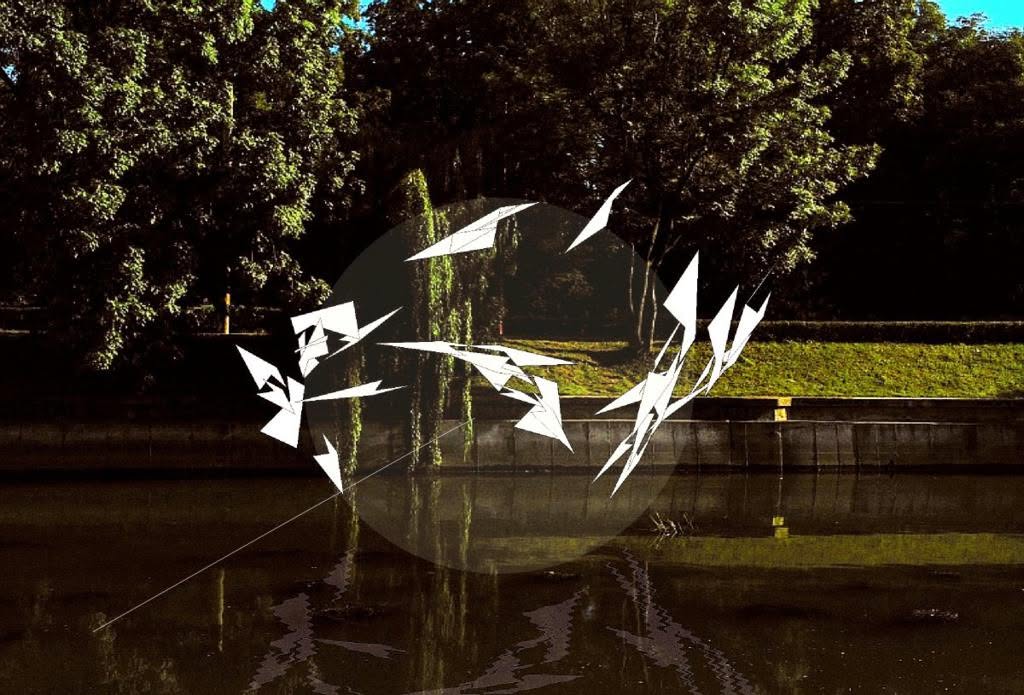
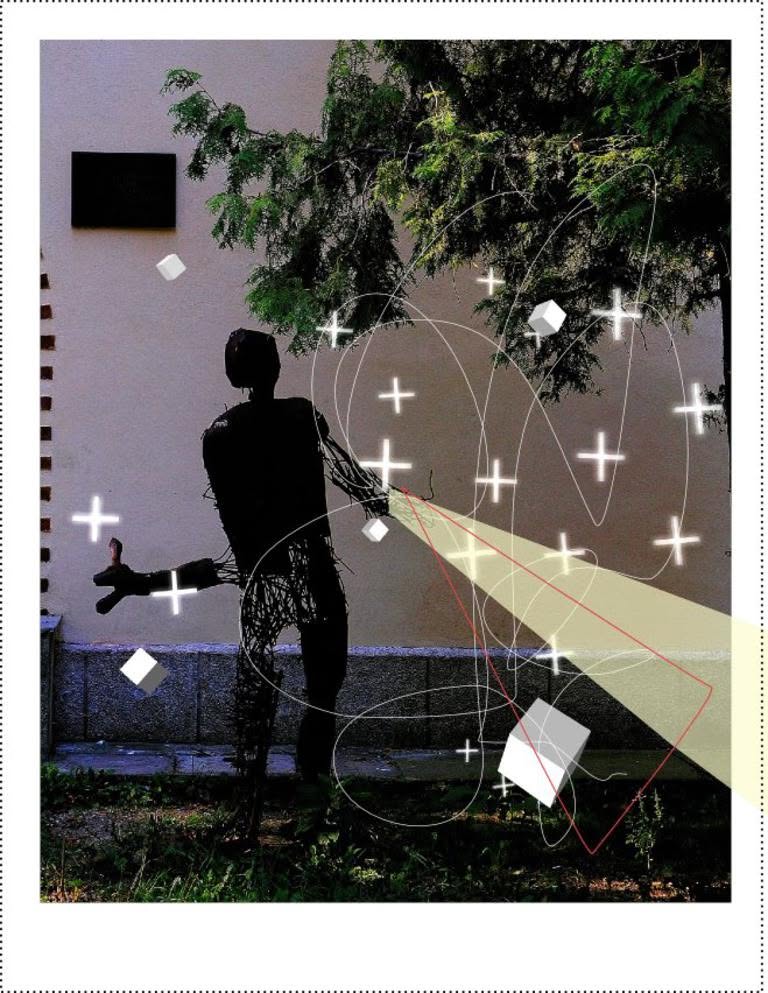
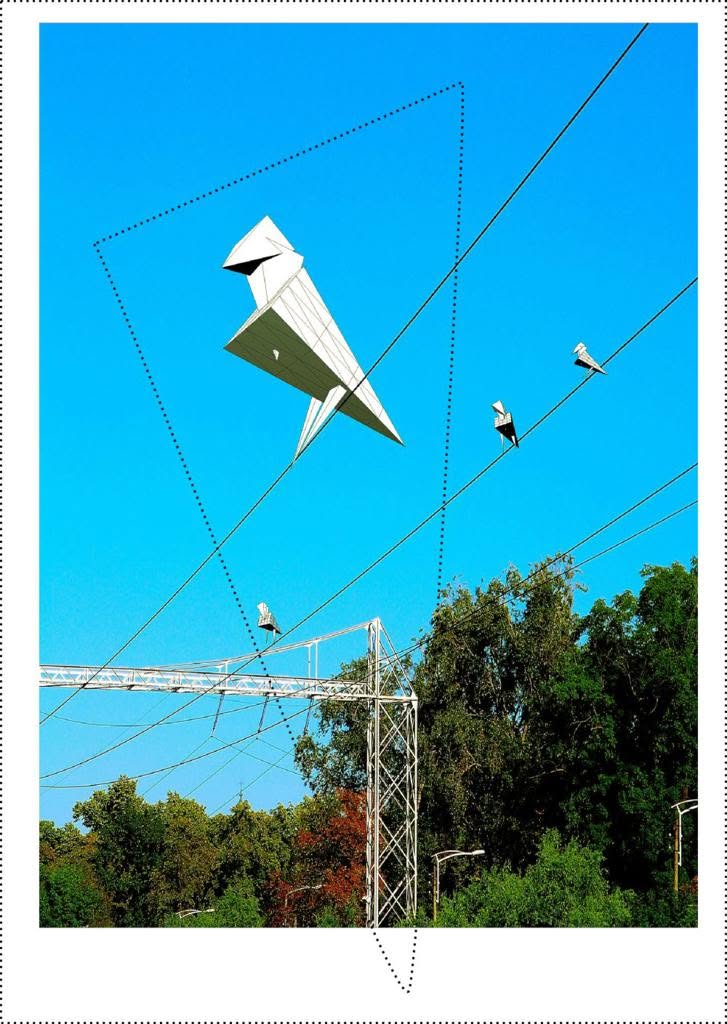
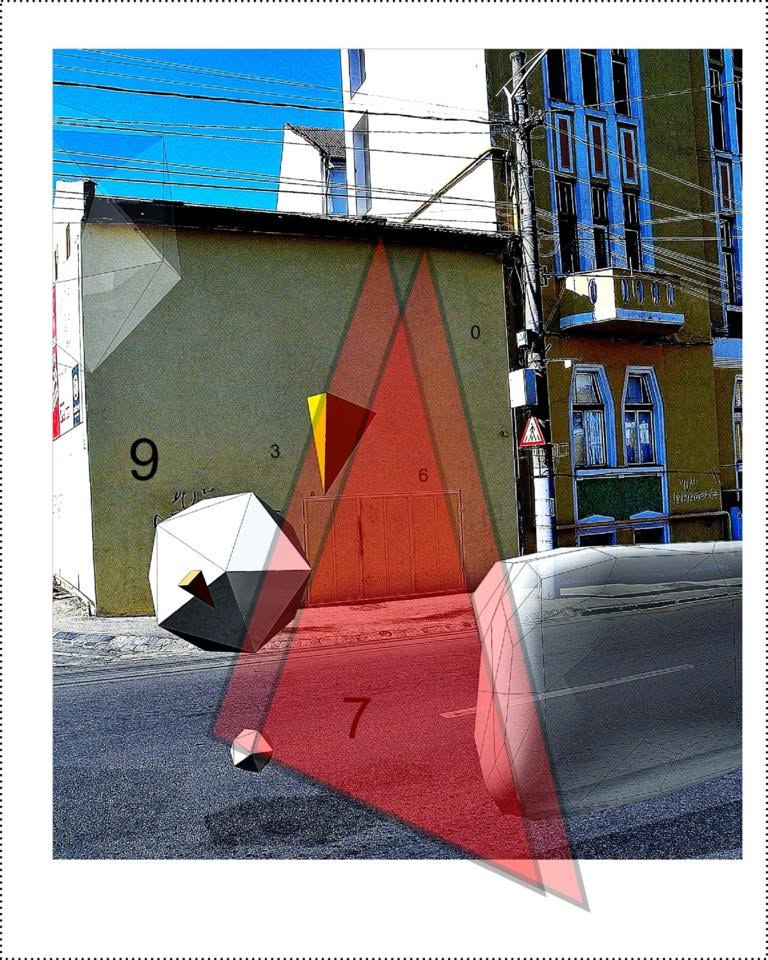
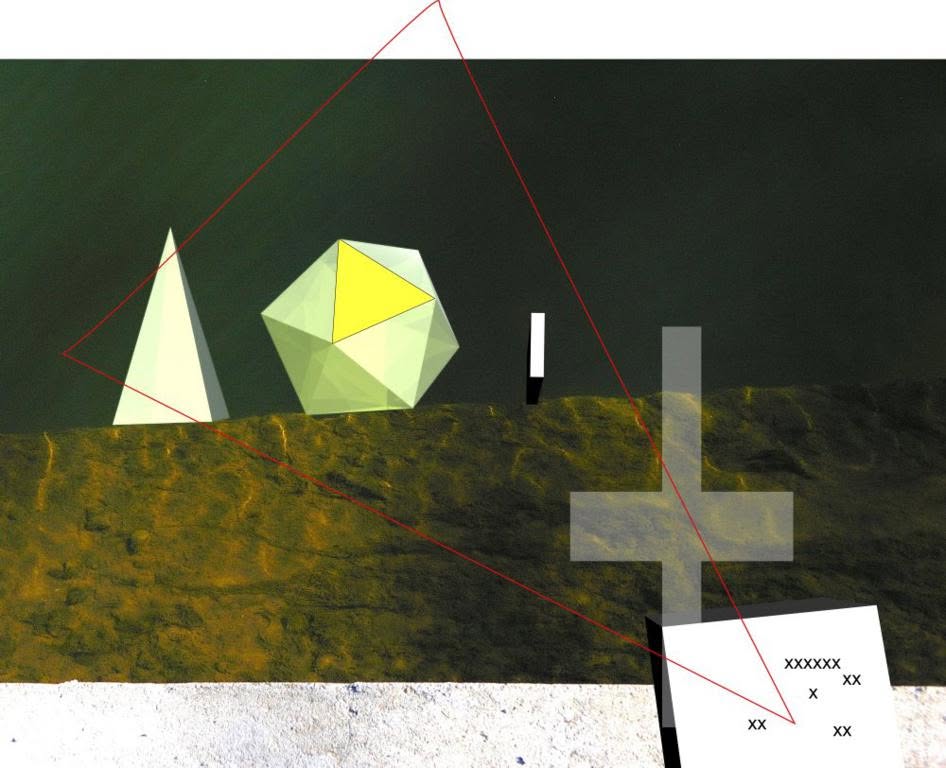
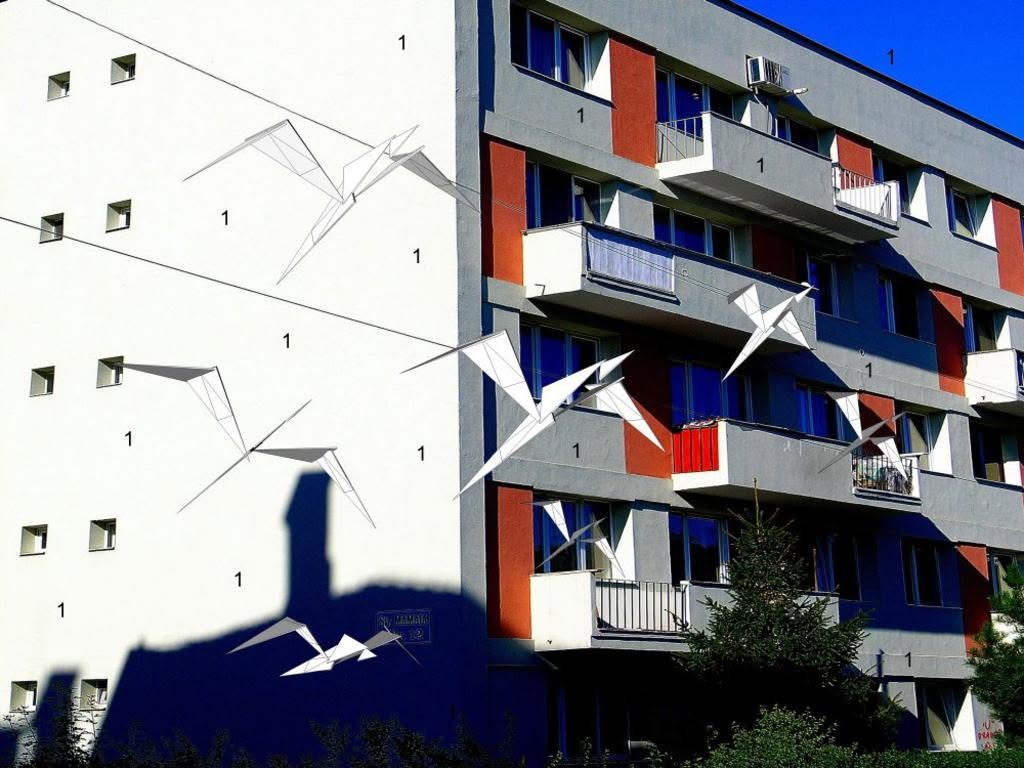
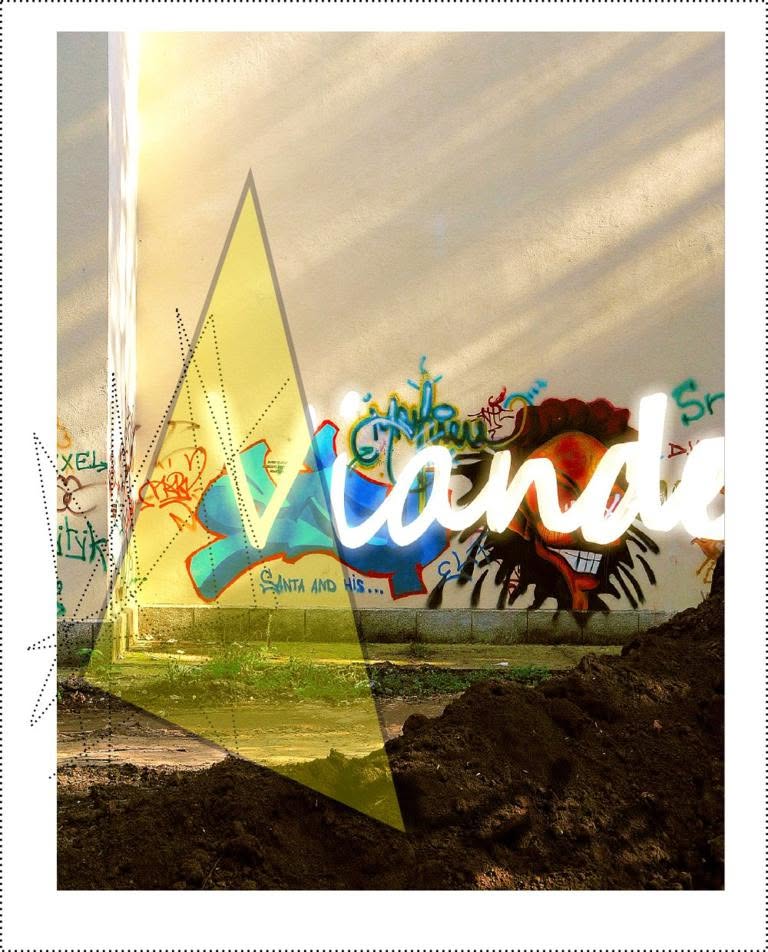
La prima vedere, Camera Obscura for Dummies poate fi interpretat ca un experiment vizual realizat la intersecția fotografiei și a graficii 3D. O serie de imagini urbane surprinse în Cluj-Napoca sunt populate cu forme geometrice, volume transparente, traiectorii, simboluri și structuri generate digital. Privite retrospectiv însă, aceste lucrări dezvăluie un demers mult mai profund decât un simplu exercițiu estetic. Ele documentează un moment de tranziție existențială și încearcă să răspundă unei întrebări fundamentale: ce se întâmplă atunci când lumea exterioară și lumea interioară încetează să mai fie distincte?
Perioada în care a fost realizat proiectul coincide cu o ruptură majoră. După ani dedicați arhitecturii și modelării tridimensionale, autorul se confruntă cu prăbușirea unui traseu profesional care până atunci îi oferise identitate, stabilitate și un mod coerent de a înțelege lumea. Criza economică afectase profund domeniul construcțiilor, iar viitorul devenise incert. În același timp, viața personală traversa o etapă aparent favorabilă: un nou oraș, o casă nouă, activități sportive, întâlniri, explorare și libertate. Din exterior, totul părea să indice începutul unei perioade fericite.
Și totuși, în fundal exista o senzație persistentă de neliniște.
Nu o frică precisă și nici o amenințare concretă, ci sentimentul că sub suprafața cotidianului se desfășura ceva ce nu putea fi încă formulat în cuvinte. O presimțire. O tensiune difuză. Intuiția că realitatea vizibilă nu epuizează ceea ce se întâmplă în jur și că, undeva, există o structură ascunsă care organizează evenimentele, relațiile și întâlnirile într-un mod inaccesibil observației directe.
În acest context apare fotografia.
Dar fotografia nu este utilizată ca instrument documentar. Ea nu încearcă să înregistreze lumea așa cum este. Din contră, ea devine suportul unei operațiuni inverse. Orașul fotografiat nu reprezintă subiectul final al lucrării, ci doar materia primă asupra căreia urmează să fie proiectat un alt strat de realitate.
Aici intervine experiența acumulată în ani de lucru în spațiul virtual al programelor de modelare 3D. După mii de ore petrecute în viewporturi, mintea ajunge să perceapă lumea diferit. Spațiul fizic nu mai este doar spațiu fizic. El devine simultan volum, perspectivă, rețea de forțe, câmp de relații geometrice și posibilă scenă pentru intervenții imaginare. În mod paradoxal, autorul nu mai privește orașul doar cu ochii unui fotograf, ci și cu cei ai unui modelator tridimensional.
Astfel, imaginile rezultate nu reprezintă suprapunerea a două medii diferite — fotografie și 3D — ci întâlnirea a două moduri de percepție.
Orașul intră în minte.
Mintea se proiectează în oraș.
Între cele două nu mai există o graniță clară.
Formele generate digital nu funcționează ca obiecte în sensul tradițional al cuvântului. Ele nu sunt sculpturi și nici elemente decorative. Nu încearcă să simuleze existența unor corpuri reale inserate într-un peisaj urban. Mai degrabă, ele se comportă ca niște urme, vectori, câmpuri de tensiune sau semne ale unei geometrii invizibile. Sunt încercări de a cartografia ceva ce nu poate fi văzut direct.
În acest sens, proiectul poate fi înțeles ca o formă de orientare.
Autorul nu știe exact ce caută. Nu știe ce reprezintă amenințarea pe care o simte și nici dacă aceasta există în mod obiectiv. Dar încearcă să-i descopere forma. Fiecare intervenție geometrică reprezintă o ipoteză vizuală, o încercare de a transforma intuiția în imagine. Ca și cum, prin repetarea gestului de a proiecta forme peste realitate, s-ar putea ajunge la revelarea unei structuri ascunse.
Titlul Camera Obscura for Dummies capătă astfel o semnificație aparte.
În camera obscură tradițională, lumea exterioară este proiectată pe o suprafață sensibilă. Imaginea se formează prin pătrunderea luminii din exterior către interior.
În acest proiect, procesul este inversat.
Nu lumea se imprimă în conștiință.
Conștiința se imprimă în lume.
Fotografia devine hârtia sensibilă pe care se developă nu realitatea exterioară, ci percepția autorului asupra ei. Imaginile rezultate nu documentează ceea ce există, ci procesul prin care cineva încearcă să înțeleagă ceea ce există.
Această inversare produce o concluzie și mai radicală.
Pe măsură ce proiectul avansează, devine evident că nu doar imaginile sunt dezvoltate. Însuși autorul este supus aceluiași proces. Dacă fotografia este modificată de intervenția privirii sale, atunci și privirea este modificată de ceea ce întâlnește în lume. Relația nu este unilaterală. Observatorul și obiectul observat se transformă reciproc.
Din această perspectivă, întregul proiect poate fi citit ca o meditație asupra caracterului iluzoriu al echilibrului.
Una dintre motivațiile declarate ale experimentului era găsirea unei forme de armonie între structurile descoperite în fotografii și cele generate digital. Exista convingerea că orice spațiu, indiferent cât de banal, dezordonat sau lipsit de interes ar părea, poate fi adus într-o stare de coerență prin intervenția imaginației. Blocuri, străzi, fire electrice, maluri de râu, vegetație sau ziduri industriale puteau deveni componente ale unei compoziții echilibrate.
Dar tocmai această căutare conduce la o întrebare mai profundă.
Există cu adevărat un asemenea echilibru?
Sau ceea ce numim armonie este doar rezultatul unei negocieri temporare între percepție și haos?
Poate că lucrarea nu demonstrează existența unei ordini ascunse. Poate că demonstrează doar nevoia umană de a o căuta. În acest sens, fiecare imagine devine mărturia unui efort de organizare simbolică a realității, fără garanția că realitatea însăși posedă o asemenea ordine.
În mod surprinzător, experimentul nu se încheie odată cu realizarea imaginilor.
Ele sunt publicate pe Facebook, iar acest gest reprezintă o etapă esențială a proiectului. Rețeaua socială nu funcționează doar ca spațiu de expunere, ci ca dispozitiv de observație. Lucrările sunt trimise în mediul social asemenea unor sonde. Autorul urmărește reacțiile, răspunsurile, tăcerile și interpretările pe care acestea le generează. Cine înțelege? Cine ignoră? Cine revine? Cine observă fără să intervină?
Astfel, experimentul capătă încă un strat.
Nu mai este vorba doar despre relația dintre artist și realitate, ci și despre relația dintre artist și rețeaua invizibilă de privitori care îl înconjoară. Imaginea devine un instrument de explorare a spațiului social, la fel cum înainte fusese un instrument de explorare a spațiului psihic.
Privit retrospectiv, Camera Obscura for Dummies apare ca un proiect despre percepție într-o epocă de tranziție. O epocă în care realitatea fizică începea să fie dublată permanent de realități digitale, de rețele, fluxuri informaționale și straturi virtuale invizibile. Cu ani înainte ca realitatea augmentată, inteligența artificială sau suprapunerea constantă a datelor peste lumea fizică să devină experiențe obișnuite, proiectul intuia deja această mutație.
Dar adevărata lui temă rămâne una profund umană.
Nu tehnologia.
Nu fotografia.
Nu grafica tridimensională.
Ci încercarea de a găsi orientare într-un moment în care lumea pare să-și piardă contururile familiare.
În acest sens, imaginile nu reprezintă răspunsuri.
Ele reprezintă urmele vizibile ale unei căutări.
English version
Camera Obscura for Dummies
At first glance, Camera Obscura for Dummies may appear to be a visual experiment situated at the intersection of photography and 3D graphics. A series of urban photographs taken in Cluj-Napoca are populated with geometric forms, translucent volumes, trajectories, symbols, and digitally generated structures. Viewed retrospectively, however, these works reveal a far deeper undertaking than a simple aesthetic exercise. They document a moment of existential transition and attempt to address a fundamental question: what happens when the boundary between the external world and the internal world begins to dissolve?
The period during which the project was created coincided with a major rupture. After years devoted to architecture and three-dimensional modeling, the author found himself confronting the collapse of a professional path that had long provided identity, stability, and a coherent framework for understanding reality. The economic crisis had severely impacted the construction industry, and the future suddenly became uncertain. At the same time, personal life seemed, on the surface, to be flourishing: a new city, a new house, sports, exploration, dating, and a renewed sense of freedom. From the outside, everything suggested the beginning of a promising chapter.
And yet, beneath the surface, there was a persistent feeling of unease.
Not a specific fear, nor a clearly identifiable threat, but rather the sense that something was unfolding underneath everyday reality—something that could not yet be articulated in words. A premonition. A diffuse tension. The intuition that visible reality did not fully account for what was happening around him, and that somewhere there existed a hidden structure organizing events, relationships, and encounters in ways inaccessible to direct observation.
It is within this context that photography enters the picture.
Photography, however, is not used here as a documentary instrument. It does not attempt to record the world as it is. On the contrary, it becomes the support for an inverse operation. The photographed city is not the final subject of the work but merely the raw material onto which another layer of reality will be projected.
At this point, years of experience working within virtual three-dimensional environments become crucial. After thousands of hours spent inside modeling software and digital viewports, perception itself begins to change. Physical space ceases to be merely physical space. It becomes simultaneously volume, perspective, network, field of forces, and potential stage for imaginary interventions. In a paradoxical sense, the artist no longer observes the city solely through the eyes of a photographer, but also through those of a three-dimensional modeler.
The resulting images are therefore not the meeting point of two separate media—photography and 3D graphics—but rather the convergence of two modes of perception.
The city enters the mind.
The mind projects itself onto the city.
Between the two, the boundary gradually disappears.
The digitally generated forms do not function as objects in the traditional sense. They are not sculptures, nor decorative additions. They do not seek to simulate physical entities inserted into an urban landscape. Instead, they behave like traces, vectors, fields of tension, or signs pointing toward an invisible geometry. They are attempts to map something that cannot be directly seen.
In this sense, the project can be understood as a form of navigation.
The artist does not know exactly what he is searching for. He does not know the nature of the threat he senses, nor whether such a threat exists objectively at all. Yet he attempts to discover its shape. Every geometric intervention becomes a visual hypothesis, an effort to transform intuition into image. It is as though, through the repeated act of projecting forms onto reality, one might eventually reveal an underlying structure.
The title Camera Obscura for Dummies acquires a particularly significant meaning in this context.
In the traditional camera obscura, the external world is projected onto a sensitive surface. The image is formed through the passage of light from outside to inside.
In this project, the process is reversed.
The world is not being imprinted upon consciousness.
Consciousness is being imprinted upon the world.
Photography becomes the sensitive paper upon which not external reality, but the artist’s perception of reality, is developed. The resulting images do not document what exists. They document the process by which someone attempts to understand what exists.
This inversion leads to an even more radical conclusion.
As the project unfolds, it becomes evident that not only the images are being developed. The artist himself is subjected to the same process. If the photograph is transformed by the intervention of his gaze, then that gaze is equally transformed by what it encounters in the world. The relationship is not one-directional. Observer and observed continuously shape one another.
From this perspective, the entire project can be read as a meditation on the illusory nature of balance.
One of the declared motivations behind the experiment was the search for harmony between structures discovered in the photographs and those generated digitally. There was a conviction that any environment, regardless of how ordinary, chaotic, or visually insignificant it might appear, could be brought into a state of coherence through the intervention of imagination. Apartment blocks, streets, electrical wires, riverbanks, vegetation, and industrial walls could all become components of a balanced composition.
Yet it is precisely this pursuit that gives rise to a deeper question.
Does such balance truly exist?
Or is what we call harmony merely the result of a temporary negotiation between perception and chaos?
Perhaps the work does not demonstrate the existence of a hidden order. Perhaps it demonstrates only the human need to search for one. In this sense, every image becomes evidence of an attempt to symbolically organize reality, without any guarantee that reality itself possesses such an order.
Remarkably, the experiment does not end with the production of the images.
They are published on Facebook, and this act becomes an essential stage of the project. The social network does not function merely as an exhibition space but as an observational device. The works are sent into the social environment like probes. The artist observes reactions, responses, silences, and interpretations. Who understands? Who ignores? Who returns? Who watches without speaking?
In this way, the project acquires yet another layer.
It is no longer solely about the relationship between artist and reality, but also about the relationship between artist and the invisible network of viewers surrounding him. The image becomes a tool for exploring social space, just as it had previously served as a tool for exploring psychological space.
Viewed retrospectively, Camera Obscura for Dummies emerges as a project about perception during an age of transition. An era in which physical reality was beginning to be permanently accompanied by digital realities, social networks, information flows, and invisible virtual layers. Years before augmented reality, artificial intelligence, and the constant overlaying of data onto physical space became commonplace experiences, the project already seemed to intuit this transformation.
Yet its deepest subject remains profoundly human.
Not technology.
Not photography.
Not three-dimensional graphics.
But the attempt to find orientation at a moment when the familiar contours of reality begin to dissolve.
In this sense, the images do not constitute answers.
They are the visible traces of a search.


Leave a Reply