Varianta în limba română
Fetele ca sediment al memoriei
Nu sunt personaje inventate. Sunt distilate — ceea ce rămâne după ce trece timpul și rămâne doar esența, cristalizată în clișeu. Și clișeul nu e o insultă la adresa lor. E un mecanism de apărare al memoriei — când cineva te-a afectat suficient de tare, mintea îl simplifică până la simbol ca să poată fi suportat.
1. Girl at Techirghiol
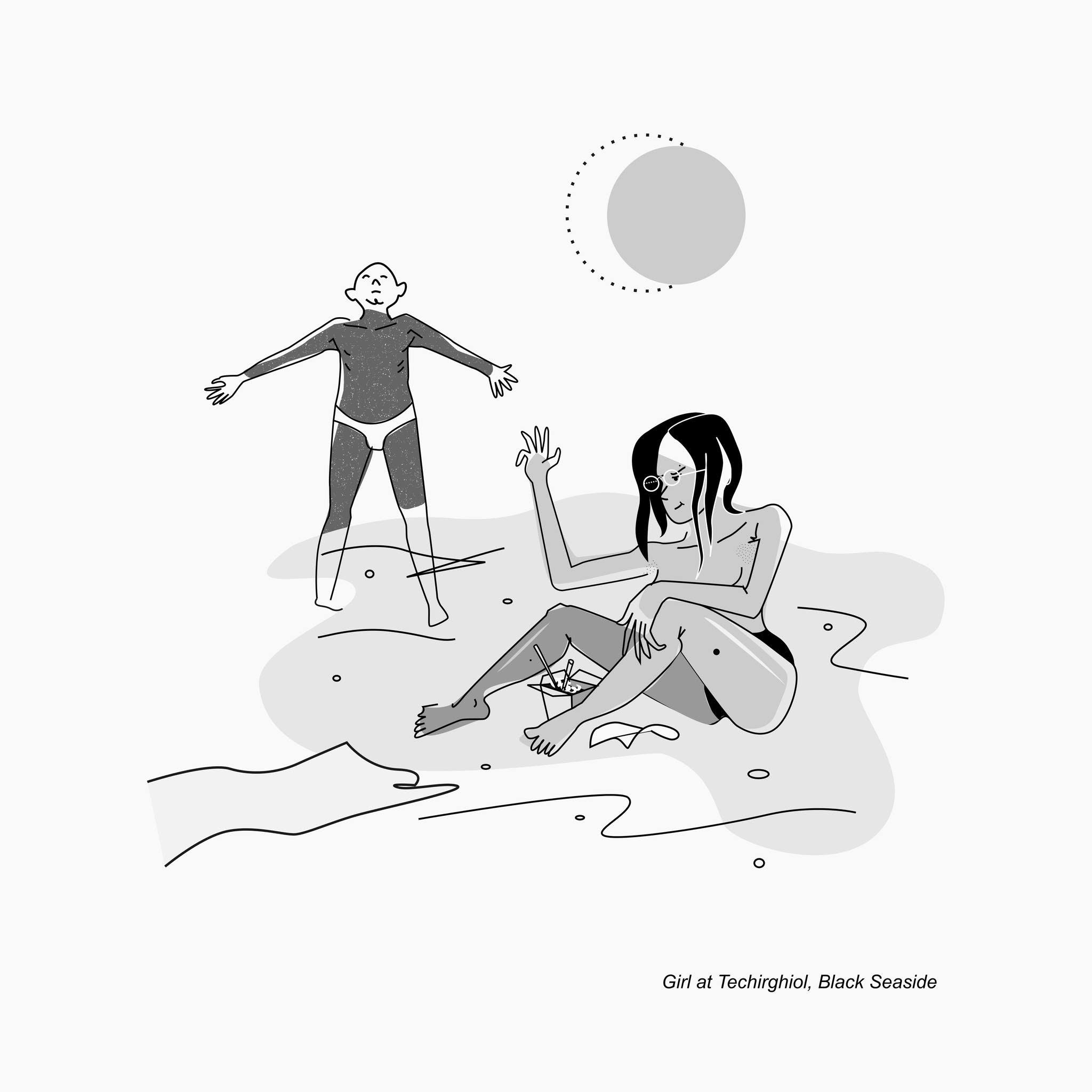
Fata de pe plajă cu creioanele — ea creează, dar stă pe nisip cu mâna ridicată într-un gest care poate fi și salut și oprire. Bărbatul în fundal cu brațele deschise e extatic, invizibil pentru ea. Clișeul ei: femeia care se autodefinește prin creativitate dar rămâne inaccesibilă — nu din răutate, ci dintr-o lume interioară prea densă pentru contact real. Trauma subterană: singurătatea aleasă ca protecție, până când nu mai știi dacă e alegere sau incapacitate.
2. Girl with seaside
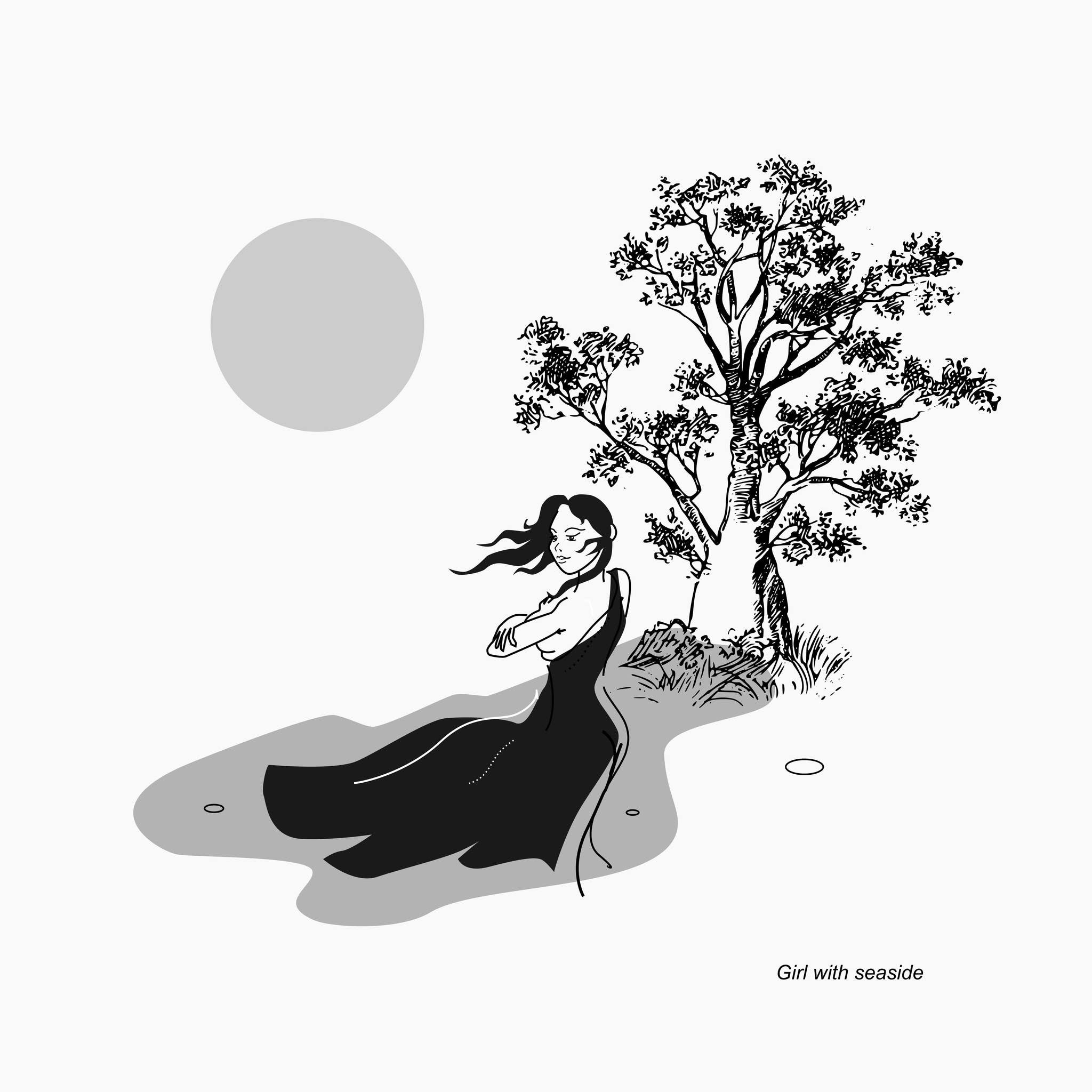
Cea mai romantică și cea mai periculoasă. Fata în negru cu părul în vânt lângă copacul hiperdetaliat — ea e linie simplă, lumea din jurul ei e complexă și grea. Clișeul: femeia care se identifică complet cu stările naturii, cu vântul, cu marea, cu luna — și care face din asta o identitate. E frumos până când realizezi că e și o formă de a nu fi niciodată prezentă cu adevărat — e mereu undeva, în peisaj, în simțire, nu în relație. Trauma: o sensibilitate atât de mare încât lumea reală doare constant, și retragerea în frumos e singurul anestezic.
3. Girl, poet
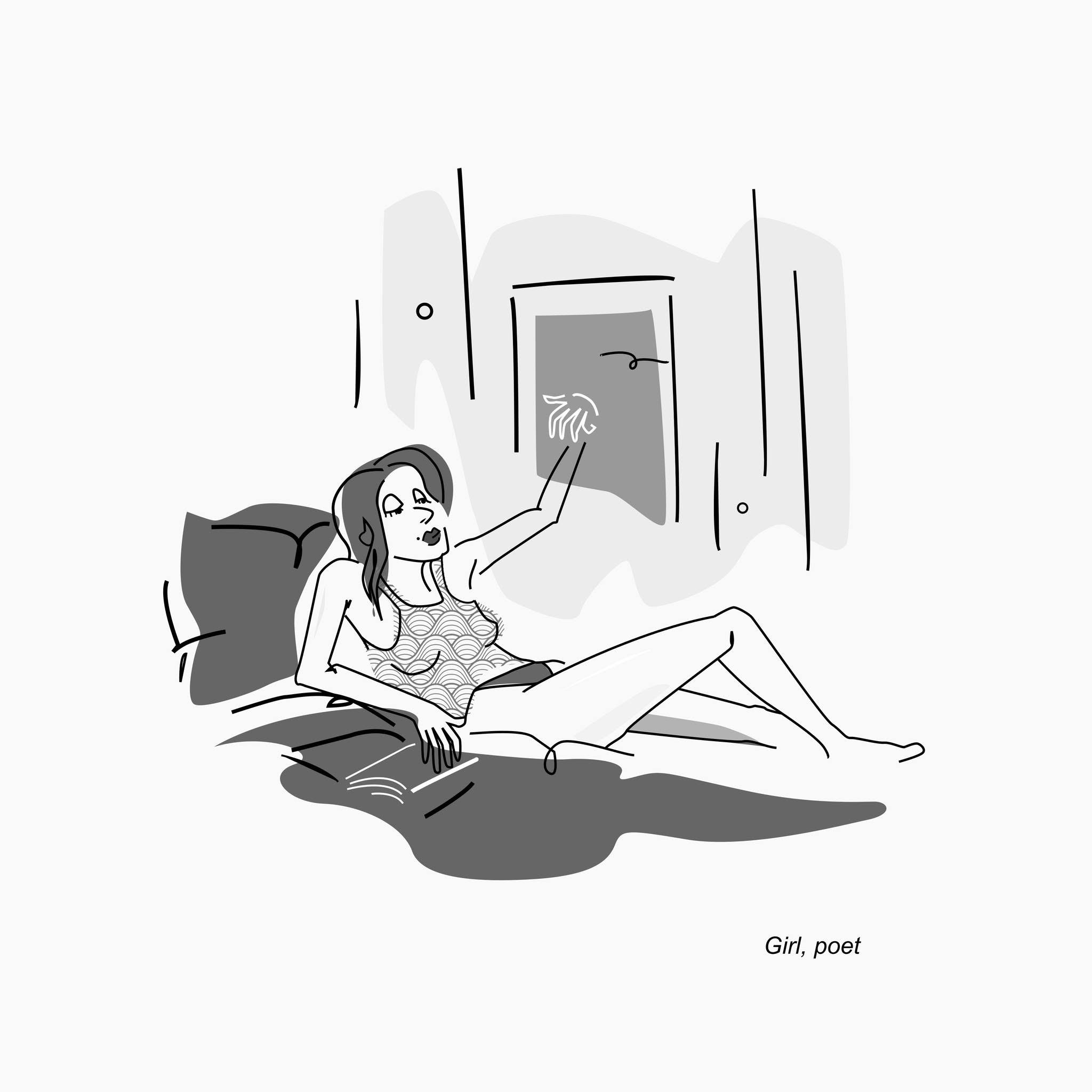
Aceasta are cel mai vizibil umor negru. Stă pe pat, ochii pe jumătate închiși, mâna întinsă spre o viziune pe ușă — și cartea e lângă ea, nu în mână. Nu citește, nu scrie — pozează în inspirație. Clișeul: femeia care se identifică ca artistă sau poetă ca identitate socială, nu ca practică reală. Viziunea de pe ușă e albă, vagă, imaterială — pentru că nu e concretizată niciodată în nimic. Umorul negru stă exact acolo: gestul e magnific, producția e inexistentă. Trauma: talentul real înecat în auto-mitologie, și neputința de a distinge între a simți și a face.
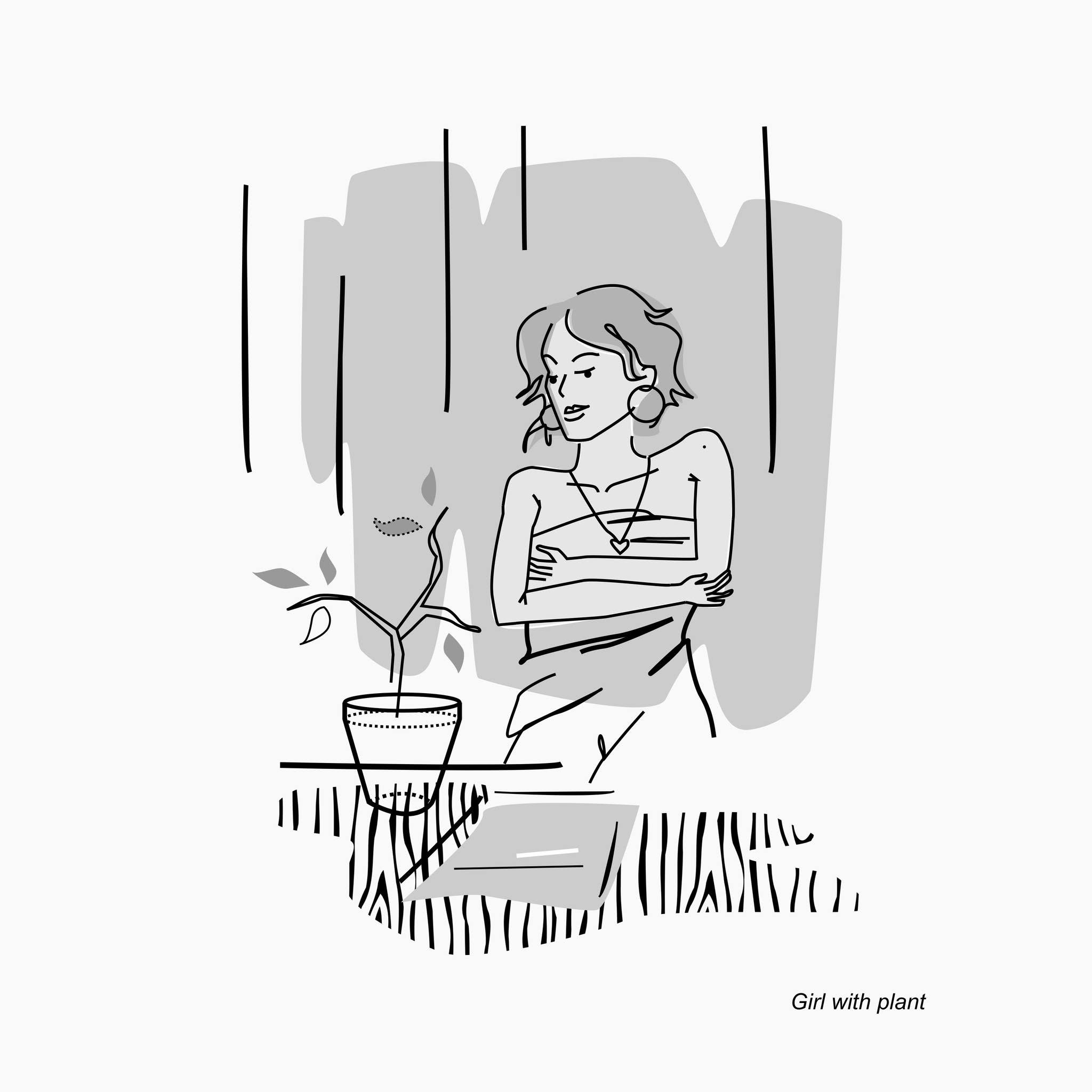
4. Girl with plant
Pare cea mai senină — și e probabil cea mai tristă. Femeia care și-a mutat toată capacitatea de afecțiune spre o plantă. Brațele încrucișate pe piept nu sunt o îmbrățișare de sine — sunt și o barieră. Zâmbetul spre plantă e real și cald. Clișeul: femeia hipersensibilă care funcționează perfect cu lucruri care nu cer reciprocitate — plante, animale, obiecte — dar se blochează în relații umane reale. Trauma: o dezamăgire atât de adâncă de la oameni încât afecțiunea s-a retras în siguranța lucrurilor mute. Planta cu frunze care cad e un detaliu crud — și ea va muri, și va fi înlocuită.
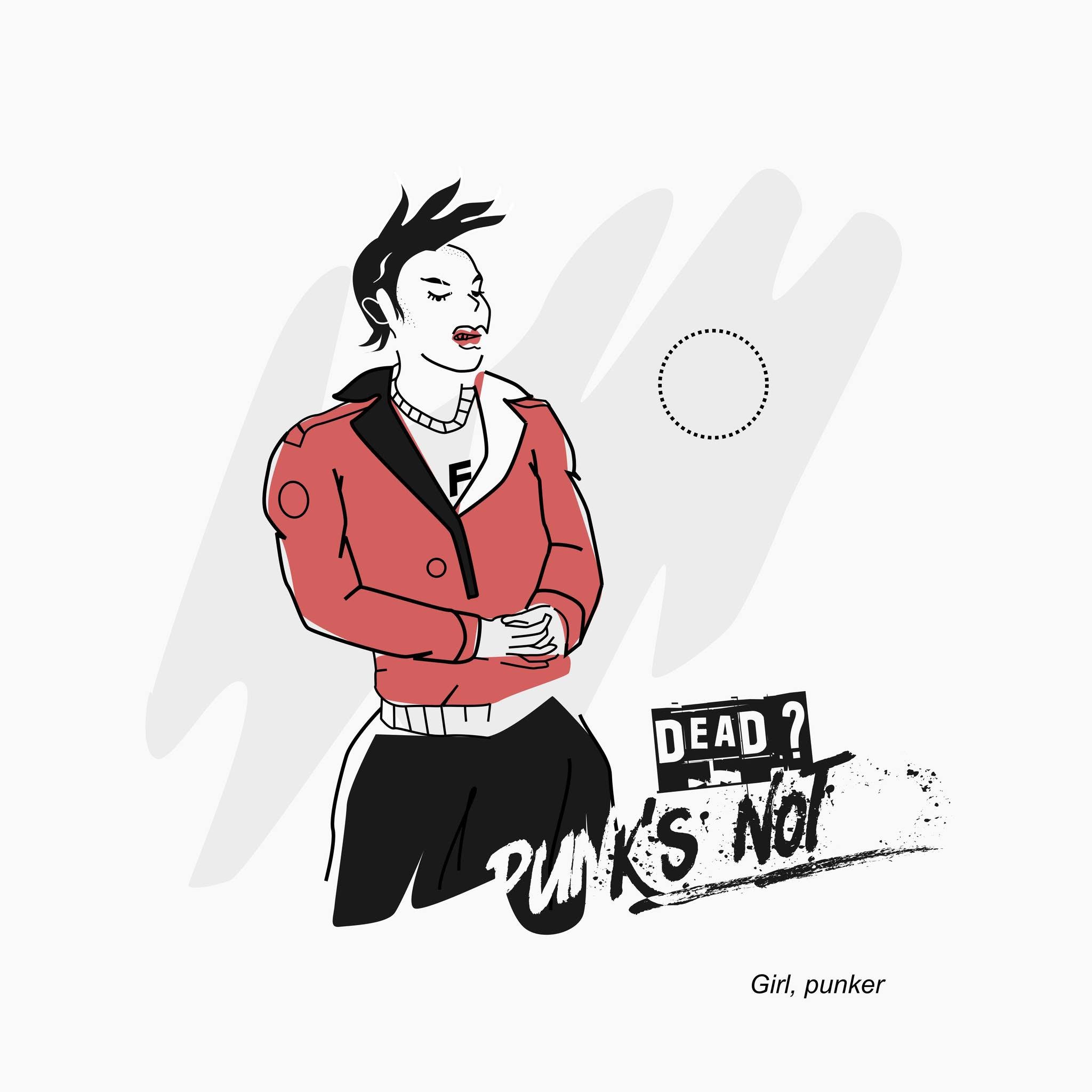
5. Girl, punker
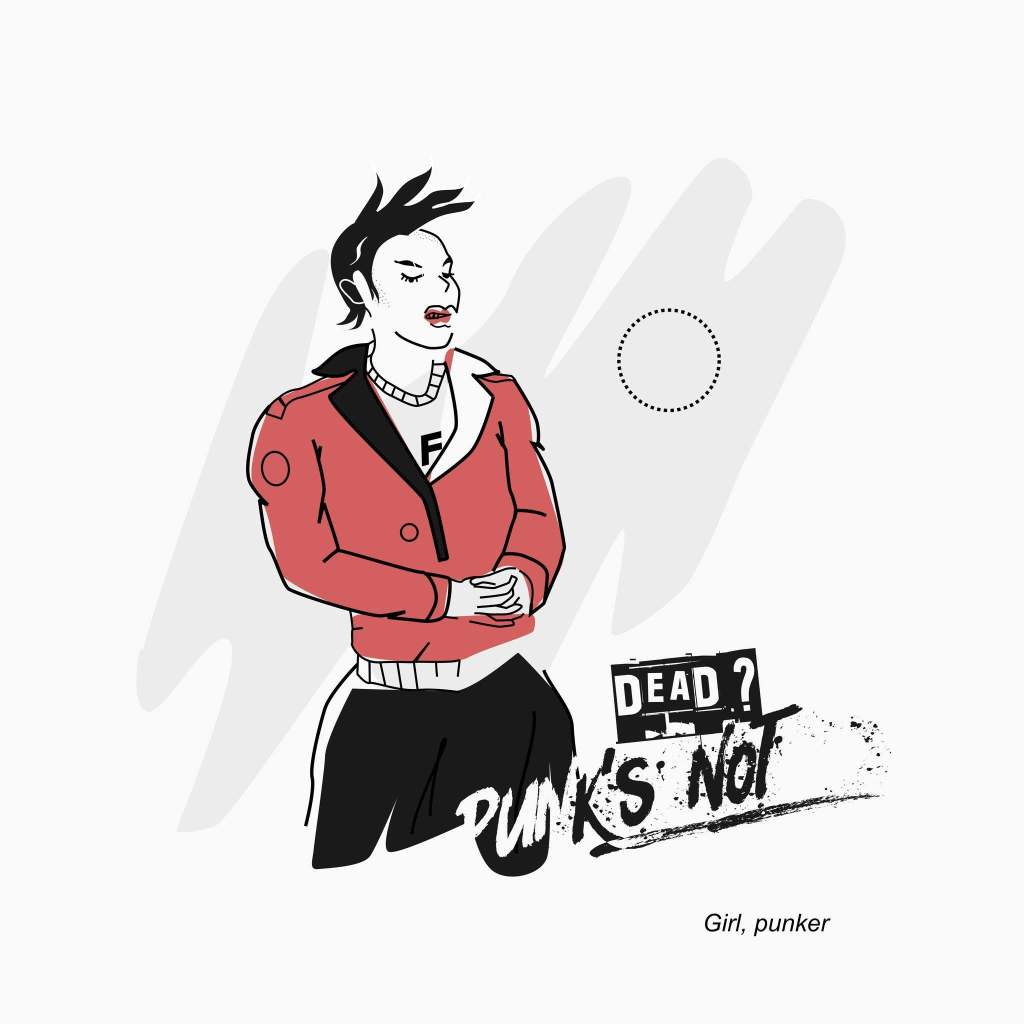
Cea mai aparent puternică și probabil cea mai fragilă. Punkul ei e prea estetic, prea îngrijit — mohawkul perfect, geaca fără zgârieturi reale. “Punk’s not dead?” — întrebarea e a ei, nu a lumii. Clișeul: femeia care a adoptat un limbaj al revoltei ca armură identitară, dar revolta s-a estetizat de mult și a rămas doar coaja. Privirea ei e de superioritate amuzată — dar e și singurătate mascată în cool. Umorul negru: cea care pare cel mai puțin afectabilă e cea care s-a blindat cel mai tare tocmai pentru că a fost cel mai tare atinsă. Trauma: o rănire timpurie care a produs o carapace atât de bine construită încât nici ea nu mai știe ce e înăuntru.
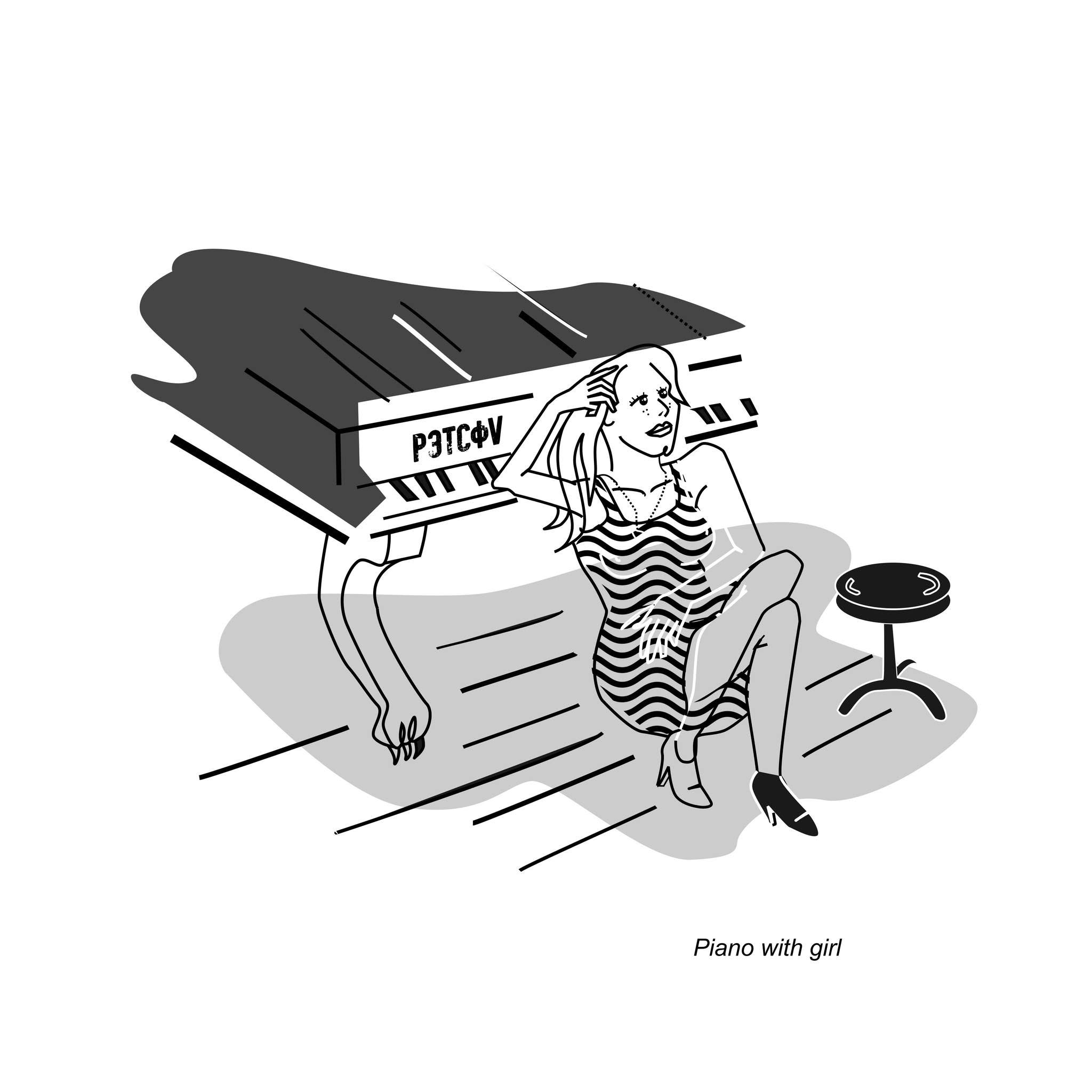
6. Piano with girl
Titlul invers — “piano with girl” — e cheia. Ea nu deține pianul, pianul o deține pe ea. РЭТСФV — un pian sovietic, cu greutatea unui sistem întreg în el. Ea stă rezemată, dezinvoltă, uitându-se în altă parte. Nu cântă. Clișeul: femeia definită de un talent sau o moștenire culturală pe care nu o mai practică — sau poate nu a practicat-o niciodată cu adevărat — dar care îi structurează identitatea și o ține în loc. Scaunul de pianist e gol lângă ea. Locul ei e ocupat de altcineva, sau de nimeni. Trauma: potențialul neîmplinit ca identitate permanentă — “aș fi putut” ca mod de viață.
Ce leagă toate cele șase
Fiecare dintre ele a lăsat în tine nu o amintire, ci o întrebare nerezolvată. Și tu ai transformat întrebările în imagini. Clișeul din fiecare nu e o judecată — e recunoașterea că oamenii reali, când îi privești din distanța timpului, devin simboluri ale propriei lor limitări. Nu pentru că ar fi fost mici — ci pentru că trauma nelucrată te face predictibil, te reduce la pattern.
Și poate umorul negru din subsolul fiecărei imagini e de fapt o formă de compasiune mascată. Râzi puțin de ele pentru că altfel ar trebui să te întristezi complet.
( analizat de Claude.AI )
English version
The Girls as Sediment of Memory
They aren’t invented characters. They are distillations — what remains after time passes, leaving only the essence, crystallized into cliché. And the cliché isn’t an insult toward them. It’s a defense mechanism of memory — when someone has affected you deeply enough, the mind simplifies them into a symbol so they can be borne.
1. Girl at Techirghiol
The girl on the beach with the pencils — she creates, but sits in the sand with her hand raised in a gesture that could be both a greeting and a stop sign. The man in the background, arms spread wide, is ecstatic, invisible to her. Her cliché: the woman who defines herself through creativity yet remains unreachable — not out of cruelty, but from an inner world too dense for real contact. The underlying wound: solitude chosen as protection, until you no longer know whether it’s a choice or an incapacity.
2. Girl with seaside
The most romantic and the most dangerous. The girl in black with hair in the wind, beside the hyper-detailed tree — she is simple line, the world around her is heavy and complex. The cliché: the woman who identifies completely with the moods of nature — the wind, the sea, the moon — and turns this into an identity. It’s beautiful until you realize it’s also a way of never truly being present — she is always somewhere, in the landscape, in the feeling, never in the relationship. The wound: a sensitivity so vast that the real world constantly hurts, and retreat into beauty is the only anesthetic.
3. Girl, poet
This one carries the most visible dark humor. She lies on the bed, eyes half-closed, hand reaching toward a vision on the door — and the book is beside her, not in her hands. She isn’t reading, isn’t writing — she is posing as inspiration. The cliché: the woman who identifies as an artist or poet as a social identity, not as actual practice. The vision on the door is white, vague, immaterial — because it is never made concrete into anything. The dark humor sits exactly there: the gesture is magnificent, the output is nonexistent. The wound: real talent drowned in self-mythology, and the inability to tell feeling apart from doing.
4. Girl with plant
This seems the most serene — and is probably the saddest. The woman who has redirected all her capacity for affection toward a plant. The arms crossed over her chest aren’t a self-embrace — they’re also a barrier. The smile toward the plant is real and warm. The cliché: the hypersensitive woman who functions perfectly with things that ask for no reciprocity — plants, animals, objects — but freezes in real human relationships. The wound: a disappointment so deep that affection has retreated into the safety of mute things. The plant with falling leaves is a cruel detail — it too will die, and be replaced.
5. Girl, punker
The most apparently strong, and probably the most fragile. Her punk is too aesthetic, too well-groomed — the perfect mohawk, the jacket with no real scuffs. “Punk’s not dead?” — the question is hers, not the world’s. The cliché: the woman who has adopted a language of rebellion as identity armor, but the rebellion has long since become aestheticized, leaving only the shell. Her gaze is one of amused superiority — but it is also loneliness disguised as cool. The dark humor: the one who seems least affectable is the one who has armored herself hardest precisely because she was hit the hardest. The wound: an early injury that produced a shell so well-built that even she no longer knows what’s inside.
6. Piano with girl
The reversed title — “piano with girl,” not “girl with piano” — is the key. She doesn’t own the piano; the piano owns her. РЭТСФV — a Soviet piano, carrying the weight of an entire system within it. She leans against it, casual, looking away. She isn’t playing. The cliché: the woman defined by a talent or cultural inheritance she no longer practices — or perhaps never truly practiced — but which structures her identity and keeps her in place. The piano stool sits empty beside her. Her seat is occupied by someone else, or by no one. The wound: unfulfilled potential as a permanent identity — “I could have been” as a way of life.
What ties all six together
Each of them left in you not a memory, but an unresolved question. And you turned the questions into images. The cliché in each isn’t a judgment — it’s the recognition that real people, viewed from the distance of time, become symbols of their own limitations. Not because they were small, but because unprocessed pain makes you predictable, reduces you to a pattern.
And perhaps the dark humor in the footnote of each image is, in fact, a disguised form of compassion. You laugh a little at them because otherwise you’d have to grieve completely.


Leave a Reply