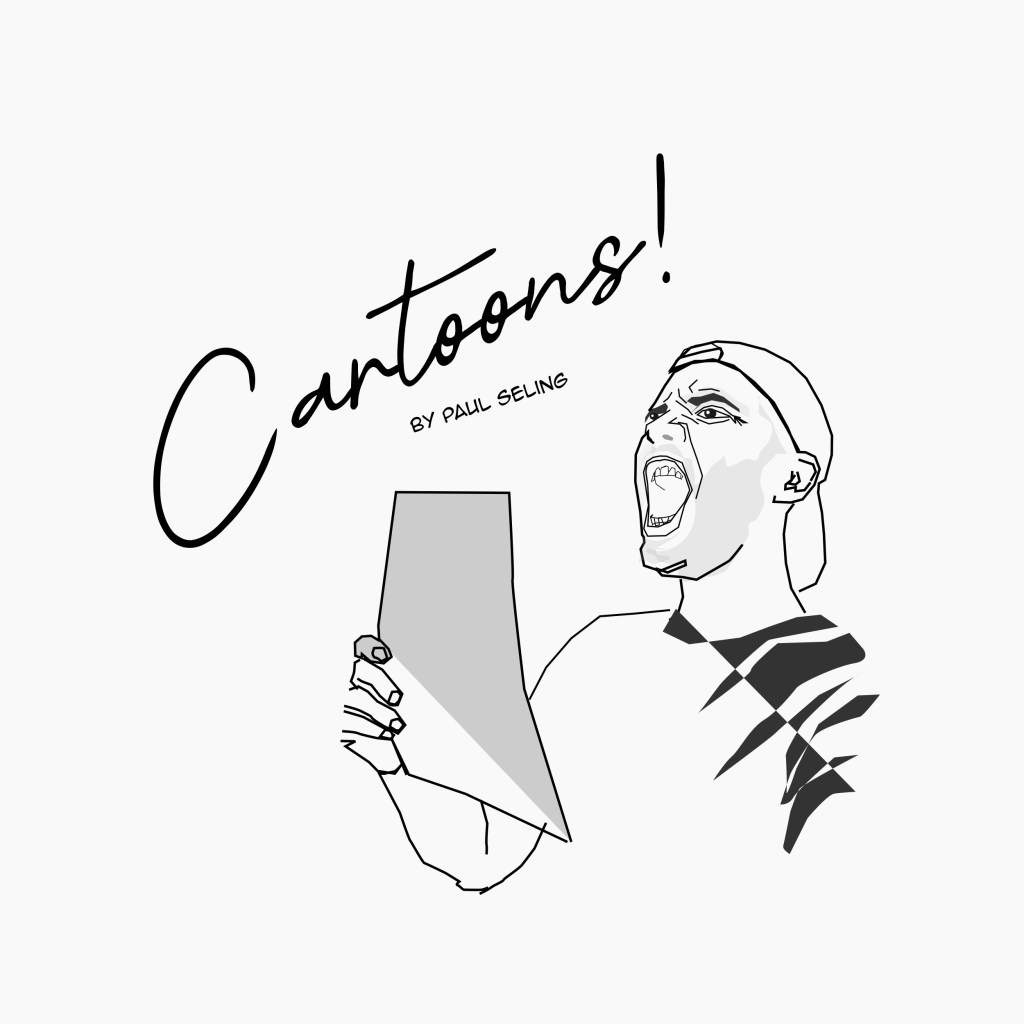
Varianta în limba română
În jurul anului 2012 desenam deja cu creionul, cu pensule și făceam puțină fotografie low-tech, din nevoia de a experimenta cu posibilul feedback al comunității de artiști – atât internaționale, cât și locale – și nu numai al artiștilor. La un moment dat am simțit nevoia să mă mut spre mediul digital; urma să îmbin mișcarea instinctuală a mâinii, deja puțin antrenată, cu condiționările, limitările, dar și avantajele unei tablete grafice.
Am ales o tabletă Genius entry-level – am dat vreo 50 de euro pe ea – și am conectat-o la un laptop pe care îl aveam în dulap. Exista un mic „lag”: laptopul era vechi și a trebuit, încă de la început, să iau în calcul, atunci când desenam, mica întârziere dintre mișcarea mâinii pe tabletă și ceea ce vedeam pe ecran.
A existat o perioadă – nu foarte lungă – în care am transpus în digital o serie de situații prin care trecusem sau prin care treceam chiar în momentul în care desenam. Pornind de la o realitate observată și de la evenimente imediate, am început un calcul al posibilităților și al evoluției stării mele în alte contexte, în alt timp. În acest fel, unele dintre caricaturi au dus mai departe, până în absurd, potențiale de comportament și atitudine ale oamenilor, ale societății – locale, în primul rând – față de mine, față de ei înșiși sau față de ceilalți.
Cum „stă bine” oricărei caricaturi, ele sunt în primul rând pamflet, observație liberă și, bineînțeles, univers subiectiv. Realitatea este văzută prin ochiul propriu și transpusă în imagine așa cum probabil face orice umorist. Da, unii caricaturiști aleg subiecte mai neutre, mai puțin riscante, dar eu nu îmi permiteam, la acea dată, să nu spun lucrurilor pe nume, exact așa cum se întâmplau și cum le puteam observa. Din nou, desenele mele au fost „fotografii” de moment nu doar ale situațiilor, ci și ale stării de moment; stare criptată în linie, în tehnică și în alegerea culorii negru ca unică opțiune de moment.
Apropo de linie, sunt încă mândru și mirat de rapiditatea cu care desenam. Nu cred că petreceam mai mult de 25–30 de secunde la fiecare caricatură, urmând ca apoi să retușez fin mici nuanțe sau să scriu textul. Cu siguranță că un desenator experimentat observă aceste detalii și înțelege că totul era „făcut pe fugă”. Nu aveam deloc o stare bună; din contră: eram speriat, obosit și confuz.
Acest set de imagini avea ca scop imediat interogarea publicului din mediile online – Facebook și website-ul personal – și nevoia de a primi feedback într-o perioadă în care nu îmi era deloc clar ce mi se întâmpla. Mă aflam fie în depresie profundă, fie în psihoză acută, văzând peste tot posibile semne de pericol și deplasându-mă constant cu rucsacul în spate între malul Mării Negre, văile Bucegilor sau vreun sat obscur din Moldova.
Faptul că am folosit Inkscape, un software open-source popular, m-a făcut să nu semnez nicio lucrare și nici să nu le înregistrez cu cunoscuta notă de copyright sau cu un logo. Intenția mea era ca această „instalație” ad-hoc, online, să funcționeze fără opreliști: caricaturile să fie distribuite cât mai departe, fără vreo interogare din partea nimănui – nici a celor care nu și-ar fi pus vreodată problema să facă asta, dar nici a celor care iau în calcul ce înseamnă copyrightul, ce înseamnă amprenta sau stilul personal, ce înseamnă valoarea, educația, munca și experiența în domeniile creative.
Pentru prima categorie – oameni nepregătiți în artă – desenele ar fi trebuit să fie o mică bizarerie. Ele, ca serie, ca întreg, se constituie într-un tablou critic al societății de atunci sau a ceea ce ar fi ea putut să devină: o societate a ipocriziei, a corupției, a manipulării sau a furtului – de resurse, de oameni, de situații, de vieți chiar. Omul obișnuit avea fie să se amuze în fața stratului superficial al caricaturii – deformarea fizionomiilor, a corpurilor, a mișcărilor – fie să înceapă să-și pună întrebări despre sensuri mai profunde care poate… „îi scăpau”.
Ridiculizam aici predispoziția românului de a dibui „tentative de manipulare”, de a găsi „sensuri ascunse”, duble sau triple, în orice lucru care îi depășește capacitatea de înțelegere imediată. Mai mult, această categorie de public ar fi putut căuta părerea unui specialist. În acest fel „virusul” funcționa mai departe, transformând spectatorul inconștient într-un „răspândac” al ideilor.
Dacă „specialistul” era cu adevărat experimentat, el ar fi fost, la rândul său, interesat de originea desenelor și ar fi ajuns, prin aceeași metodă, la sursă: contul meu de Facebook sau website-ul personal. Astfel am fi făcut cunoștință „pe ascuns”, fără ca identitatea lui să fie cunoscută sau siguranța lui periclitată de vreo asociere cu mine sau cu pericolele care păreau să mă pândească la acea dată. Ar fi fost liber să ia atitudine, să caute explicații, să disemineze mai departe conținutul către alți „cunoscători” sau, dacă nu, măcar să se bucure de faptul că mai există și alți împătimiți ai caricaturii „de modă veche”.
Cum știam că desenele vor fi văzute și de artiști – consacrați sau nu, mai bine sau mai puțin pregătiți – și cum cunoșteam varietatea de caractere și predispozițiile acestora spre critică sau contestare, caricaturile poartă amprenta mișcării, a liniei personale și a personalității dezvoltate în zeci de ani de muncă, dar în afara oricărui sistem educativ „established”.
Caricatura rămâne, în opinia mea, un stil pamfletar la îndemâna oricui. Atâta timp cât are umor sau se constituie într-o critică inteligentă a moravurilor vremii, ea devine autentică, iar cel care o contestă se transpune instantaneu chiar în obiectul caricaturii. Bineînțeles, în funcție de societatea de care aparține, publicul poate sau nu să „aibă umor”, să înțeleagă și să accepte critica, ironia și pamfletul.
Nu am sperat foarte mult la feedback pozitiv sau constructiv din partea comunității locale, ci m-am așteptat mai degrabă la reacții din alte țări și se pare că, într-adevăr, unii dintre aceștia au fost mai receptivi. În orice caz, încă de la început experimentul sau „instalația mea” a avut ca scop afirmarea unicității și a individualității și exprimarea – dacă nu a talentului și a experienței – măcar a muncii și a calității spiritului de observație.
Și, mai departe, a libertății de expresie, a posibilității de a critica în mod constructiv starea lucrurilor și de a spera, în final, dacă nu „la mai bine”, măcar la auto-evaluare și introspecție. Consider, așa cum am știut instinctiv încă de pe la 6–7 ani când m-am apucat de caricatură, că această formă puțin apreciată de artă este de fapt o metodă fină de a aduce schimbare în oameni și în lume.
Bineînțeles, luam în calcul și faptul că îmi voi face și inamici. Cum situațiile și personajele sunt tipizate sau chiar clișeistice, este posibil ca mulți observatori să-și fi descoperit în ele propriile moduri de a acționa sau de a gândi. Un alt efect al caricaturii este acela de a-l determina pe omul „standard” să cadă pe gânduri, întrebându-se – conștient sau nu – dacă modul său de a fi nu este, în final, doar o caricatură: o deformare, sub diverse auspicii, a naturii sale și a potențialului său de a fi o ființă umană în toată puterea cuvântului.
Mai există probabil și categoria celor cu diverse tipuri de complexe care s-au recunoscut chiar în stratul inferior de umor, cel al deformării fizionomiilor. Eram conștient și de acest posibil efect și, din acest motiv, nu am recurs la o caricaturizare excesivă, păstrând personajele într-o zonă a desenului „corectă politic”. Bineînțeles, dacă desenam „mai frumos”, ieșeam complet din pamflet și poate intram în altă zonă a artelor grafice.
Este de la sine înțeles că am ridiculizat până și această „corectitudine politică”, evitând orice detaliu compromițător – nu din frica de a fi acuzat, ci din nevoia de a arăta că acest tip de atitudine nu face decât să adauge noi și noi nuanțe, poate mai subtile, poate mai greu de observat și demonstrat, corupției și ipocriziei oamenilor sau rețelelor din care fac parte.
Ca notă finală, aș mai adăuga că am desenat mult, în încercarea de a acoperi cât puteam de mult din spectrul corupției sociale care îmi era accesibil la acea dată. Anticipam că, în final, observatorul se va fi găsit absorbit într-o lume complexă, vastă, că va avea acces la o imagine panoramică a societății și că fie va lua lucrurile mai în serios, fie va învăța măcar ceva din întreaga experiență.
Stilul caricaturilor, deși la prima vedere simplist, sintetizează de fapt mai multe influențe pe care le-am integrat de-a lungul îndelungatei mele activități în domeniu: începând de la desenatorii români ai anilor ’70–’80, punctul meu de plecare, și terminând cu artiști de calibru ai scenei internaționale – francezi, americani și alții.
În acest fel, desenele rămân actuale și, într-un fel, în afara oricărui trend sau curent mainstream. O altă indicație a faptului că situațiile descrise în desene nu sunt nici noi și nici nu vor fi probabil corectate cu ușurință în viitor. O tristă concluzie strecurată în subtext: firea umană a fost, este și va fi coruptibilă până la exces și că, nu-i așa, caricatura este poate ultima noastră formă de rezistență, dar și de luptă împotriva părții întunecate a umanității. Cu toate riscurile de rigoare.
Acum câteva zile m-am hotărât să pun tot ce am desenat în această serie, acum aproape 15 ani, într-un folder și să-l ofer spre download, adăugând un fișier-licență. Cu ajutorul AI am putut compila rapid un document care să prevină folosirea acestei „instalații” în scopuri care contravin bunului-simț, dacă nu chiar în scopuri distructive.
Bineînțeles, orice om educat, civilizat, decent ar fi știut asta din momentul în care le-am expus, dar probabil că acest „disclaimer” nu îi va opri pe unii să le folosească în viitor în același mod. Am avut un mic nod în gât atunci când desenam, gândindu-mă că lucrurile pot aluneca într-o direcție, dacă nu nefirească, cel puțin neașteptată.
Dar mi-am spus că, până la urmă, un artist lipsit de curajul de a experimenta sau de a critica rămâne un simplu „decorator”. Și apoi, dacă tot am fost „punker” încă de pe la 5–6 ani, nu mai avea rost să mă conformez. Aș fi anulat nu numai natura experimentului, ci mi-aș fi negat și propria natură.
Desenele sunt accesibile pentru download gratuit aici :
English version
Around 2012 I was already drawing with pencil and brushes, and doing a bit of low-tech photography, driven by the need to experiment with the possible feedback of the artistic community—both international and local—and not only artists. At some point I felt the need to move toward the digital medium; I was about to combine the instinctive movement of my hand, already somewhat trained, with the constraints, limitations, but also the advantages of a graphic tablet.
I chose an entry-level Genius tablet—I paid around 50 euros for it—and connected it to a laptop I had sitting in a closet. There was a bit of lag: the laptop was old, so from the very beginning I had to take into account, while drawing, the small delay between the movement of my hand on the tablet and what I saw on the screen.
There was a period—though not a very long one—during which I translated into digital form a series of situations I had been through or was going through at the very moment I was drawing. Starting from observed reality and immediate events, I began calculating possible evolutions of my own state in other contexts, in another time. In this way, some of the caricatures pushed potential behaviors and attitudes of people—and of society, especially the local one—toward the absurd: attitudes toward me, toward themselves, or toward others.
As any caricature “should be,” they are first and foremost satire, free observation, and of course a subjective universe. Reality is seen through one’s own eye and translated into image, as probably any humorist does. Yes, some caricaturists choose more neutral, less risky subjects, but at that time I could not afford not to call things by their name, exactly as they were happening and as I could observe them.
Once again, my drawings were momentary “photographs,” not only of situations but also of states of mind; states encoded in line, technique, and in the choice of black as the only color option at the time.
Speaking of line, I am still proud—and somewhat amazed—by the speed with which I was drawing. I do not think I spent more than 25–30 seconds on each caricature, after which I would make small refinements or write the accompanying text. An experienced draftsman would certainly notice these details and understand that everything was “done in a hurry.” I was not in a good state at all; on the contrary: I was frightened, exhausted, and confused.
This set of images had the immediate purpose of questioning the audience in the online environment—Facebook and my personal website—and fulfilling my need for feedback during a period in which it was not at all clear to me what was happening to me. I was either in deep depression or acute psychosis, seeing possible signs of danger everywhere and constantly moving with a backpack on my shoulders between the shores of the Black Sea, the valleys of the Bucegi Mountains, or some obscure village in Moldova.
The fact that I used Inkscape, a popular open-source software, led me not to sign any work and not to register them with the well-known copyright note or logo. My intention was that this ad-hoc online “installation” should function without barriers: the caricatures should be shared as widely as possible without any questioning from anyone—neither from those who would never have considered such things, nor from those who take into account what copyright means, what personal style or artistic imprint means, what value, education, work, and experience in creative fields mean.
For the first category—people untrained in art—the drawings were meant to appear as a small oddity. As a series, as a whole, they form a critical tableau of society at that time or of what it could potentially become: a society of hypocrisy, corruption, manipulation, or theft—of resources, of people, of situations, even of lives.
The ordinary viewer might either laugh at the superficial layer of the caricature—the deformation of faces, bodies, and gestures—or begin to ask themselves questions about deeper meanings that perhaps “escaped” them.
Here I was also ridiculing the Romanian tendency to detect “attempts at manipulation,” to find “hidden meanings,” double or triple interpretations in anything that exceeds their immediate capacity for understanding. More than that, this category of viewers might seek the opinion of a specialist. In this way the “virus” would continue to function, turning the unconscious spectator into a spreader of ideas.
If the “specialist” were truly experienced, they would in turn become interested in the origin of the drawings and would reach the source through the same path: my Facebook account or personal website. In this way we would meet “in secret,” without their identity being known or their safety compromised by any association with me or with the dangers that seemed to surround me at the time.
They would thus be free to take a stance, to search for explanations, to disseminate the content further to other “connoisseurs,” or at least to enjoy the fact that there were still other enthusiasts of old-fashioned caricature.
Since I knew that the drawings would also be seen by artists—established or not, better or less well trained—and since I knew the variety of characters and their predispositions toward criticism or contestation, the caricatures carry the imprint of movement, personal line, and a personality developed through decades of work, yet outside any established educational system.
In my opinion, caricature remains a satirical form available to anyone. As long as it has humor or constitutes an intelligent critique of the morals of its time, it becomes authentic, and the one who contests it instantly turns into the very object of the caricature.
Of course, depending on the society to which it belongs, the public may or may not “have a sense of humor,” may or may not understand and accept criticism, irony, and satire.
I did not hope for much positive or constructive feedback from the local community; I expected more from audiences in other countries, and indeed some of them proved more receptive. In any case, from the beginning the experiment—or my “installation”—was meant to assert uniqueness and individuality, and to express, if not talent and experience, then at least the work invested and the quality of observation.
And beyond that, the freedom of expression: the freedom to criticize the state of things constructively and to hope, in the end, if not for improvement, then at least for self-evaluation and introspection.
As I instinctively knew from the age of six or seven, when I first began drawing caricatures, this undervalued form of art is actually a subtle method of bringing change to people and to the world.
Of course, I also took into account the fact that I would make enemies. Since the situations and characters are typified or even cliché-like, many observers may have recognized their own ways of acting or thinking in them.
Another effect of caricature is that it can cause the “standard” individual to pause and reflect, consciously or not, on whether their own way of being is not ultimately just a caricature—a deformation, under various influences, of their nature and their potential to be fully human.
There is probably also the category of people with various types of complexes who may have recognized themselves even in the lowest layer of humor: the deformation of physiognomies.
I was aware of this possible effect, and for that reason I avoided excessive caricaturization, keeping the characters within a politically “correct” drawing zone. Of course, if I had drawn them “more beautifully,” I would have completely left the realm of satire and perhaps entered another territory of graphic art.
It goes without saying that I also ridiculed this very notion of “political correctness,” avoiding any compromising detail—not out of fear of accusation, but out of the need to show that this kind of attitude merely adds new layers, perhaps subtler ones, perhaps harder to detect and demonstrate, to the corruption and hypocrisy of people or of the networks they belong to.
As a final note, I would add that I drew extensively in an attempt to cover as much as possible of the spectrum of social corruption that was accessible to me at the time. I anticipated that, in the end, the observer would find themselves absorbed in a complex and vast world, gaining access to a panoramic image of society and either taking things more seriously or at least learning something from the entire experience.
The style of the caricatures, although seemingly simplistic at first glance, actually synthesizes several influences that I have integrated throughout my long activity in the field: beginning with Romanian cartoonists of the 1970s and 1980s—my starting point—and ending with major figures of the international scene: French, American, and others.
In this way the drawings remain current and somehow outside any mainstream trend or movement. Another indication that the situations described in the drawings are neither new nor likely to be easily corrected in the future.
A sad conclusion slipped into the subtext: human nature has been, is, and will remain corruptible to excess and, after all, caricature may be our last form of resistance—but also of struggle—against the dark side of humanity. With all the risks involved.
A few days ago I decided to gather everything I had drawn in this series—almost 15 years ago—into a folder and offer it for download, adding a license file.
With the help of AI I was able to quickly compile a document meant to prevent the use of this “installation” for purposes that contradict common decency, if not outright destructive purposes.
Of course, any educated, civilized, decent person would have understood this from the moment I first exhibited them. But this disclaimer will probably not stop some people from using them in the same way in the future.
I had a small knot in my throat while drawing, thinking that things could slide in a direction that, if not unnatural, was at least unexpected.
But in the end I told myself that an artist lacking the courage to experiment or to criticize remains nothing more than a simple “decorator.” And besides, if I had already been a “punk” since the age of five or six, there was no point in conforming now.
I would not only have cancelled the nature of the experiment, but I would also have denied my own nature.
The drawings are available for free download here :
 PAUL SELING
Leave a comment