Varianta în limba română
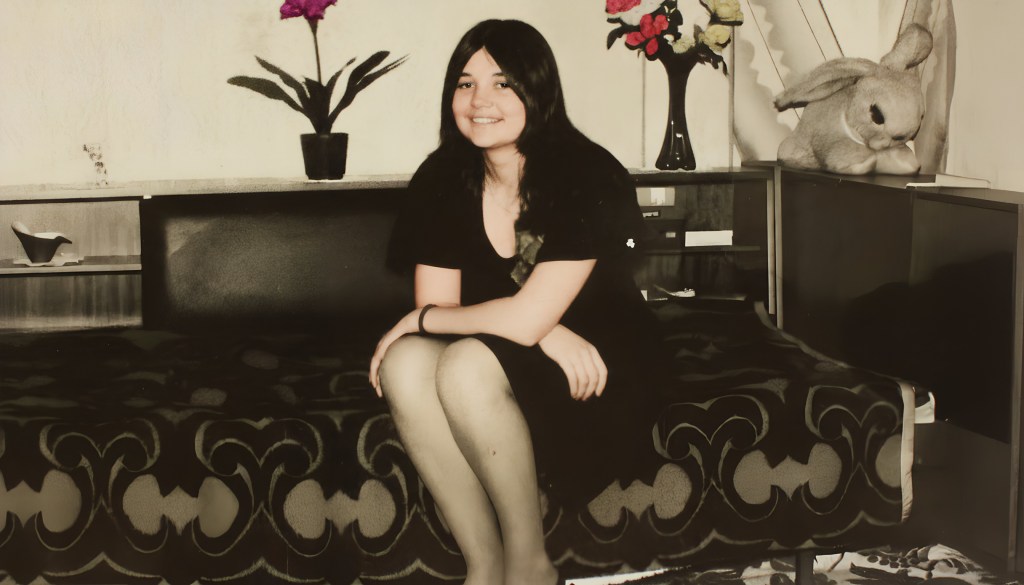
Undeva la începutul anilor ’70, mama absolvea facultatea, devenind profesoară de matematică-fizică. A fost întotdeauna o idealistă, o ambițioasă. O luptătoare, cu o grație și o feminitate pe care aproape toți elevii ei au iubit-o din primul moment.
În cei opt ani de profesorat — prima ei catedră — la Copalnic Mănăștur, a dat piept cu realitatea muncii în sistemul comunist. Profesorul era, mai ales la sat, oarecum izolat de „realitatea politică” a vremii. În felul acesta a putut să-și facă meseria așa cum spera: cu multă dedicare și atenție acordată fiecărui copil în parte.
Tocmai am descusut-o la telefon și mi-a povestit despre ambițioșii de clasa a V-a din școala din Copalnic. Multă lume îi privește pe acești „săteni” ca pe niște ființe mai puțin educate; în cazul mamei mele n-a fost niciodată așa. Și-a petrecut aproape întreaga carieră făcând naveta într-un sat sau altul, mergând cu orele în autobuze neîncălzite, în care îți îngheța respirația și trebuia să tropăi neîncetat ca să nu răcești instant. Alteori, din poveștile ei, cursele nici nu mai veneau — nu de puține ori au mers, ea cu câte o colegă, pe jos, câte 15–20 kilometri din sat până acasă, în Baia Mare, prin ploaie, îngheț sau ninsoare abundentă.
Pe micii ei elevi de clasa a V-a i-a motivat încet, treptat, propunându-le să rezolve probleme de matematică din pe atunci celebra Gazeta Matematică. Rezolvau problemele, le redactau frumos, le puneau în plicuri și le trimiteau la redacție. La scurt timp, copiii au început să apară în revistă, la final, unde erau trecuți cei care rezolvau problemele cel mai elegant. Bulgărele de zăpadă al succesului i-a motivat și mai mult și, astfel, întregul colectiv a devenit pasionat de această frumoasă materie.
Mama îmi povestește amuzată cum copiii îi aduceau mâncare la școală, doar ca să poată petrece după-amiezile împreună, rezolvând probleme care mai de care mai complicate. Au evoluat și au învățat împreună până la absolvire, în clasa a VIII-a, când toți s-au răspândit pe la licee, intrând cu note bune și, probabil, făcând o figură frumoasă și în continuare.
În 1990, după mulți ani dificili de catedră în Remetea Chioarului — satul bunicilor mei, unde se născuse — mama a primit repartiție în oraș, la Baia Mare. A fost angajată ca profesoară la Liceul Sportiv (Școala 19 pe atunci). Era o școală mare, cu 2.500 de elevi, vreo 150 de profesori și nu mai puțin de opt de matematică. Cum elevii erau triați prin examinări la începutul gimnaziului (în clasa a V-a), erau departajați și împărțiți în clase „mai bune” sau „mai slabe”. Cei care „căzuseră” în clasele slabe erau supărați; se simțeau puși într-o lumină proastă, catalogați drept „inferiori”. Cum mama era nou-venită, a primit sarcina de a fi profesoara unor asemenea clase.
Nu s-a descurajat deloc. Cu experiența ei, adunată în peste 20 de ani, a știut din nou să-i motiveze pe micuți, care au îndrăgit-o — cum altfel? — de la început. Rapid, copiii s-au „încălzit” și s-au pus cu ambiție și îndârjire pe învățat; era clar — spune mama — că voiau să demonstreze că nu sunt „de calitate inferioară” și că puteau foarte bine să fie considerați egalii celorlalți, din clasele „bune”.
Mama îmi povestește cum, după ce își termina programul la alte materii (fizica, de exemplu), elevii o căutau ca să o cheme la ore suplimentare de meditații. Era greu de găsit o clasă liberă chiar și după-amiaza, dar copiii erau ambițioși și puneau ochiul rapid pe câte un spațiu disponibil, într-o fereastră de o oră-două.
Mama îmi spune amuzată cum, ruptă de oboseală, o lua de la capăt cu predatul după program, înduioșată de dorința elevilor ei de a învăța și de a dovedi de ce sunt în stare. Copiii au muncit, spune ea, enorm — susținut, cu entuziasm și drag pentru materia asta atât de dificilă pentru alții. Unii dintre ei au participat, într-un final, și la olimpiade, reușind să se califice chiar și în fazele municipale. Din proprie experiență știu cât de „rarefiat” este aerul în grupurile selecte ale celor care ajung la faze județene sau chiar naționale, deci efortul lor este cu adevărat de apreciat.
Mi-a mai povestit — imagine amuzantă acum, de care vag îmi aduc și eu aminte — cum, după absolvirea clasei a VIII-a, la examenele de admitere în licee, mama a făcut rost de o bicicletă și s-a plimbat pe la toate listele cu rezultate. Elevii ei nu numai că fuseseră admiși cu toții, dar se situaseră cu succes printre primele locuri.
Prin 1995, mama devenise un personaj extrem de popular și de îndrăgit, atât printre elevi, cât și printre colegii profesori. A fost puțin „împinsă de la spate” și motivată de aceștia să devină chiar directoarea liceului, lucru care s-a și întâmplat. Au urmat încă șase ani de muncă și mai intensă, și mai susținută — muncă pe care mama a făcut-o cu aceeași grație și ambiție. Dar despre această perioadă, într-o altă postare, viitoare.
English version
Sometime in the early 1970s, my mother graduated from university, becoming a mathematics and physics teacher. She was always an idealist, ambitious by nature—a fighter, endowed with a grace and femininity that almost all of her students loved from the very first moment.
During her first eight years of teaching—her very first assignment—in Copalnic Mănăștur, she came face to face with the reality of working within the communist system. Teachers, especially in rural areas, were somewhat isolated from the “political reality” of the time. In this way, she was able to practice her profession as she had hoped: with great dedication and careful attention given to each individual child.
I had just spoken with her on the phone, and she told me about the ambitious fifth-graders at the school in Copalnic. Many people tend to view these “village kids” as less educated; in my mother’s case, that was never true. She spent almost her entire career commuting to one village or another, traveling for hours on unheated buses where your breath would freeze and you had to stomp your feet constantly just to avoid catching a cold on the spot. Other times, according to her stories, the buses wouldn’t come at all—more than once she and a colleague walked 10–15 kilometers from the village back home to Baia Mare, through rain, frost, or heavy snowfall.
She motivated her fifth-grade students slowly and steadily, encouraging them to solve mathematics problems from the then-famous Gazeta Matematică. They solved the problems, wrote them up neatly, put them in envelopes, and sent them to the editorial office. Before long, the children began to appear in the magazine, listed at the end among those who had provided the most elegant solutions. The snowball effect of success motivated them even more, and soon the entire class became passionate about this beautiful science.
My mother tells me, amused, how the children used to bring her food to school just so they could spend their afternoons together, solving increasingly complex problems. They grew and learned together until graduation, in the eighth grade, when they all dispersed to different high schools, being admitted with good grades and, most likely, continuing to make a good impression.
In 1990, after many difficult years teaching in Remetea Chioarului—the village of my grandparents, where she herself had been born—my mother received a placement in the city, in Baia Mare. She was hired as a teacher at the Sports High School (then known as School No. 19). It was a large school, with 2,500 students, around 150 teachers, and no fewer than eight mathematics teachers. Since students were selected through examinations at the start of middle school (fifth grade), they were divided into “better” and “weaker” classes. Those who had “fallen” into the weaker classes were upset; they felt cast in a poor light, labeled as “inferior.” As my mother was new there, she was assigned to teach such classes.
She was not discouraged at all. With the experience she had gathered over more than 20 years, she once again knew how to motivate the children, who grew fond of her—how could they not?—from the very beginning. Quickly, the students “warmed up” and threw themselves into learning with ambition and determination. It was clear, my mother says, that they wanted to prove they were not “of inferior quality” and that they could very well be considered equals to those in the “good” classes.
She tells me how, after finishing her regular teaching schedule in other subjects (physics, for example), students would seek her out to ask for extra tutoring sessions. It was hard to find an empty classroom even in the afternoon, but the children were ambitious and quickly spotted any available space, even if only for an hour or two.
My mother says, amused, how exhausted she was, yet how she would start teaching all over again after hours, moved by her students’ desire to learn and to prove what they were capable of. The children worked tremendously hard, she says—consistently, with enthusiasm and genuine love for a subject that many others find so difficult. Some of them eventually participated in academic competitions, even qualifying for the municipal stages. From my own experience, I know how “thin” the air is in the select groups that reach county or even national levels, so their effort truly deserves appreciation.
She also told me—an amusing image now, which I vaguely remember myself—how after the eighth-grade graduation exams for high-school admission, she got hold of a bicycle and rode around checking all the posted results. Not only had all of her students been admitted, but many of them ranked among the top.
By around 1995, my mother had become an extremely popular and beloved figure, both among students and fellow teachers. She was gently “pushed from behind” and encouraged by them to become the school’s principal, which indeed happened. Another six years of even more intense and sustained work followed—work that my mother carried out with the same grace and ambition. But that period is a story for another future post.
 PAUL SELING
Leave a comment