Varianta în limba română
a) Arhitectul din „Matrix”
Când am văzut Matrix, prima parte, am fost absolut șocat. Așa ceva nu mai văzusem niciodată. Atenția la detaliu, povestea, acțiunea, jocul actorilor – absolut totul m-a fascinat și mă fascinează până azi. Ani de zile m-am tot uitat pe YouTube la explicații date de cineaști, filosofi; am studiat, în ultima vreme, și Baudrillard și alți structuraliști sau post-structuraliști. Pot spune că Matrix a fost introducerea mea – din nou folosesc termenul „gateway drug” – în gândirea critică.
M-am tot gândit la geniul celor doi frați Wachowski. Erau cu doar câțiva ani mai mari decât mine – vreo 8–10, parcă – și dăduseră naștere unei capodopere la vârste la care alții încă încearcă fără succes să rememoreze tabla înmulțirii. Lol. Am căutat și influențele lor: Ghost in the Shell, anime-ul japonez, se pare că a fost un punct de pornire. Am ascultat interviuri date de ei, m-am uitat la making of, apoi am împrumutat și Animatrix și pot să spun că iar am… „căzut pe spate”.
Episodul din Animatrix în care bolnavul în cărucior este împins cu agresivitate de asistenta medicală la „locul său” m-a marcat profund; m-a mai impresionat și cel în care băiatul care desenează în caietul lui de școală se aruncă de pe clădire, căutând ieșirea din Matrix; sau cel cu alergătorul care își rupe tendoanele, încercând să depășească un record.
În mod cert n-am fost singurul – cred – care a văzut asemănarea dintre „arhitectul” din Matrix și celebrul arhitect român Dinu Patriciu. Ulterior, am fost nițel mirat de lansarea lanțului de magazine creat de investitor, denumit MIC.RO.
Ani de zile am tot meditat la „funcția agentului Smith” în societate, și în special în societatea românească. Cu timpul, am ajuns la concluzia că da, într-adevăr, fiecare om poate lua această funcție atunci când siguranța, echilibrul sau conexiunile sale cu „sistemul” sunt în pericol. Cu siguranță că Matrix este o parabolă care descrie nu numai „sistemul (post)comunist”, ci, în general, toate sistemele opresive, indiferent de „culoare”. Complexitatea simbolisticii folosite și a planurilor în care poate fi văzut filmul mă depășește și azi.
Revenind la MIC.RO, m-am gândit că poate dl. Patriciu s-o fi simțit oarecum „vizat / citat”, poate alături de întreg „establishmentul” românesc, și că reacția acestor grupuri de interese va fi dat naștere unei forme de „acoperire” locală sau de „mascare(?)” a influenței trilogiei Matrix. Oricum ar fi, vorba umbla prin IAIM că arhitectul avusese conexiuni cu vechea „Securitate”.
2) Sediul Arhitecților și cafeneaua IO
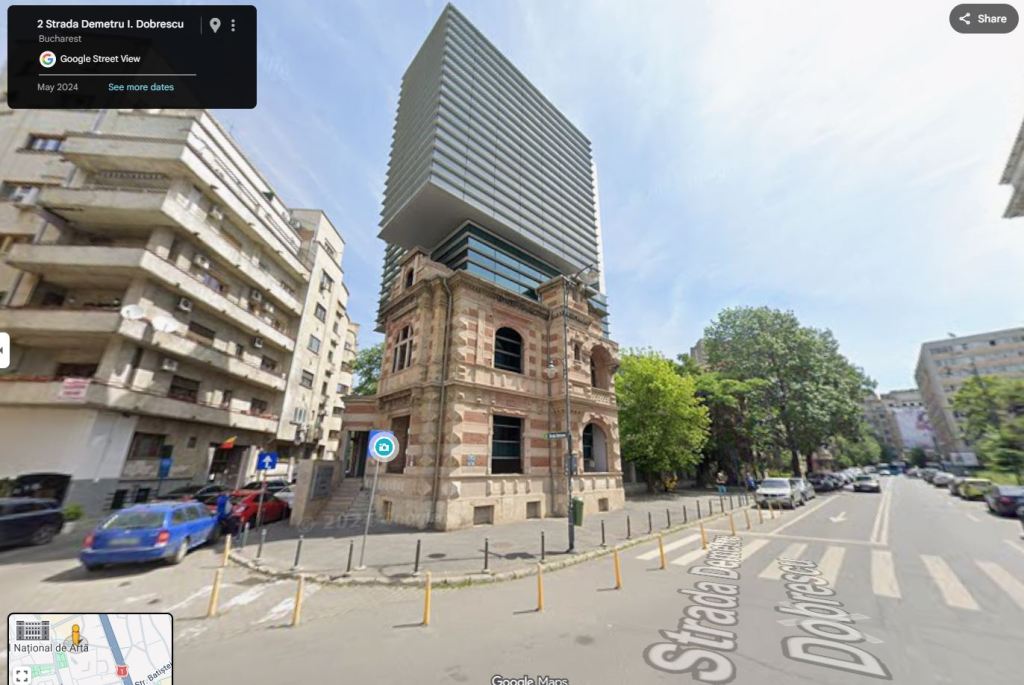
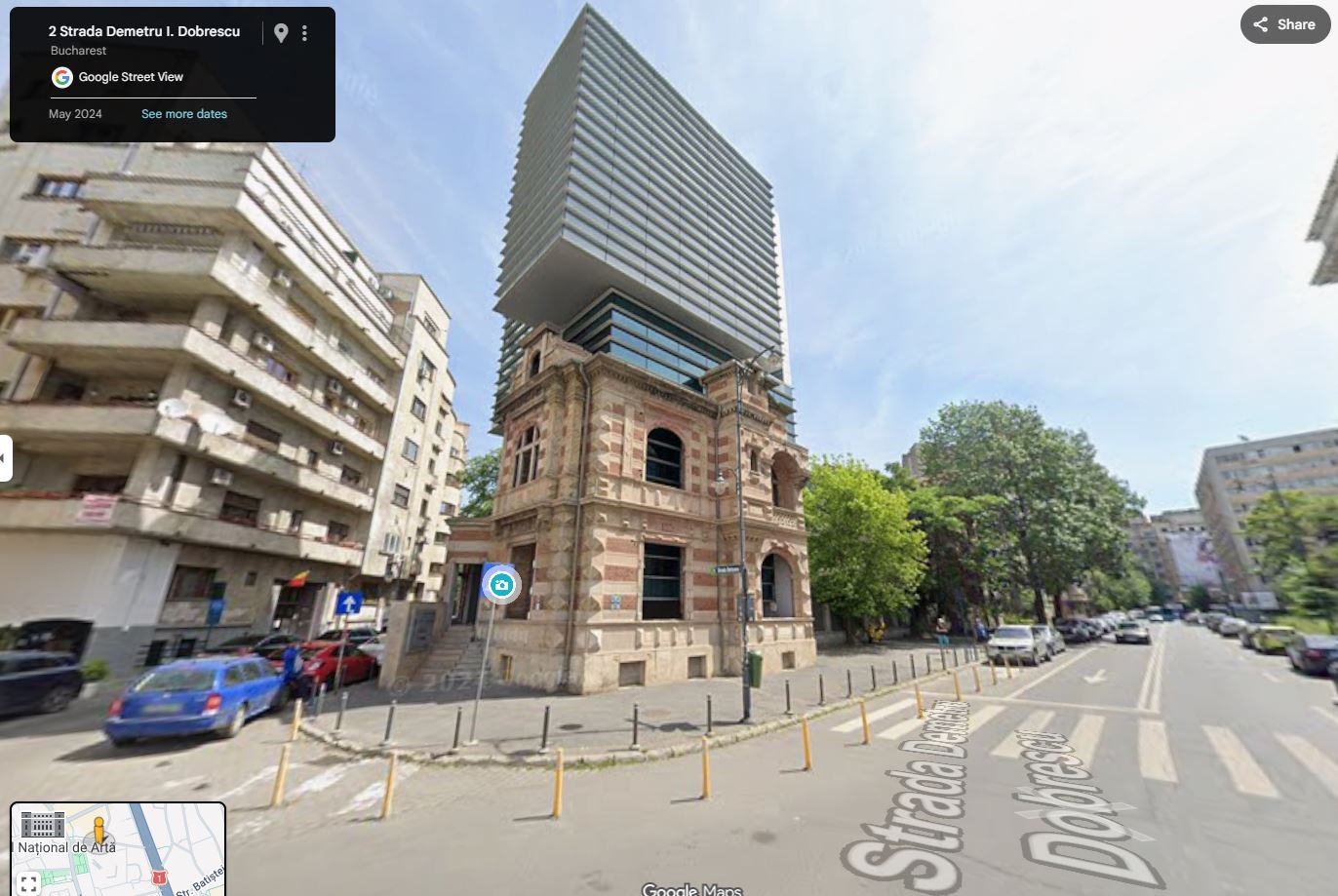
O altă încercare de a „fixa” în plan fizic va fi fost, poate, și clădirea sediului UAR (sau OAR, nu mai știu exact), de pe actuala stradă Dem I. Dobrescu. „Blogul lui Otravă” spune așa:
„Clădirea a fost construită înainte de 1884 de Grigore Paucescu – om politic și avocat – și poartă amprenta stilului arhitectural al Renașterii franceze, având inițial o funcțiune rezidențială, devenind sediul Consulatului Ungariei după 1919. Casa a fost incendiată în timpul Revoluției din ’89, pentru că era sediu al Direcției a V-a a Securității. În 2003, clădirea a fost ridicată într-o manieră modernă până la etajul 7, fiind monument istoric.”
Povestea ideii extinderii moderne de deasupra amprentei vechi este următoarea: la un proiect „schiță de schiță” am avut, întregul an, oportunitatea de a propune o soluție de extindere pe verticală a acestei clădiri de patrimoniu. La finalul zilei, propusesem ceva foarte asemănător cu ceea ce s-a realizat mai târziu. Ideea nu a fost neapărat una extrem de originală – mai mulți colegi au avut o viziune asemănătoare. Într-un fel, forma construită „ne aparține” ca unui „mashup colectiv de minți… studențești”.
Ulterior, la demisolul construcției a funcționat, pentru o perioadă, cafeneaua IO. Bineînțeles, „IO” înseamnă și ardelenescul „eu”, și simboluri alfanumerice pentru codul de programare (1 și 0) și, bineînțeles, satelitul lui Jupiter, al patrulea ca mărime în Sistemul Solar. IO, citit invers, se vede ca „OI” etc.
Este posibil ca „inspirația” să fi venit și după vizionarea videoclipului trupei IIO – Rapture feat. Nadia Ali (lansat pe 29 octombrie 2001). „Aerograful” cu care e „vopsit” modelul este, într-adevăr, o unealtă folosită înainte de apariția randărilor 3D de către arhitecți pentru randări și vizualizări. Dacă „cafeneaua IO” a fost, din nou, un „împrumut” din media occidentală, aprobat sau nu de aceștia, cu sau fără știința lor, nu am cum să (mai) știu la ora actuală.
3) „Țeapa cu mic”
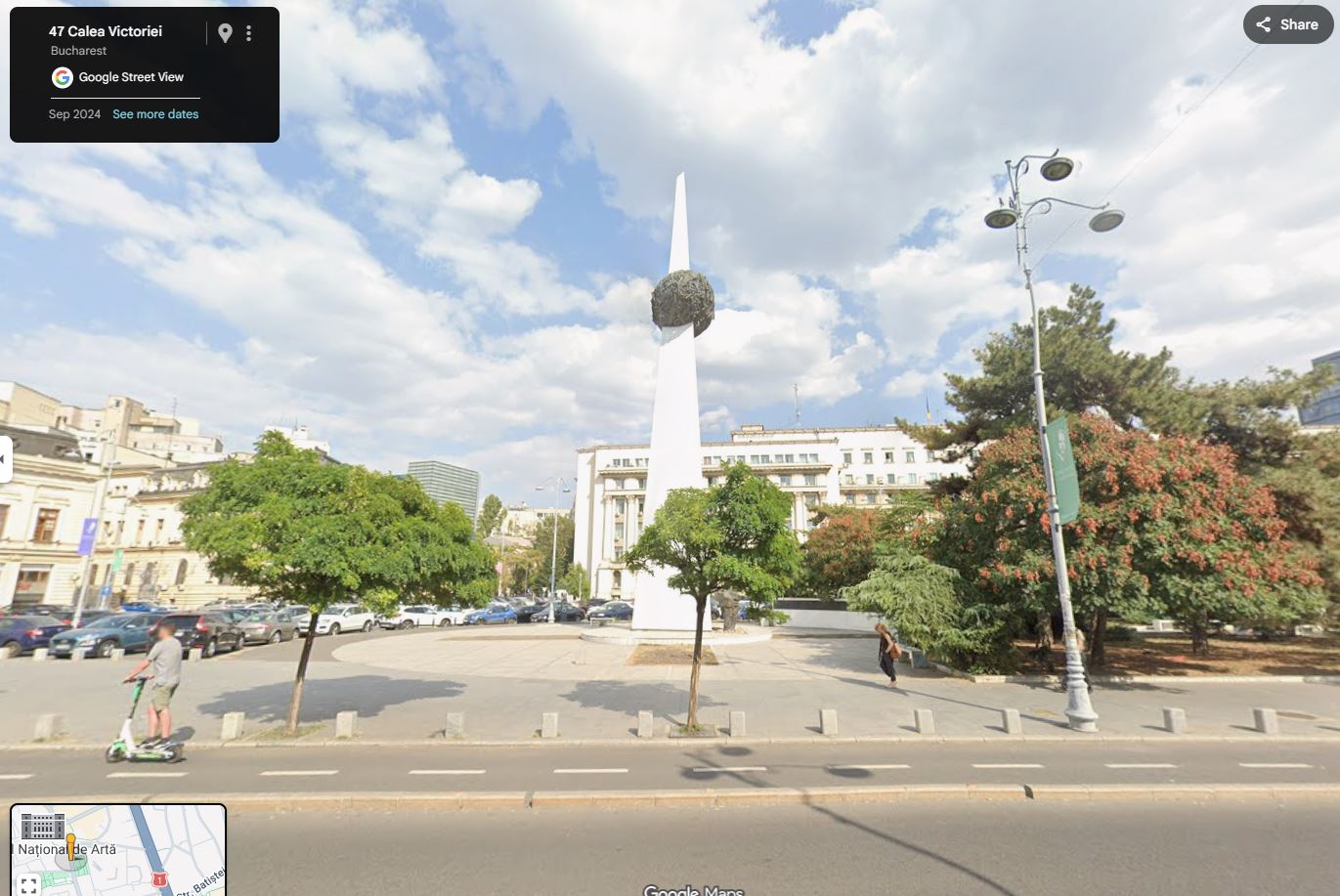
Mult amuzament a fost provocat și de sculptura din centrul Bucureștiului, atunci când a fost plasată acolo. Cu siguranță că acest „statement” are multe semnificații, ca orice formă de artă. Din câte auzeam la vremea respectivă, „micul” din țeapă ar fi simbolizat „vechiul establishment”, cu rețeaua lor densă și complicată de relații (se poate vedea „țeserea” în textura „micului”).
Bineînțeles, pornind de la simbolistica originală, „înaltă”, mintea colectivă a coborât „în stradă”, cum face de obicei, statementul artistic: micul a devenit pentru unii „testicul”, pentru alții „muc”, „țeapa” a fost văzută ca „scobitoare” etc. La baza lucrării de artă se află o „familie de îngeri”. Dacă creatorul sculpturii a anticipat aceste interpretări sau chiar le-a premeditat îmi este, iarăși, cu neputință de aflat.
4) Gânduri de final
Bineînțeles, este vizibilă atitudinea „anticomunistă” și chiar „anticorupție” a establishmentului cultural care a dat naștere acestor lucrări, cel puțin la nivel de discurs public. După experiența frugală în Institutul de Arhitectură Ion Mincu (voi detalia într-o postare următoare), aș îndrăzni să afirm că instituțiile acestea sunt departe de a fi incoruptibile sau adevărate exemple de urmat; le găsim, totuși, scuze – „nimeni” nu poate funcționa într-un sistem corupt (totalitar sau post-totalitar) fără să „simtă influența” rețelelor de corupție, și în special artiștii și arhitecții, care sunt nevoiți să lucreze cu o varietate de clienți din toate clasele sociale.
Aș îndrăzni să afirm că poate aceste „landmarks” sunt bazate în primul rând pe o atitudine defensivă (sau, de ce nu, „ofensivă”), și abia apoi pe o formă de ipocrizie, în special prin caracterul lor „multifuncțional”, care poate fi interpretat / văzut din fiecare mediu social în alt mod. În plus, conexiunile vizibile, prin simbolistica culorilor și a locațiilor, trimit poate prea des la „minoritatea maghiară” – trimitere care, cu siguranță, a fost receptată instant până în administrația statului maghiar. Modul în care „feedback-ul” a venit, probabil prin comunitatea acestora din România, înapoi, este discutabil.
Din nou, dacă comunitatea artiștilor și arhitecților își afirmă independența față de vechiul sistem politic, mesajul mi se pare puțin credibil. Știm cu toții că în toate instituțiile de stat „s-a colaborat”, au existat informatori, s-a „turnat” etc. Gurile rele spun chiar că unul din 4-5 cetățeni a informat benevol sau a fost forțat să informeze vechea „Securitate”.
Da, arta și arhitectura au fost „nișele” în care limbajul informal a putut „feri” creativii de sistemul opresiv, dar, să recunoaștem, a existat artă proletcultistă, arhitectura României Socialiste este vizibilă, Casa Poporului stă încă în picioare, martoră a compromisurilor pe care creativii au trebuit sau au dorit să le facă. Dar da, discuția este extrem de complicată, specializată, iar nuanțele în care rațiunea se poate pierde sunt practic infinite…
Dar da, „așa au fost vremurile”.
English version
a) The Architect from “Matrix”
When I saw Matrix, the first part, I was absolutely shocked. I had never seen anything like that before. The attention to detail, the story, the action, the acting — absolutely everything fascinated me and still fascinates me to this day. For years I kept watching explanations on YouTube given by filmmakers and philosophers; in recent times I also studied Baudrillard and other structuralists or post-structuralists. I can say that Matrix was my introduction — again I use the term “gateway drug” — into critical thinking.
I kept thinking about the genius of the two Wachowski brothers. They were only a few years older than me — about 8–10, it seems — and had given birth to a masterpiece at ages at which others are still unsuccessfully trying to remember the multiplication table. Lol. I also looked for their influences: Ghost in the Shell, the Japanese anime, seems to have been a starting point. I listened to interviews given by them, watched the making of, then I also borrowed Animatrix, and I can say that once again I… “fell on my back”.
The episode in Animatrix in which the patient in a wheelchair is aggressively pushed by the nurse to “his place” deeply marked me; I was also impressed by the one in which the boy who draws in his school notebook jumps off a building, searching for the exit from the Matrix; or the one with the runner who tears his tendons while trying to break a record.
I was certainly not the only one — I believe — who saw the resemblance between the “architect” from Matrix and the famous Romanian architect Dinu Patriciu. Later, I was somewhat surprised by the launch of the chain of stores created by the investor, called MIC.RO.
For years I meditated on the “function of Agent Smith” in society, and especially in Romanian society. Over time, I reached the conclusion that yes, indeed, every person can take on this function when their safety, balance, or connections with the “system” are in danger. Certainly, Matrix is a parable that describes not only the “(post)communist system”, but, in general, all oppressive systems, regardless of their “color”. The complexity of the symbolism used and of the planes in which the film can be seen still surpasses me today.
Returning to MIC.RO, I thought that perhaps Mr. Patriciu might have felt somewhat “targeted / quoted”, maybe alongside the entire Romanian “establishment”, and that the reaction of these interest groups might have given rise to a form of local “covering” or “masking(?)” of the influence of the Matrix trilogy. Anyway, word was going around IAIM that the architect had had connections with the old “Securitate”.
2) The Architects’ Headquarters and the IO café
Another attempt to “fix” things in the physical plane may have been, perhaps, the building of the UAR (or OAR, I no longer remember exactly) headquarters, on what is now Dem I. Dobrescu Street. “Blogul lui Otravă” says the following:
“The building was constructed before 1884 by Grigore Paucescu — politician and lawyer — and bears the imprint of the architectural style of the French Renaissance, initially having a residential function, later becoming the headquarters of the Hungarian Consulate after 1919. The house was set on fire during the 1989 Revolution because it was the headquarters of the Fifth Directorate of the Securitate. In 2003, the building was raised in a modern manner up to the 7th floor, being a historical monument.”
The story of the idea of the modern extension above the old footprint is the following: in a “sketch of a sketch” project, I had, for the entire year, the opportunity to propose a vertical extension solution for this heritage building. By the end of the day, I had proposed something very similar to what was later built. The idea was not necessarily an extremely original one — several colleagues had a similar vision. In a way, the built form “belongs to us” as a kind of “collective mashup of student minds”.
Later, in the basement of the building, the IO café functioned for a period. Of course, “IO” also means the Transylvanian “me”, as well as alphanumeric symbols for programming code (1 and 0), and of course Jupiter’s moon, the fourth largest in the Solar System. IO, read backwards, becomes “OI”, etc.
It is possible that the “inspiration” also came after watching the music video of the band IIO — Rapture feat. Nadia Ali (released on October 29, 2001). The “airbrush” with which the model is “painted” is indeed a tool used before the appearance of 3D renderings by architects for visualizations and renderings. If the “IO café” was, again, a “borrowing” from Western media, approved or not by them, with or without their knowledge, I have no way of knowing anymore at present.
3) “The sausage skewer”
Much amusement was also caused by the sculpture in the center of Bucharest when it was placed there. Certainly, this “statement” has many meanings, like any form of art. From what I heard at the time, the “sausage”( micul* ) on the skewer was said to symbolize the “old establishment”, with their dense and complicated network of relationships (the “weaving” can be seen in the texture of the “sausage”).
Of course, starting from the original, “elevated” symbolism, the collective mind brought the artistic statement “down to the street”, as it usually does: the sausage became for some a “testicle”, for others “mucus”, the “skewer” was seen as a “toothpick”, etc. At the base of the artwork lies a “family of angels”. Whether the creator of the sculpture anticipated these interpretations or even premeditated them is, again, impossible for me to find out.
- * “Micul” (plural: “mici”) is a traditional Romanian grilled meat dish made of small, skinless sausages from minced meat, typically beef and pork, seasoned with garlic and spices.
They are cooked on a charcoal grill and commonly eaten with mustard and bread, especially at outdoor gatherings and street-food settings.
In Romanian culture, mici are strongly associated with everyday life, informality, and collective social rituals rather than fine dining.
4) Final thoughts
Of course, the “anti-communist” and even “anti-corruption” attitude of the cultural establishment that gave rise to these works is visible, at least at the level of public discourse. After my frugal experience at the Ion Mincu Institute of Architecture (I will detail this in a future post), I would dare to say that these institutions are far from being incorruptible or true role models; nevertheless, we find excuses for them — “no one” can function in a corrupt system (totalitarian or post-totalitarian) without “feeling the influence” of corruption networks — especially artists and architects, who are forced to work with a variety of clients from all social classes.
I would dare to say that perhaps these “landmarks” are based primarily on a defensive attitude (or, why not, an “offensive” one), and only afterward on a form of hypocrisy, especially through their “multifunctional” character, which can be interpreted / seen differently by each social environment. In addition, the visible connections, through the symbolism of colors and locations, may point too often toward the “Hungarian minority” — a reference that, certainly, was instantly received even within the administration of the Hungarian state. The way in which the “feedback” came back, probably through their community in Romania, is debatable.
Again, if the community of artists and architects claims independence from the old political system, the message seems to me slightly unconvincing. We all know that in all state institutions “there was collaboration”, there were informants, people “snitched”, etc. Rumors even say that one in 4-5 citizens informed voluntarily or was forced to inform the old “Securitate”.
Yes, art and architecture were the “niches” in which informal language could “shield” creatives from the oppressive system, but let’s admit it — proletcultist art existed, the architecture of Socialist Romania is visible, the House of the People is still standing, a witness to the compromises that creatives had to make or chose to make. But yes, the discussion is extremely complicated, specialized, and the nuances in which reason can get lost are practically infinite…
But yes, “those were the times”.
 PAUL SELING
Leave a comment