Varianta în limba română
Pe Tomi Hajdu l-am cunoscut la final de ani `90, într-o vizită prin Cluj, la foști colegi de facultate. Mi-a plăcut din start caracterul lui calm, introspectiv și pasiunea reală pentru muzica electronică, experimentală chiar. Am fost chiar uimit să constat, la un om fără pregătire artistică anterioară, o asemenea atenție și pricepere. Apoi am aflat că și tatăl lui fusese pasionat de artă (parcă era chiar sculptor?), așa că m-am edificat nițel.
După ce m-am întors în Baia Mare, prin 2002, ne-am mai vizitat nițel, mai ales la noua lui casă. Am primit niște muzică nouă, electronică, și îmi aduc aminte că a încercat o vreme să intre în producție. Ulterior s-a reorientat spre fotografie, domeniu în care activează și astăzi.
La mijlocul anilor 2000 schimbam des, pe Yahoo Messenger, impresii despre primele lui încercări. Eu încă nu intrasem în foto, nu aveam decât un aparat simplu – o „săpunieră” de 200–300 de lei – și nu înțelegeam nicicum capacitatea lui de a învăța atât de repede. Deja „scotea” niște poze „beton”, pe care mi le mai amintesc și azi. Avea și un blog pe Blogspot, pe care cred că îl mai are și astăzi.
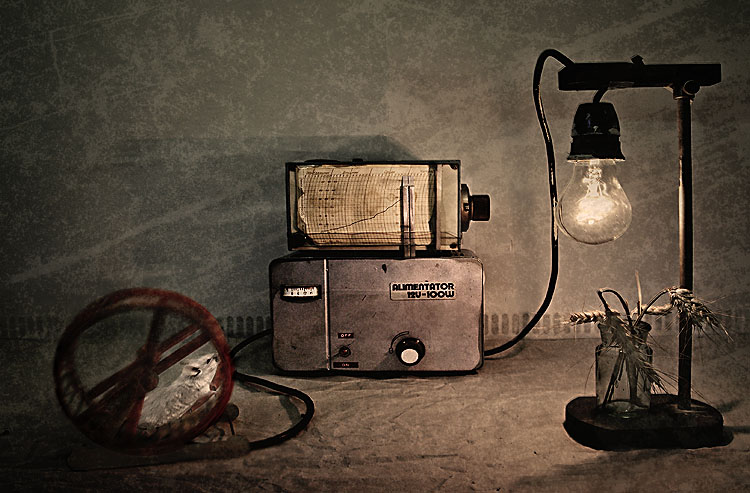
Atașez link la colecția „de laborator”, care mi-a plăcut mult și încă îmi place și azi. Mi se părea că pozele au un umor negru, finuț, combinat cu o tentă și o colorizare grungy, „à la anii ’90”, iar din punct de vedere tehnic erau impecabile. Am „tras” și eu câteva cadre cu „săpuniera” mea, doar ca să realizez că nu prea mă pricep. De fapt, aparatele cu setări automate nu știu, nu pot să producă ceea ce poate un aparat cu obiective interschimbabile și setări manuale. Oricum, Tomi m-a criticat constructiv, încurajându-mă constant.
https://hajdutamas.blogspot.com/search/label/laboratoires
Am încercat în zadar să înțeleg „sfânta trinitate”, chestie de bază în fotografie: combinația dintre timpul de expunere, deschiderea diafragmei și sensibilitatea (ISO); noțiunile îmi erau efectiv inaccesibile. Mulți ani am tot bâjbâit cu diverse alte tipuri de gadgeturi ieftine, fără să obțin decât, în mod aleatoriu, ceva interesant.
Tomi a insistat în această pasiune până astăzi. A avut nenumărate expoziții, a luat premii naționale și internaționale. Ba a fost, parcă, publicat și în National Geographic, dacă nu mă înșel.
Aveam totuși un blocaj, mi-am spus. De obicei învăț orice nouă tehnologie fără prea mare efort. Sincer, am tot considerat fotografia ca fiind o artă facilă. La urma urmei, ce era așa greu în a apăsa pe un buton și a încadra un subiect, îmi tot spuneam? Rada P., fata cu care m-am văzut în episoade repetate de prin 2000 până prin 2007, își dorea foarte mult să facă foto și video. Ambii eram pasionați de studiul imaginii. Dacă eu tot visam și încercam să fac arhitectură, cu Rada am discutat chiar ideea ca ea să se înscrie la cursuri de foto-video. Nu își dădea prea mari șanse, deși știu că avea – și are încă – un mare potențial. Dintotdeauna s-a subestimat și s-a sabotat singură, prea puțin conștientă de înclinația și bunul gust nativ.
Când, prin 2007–2008, am început să filmez expedițiile mele pe munte sau alte activități sportive – snowboarding sau cățărare – am început tot cu niște „săpuniere”. Parcă arta video era mai interesantă și mai complexă, îmi spuneam, pentru că surprindea dinamism, mișcare și nu era tributară unui ochi fix, contemplativ. Aici puteai vedea mult mai multe detalii și înțelege personalitatea subiectului în mișcare fluidă, dintr-o varietate de unghiuri. În plus, mai era și layerul audio, care completa ansamblul.
Restricționat de rezoluția minimală a aparatelor mele și intrat deja preventiv într-o perioadă în care foloseam doar softuri open-source, am tot filmat și editat, și așa am învățat, timid, ce înseamnă filmul. Erau doar niște prime idei și intuiții. Puțin mai târziu, amicul Sever mi-a împrumutat un GoPro și acolo am avut o calitate mai bună a filmării, plus o cameră solidă, rezistentă la șocuri, numai bună de folosit în activități dinamice.
Revenind la Tomi, i-am mai urmărit evoluția în domeniu, dar extrem de rar. Stilul lui a migrat tot mai mult spre un „mood” pe care personal nu îl agreez. I-am și spus-o, de altfel. Ochiul lui subiectiv vede un oraș, o Românie care mie mi se par triste, deprimante, ireale chiar. Deși și-a rafinat umorul, deși tehnic pozele sunt tot mai bine realizate și editate, nu mă regăsesc deloc nici în peisajul mental pus de el în imagini, nici în realitatea subiectivă pe care o capturează.
Mai în glumă, mai în serios, când m-am apucat de grafică digitală am tot făcut mici glumițe – ascunse, bineînțeles – în lucrările mele. Încercam, de fapt, să-l trag subtil de mânecă, arătând că mai există și alte moduri de a vedea lumea, România, orașul natal. Există un capitol în cartea mea de caricatură din 2014, Blog, în care capturam prin fotografie imagini din urbe și apoi suprapuneam peste ele o interpretare personală, filtrată prin mișcarea mâinii via tableta grafică.
La începutul anilor 2010 am primit un aparat foto Canon 650D, cu trei obiective frumoase, din partea lui Radu Bucura Seling, pe atunci soțul surorii mele. Mai primisem înainte unul, tot cadou, un Nikon nu-mai-știu-ce-model, cu care mă jucam fără să știu de fapt să fac setările. Mintea îmi era încă la video și nu la imagini statice. După ce am primit Canon-ul, am folosit tot modul video în detrimentul foto, dar deja începeam să înțeleg setările necesare pentru a face ceva coerent, artistic. Una dintre primele lucrări a fost clipul la piesa „Știi ce-nseamnă?”, de pe albumul cu același nume, creat împreună cu Cristi Ștefănescu (aka Electric Brother) și alți băieți de la Yama Studios.
Eram într-o perioadă de psihoză și confuzie acută și probabil că clipul poartă amprenta unei căutări febrile a adevărului și o formă de „recapitulare” a ceea ce mi se întâmplase până atunci.
Din nou, aceeași formă de „divinație” sau interogare a minții profunde. A fost multă muncă, dusă la capăt în vreo două zile de activitate maniacală, în apartamentul nostru din București. Am investit ce bani mai aveam prin buzunare în mici obiecte cu încărcătură simbolică, făcând shopping pe la magazinele de art supplies. Tare mi-au plăcut figurinele din ipsos cumpărate de la niște doamne care făceau modele pentru școli sau facultăți de artă. Le mai păstrez cu drag, ca simboluri ale unei munci de detaliu, făcute manual, și astăzi. Clipul poate fi văzut aici:
https://www.youtube.com/watch?v=qaR_t2S1-Eo
Revenind la Tomi, acum aproape doi ani l-am sunat, pe el și pe alții, să le cer sfatul despre ce aparat mirrorless să îmi cumpăr. Chiar aveam chef să renunț la „low-tech-ul” impus de restricțiile tehnice și lipsa de dotări și să „trec la un nou nivel”. Am ales, după cum m-au sfătuit aproape toți, un Sony A6100, de care sunt extrem de mulțumit. După ce, de prin 2017, începusem să expun sporadic pe www.pexels.com instantanee de pe ici, de colo, cu gândul să-mi petrec cumva timpul în mod constructiv, acum aveam o nouă unealtă.
Orașul mi se pare totuși că l-am acoperit, cel puțin în ceea ce mă interesează, în ceea ce vibrez de fapt. Niciodată nu fac ceva care să nu mă provoace, să nu mă inspire total, să nu mă atragă în vreun fel. Mă bucur că fac parte din comunitatea Pexels, de unde mi-am descărcat aproape toate coperțile de albume. Punând și eu conținut acolo, simt că ofer și eu comunității cât pot, după ce am luat suficient de mult. Am mai încercat să vând poze pe alte site-uri de stock, dar m-am ales cu 5–6 dolari o dată la 7–8 luni. M-am demoralizat, așa că m-am resemnat să contribui în mod gratuit tot pe Pexels. Mă bucură să văd că am 22 de milioane de vizualizări și câteva zeci de mii de download-uri până acum.
Colecția mea de pe Pexels urmărește, de fapt, interesele mele de moment, combinate cu locații ofertante, frumoase și, în general, aflate la o aruncătură de băț. Încă mi-e frică să-mi duc aparatul și obiectivele cu mine în deplasări mai lungi. Țin mult la ele și, sincer, n-aș avea bani să le cumpăr din nou dacă le-aș pierde. Prefer să fac poze în casă, mai ales, sau să filmez câte un clip – la mișto, întotdeauna – pentru piesele mele, în care apar și eu uneori, tot… la mișto. Nu cred că am prea multe de spus ca… actor.
Ca să închei capitolul Tomi, mi-am creat o personalitate „de fotograf” diferită de a lui. Ba chiar uneori încerc să ofer publicului, în contrast cu mood-ul imaginilor create de el, o altă viziune asupra orașului. Îmi plac culorile mai vii, abordez teme specifice intereselor mele, încadrez alte subiecte. Din acest motiv, pe Pexels se poate vedea un fel de „univers personal” al explorărilor mele din ultimii ani. Poate o să filosofez într-o postare următoare despre modul în care am înțeles eu felul în care ne raportăm la arta fotografică.
Dacă piesa trupei NOISIA, „Tommy’s Theme”, are vreo legătură cu Tomi, nu îndrăznesc să afirm. Nu cunosc prea multe detalii despre sfera lui personală sau interesele lui din ultimii ani, ale familiei, ca să mă pot pronunța. Ceva îmi spune că da, pe undeva există o „ramificație”, dar nu o cunosc și nici nu sunt în „mood-ul” de a investiga.
Pe final mai notez că ultimul meu album produs sub pseudonimul „Aniak”, denumit Litography, pornește cumva și de la colecția „Laborator” a lui Tomi, cea de pe la mijlocul anilor 2000. Am încercat să surprind atmosfera dark, grungy a pozelor, deși piesele mele nu (mai) conțin umor de felul celui regăsit în imagini. Dar nu este acolo doar „mood”-ul lui Tomi, ci și alte elemente: poate, poate un clip de la Aphex Twin; poate, în piesa „Litography”, amintirea conversațiilor cu o mai veche cunoștință care era pasionată de această tehnică.
Trebuie menționat că atunci când lucrez în muzică, ca și în alte domenii, prin minte îmi trec constant zeci, poate sute de influențe și idei, pe care le captez din mers, de cele mai multe ori aleatoriu, și pe care cu siguranță le accept ca pe niște provocări. Odată stabilită o temă, o imagine sau un concept de pornire, începe un anevoios, dar frumos parcurs: acela de a „armoniza” alte și alte influențe care vin după aceea, de a le filtra, de a le reconverti în noul limbaj, de a le unifica stilistic cu primele influențe și, de ce nu, cu alte piese sau elemente ce vor aparține aceleiași colecții.
Poate că sună ca ceva foarte complicat, complex, dar îmi place să spun că, după atâția ani creativi, pentru mine acestea sunt doar mici experimente care mă ajută să nu mă simt complet inutil și să-mi treacă vremea cu un pic de sens. Deși, trebuie să recunosc, nimeni n-a murit de la privitul în gol pe fereastră.
Puteți asculta Litography aici:
https://aniak.bandcamp.com/album/litography-ep
P.S. – Celui care mi-a furat obiectivul zoom extrem de prețios, la începutul anilor 2010, din casă, Dumnezeu să-i dea pedeapsa! Noroc că m-am mutat la mirrorless, că aș fi suferit și astăzi de nervi. Se pare că unii mai „joacă” penibilul joc „social, urban” de-a „furatul obiectivului” până astăzi. Lol (cu dispreț).
English version
I met Tomi Hajdu during my university years, on a visit to Cluj, at some former classmates’ place. From the very beginning I liked his calm, introspective character and his genuine passion for electronic music—experimental, even. I was truly amazed to find such attention to detail and skill in someone with no prior artistic training. Later I found out that his father had also been passionate about art (I think he was even a sculptor?), so things made a bit more sense.
After I returned to Baia Mare, sometime in 2002, we visited each other from time to time, mostly at his new house. I received some new electronic music from him, and I remember that for a while he tried to get into music production. Eventually he shifted his focus to photography, a field in which he is still active today.
In the mid-2000s we often exchanged impressions on Yahoo Messenger about his first attempts. I hadn’t yet entered photography myself; I only had a simple camera—a cheap point-and-shoot costing a couple of hundred lei—and I couldn’t understand how he managed to learn so fast. He was already producing some really solid photos, which I still remember today. He also had a Blogspot blog, which I believe he still keeps.
I’m attaching a link to the “Laboratory” collection, which I liked a lot back then and still like today. I felt the photos had a subtle, refined black humor, combined with a grungy tint and color grading, very much “’90s-style,” and from a technical point of view they were impeccable. I shot a few frames myself with my little point-and-shoot, only to realize that I wasn’t really good at it. In fact, cameras with automatic settings simply don’t know—and can’t produce—what a camera with interchangeable lenses and manual settings can. Still, Tomi criticized me constructively, encouraging me constantly.
https://hajdutamas.blogspot.com/search/label/laboratoires
I tried in vain to understand the “holy trinity,” a basic concept in photography: the combination of shutter speed, aperture, and sensitivity (ISO). These notions were simply inaccessible to me. For many years I fumbled around with various cheap gadgets, managing to obtain something interesting only by pure chance.
Tomi persisted in this passion to this day. He has had countless exhibitions and has won national and international awards. I believe he was even published in National Geographic, if I’m not mistaken.
Still, I felt I had a blockage. Usually I learn any new technology without much effort. Honestly, I had always considered photography to be an easy art. After all, what could be so hard about pressing a button and framing a subject, I kept telling myself? Rada P., the girl I saw repeatedly between roughly 2000 and 2007, really wanted to do photo and video. We were both passionate about studying the image. While I was dreaming of and attempting architecture, we even discussed the idea of her enrolling in photo-video courses. She didn’t give herself much credit, although I know she had—and still has—great potential. She has always underestimated and sabotaged herself, too little aware of her native inclination and good taste.
When, around 2007–2008, I started filming my mountain expeditions or other sports activities—snowboarding or climbing—I also began with simple point-and-shoot cameras. Video art seemed more interesting and more complex to me, because it captured dynamism and movement and was not bound to a fixed, contemplative eye. You could see many more details and understand the subject’s personality in fluid motion, from a variety of angles. On top of that, there was the audio layer, completing the whole.
Limited by the minimal resolution of my cameras and already deliberately using only open-source software, I kept filming and editing, and that’s how I timidly learned what film meant. These were just first ideas and intuitions. A bit later, my friend Sever lent me a GoPro, and there I finally had better image quality, plus a solid, shock-resistant camera, perfect for dynamic activities.
Coming back to Tomi, I continued to follow his evolution in the field, but very rarely. His style gradually migrated toward a “mood” that I personally don’t resonate with. I even told him so. His subjective eye sees a city, a Romania that strike me as sad, depressing, even unreal. Although his humor has become more refined, and although his photos are technically better and better executed and edited, I don’t find myself at all in the mental landscape he puts into images, nor in the subjective reality he captures.
Half joking, half serious, when I started working in digital graphics I kept inserting small jokes—hidden, of course—into my works. I was actually trying to subtly tug at his sleeve, showing that there are other ways of seeing the world, Romania, the hometown. There is a chapter in my 2014 caricature book, Blog, where I captured urban images through photography and then overlaid them with a personal interpretation, filtered through the movement of my hand via a graphic tablet.
In the early 2010s I received a Canon 650D camera with three beautiful lenses from Radu Bucura Seling, who was at the time my sister’s husband. Before that, I had also received another camera as a gift—a Nikon, some model I can’t remember—with which I played around without actually knowing how to set it up properly. My mind was still focused on video, not on still images. After receiving the Canon, I still favored video over photography, but I was already starting to understand the settings needed to create something coherent and artistic. One of my first works was the video clip for the song “Știi ce-nseamnă?” from the album of the same name, created together with Cristi Ștefănescu (aka Electric Brother) and other guys from Yama Studios.
I was in a period of psychosis and acute confusion, and the clip probably bears the mark of a feverish search for truth and a kind of “recapitulation” of everything that had happened to me up to that point.
Once again, the same form of “divination” or interrogation of the deeper mind. It was a lot of work, completed in about two days of manic activity in our Bucharest apartment. I invested whatever money I had left in small objects with symbolic meaning, shopping at art supply stores. I especially loved the plaster figurines bought from some ladies who made models for art schools or universities. I still keep them fondly today, as symbols of detailed, handcrafted work. The clip can be seen here:
https://www.youtube.com/watch?v=qaR_t2S1-Eo
Returning to Tomi, almost two years ago I called him, along with others, to ask for advice on what mirrorless camera to buy. I really felt like giving up the “low-tech” imposed by technical limitations and lack of equipment and “moving to a new level.” I chose, as almost everyone advised me, a Sony A6100, which I am extremely happy with. After having sporadically uploaded snapshots on www.pexels.com since around 2017—here and there, just to spend my time constructively—I now had a new tool.
I feel that I’ve covered the city, at least what interests me, what I truly resonate with. I never do anything that doesn’t challenge me, fully inspire me, or attract me in some way. I’m glad to be part of the Pexels community, from which I downloaded almost all my album covers. By contributing content there myself, I feel I’m giving something back to the community after having taken quite a lot. I also tried selling photos on other stock sites, but ended up with five or six dollars once every seven or eight months. I got discouraged, so I resigned myself to contributing for free on Pexels. It makes me happy to see that I’ve reached 22 million views and several tens of thousands of downloads so far.
My Pexels collection basically follows my current interests, combined with appealing, beautiful locations that are generally just a stone’s throw away. I’m still afraid to take my camera and lenses on longer trips. I care a lot about them, and honestly, I wouldn’t have the money to buy them again if I lost them. I prefer to take photos at home or film the occasional clip—always tongue-in-cheek—for my own songs, in which I sometimes appear myself, also… tongue-in-cheek. I don’t think I have much to say as an “actor.”
To conclude the Tomi chapter, I’ve developed a “photographer” persona different from his. Sometimes I even try to offer the public, in contrast to the mood of his images, a different vision of the city. I like more vivid colors, I approach themes specific to my interests, I frame different subjects. For this reason, on Pexels one can see a kind of “personal universe” of my explorations from recent years. Perhaps I’ll philosophize in a future post about how I understand the way we relate to photographic art.
As for whether NOISIA’s track “Tommy’s Theme” has anything to do with Tomi, I wouldn’t dare to say. I don’t know enough about his personal sphere or his family’s interests in recent years to make such a claim. Something tells me that yes, somewhere there might be a “branching connection,” but I don’t know it, nor am I in the mood to investigate.
Finally, I should note that my latest album produced under the pseudonym “Aniak,” titled Litography, also somehow starts from Tomi’s “Laboratory” collection from the mid-2000s. I tried to capture the dark, grungy atmosphere of those photos, even though my tracks no longer contain the kind of humor found in the images. But it’s not just Tomi’s mood that’s there—there are other elements too: maybe a clip by Aphex Twin; maybe, in the track “Litography,” the memory of conversations with an old acquaintance who was passionate about this technique.
It should be mentioned that when I work in music, as in other fields, dozens—maybe hundreds—of influences and ideas constantly pass through my mind. I capture them on the fly, most often randomly, and I definitely accept them as challenges. Once a theme, image, or starting concept is established, a laborious but beautiful journey begins: that of “harmonizing” more and more influences that come afterward, filtering them, converting them into the new language, unifying them stylistically with the initial influences and, why not, with other tracks or elements that will belong to the same collection.
It may sound very complicated and complex, but I like to say that after so many creative years, for me these are just small experiments that help me not feel completely useless and help time pass with a bit of meaning. Although, I must admit, no one has ever died from staring out the window into nothingness.
You can listen to Litography here:
https://aniak.bandcamp.com/album/litography-ep
P.S. – To whoever stole my extremely valuable zoom lens from my house in the early 2010s: may God punish you! Luckily I switched to mirrorless, otherwise I’d still be suffering from nerves today. It seems that some people are still playing that ridiculous “social, urban” game of “stealing lenses” ( objectives, in romanian ) even now. Lol (with contempt).
 PAUL SELING
Leave a comment