Versiunea în limba română
E un 1984, toamnă, e seară și ne găsim în vizită la familia M., cu care părinții sunt tare buni prieteni. Adulții s-au cherchelit nițel și stau de vorbă în sufragerie, în timp ce eu îmi bag nasul în resturile lăsate pe masa din bucătărie. Sunt tare încântat când venim la de-alde M., pentru că, invariabil, suntem serviți cu “grătar cu cartofi prăjiți”, mâncare de care nu prea avem parte acasă.
De data asta, mânat de o senzație ușoară de sete, iau un pahar de pe masă și îl dau pe gât pe nerăsuflate. “Mmmm”, bună licoarea asta, îmi zic, și golesc toate resturile de vin roșu, de casă, din toate paharele abandonate neglijent în urmă de cheflii.
M-am îmbătat, la 7 ani, lol. Părinții n-au înțeles de ce, în drum spre casă – familia M. stă la câteva străzi distanță – mă împiedic cu picioare moi, de lână, până aproape să mă prăbușesc. Mami și tati mă flanchează în timp ce eu mă minunez de ce bine mă pot simți.
…
De multe ori am vizitat, de-a lungul copilăriei comuniste, familia M. Anticipez cu bucurie vizitele astea pentru că debaraua băiatului, A., e doldora de jucării de toate felurile.
Dar. Ce e cel mai special lucru e colecția lui imensă de reviste Rahan. Nu știu dacă știți, dar la vremea aia “un Rahan” valora poate cât 5 mășinuțe de fier, sau cât 10 colițe sau poate vreo 30 de timbre neștampilate. Un Rahan e valută forte în toate schimburile care au loc între copiii din cartiere, și A. deține o adevărată mină de aur.
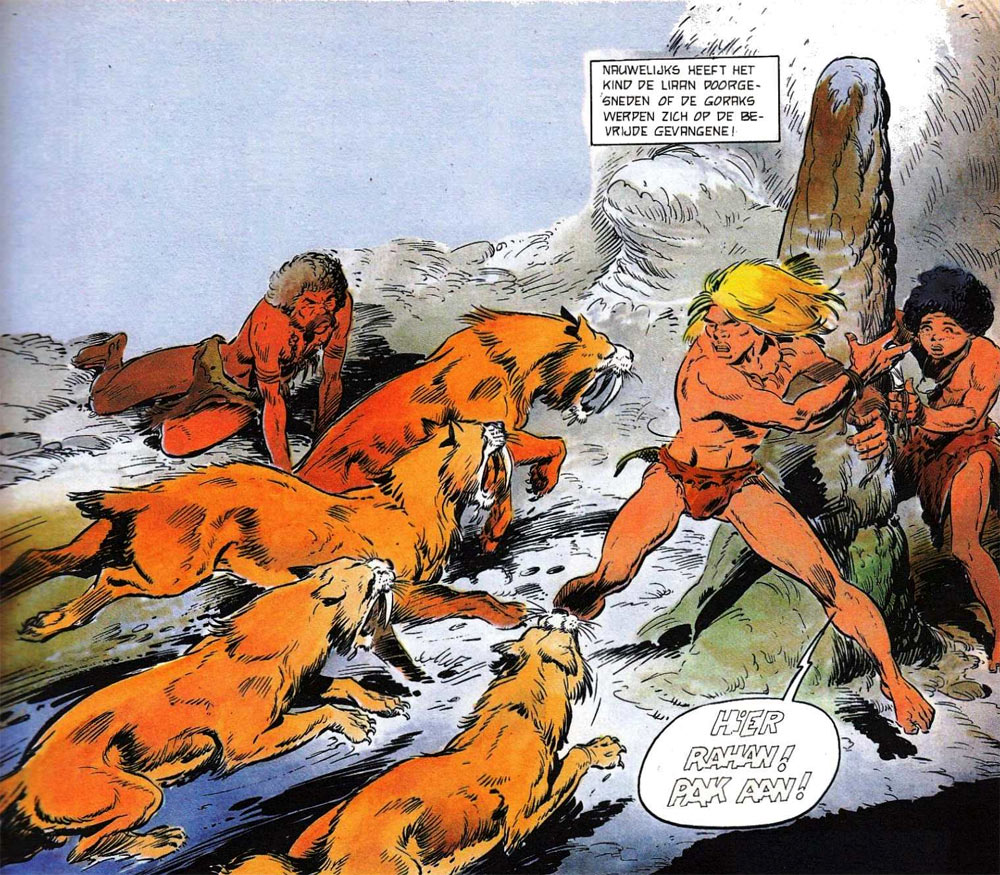
Deci la fiecare vizită îi cer vraful de reviste și mă scufund în admirație. Admirație pentru eroul principal, pentru aventuri, pentru grafica impecabilă, bogată, a ilustratorului francez. Și, de ce să nu recunosc, pentru faptul că, în multe din povestiri, am șansa să văd în triburile sălbatice – pe care întotdeauna Rahan le învăța câte ceva util – sâni goi.
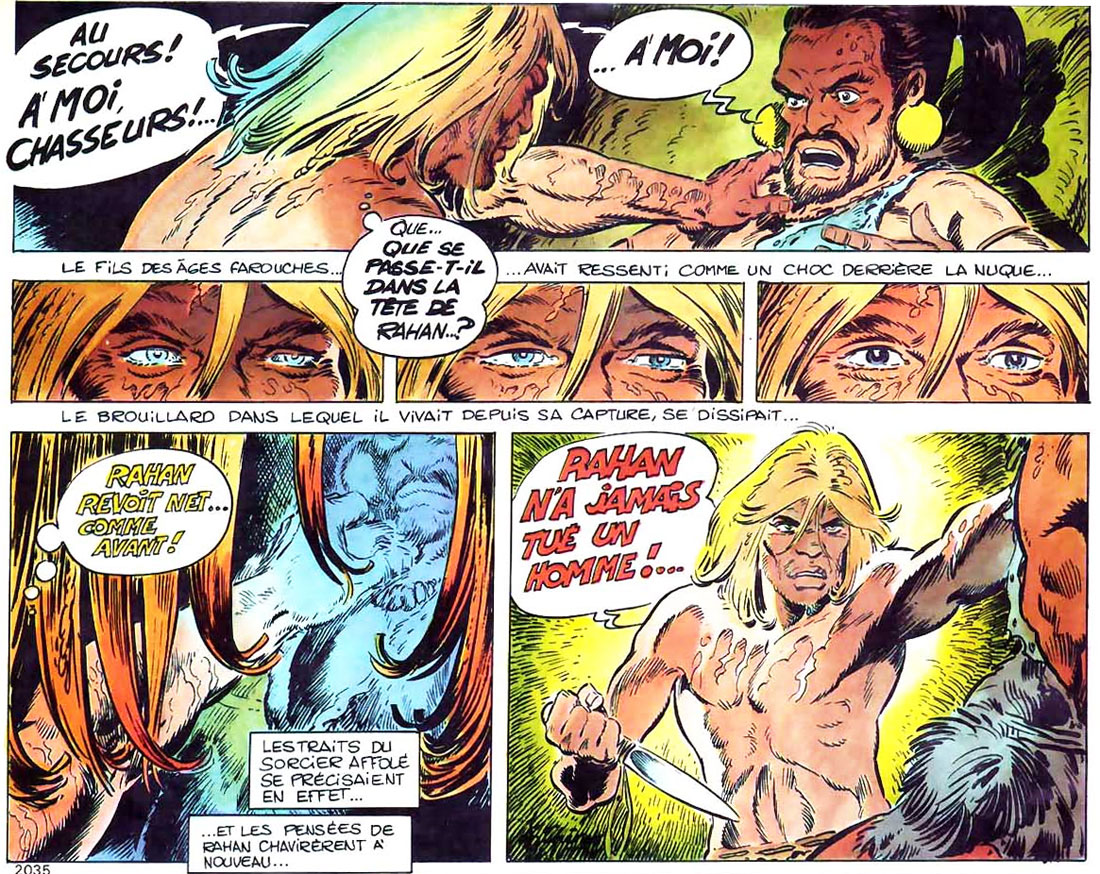
Totuși, totuși, în mintea mea a rămas multă vreme o întrebare mută despre o contradicție ciudată, cea dintre frumusețea corpurilor lor aproape goale și modul în care erau reprezentate: femeile triburilor băștinașilor erau întotdeauna brunete, cu cranii asemănătoare celor de australopitec.
Comparativ, Rahan cel blond pare unicul personaj inteligent din toate poveștile. Uneori mi-a trecut prin minte întrebarea despre o posibilă legătură între el și vreo femeie din triburile pe care le vizita, dar mi-am răspuns singur că “sigur nu, că nu-s demne de un așa erou”. Dacă e să se cupleze, să-și găsească o blondă asemenea lui.
Orișicât, Rahan cel veșnic singur și aventurier mi-a inspirat copilăria ca model de curaj, inventivitate și empatie. Pe de altă parte, perfecțiunea și detaliile desenului m-au făcut cumva să nu-mi doresc să mai încerc măcar să calc pe urmele artistului care i-a dat naștere.
Acum ceva ani mi-am cumpărat un vraf de reviste Rahan reeditate în România, dar sincer, nimic nu se compară cu memoria hârtiei și cernelurilor fine, de calitate, a originalelor franceze. Deși umbla vorba la vremea aia, printre puștime, că tiparul lor se făcea undeva prin România, și că unii puteau sustrage câte ceva în timpul producției. Dar, nu voi ști niciodată. Legende urbane.
English version
It’s sometime in the autumn of 1984, in the evening, and we’re visiting the M. family, with whom my parents are very good friends. The adults are slightly tipsy and chatting in the living room, while I’m sticking my nose into the leftovers on the kitchen table. I’m always excited when we visit the M. family, because, without fail, we’re served “grilled meat with French fries,” a dish we rarely get at home.
This time, driven by a slight feeling of thirst, I grab a glass from the table and down it in one gulp. “Mmmm,” this stuff is delicious, I think to myself, and I go on to finish all the leftover red homemade wine from the glasses carelessly abandoned by the partygoers.
I got drunk—at 7 years old, lol. My parents couldn’t understand why, on the way home (the M. family lives just a few streets away), I staggered with legs as soft as wool, almost collapsing. Mom and Dad flank me while I marvel at how good I feel.
…
We visited the M. family many times throughout my communist childhood. I always looked forward to these visits, because A.’s pantry was crammed with all kinds of toys.
But the most special thing was his huge collection of Rahan magazines. I don’t know if you’re familiar, but back then, “a Rahan” was worth as much as five metal toy cars, or ten sticker sheets, or maybe around thirty unused stamps. A Rahan was hard currency in all the trades taking place between kids in the neighborhood, and A. owned a true goldmine.
So every visit, I’d ask for the stack of magazines and dive into awe. Awe for the main hero, for the adventures, for the impeccable, rich artwork by the French illustrator. And—why not admit it?—for the fact that, in many of the stories, I had the chance to see bare breasts in the wild tribes—tribes that Rahan would always teach something useful.
Still, for a long time, there was a silent question in my mind about a strange contradiction: the beauty of those almost-naked bodies contrasted with how they were portrayed. The tribal women were always dark-haired, with skulls resembling those of australopithecines.
In comparison, blond-haired Rahan seemed like the only intelligent character in all the stories. Sometimes, I wondered if he ever had a romantic connection with any of the women from the tribes he visited, but I’d always answer myself: “Surely not, they’re not worthy of such a hero.” If he were to fall in love, he should find a blonde like himself.
Anyway, the forever lone and adventurous Rahan inspired my childhood as a model of courage, inventiveness, and empathy. On the other hand, the perfection and detail of the illustrations made me feel I should never even try to follow in the footsteps of the artist who brought him to life.
A few years ago, I bought a collection of Rahan magazines reprinted in Romania, but honestly, nothing compares to the memory of the original French editions—the fine, high-quality paper and ink. Although, back in the day, there were rumors among kids that they were printed somewhere in Romania and that some people managed to sneak out a few copies during production. But I’ll never know for sure. Urban legends.
 PAUL SELING
Leave a comment